🌿 Moss & Lichen for Kids
Everything in this trail so far has been big enough to see easily: birds, turtles, trees, flowers. This guide is about the worlds you walk past without noticing — the green velvet on a shady tree trunk, the orange crust on an old fence, the tiny forest growing on a rock. Moss and lichen are small. They are also some of the toughest, oldest, and strangest life in the yard.
🌿 Meet the Tiny Worlds
🌿 Moss — The Real Thing
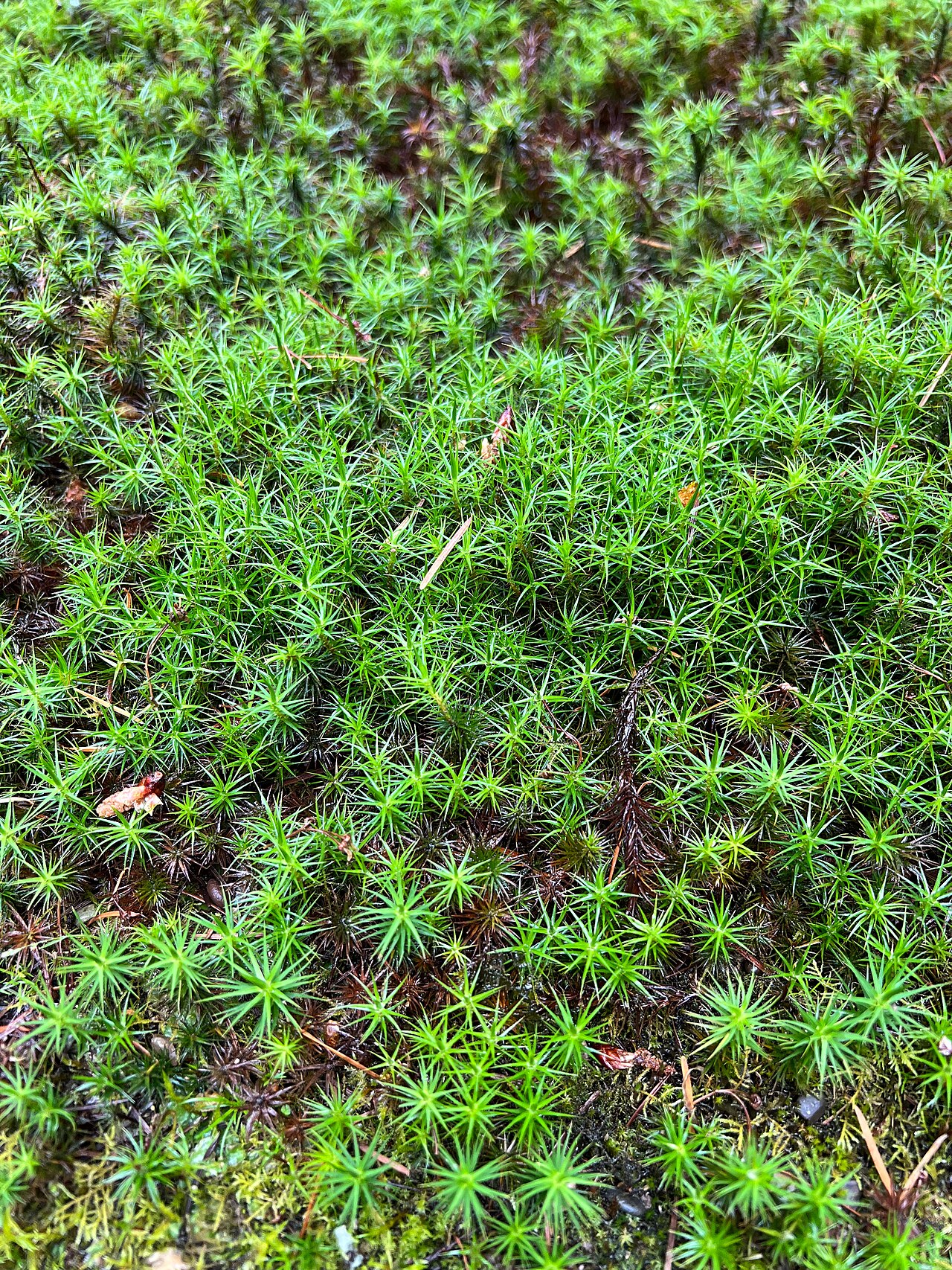
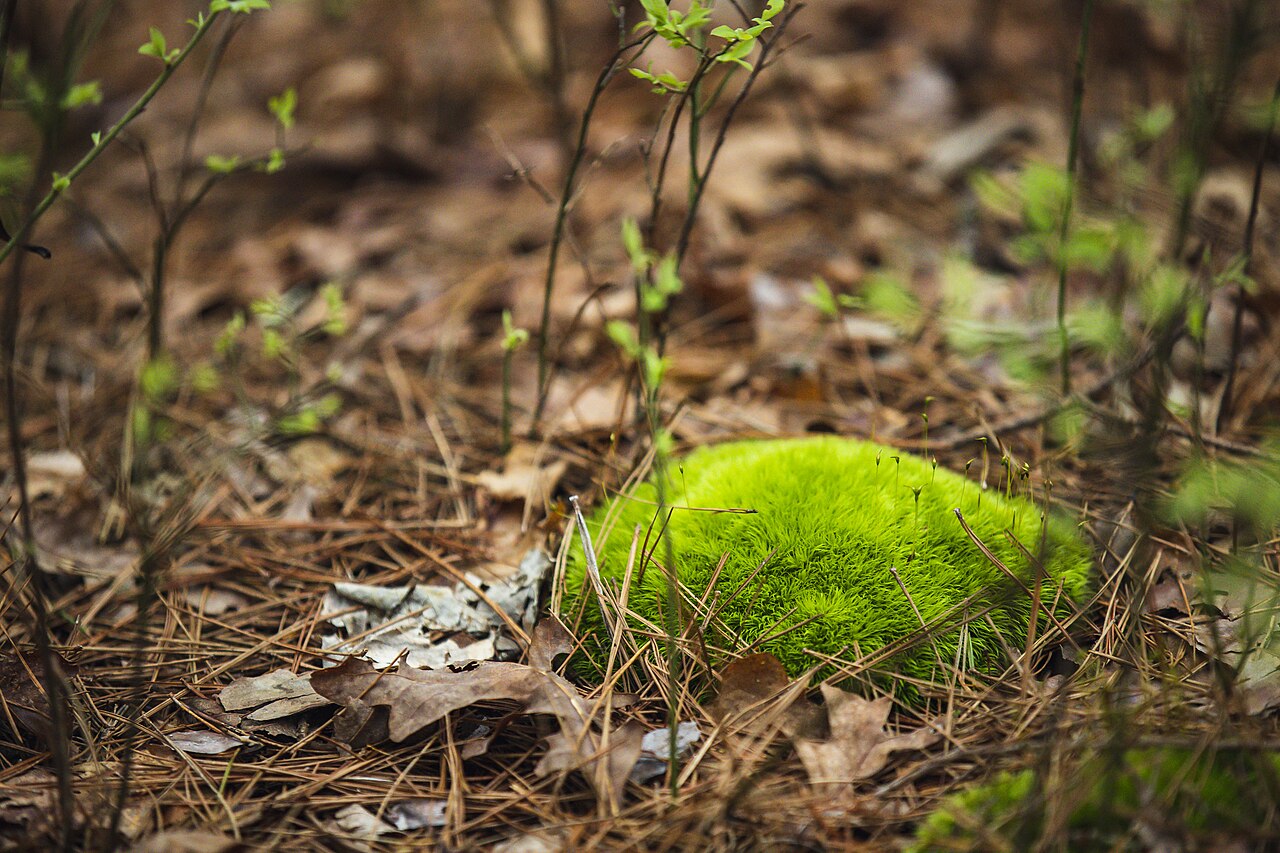
First, a correction to an earlier guide: remember the trees guide, where Spanish moss turned out to be a flowering plant and not moss at all? This is what actual moss looks like: soft, green, velvety cushions growing on shady tree trunks, rocks, and damp soil. Real moss has no true roots — it holds on with tiny threads called rhizoids — and no flowers, no seeds. It reproduces with spores, tiny dust-like cells that float away and start new moss. Moss loves shade and damp, which is why it grows on the north sides of trees and in the corners sprinklers miss. It is a plant, just a very old-fashioned one: mosses were among the first plants to live on land, long before flowers existed.
🍄 Lichen — Two Lives, One Body
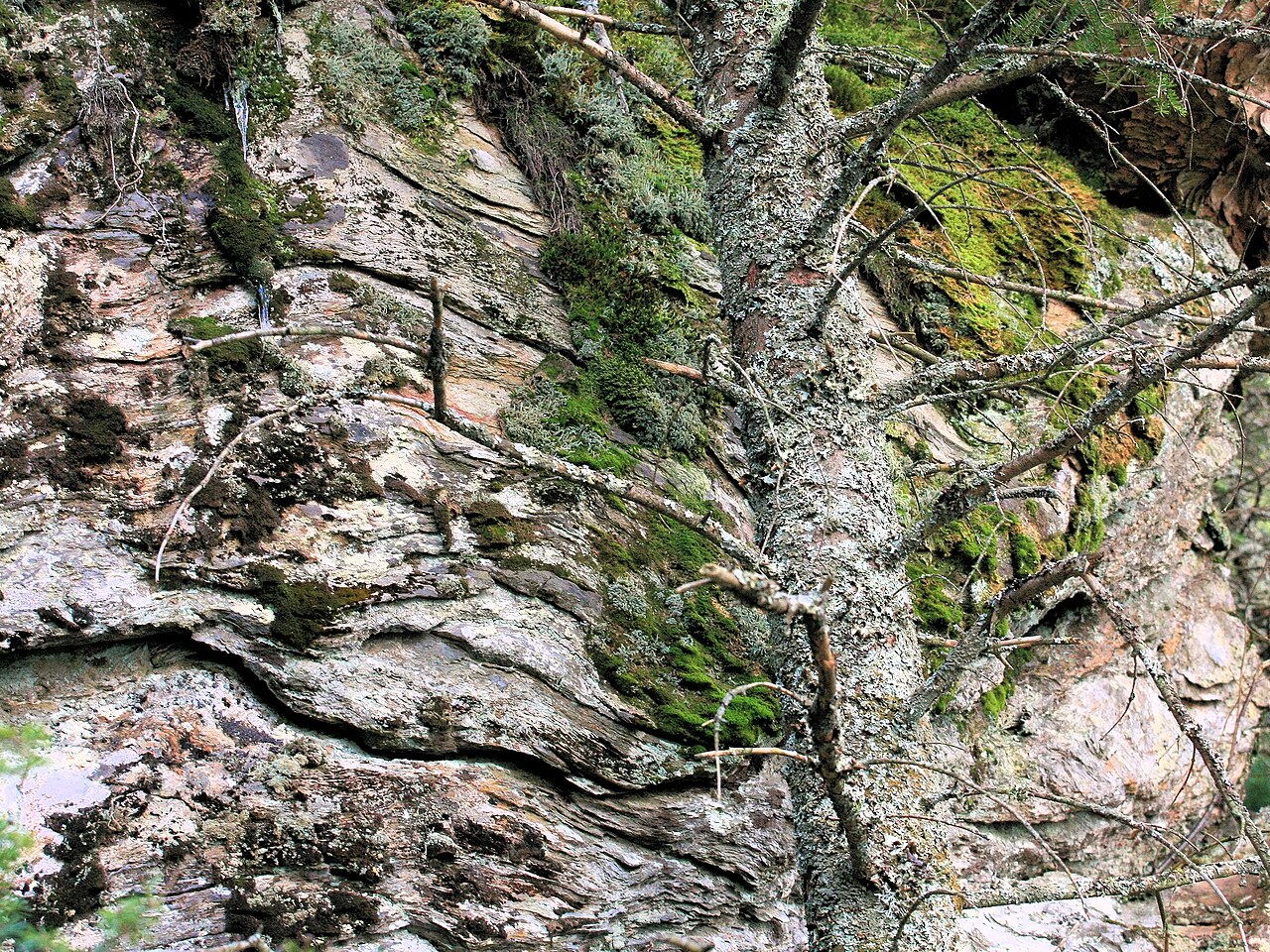
Lichen looks like one thing — a crust, a leaf, a little shrub on a rock or a branch — but it is actually two lives living as one body: a fungus (you met fungi in the mushrooms guide) plus an alga (or a cyanobacterium) living inside it. The fungus gives structure and protection; the alga photosynthesizes and makes food. Neither could live where lichen lives — bare rock, old fences, dry bark — but together they can. Lichen is not a single organism. It is a partnership so close it looks like one creature. Scientists argue about exactly what to call it, which tells you how weird it is: even the experts have to think twice.
🎭 Spanish Moss — The Impostor (Again)
Back by popular demand: Spanish moss, the trees guide's impostor. It hangs off live oaks looking like gray-green hair, but it is a flowering plant, a cousin of pineapples, that drinks rain and air and never touches the soil. It is not moss, it is not a lichen, and it does not hurt the tree. It is here in this guide as a reminder: in nature, names lie. Always look closer than the name.
🔍 Clean-Air Detective — What Lichen Tells Us
Lichen is picky about air. Many lichens only grow where the air is clean, and they vanish where pollution rises — which makes them living air-quality monitors. Scientists map lichen to map air: lots of lichen species means clean air; few means trouble. So the crust on your fence is not just a crust. It is a report card for the sky above it. Find lichen, and you have found clean air. That is worth knowing.
🌿 Tap a Tiny World
Real moss, partnership, impostor, or detective? Tap one.
Tap a tiny world above!
Its story and one wild fact will show up here.
🔍 How to Find Tiny Worlds
Look in the shade: north sides of trees, damp rocks, old fences, the shady side of the house. Bring a magnifier if you have one — moss under magnification is a forest of tiny leaves, and lichen up close is a landscape of cups, leaves, and crusts. Count the colors: green moss, orange lichen, gray lichen, yellow lichen — a single old fence can host a whole gallery. You are not looking for something rare. You are looking at something common, closely, for the first time. That is half of science right there.
So slow down, crouch low, and look at the trunk, the rock, the fence. The tiniest worlds in the yard are also among the oldest and strangest: a plant without roots, a partnership pretending to be one creature, an impostor that is really a pineapple cousin, and a crust that grades the air. Small worlds. Big stories. Now you know their names.