🐍 Good Snakes, Bad Snakes for Kids
No legs. No eyelids. A tongue that smells. And some of the best pest control in Florida.
Snakes are some of the most misunderstood neighbors in the whole garden. Some are harmless helpers that eat rats and roaches. A few have a powerful defense system you must give a LOT of space. All of them would rather be left alone than meet you up close.
This guide will help you learn them at home, on the page — who they are, where they live, and what science is packed into that long, legless body. Learning their names is scientist work. Meeting them in person is not.
❓ What “Good” and “Bad” Really Mean Here
Let's get the title honest right away. No snake in this guide is evil. No snake is a villain twirling a tiny mustache and plotting against your garden.
“Good” means harmless helpers — snakes that can't seriously hurt you and that do useful work eating rodents and bugs.
“Bad” means bad to get close to — venomous snakes with a serious defense system. They are still neighbors. They eat rodents too. Even rattlesnakes help control the rodents that carry ticks. They just come with one clear instruction: give them space and admire them from very, very far away — or better, just learn about them here.
💚 The Good Crew: Harmless Helpers
These seven do quiet, useful work all over Florida. Read about them, enjoy spotting them from a distance with a grown-up — and remember Rule #1 with every single one: look, don't touch.
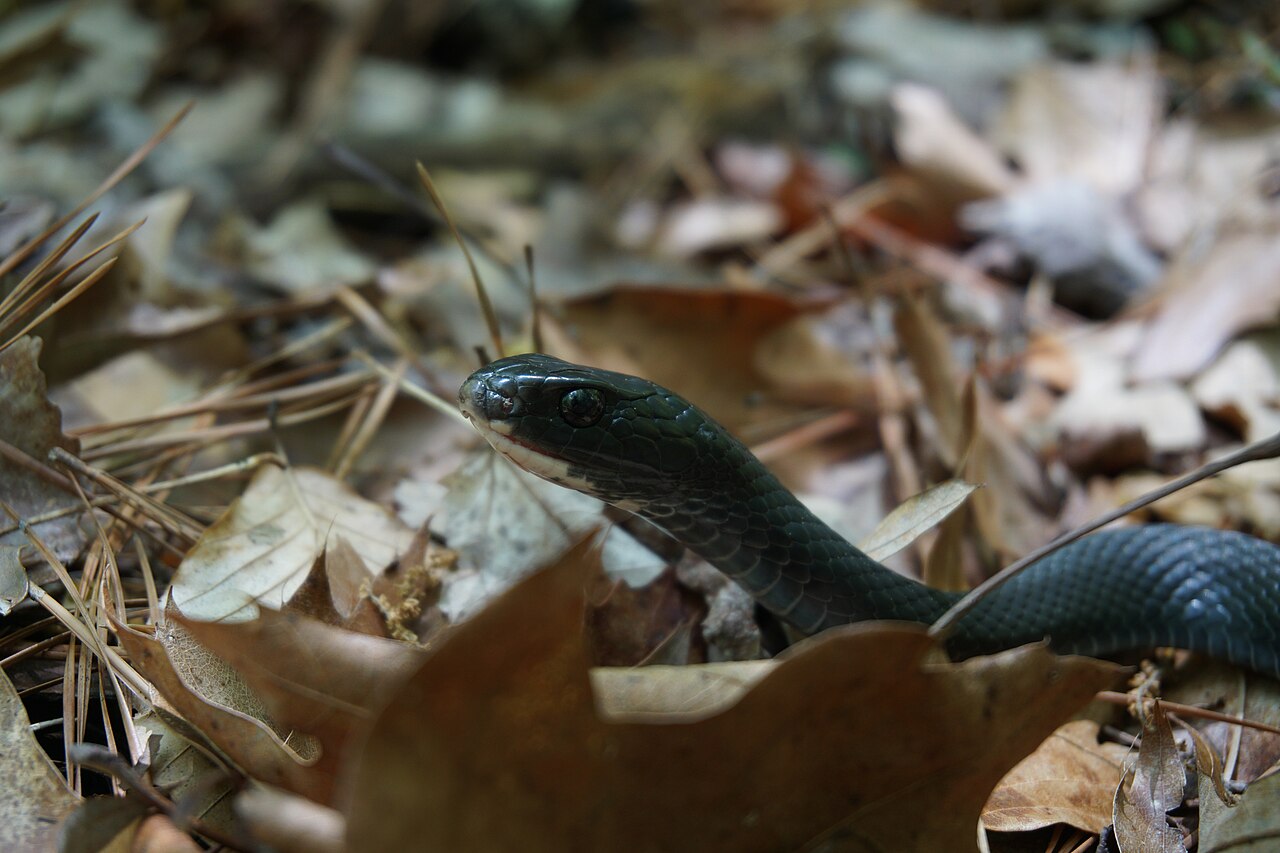
🏎️ Southern Black Racer — Coluber constrictor priapus
The speedster. Long, skinny, matte black, and almost always in a hurry during the daytime. Racers are curious — one might lift its head like a tiny periscope — but it is harmless and will rocket away given a chance. Racers hunt frogs, lizards, and rodents mostly by sight, which is unusual: most snakes hunt mainly by smell.
🧗 Eastern Rat Snake — Pantherophis alleghaniensis
The champion climber. Rat snakes can scale a tree, a barn wall, even rough brick, belly scales gripping like tire treads. Around barns they are rodent-control royalty. Honest note: one near a chicken coop may also take an egg now and then. It isn't being “bad” — it's doing rodent control around a food-rich building, and eggs are on the menu too.
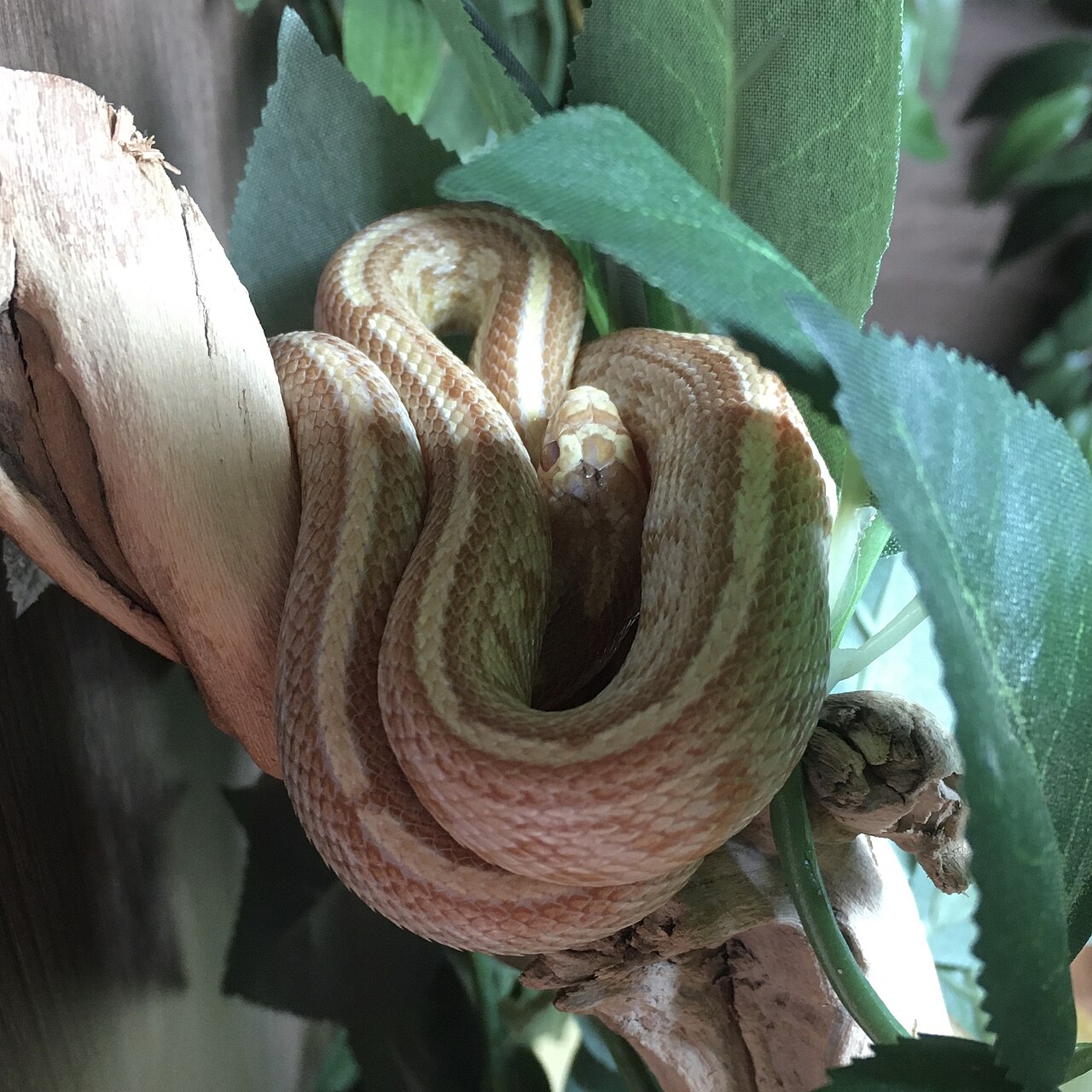
🌽 Corn Snake (Red Rat Snake) — Pantherophis guttatus
The gentle orange one. Corn snakes are a kind of rat snake wearing orange and reddish blotches, with a black-and-white checkerboard belly that looks like piano keys — or tiny corn kernels, which is one story behind the name. They are calm, excellent climbers, and the snake many pet keepers love most. In the wild: same rule as always. Admire the paint job from far away.
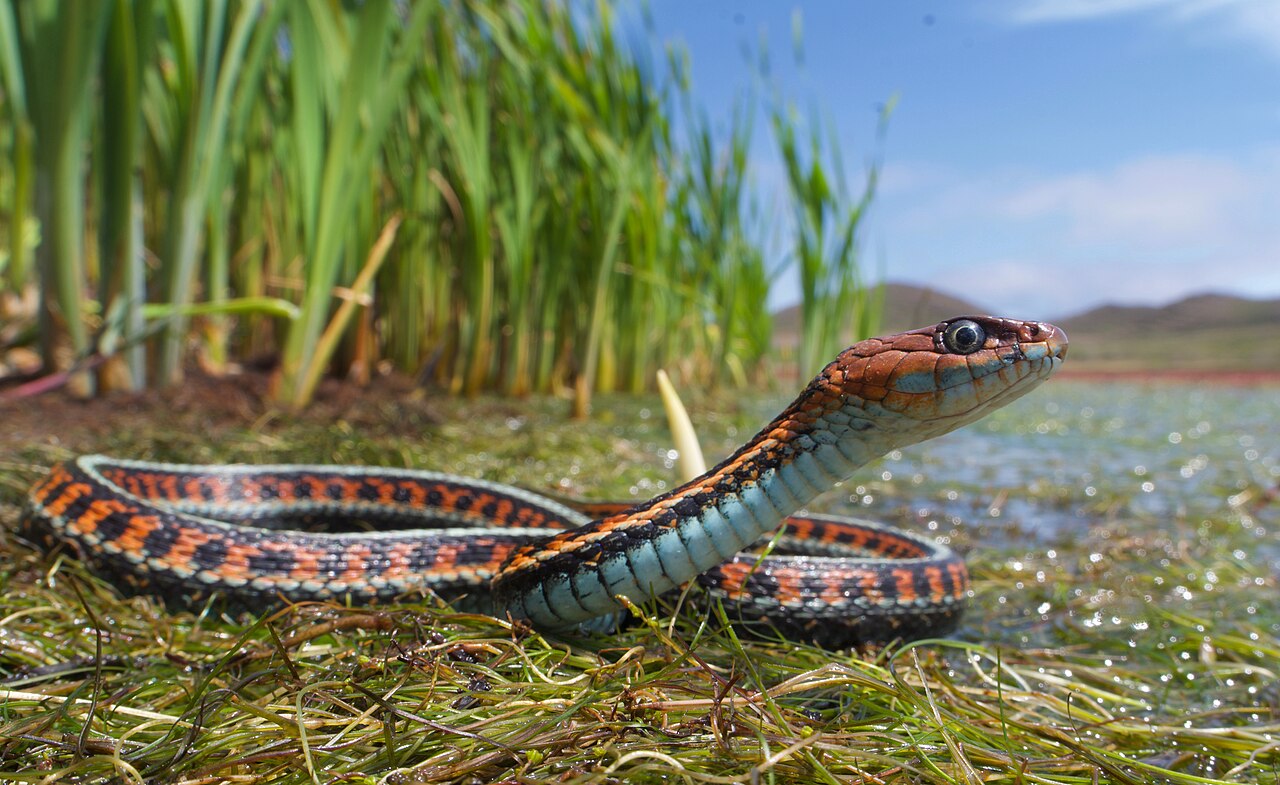
💧 Eastern Garter Snake — Thamnophis sirtalis
The striped swimmer-around-the-edges. Garter snakes wear long yellowish stripes from head to tail and hang out near water, where they hunt frogs, tadpoles, minnows, and worms. If a garden hose had ambition and stripes, it would look a little like this. Small, quick, and harmless.
🌊 Florida Watersnake — Nerodia fasciata
The great mistaken identity. This harmless watersnake lives around ponds and ditches eating fish and frogs — and constantly gets blamed for being a cottonmouth, a venomous snake it is NOT. Here's the big lesson hidden in this one snake: lots of harmless snakes get blamed for a lookalike. That is exactly why kids never sort snakes in person. Even grown-up scientists get fooled by a wet, muddy watersnake at dusk.
💍 Ring-Necked Snake — Diadophis punctatus
The tiny secret. Ring-necked snakes are smaller than a ruler is long, slate-gray on top, with a neat little necklace ring — and a secret surprise: a bright orange-yellow belly, sometimes with spots, that it flashes when startled. They live hidden under leaf litter and logs eating tiny frogs, worms, and slugs, and they are almost never seen. If you ever spot one from a distance, you found one of Florida's best-kept secrets.
🌿 Rough Green Snake — Opheodrys aestivus
The living vine. Thin, bright green, and built to disappear in bushes, this gentle snake sways a little like a branch in the breeze — camouflage with method acting. It hunts crickets, grasshoppers, caterpillars, and spiders up in the shrubs instead of on the ground. A bug-eating garden vine that happens to be an animal.
⚠️ The Give-It-Space Crew: Florida's Six Venomous Snakes
Florida has exactly six venomous snake species. Six. Not sixty. Learning all six — here, on the page — is real Florida science. Every one of them eats rodents, every one would rather you left, and every one gets the same response in person: stop, step back, get a grown-up. No exceptions, no close looks, no “let me check the pattern first.”
💎 Eastern Diamondback Rattlesnake — Crotalus adamanteus
The heavyweight champion. Florida's biggest venomous snake — thick, strong, with bold dark diamonds outlined in pale scales and a proper rattle. Diamondbacks live in pine woods, palmettos, and dry fields, hunting rabbits and rodents. Big, beautiful, and absolutely a look-at-in-this-guide animal.
🌲 Timber Rattlesnake — Crotalus horridus
The northern specialist. In Florida, timber rattlesnakes live only in the north — around the Apalachicola River and its bluffs and ravines. If someone in South Florida says they saw one, it almost certainly wasn't. Timber rattlers wear dark chevron bands like sideways Vs, keep to rocky, wooded slopes, and are famously shy patient hunters who can wait coiled beside a log for days.
🐜 Dusky Pygmy Rattlesnake — Sistrurus miliarius barbouri
The tiny one with the big lesson. Dusky pygmies are Florida's most commonly encountered venomous snake — barely longer than a school ruler, gray with dark blotches and a reddish stripe down the back. Their rattle buzzes faintly, like an insect, and you may not hear it. Small does NOT mean safe: size tells you nothing — space tells you everything.
💦 Cottonmouth (Florida Cottonmouth) — Agkistrodon conanti
The waterside stand-your-grounder. Cottonmouths live near swamps, ponds, and slow water, and unlike most snakes they may hold their ground instead of fleeing — sometimes gaping open to show the bright white inside of the mouth that earned the name. That display is a warning sign, not an invitation: “please go the other way.” Smart explorers happily obey, from a long way off.
🍂 Southern Copperhead — Agkistrodon contortrix
The Panhandle-only guest. Copperheads wear beautiful hourglass bands — wide on the sides, narrow on top — in shades of copper and tan that vanish into dead leaves. But here's the honest range note: in Florida, copperheads live only in the far western Panhandle, around the Apalachicola River area. Most of Florida will never see one. Great camouflage, tiny Florida address.
🔴 Eastern Coral Snake — Micrurus fulvius
The shy burrower in fancy bands. Coral snakes are slender, secretive, and spend most of their lives underground or under leaf litter, hunting other small snakes and lizards. They wear shiny rings of red, yellow, and black, they almost never bite, and the rare bites that do happen are almost always when someone picks one up or steps on it barefoot. Which brings us right back to Rule #1: never touch, and wear closed shoes in brushy places.
🧪 Snake Super-Senses & Strange Bodies
👅 Sniffing With a Tongue
That flicking forked tongue isn't tasting — it's smelling. Each flick picks up scent particles, the two fork tips sampling slightly different spots, like stereo for smells. The tongue delivers them to a smell-supercharger in the roof of the mouth called the Jacobson's organ. Left fork stronger than the right? Dinner went left. A snake can track a mouse through grass it can't even see.
👁️ Sleeping With Their Eyes Open — Literally
Snakes have no eyelids. They cannot blink. Ever. Each eye is protected by a clear scale called an eye cap, or brille — a built-in safety goggle. So yes, snakes sleep with their eyes open — and when the eyes turn cloudy blue, a shed is coming, because the eye caps come off with the old skin.
🧥 The Great Skin Swap
A snake's skin doesn't stretch the way yours does, so a growing snake crawls right out of its old skin — often in one inside-out tube, eye caps and all, like peeling off a very long sock. This is shedding. Finding an empty shed is a fantastic discovery: scale patterns up close, from a snake that isn't even there anymore. The perfect distance.
| Toolkit | Who uses it | How it works |
|---|---|---|
| Constriction | Rat snakes, corn snakes | Strong coils squeeze tighter with each breath out until prey stops breathing — no venom needed |
| Grab and swallow | Racers, garter snakes, green snakes, watersnakes | Prey is small (frogs, fish, bugs), so they simply seize it and swallow it whole |
| Venom | The six give-it-space species | A bite delivers venom that stops prey quickly — a hunting tool first, a defense second. Our job: admire from far away |
⬍ swipe the table on small screens ⬍
🔍 The Snake Spotter Explorer
Every habitat in a Florida yard is somebody's home. Tap a habitat to explore who might live there and what they're up to. Explore in any order, as long as you like — and notice that every stop ends with exactly the same move, because that's the move that always works.
👀 How to Watch a Snake Like a Scientist
- Freeze first. If you spot a snake, stop moving. Stillness is your superpower — most snakes will simply carry on, or slip away, while you watch from where you stand.
- Keep your distance and keep it. Far away means far away: across the path, not one step closer for a better look. Zoom with grown-up binoculars or a camera, never with your feet.
- Let it leave on its own schedule. Never block a snake's path, poke toward it, or try to move it. It lives there. You're the guest.
- Remember the details later. Scientists observe, then record: Where was it? What was it doing? How big, roughly? Drawing it at home afterward is real field science.
- Never reach where you can't see. Not into brush, not into woodpiles, not under anything. Curiosity is wonderful; surprises are not.
That's the whole field guide: seven harmless helpers doing free pest control, exactly six venomous neighbors who deserve respect and room, a tongue that smells in stereo, eyes that never close, and skin you can grow right out of. Florida's snakes were hunting rodents here long before there were gardens. Our job is just to know them, respect them — and leave them to their work. 🐍