🐢 Turtles for Kids
Frogs, lizards, and snakes all have their guides. But the trail was missing one whole group: turtles. Turtles are reptiles like lizards and snakes, but they carry something no other reptile carries — a shell that is part of their body, not a jacket they can take off. A turtle's shell is its ribs and spine, grown into armor. A turtle cannot leave its shell any more than you can leave your skeleton.
🐢 Meet the Turtles
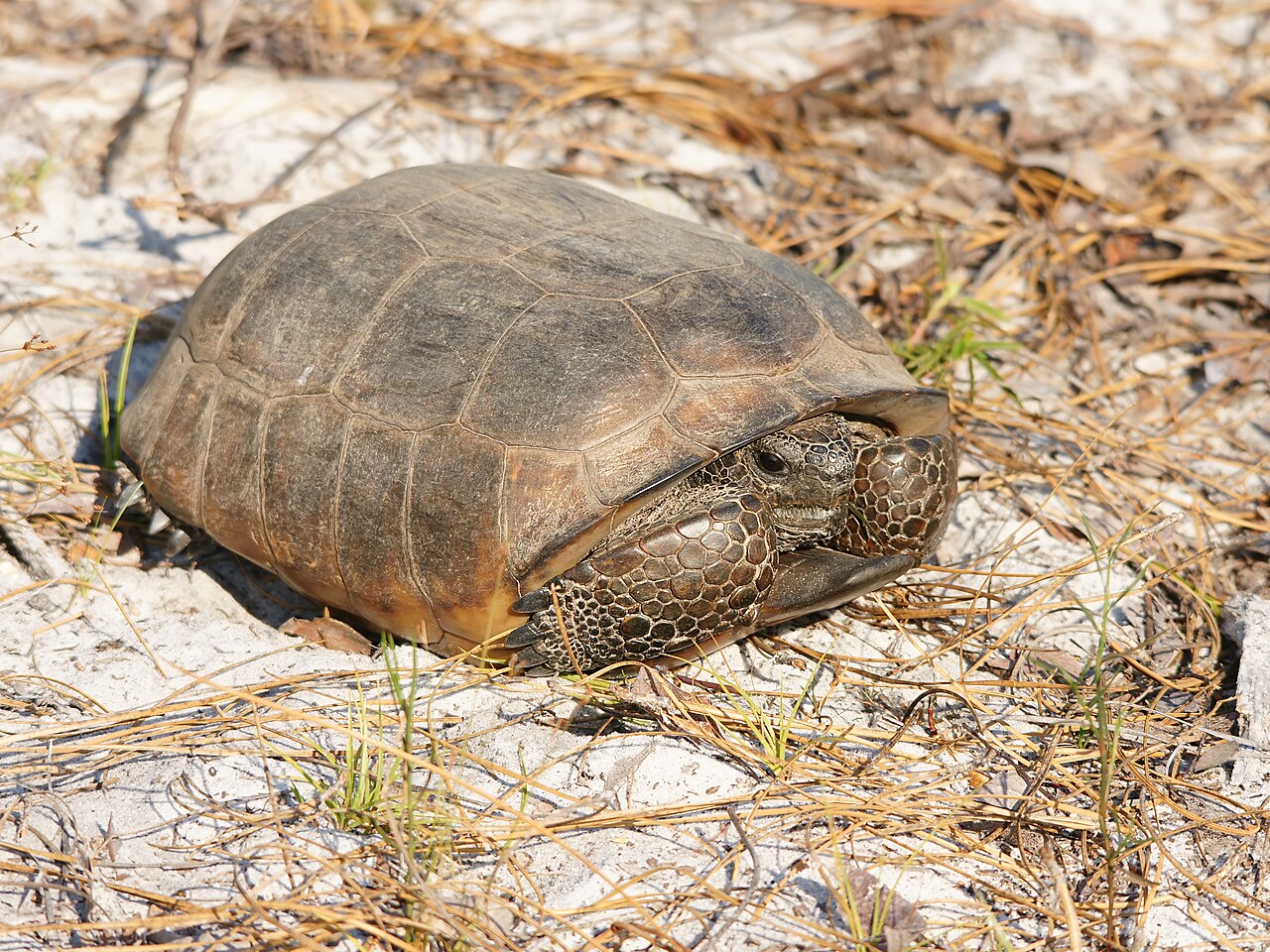
🐢 Gopher Tortoise (Gopherus polyphemus) — The Landlord
Gopher tortoises live on land in Florida's sandy scrub and dig burrows — long tunnels, sometimes longer than a school bus — that hundreds of other animals use: owls, snakes, frogs, mice, and insects all shelter in gopher tortoise burrows. That makes the tortoise a keystone species: take it away and the whole neighborhood loses its apartment building. Gopher tortoises are protected in Florida, which means their burrows are protected too. If you see a sandy mound with a half-moon hole in front of it, you are looking at a tortoise's front door. Do not block it, dig in it, or poke anything into it. The landlord is home.
🌊 Sea Turtle — The Ocean Traveller
Florida's beaches are sea turtle nesting beaches. Female sea turtles crawl ashore at night, dig nests in the sand, lay eggs, and return to the ocean — and months later, tiny hatchlings dig out and race for the water. Artificial lights confuse hatchlings (they follow the moon's reflection on the ocean, and porch lights look brighter), which is why beach towns dim their lights during nesting season. If you ever see a sea turtle nest (marked with stakes and tape) or hatchlings, the rule is: watch quietly from far away, never touch, never help them to the water yourself — they need to make the crawl on their own, and grown-ups in charge of the beach will handle any real trouble.
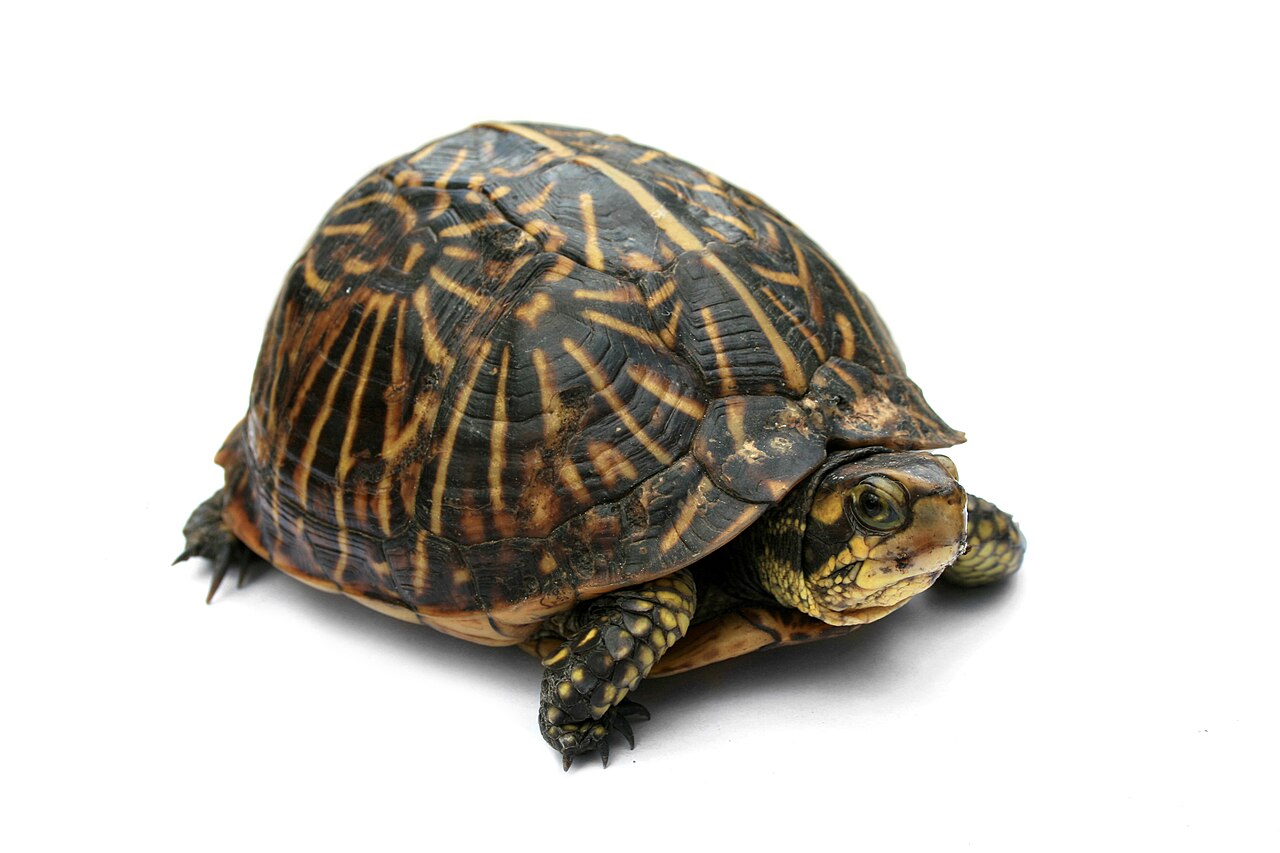
📦 Florida Box Turtle (Terrapene carolina bauri) — The One That Closes Up
Box turtles live on land, in woods and yards, and they have a special trick: a hinged shell that closes up tight, front and back, like a box with a lid. When scared, a box turtle pulls everything in and shuts the box. They eat mushrooms, berries, insects, and slugs (the slowpokes from the snails guide — everybody eats slugs, apparently), and they can live for decades, wandering the same patch of woods their whole lives. A box turtle in your yard is a neighbor you will probably see again next year, and the year after that.
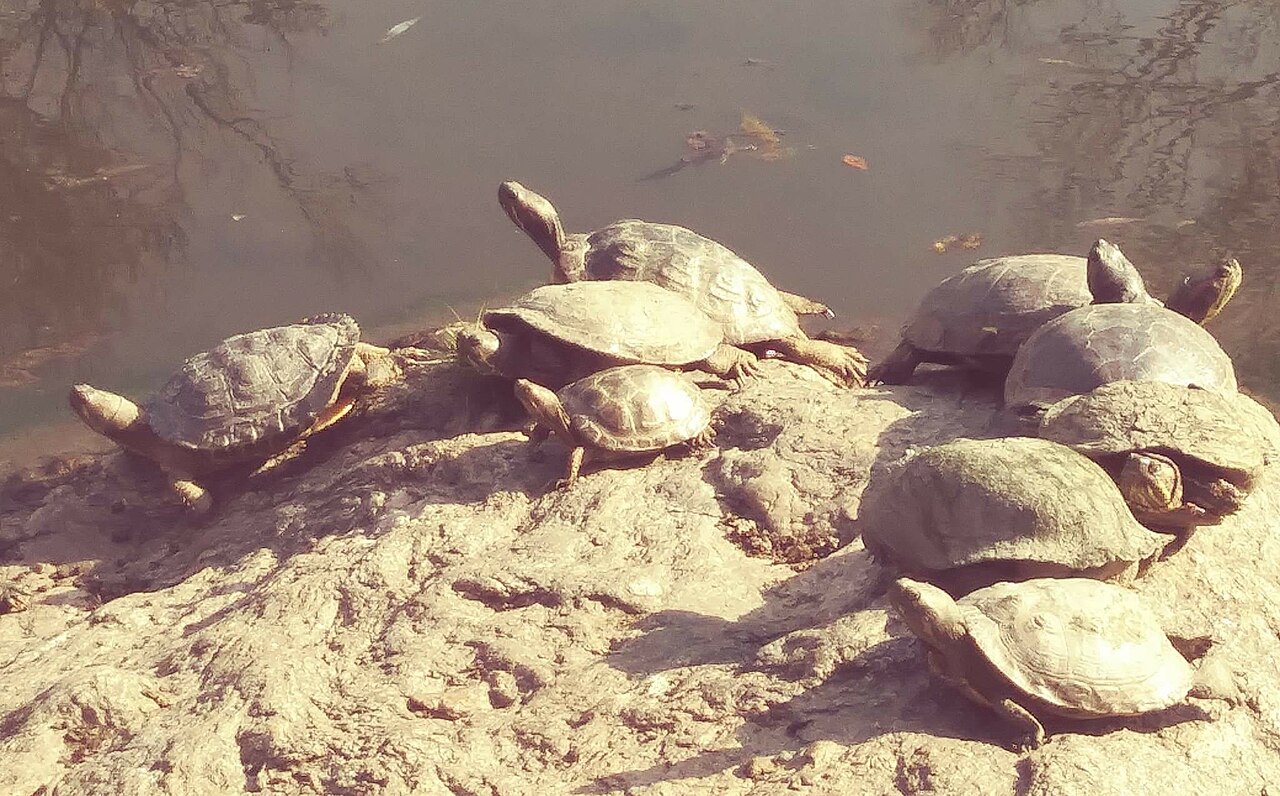
🔴 Red-Eared Slider (Trachemys scripta elegans) — The Pet That Became a Problem
Red-eared sliders are the turtles in pet stores: small, green, with a red patch behind each eye. The problem is what happens when people get tired of them and release them into ponds. Sliders are not native to most of Florida's waters, and released pets outcompete native turtles for food and basking spots. A released pet becomes an invader. The lesson is for grown-ups and kids alike: never release a pet into the wild, no matter the animal. Pets stay pets. Wild stays wild.
🐢 Tap a Turtle
Landlord, traveller, box, or pet-turned-problem? Tap one.
Tap a turtle above!
Its story and one wild fact will show up here.
🌿 How to Be a Turtle's Friend
Slow down on roads near scrub and ponds — tortoises cross roads slowly, and a patient driver is a tortoise's best friend. (If a grown-up ever moves a turtle off a road, they move it in the direction it was already going, never to a "nicer" pond — turtles know where they live.) Leave burrows alone. Leave nests alone. Keep beaches dark during nesting season. And if you keep a pet turtle, keep it for its whole life — turtles live for decades, and that commitment is part of the pet.
So the trail finally has its turtles: the landlord, the traveller, the box, and the cautionary tale. Slow animals, ancient design, and a shell that is also a skeleton. Turtles showed up around the same time as the first dinosaurs — and outlived them. Turtles don't hurry. Neither should you, when you meet one.