
What it looks like
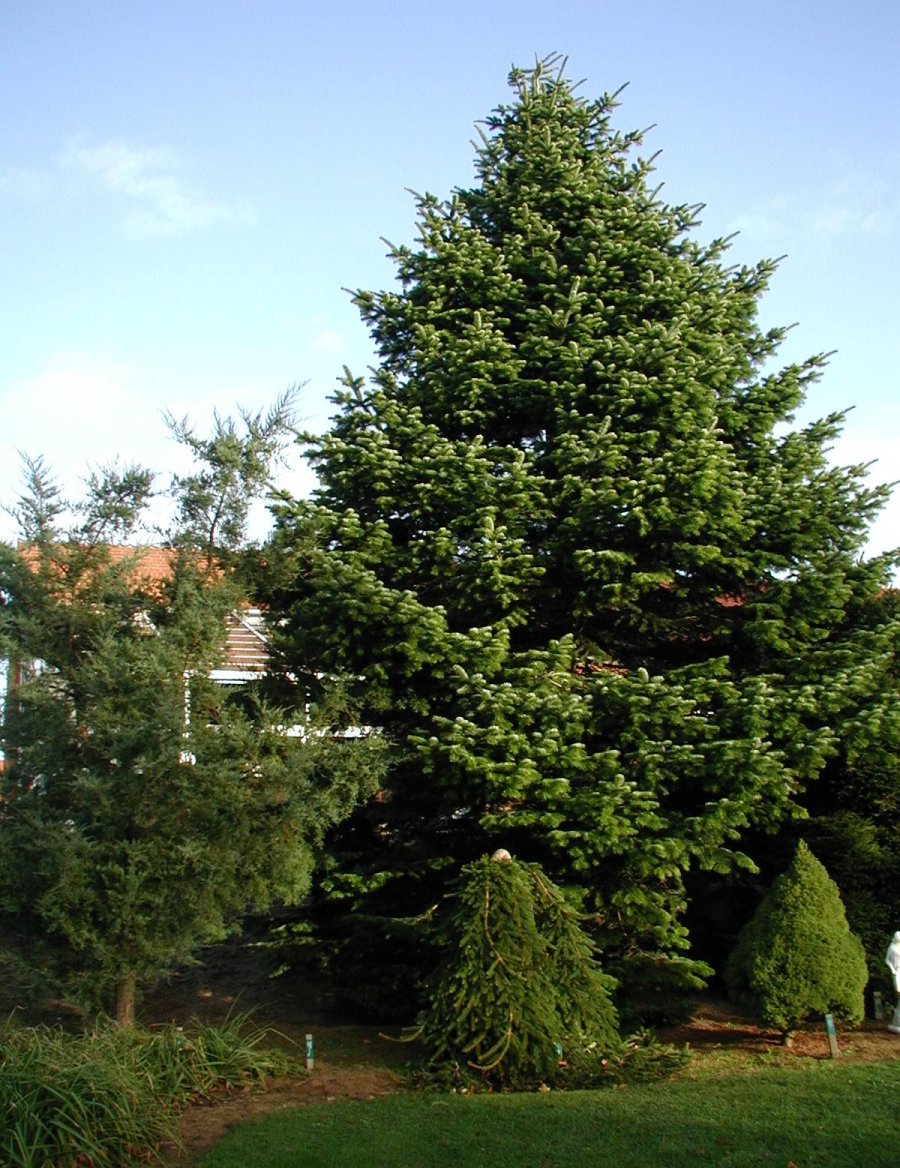
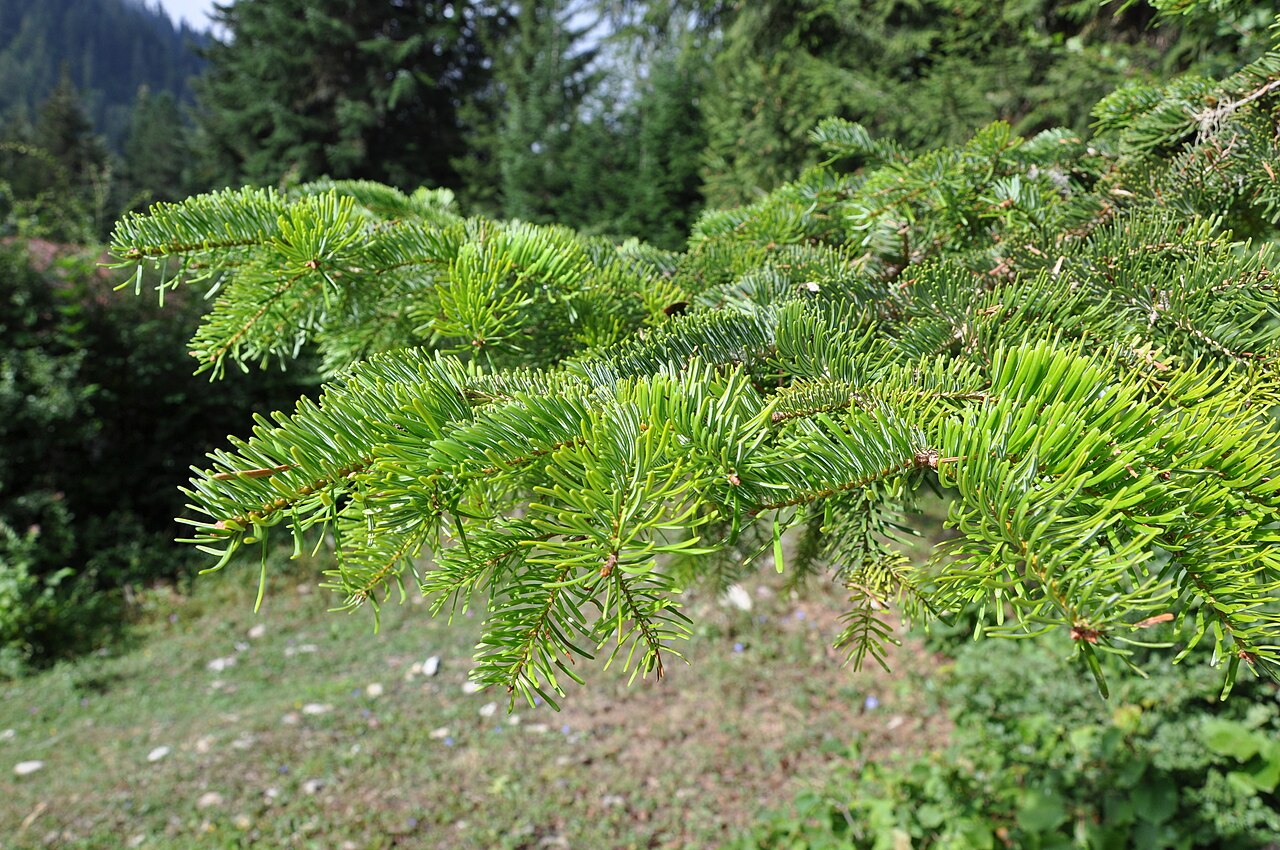
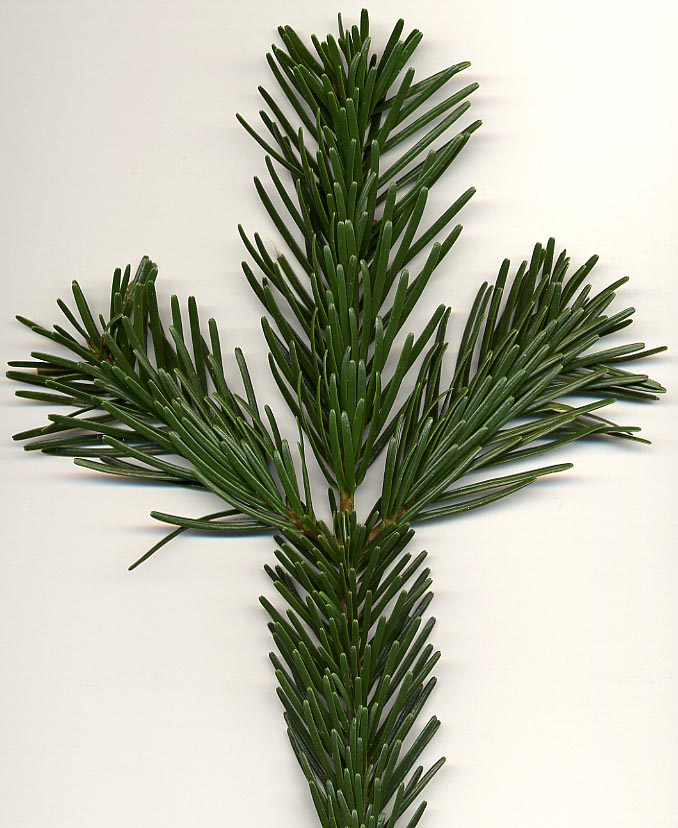
🎄 Nordmann Fir
Abies nordmanniana
Nordmann fir is the Christmas tree that Europe picks when it wants the best one. It is the classic, symmetrical, glossy, dark green fir with soft needles that do not stab you, branches that sweep to the ground, and a famous refusal to drop its needles all over the living room floor. It is also a big, slow-growing, cool-climate mountain tree from the Caucasus, and this guide will tell you both halves of that story, because only one of them fits in a warm garden.
Quick facts
- Sun: Full sun to part shade
- Soil: Rich, consistently moist, acidic, well-drained soil
- Size: Roughly 35–50 feet tall and 15–25 feet wide in gardens; much taller in the wild
- Life cycle: Evergreen conifer, slow-growing
- Zones: USDA zones 4–6
- Native range: Mountains of the Caucasus, Turkey, and Georgia, at elevations around 3,000–7,200 feet
What it is
Nordmann fir (Abies nordmanniana), also called Caucasian fir, is an evergreen conifer in the pine family, native to the mountains south and east of the Black Sea. It is named for Alexander von Nordmann, the Finnish naturalist who found it growing in the Caucasus in the 1830s. The tree is a dense, broad pyramid with tiered, horizontal branches that typically reach the ground, giving it a full, stately silhouette. The needles are its selling point: flattened, glossy dark green above with two white bands beneath, soft and not prickly, with a resinous fragrance — some descriptions note a citrus-like note — when crushed.
The cones are large and upright, 4–8 inches long, green to purplish-brown at maturity, and like all true firs they disintegrate on the tree. In its native mountains it can reach 200 feet; in gardens it settles for a more manageable 35–50 feet, which is still a very large tree. It is one of the most heat-tolerant firs, which is a relative claim — it tolerates more heat than a balsam fir, and still wants cool, moist conditions to be happy.
The honest climate note
Zones 4–6, cool and humid, with plenty of rainfall — that is the Nordmann fir’s contract, and warm, humid, lowland climates break it. It is not recommended for planting in hot, humid summer conditions, it is not drought tolerant, and it does poorly in polluted air. This is a reference guide and a Christmas-tree explainer, not a planting recommendation for warm climates. If you buy a Nordmann fir for the holidays, you are buying arguably the best cut tree available — symmetrical, fragrant, and famously non-dropping. If you are tempted to plant one in the yard afterward, check your zone first and believe what it says.
How to grow it (where the climate fits)
Site. Full sun is best, part shade tolerated. Give it space — a 50-foot tree with branches to the ground needs a lawn or park setting, not a foundation bed.
Soil. Rich, consistently moist, acidic, well-drained soil. Mulch around the base to conserve moisture, and water through dry spells without fail.
Care. Maintain a single leader from youth, keep the base weed-free and mulched, and prune only to remove damaged wood. It is slow-growing, so patience is part of the care routine.
Trouble spots
Drought, heat, pollution, and wet, heavy soil are the enemies. Pests are relatively minor when the tree is healthy and in the right climate. Its great virtue as a cut tree — needle retention — is also a hint about its character: this is a tree that holds on, in the living room and in the landscape, as long as conditions are right. When they are not, it lets you know by thinning and declining, and the fix is not more fertilizer, it is a cooler climate.
For the whole fir family, see the Fir guide.
Saving seeds
Nordmann fir is the Christmas tree that Europe picks when it wants the best one, and its seed comes with a timing problem that is worth knowing before you start. Fir cones do not drop whole the way pine cones do — they fall apart on the tree, scattering their winged seed to the wind. Collect the cones in late summer or early fall, just before they start to break up, and let them finish drying in a paper bag, where they will shed their seed on their own schedule. Or gather the seed from the ground beneath the tree, quickly, before the wind and the squirrels take it.
The seed needs a short winter before it will sprout. Mix the cleaned seed with damp sand or vermiculite, seal it in a bag, and refrigerate it for three to four weeks — the standard fir treatment, with some sources giving a range of two to four weeks. Sow the stratified seed shallowly in spring, in a moist, well-draining mix, and keep it cool and bright. Germination is usually good and comes within a few weeks, though some seed takes longer.
Seedlings grow slowly — very slowly, by garden standards — and want a season or two in pots before planting out, with shade in the hottest part of the day while young. And here is the patience test that belongs in any fir seed section: a Nordmann fir grown from seed will take a decade or more to become a tree worth looking at, and far longer to become a Christmas tree. Seed is for the long game, not for next December.
Save seed from a healthy, well-formed tree, and keep it cool and dry — fir seed stores reasonably well in the fridge in an airtight jar, but Florida humidity is the enemy of stored seed, so dry it thoroughly first and jar it with a silica gel packet.
Varieties
Every named variety of Nordmann Fir with its own growing guide:
- Golden Spreader Nordmann Fir — The golden Nordmann: a dwarf, prostrate spreader whose golden-yellow needles glow brightest in winter cold.
- Pendula Nordmann Fir — The weeping Nordmann: strictly pendulous branches on a narrow, trainable tree — a living sculpture, not a hedge.
- Arne's Dwarf Nordmann Fir — The compact Nordmann: a dense, dark-green, frosted-looking dwarf with short, blunt needles and two white stripes beneath.