
🌸 Japanese Flowering Cherry
Prunus serrulata
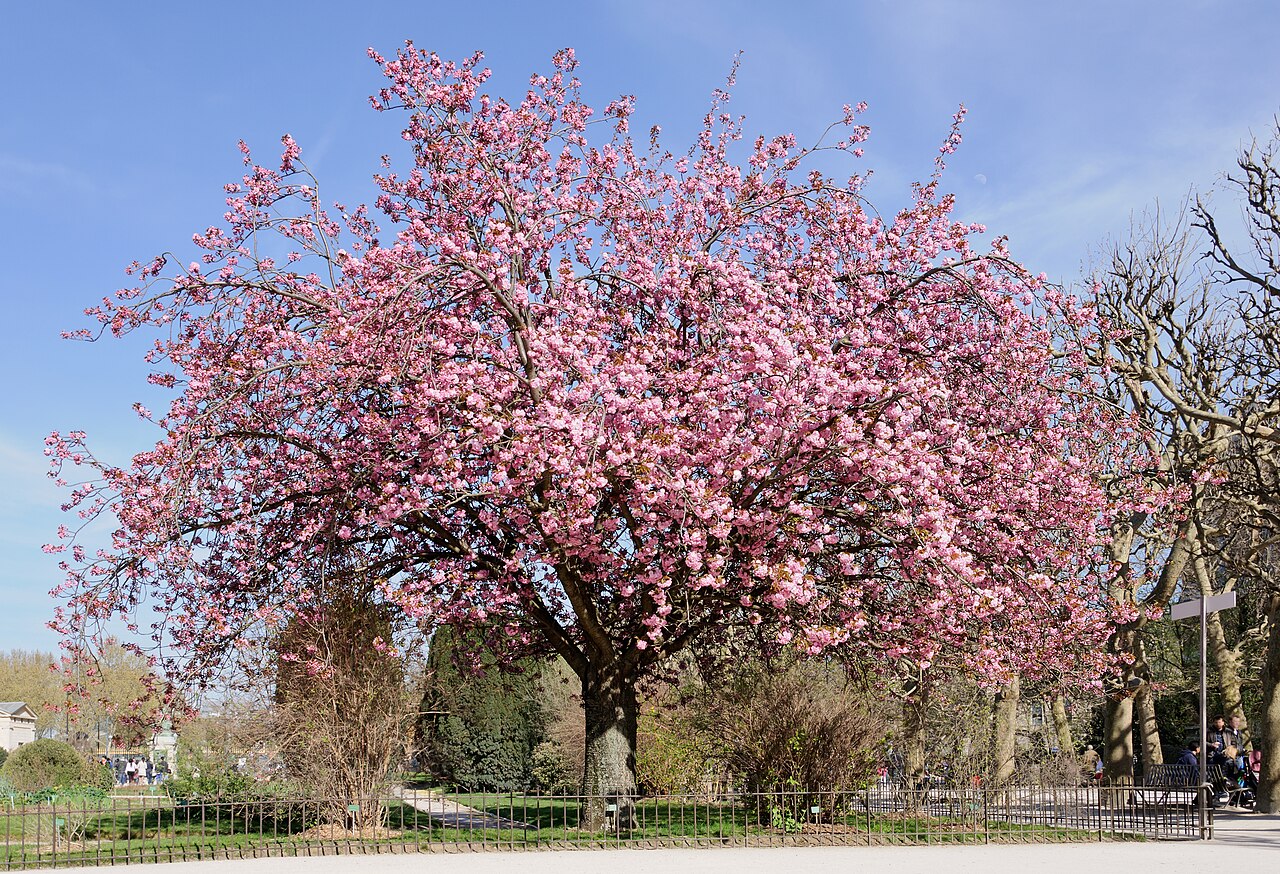
Japanese flowering cherry is the tree that stops traffic. For a week or two each spring it erupts into clouds of pink blossom so dense the branches disappear, and entire cities plan festivals around it. It is not a fruit tree — it is a flower tree that happens to be a cherry — and it is one of the most planted ornamental trees in the temperate world. It is also a tree with opinions about climate, lifespan, and pruning, and this guide will give you all three straight.
Quick facts
- Sun: Full sun
- Soil: Moist, well-drained, fertile soil; dislikes wet feet and drought
- Size: Roughly 20–40 feet tall and wide, depending on cultivar, with a vase-shaped to spreading form
- Life cycle: Deciduous tree
- Bloom: Spring, profuse pink blossoms, often before or with the leaves
- Zones: USDA zones 5–9 (cultivars vary; many are listed 5–8)
What it is
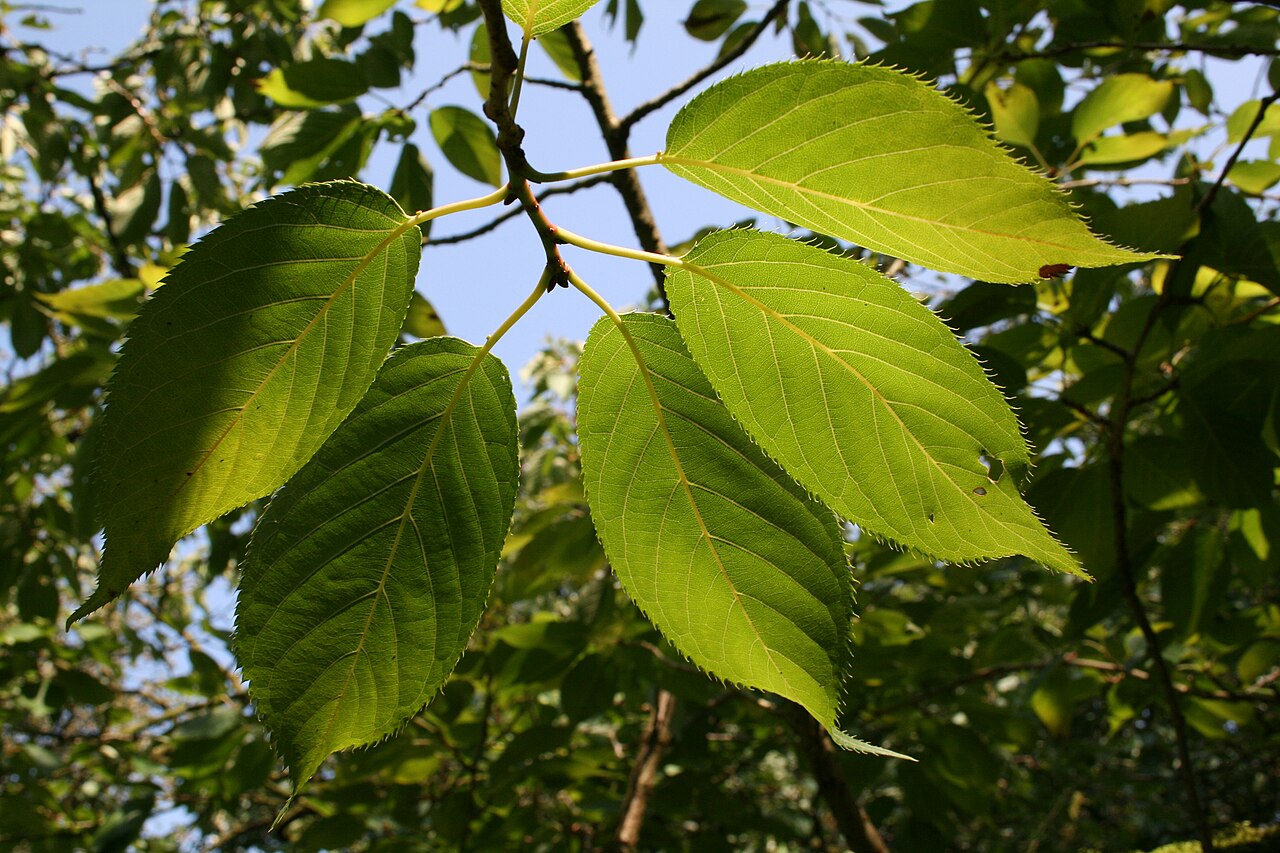
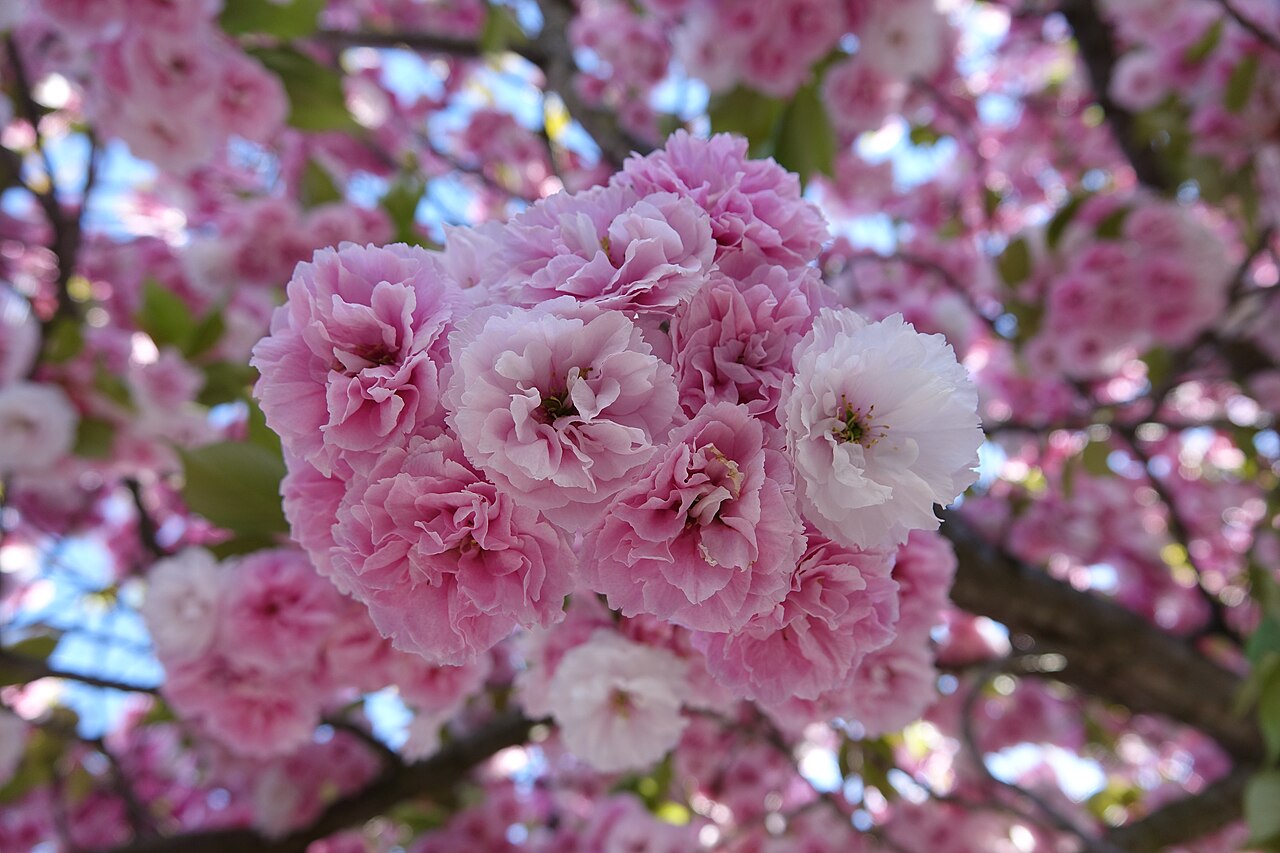
Japanese flowering cherry (Prunus serrulata) is a deciduous ornamental tree in the rose family, Rosaceae, native to Japan, Korea, and China. It is grown for its flowers, not its fruit — most ornamental selections produce little or no fruit, which is a feature if you dislike cherry pits on the patio. The blossoms range from single white to double deep pink, carried in clusters along the branches, and the foliage follows with bronze-tinted young leaves maturing to green and turning yellow, orange, or copper in fall. The bark is smooth with horizontal lenticels, handsome in winter even without leaves.
Here is the naming honesty this guide owes you: ‘Kwanzan’ (also spelled ‘Kanzan’) is not a separate species. It is a cultivar of Prunus serrulata — the most popular double-flowered selection, with deep pink, double blossoms, a vase-shaped form, and a mature size around 25–40 feet. When nurseries sell you a Kwanzan cherry, they are selling you this species in its most famous outfit. Other cultivars vary the flower color, form, and size, but they are all the same species underneath the fancy name.
The Florida translation
Zones 5–9 look promising on paper, and the zone-9 end of that range does reach into the northern part of the state — but flowering cherries are temperate trees that want a real winter chill, moderate summers, and well-drained soil, and they are challenged by summer heat and humidity. In the coolest northern corner, a full-sun spot with good drainage and steady moisture is a reasonable trial, with the understanding that bloom may be less profuse and the tree’s lifespan — already modest at roughly 15–25 years for Kwanzan types — may be shorter under stress. Farther south, this is a tree to admire in cooler climates, not to plant in hope. Heat, humidity, and root-zone wetness are a hard combination for it, and no cultivar changes that basic fact.
How to grow it (where the climate fits)
Site. Full sun, with room for the mature spread — do not plant a 30-foot tree 6 feet from the house and then act surprised. Good air circulation helps reduce disease pressure, and a spot out of strong wind protects the blossom display.
Soil. Moist, fertile, well-drained soil is the target. Flowering cherries dislike both drought and waterlogging, and they are sensitive to compacted soil and root disturbance. Work compost into the planting area to give the soil structure and biology, mulch to conserve moisture, and water through dry spells.
Care. Prune sparingly and only after flowering, removing dead, crossing, or damaged wood. Heavy pruning invites disease and ruins the form. Fertilize lightly if growth is poor; a vigorous tree in good soil needs little. Watch for the usual cherry troubles — bacterial canker, brown rot on blossoms in wet springs, aphids, and borers on stressed trees — and keep the tree vigorous, because a stressed flowering cherry is a sick flowering cherry, and the decline is rarely subtle.
Trouble spots
Short lifespan, disease susceptibility under stress, and surface roots that can lift paving are the honest drawbacks. The blossom show is brief — a week or two of glory, weather permitting — and a late frost can cut it shorter. None of that stops millions of people planting them, because when a flowering cherry is in full bloom, nothing else in the garden matters. Plant it for that week, site it well, and accept the trade.
For the whole flowering cherry clan — including the Yoshino hybrid and the weeping forms — see the Flowering Cherry guide.
What it looks like
Propagation
The honest headline: if you want a specific Japanese flowering cherry — ‘Kanzan’ with its pompom pink flowers, ‘Shirotae’ in white, any named form at all — buy a grafted tree. Grafting is how the nursery trade produces them, and it is the only way to be sure of the flower color, form, and bloom time. Seed will give you a cherry tree, but it will not give you the tree on the label.
Most of the famous double-flowered cultivars are sterile, their stamens transformed into extra petals, so they set no viable seed at all. Seed can only be raised from single-flowered stock or wild-collected material. Clean the pulp from ripe fruit and give the seed a long cold chill — about 3 months in damp sand or peat in the fridge. Sources quote anything from 30 days to a full winter; the longer chill is the reliable one, because these seeds ripen their embryos late. Sow 1–2 cm deep in gritty loam, keep the trays outdoors in shade for the first summer, and guard them from mice, which dig cherry seed out as happily as bulbs. Germination takes 4–8 weeks after chilling.
Seed-grown trees vary in flower color, form, and bloom time, and take 4–7 years to flower — seed is the way to raise rootstocks or explore wild variability, not the way to copy a cultivar. For the home gardener who wants a particular tree, softwood cuttings taken in late spring are the best method: they root in 6–10 weeks under high humidity with rooting hormone. Hardwood cuttings taken in winter root much more slowly, over 4–6 months, and with lower success.
One Florida reality check before you start: cherries want winter chill that most of Florida simply does not get, so Japanese flowering cherry is a gamble here — a north Florida experiment at best, and in central and south Florida it will struggle to bloom at all. If you are growing it, a grafted tree in the coolest, sunniest spot you have is your best shot; seed is for the patient and the curious, not for anyone in a hurry for blossoms.
Varieties
Every named variety of Japanese Flowering Cherry with its own growing guide:
- Kwanzan Japanese Flowering Cherry — The famous double pink: huge clusters of deep-pink double flowers, bronze new leaves, and gold autumn colour — also spelled Kanzan.
- Shirofugen Japanese Flowering Cherry — The colour-changing cherry: pink buds open white, then age back to deep pink, with crimson-bronze young leaves.
- Royal Burgundy Japanese Flowering Cherry — The purple-leaved Kwanzan: double deep-pink flowers over reddish-purple foliage that colours the tree all season.