
🌸 Yoshino Cherry
Prunus × yedoensis
Yoshino cherry is the cloud tree. When it blooms, it does not flower so much as it snows upward — masses of pale pink to white, lightly fragrant blossoms that open before the leaves and turn the whole canopy into something that looks Photoshopped. It is the cherry of the great blossom festivals, the tree lining avenues and riverbanks across the temperate world, and it is a hybrid with a genuinely interesting origin story that involves a single clone, a lot of grafting, and a century of mistaken identity.
Quick facts
- Sun: Full sun (flowering drops off in shade)
- Soil: Moist, well-drained, fertile soil; sensitive to drought and to wet feet
- Size: Roughly 20–40 feet tall and wide, with a spreading, rounded crown
- Life cycle: Deciduous tree
- Bloom: Early to mid-spring, pale pink buds opening to white or palest pink, before the leaves
- Zones: USDA zones 5–8
What it is
Yoshino cherry (Prunus × yedoensis) is a hybrid cherry in the rose family, a cross between the Oshima cherry (Prunus speciosa) and the Edo higan cherry (Prunus subhirtella var. ascendens), born in Japan. The × in the name is the giveaway: this is not a wild species, it is a hybrid, and the most famous form of it — ‘Somei-yoshino’, the tree everyone means when they say “Yoshino cherry” — is a single clone, propagated by grafting all over the world from one original tree. That is why Yoshino cherries bloom in such eerie unison: genetically, they are all the same tree, having the same spring, everywhere at once.
The name needs a careful sentence, because it is easy to get wrong. ‘Yoshino’ is the clone and cultivar name for this hybrid taxon — it is not a separate species from Prunus × yedoensis, it is the famous selection of it. Other selections exist — ‘Akebono’ with pinker flowers, weeping forms, and others — but when someone says Yoshino cherry, they mean ‘Somei-yoshino’, the pale, cloud-like, early-blooming original. It grows fast when young, spreads wide, and carries its flowers on bare wood before the leaves emerge, which is what makes the display so dramatic: blossom against sky, nothing in between.
The Florida translation
Zones 5–8 put Yoshino cherry at the edge of the northern part of the state, and the same caveats as its flowering-cherry cousins apply, with feeling. It wants a cool winter, moderate summers, and well-drained soil, and it is challenged by summer heat and humidity in the Southeast — though among flowering cherries it is often rated one of the better performers in the region, which is a relative compliment, not a guarantee. In the coolest northern corner, a full-sun, well-drained, well-watered spot is a fair trial. Farther south, admire it in cooler climates and in festival photos, and plant trees that want your summers. A Yoshino cherry struggling in heat is a sad tree, and a sad cherry tree is a short-lived one.
How to grow it (where the climate fits)
Site. Full sun — shade visibly reduces flowering, and a Yoshino cherry that does not flower is just a tree with a famous name. Give it room for a wide, spreading crown, away from streets and parking lots where drought stress and reflected heat punish it.
Soil. Moist, fertile, well-drained, slightly acidic soil. It does not like wet feet, it does not like drought, and it does not like compacted soil. Compost in the planting area and mulch over the root zone help keep moisture even, which is the single most useful thing you can do for a flowering cherry.
Care. Water through dry spells, prune lightly after flowering to remove dead or crossing wood, and avoid wounding the bark — cherry bark damage invites borers and canker. Fertilize only if growth is weak. Keep an eye out for brown rot on blossoms in wet springs, bacterial canker, and aphids, and keep the tree vigorous, because vigor is a flowering cherry’s main defense.
Trouble spots
Short lifespan relative to shade trees, disease pressure in humid climates, and a spreading root system that dislikes paving and compaction are the honest costs. The bloom is also brief and frost-sensitive — a warm February followed by a March freeze can steal the whole show. But when the timing is right and the tree is happy, there is no spring display in the temperate garden that beats a Yoshino cherry in full bloom. It is a cloud that you planted. That is worth a little fuss.
For the whole flowering cherry family, see the Flowering Cherry guide.
What it looks like
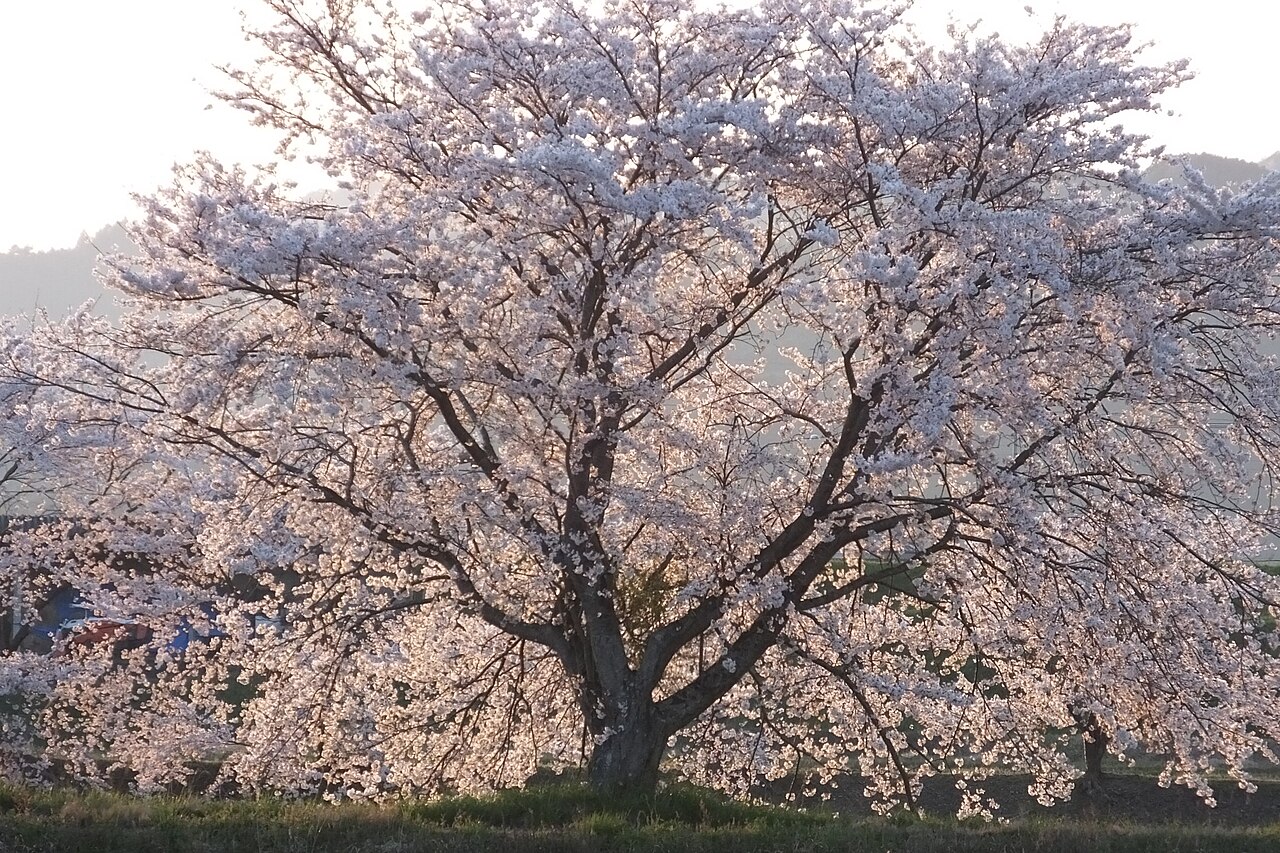
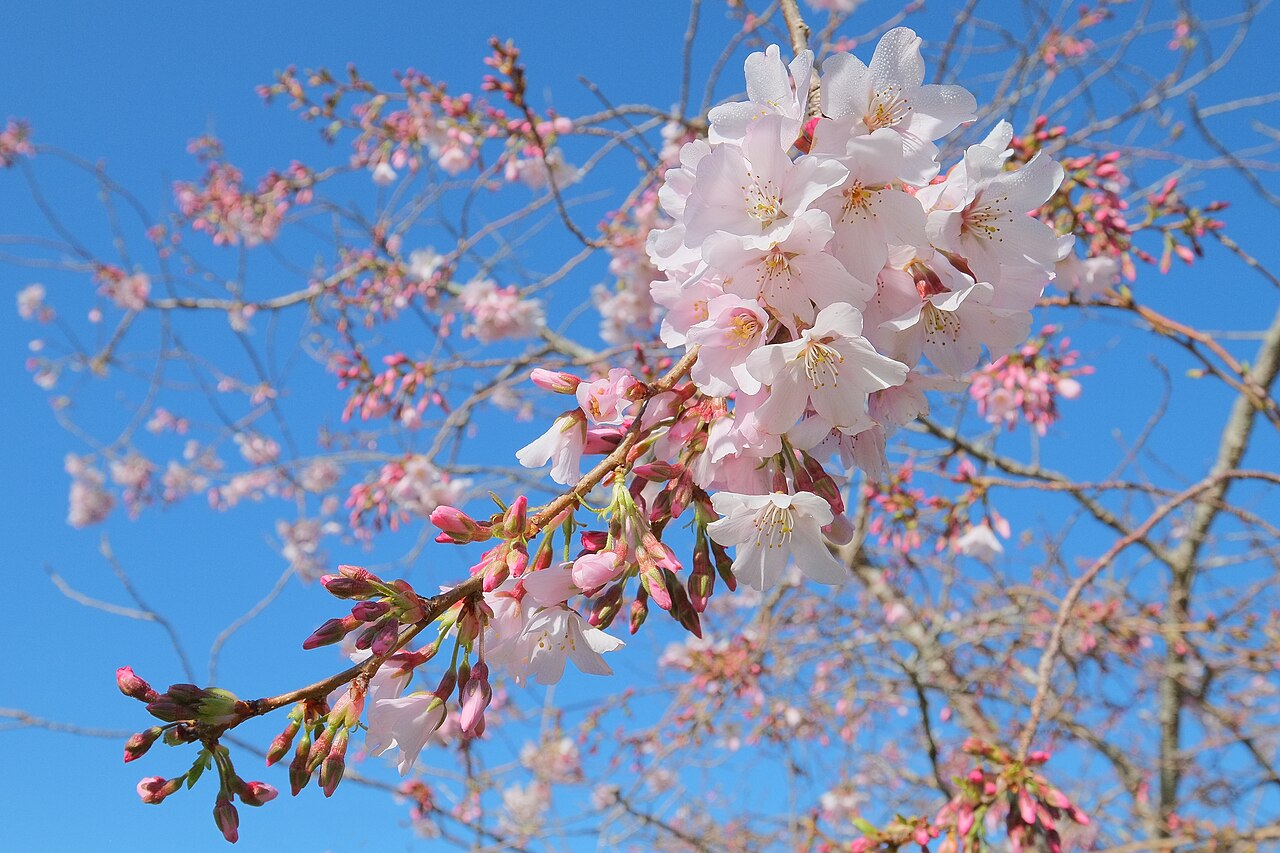
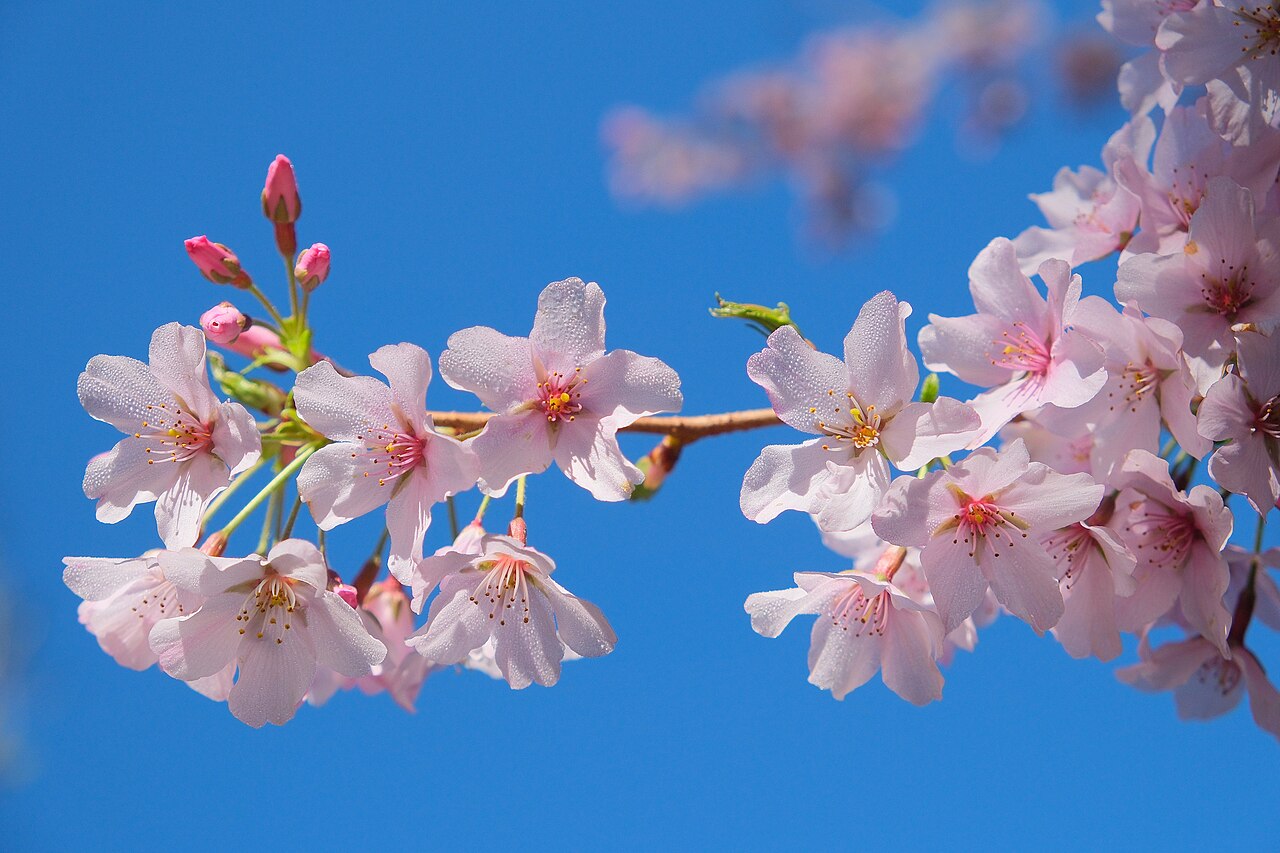
Saving seeds
Yoshino cherry seed needs winter. Let the cherries ripen fully — the darkest fruit on the healthiest tree — and clean the pulp off the seed, because pulp inhibits germination. Give it a cold, moist chill — two to three months is the common figure — by mixing seed with damp sand in a bag and refrigerating it, or by sowing in fall outdoors and letting winter do it. Sow in spring in a gritty, well-draining mix, barely covered, and germination usually comes in a few weeks after chilling.
Save seed from the best tree — the fullest flowers, the healthiest canopy — and dry the seed thoroughly before storing; it keeps a few years in a cool, dry jar. Sow more than you need, since germination is uneven, and give the seedlings room — Yoshino cherries are trees, not shrubs, and they want to be tall.
Seedlings will vary wildly in flower color and form, and the named Yoshino cherry comes only from grafting. Seed is for the species, for rootstocks, and for the patient gardener. A seed-grown Yoshino cherry takes years to flower, so this is the long game.
And the Florida honesty: Yoshino cherry wants a real winter, for zones 5 to 8, and it does not grow in Florida. This section is for the reader in a colder climate, where Yoshino cherries come back year after year.
Varieties
Every named variety of Yoshino Cherry with its own growing guide:
- Akebono Yoshino Cherry — The pink Yoshino: semi-double, light-pink flowers that fade to white, on a slightly smaller, very popular tree — also called Daybreak.
- Shidare Yoshino Yoshino Cherry — The weeping Yoshino: graceful, cascading branches covered in white blossoms — the Tidal Basin tree, in your garden.
- Cascade Snow Yoshino Cherry — The tough Yoshino: pure snowy-white flowers with healthier, disease-resistant foliage — sold as Cascade Snow.