
🏯 Pagoda Flower
What it looks like
Quick facts
- Sun: Full sun to partial shade (best flowering with plenty of sun; midday shade often looks better in the deep South)
- Soil: Rich, moist but well-drained; acidic to neutral
- Spacing: Give it room: 5–10 feet wide at maturity, and site it where suckers can be managed
- Height: 5–10 feet, sometimes taller after several warm winters in Central Florida
- Life cycle: Evergreen shrub where frost never visits; deciduous to the ground where freezes hit, returning from the roots
- Zones: USDA 8–11 (safest in 9–11; mature plants tolerate brief dips to about 30°F)
- Bloom: Summer through fall, sporadically year-round where frost-free
What it is
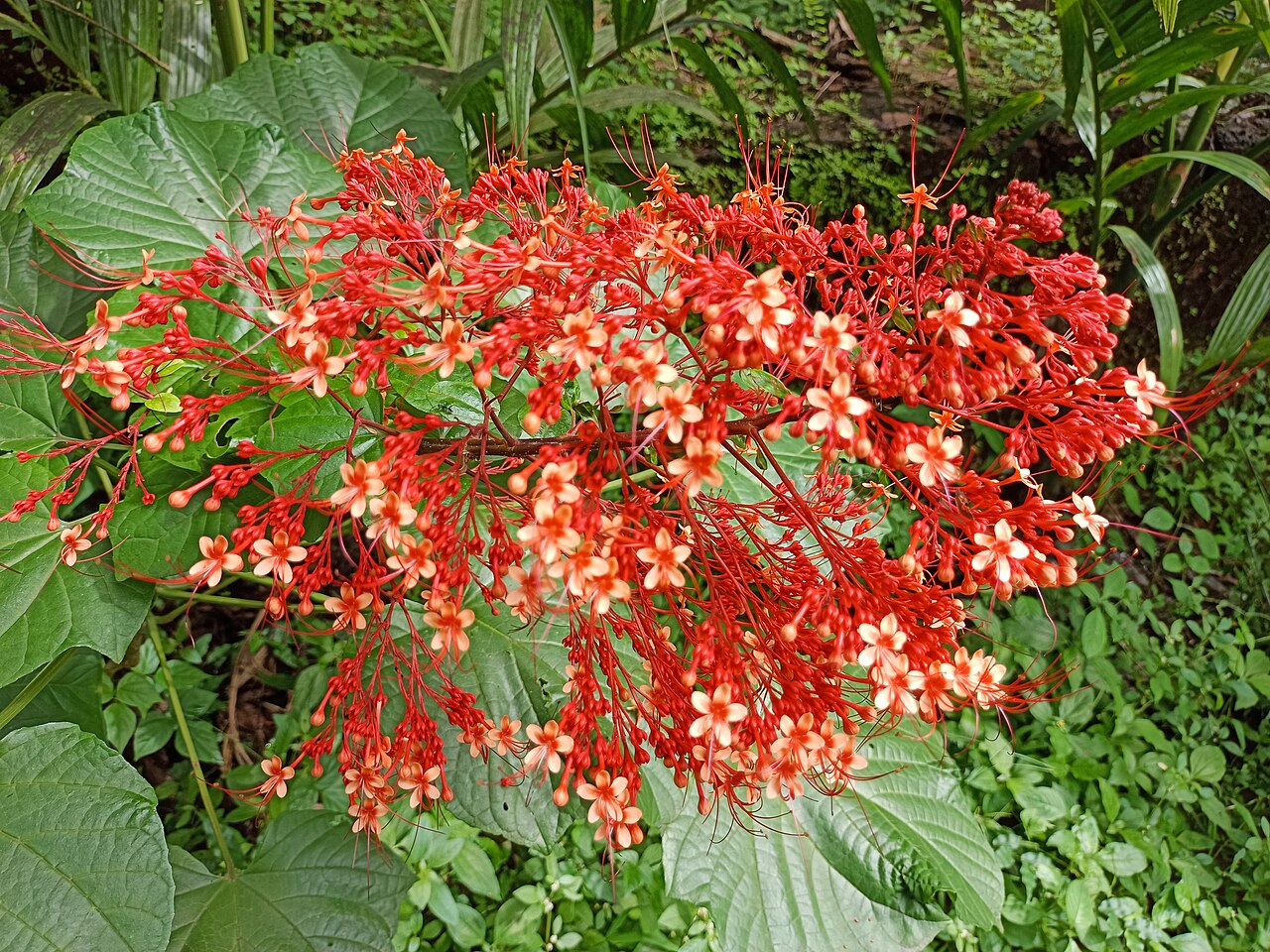
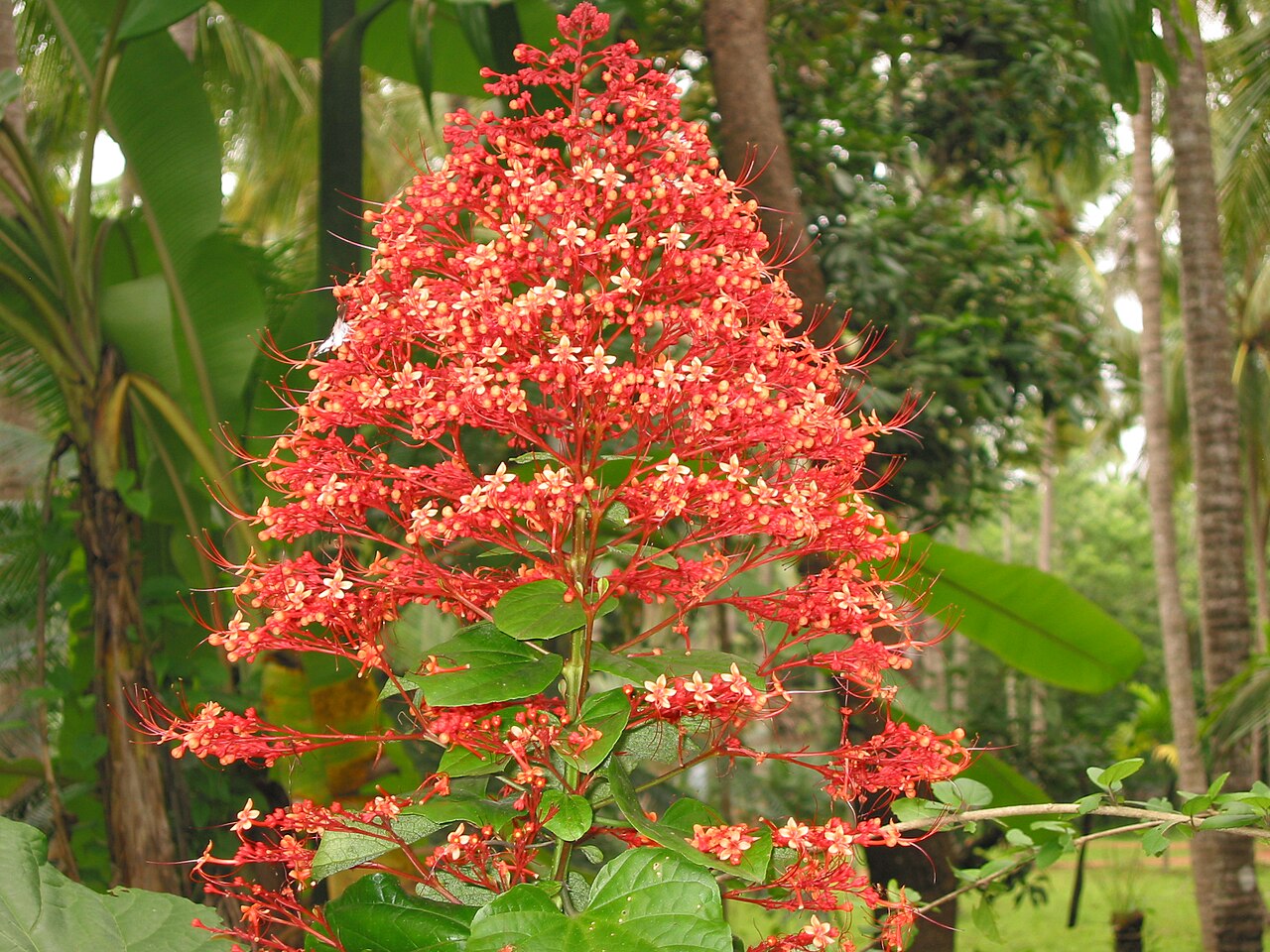
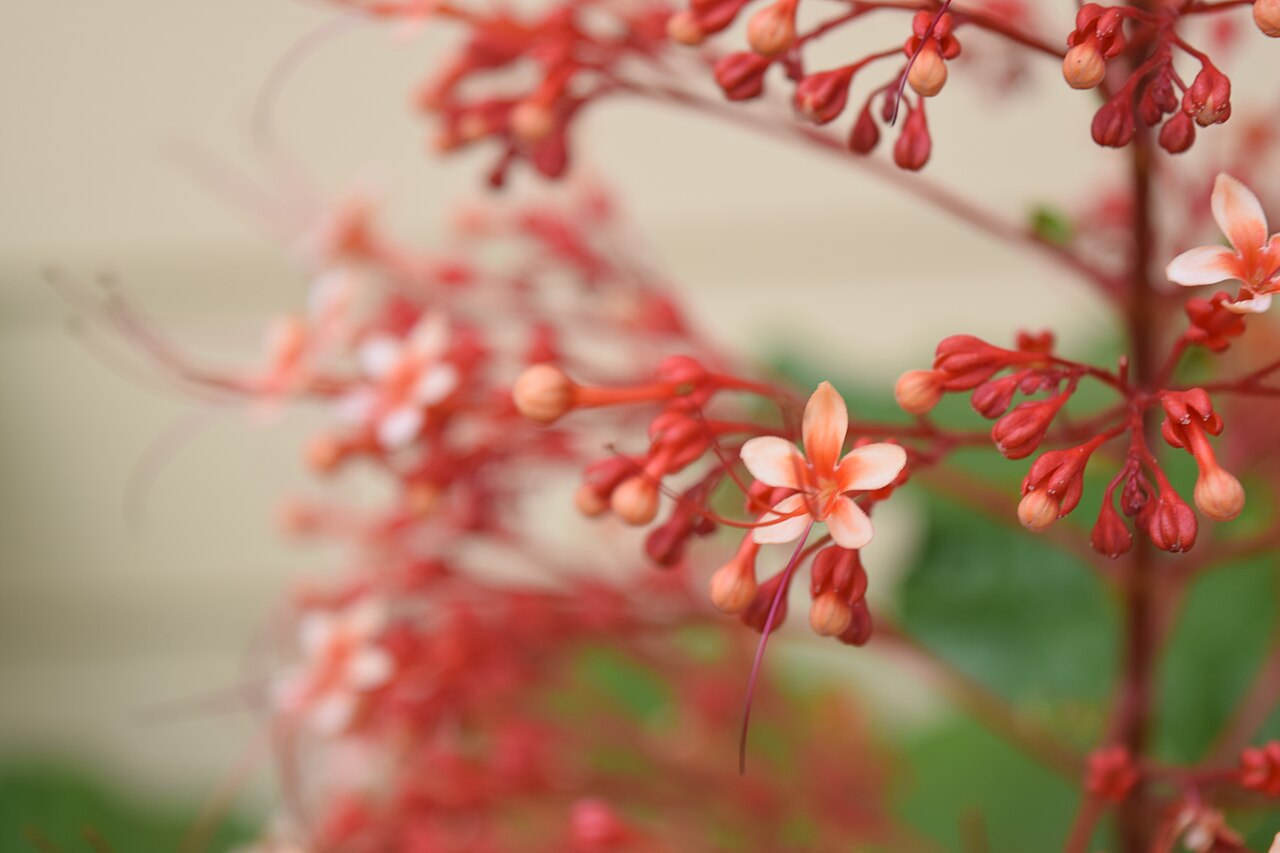
Pagoda flower is a tropical shrub that builds its flowers the way its name suggests: in tiers. Clerodendrum paniculatum, native to tropical Asia, grows into a multi-stemmed, semi-woody shrub with huge, lobed, heart-shaped leaves up to a foot across, and then raises pyramidal clusters of small orange-red to scarlet flowers high above the foliage, like a pagoda roof in bloom. The flower heads are the whole show, and they are a big show: a mature plant in full flower stops traffic, and swallowtail butterflies, bees, and the occasional hummingbird all come to work the clusters from first warm light into the evening.
It is sometimes called pagoda plant, and it is not the same plant as bleeding heart vine (Clerodendrum thomsoniae), its better-known cousin with red-and-white flowers. Same genus, different plant, different look. There is also a white-to-yellow form, sometimes sold as ‘Alba’, that blooms through the winter in frost-free gardens and is reported to be even more vigorous than the red form.
Growing pagoda flower in Florida
Florida suits this plant well, with the usual tropical-plant asterisk: cold. In frost-free South Florida it is an evergreen shrub that can flower sporadically all year. In Central Florida it can reach 8 feet or more after several warm winters, and a hard freeze will knock it to the ground; the good news is that it comes back fast and with vigor as soon as the soil warms even slightly, behaving as a perennial through zone 8b–9. In North Florida, give it a protected spot, ideally against a house or other building, and expect it to die back in cold winters and return in spring. Gardeners in the coldest pockets can grow it in a large pot and overwinter it under cover, though it flowers weakly indoors and is really an outdoor plant at heart.
Sun is flexible in a way that surprises people: it flowers best in full sun to light afternoon shade, and in North Florida full sun is fine. Farther south, many gardeners prefer partial shade or midday shade, where the big leaves stay lusher and less weather-worn, even if the flower heads stand a little shorter. Either way, it wants bright light and heat; deep shade gives you leaves with no pagodas.
Soil should be rich, moist, and well-drained. Regular water through the growing season keeps it happiest; established plants tolerate dry spells (the big leaves droop during dry periods and perk back up at night), but steady moisture and a bit of organic matter, fed a few times a year especially before bloom, is what produces the biggest flower heads. Mulch after cutting back dead foliage at the end of the year helps protect the roots through winter.
The suckering habit, stated plainly
Pagoda flower spreads by underground runners, sending up suckers around the parent plant that gradually form a colony. This is a feature or a problem depending on where you plant it. In a spot with room, the suckers are free plants: dig them up and transplant them, or let them fill in an ugly wall or fence line with tropical foliage. In a small, formal bed, the same habit will test your patience, as new shoots pop up where you did not invite them.
The honest framing is this: it is a vigorous spreader, and in the tropics it can become invasive. In Florida gardens it is generally described as aggressive rather than invasive, and the runners are easily removed by hand-pulling. Site it accordingly: give it space, keep it away from beds where you want strict borders, and pull suckers as they appear if you want it contained. A large pot is the simplest containment of all, though a potted plant will stay smaller than one in the ground.
Planting
Plant in spring, after the last frost, in a spot with room to spread. Dig a hole no deeper than the root ball, set the plant in, water deeply, and mulch. If you are planting more than one, space them with their mature width in mind, not their nursery-pot width; a plant that arrives in a gallon pot and matures at 8 feet wide will not stay polite about it.
Propagation is easy, which is both a blessing and the suckering warning in another form. Dig up suckers and transplant them. Take softwood or half-ripe cuttings in summer after flowers fade, or root cuttings, or divide an established clump. Seed works too. If a neighbor has one, you will not need a nursery: ask for a sucker, and you will have a pagoda flower.
Care and pruning
Water regularly through the growing season, letting the top layer of soil dry slightly between waterings rather than keeping it constantly soggy. Feed a few times a year, especially before bloom, with a balanced fertilizer or compost; rich soil and steady feeding are what build the biggest flower heads.
Prune to manage size and shape rather than to protect any woody fruiting structure. A moderate to fairly hard annual cutback is tolerated well, and pruning at the end of summer helps limit size and encourages denser foliage and fuller blooms the following year. After a freeze, cut back the dead foliage, mulch the roots, and wait: regrowth from the base is the norm, not a rescue operation.
Pests are usually minor outdoors. Aphids, spider mites, and whiteflies can show up, especially on plants grown indoors or in dry conditions; outdoors, healthy plants and their butterfly visitors generally keep things in balance.
Problems, honestly stated
- Freeze dieback: prolonged freezing knocks it to the ground. It returns from the roots in zones 8b–9, but it is not evergreen there.
- Suckering spread: it colonizes by runners. Give it room or a pot, and pull unwanted suckers by hand.
- Too much shade: deep shade means leaves without pagodas. Bright light is required for the flower show.
- Dry soil: it tolerates dry spells once established, but the best flowering comes with steady moisture.
Saving seeds
Pagoda flower does set seed — dark blue-black berries in the fall, each holding a few seeds — but the honest headline is that seed is the slow way to more pagoda flower, and suckers are the fast way. The plant spreads by underground runners with real enthusiasm, and a gardener who wants another one usually just digs up a sucker. Seed is for the patient, and for the gardener who wants to see what the plant does when it starts from scratch.
Collect the berries when they are fully ripe and dark, mash them in water, and clean the pulp off the seed — the pulp can inhibit germination, so rinse the seed well and dry it briefly on paper. Sow the seed fresh, shallowly, in a warm, moist, well-draining mix, and keep it warm and bright. Germination usually comes within a few weeks at warm temperatures, though some seed takes longer, so do not give up on a pot at three weeks.
Seedlings grow fast once they get going, and they want full sun and plenty of room — pagoda flower is a big, bold plant, and a seedling will be a big, bold plant sooner than you expect. Grow them on in pots until they are sturdy, then plant them out where a large, suckering shrub is welcome.
The practical route, stated plainly: if you want an exact clone of your pagoda flower, dig a sucker. A sucker with roots attached, dug in spring or fall, is a guaranteed new plant, and it will flower sooner than a seedling. Seed is for the adventure — a new plant that might be taller, shorter, or more floriferous than its parent. Save seed from a healthy, well-flowered plant, and keep it dry and cool: Florida humidity is the enemy of stored seed, so jar it with a silica gel packet and keep it in a cool, dark place.