
🤍 Dwarf Fothergilla
What it looks like
Meet the shrub
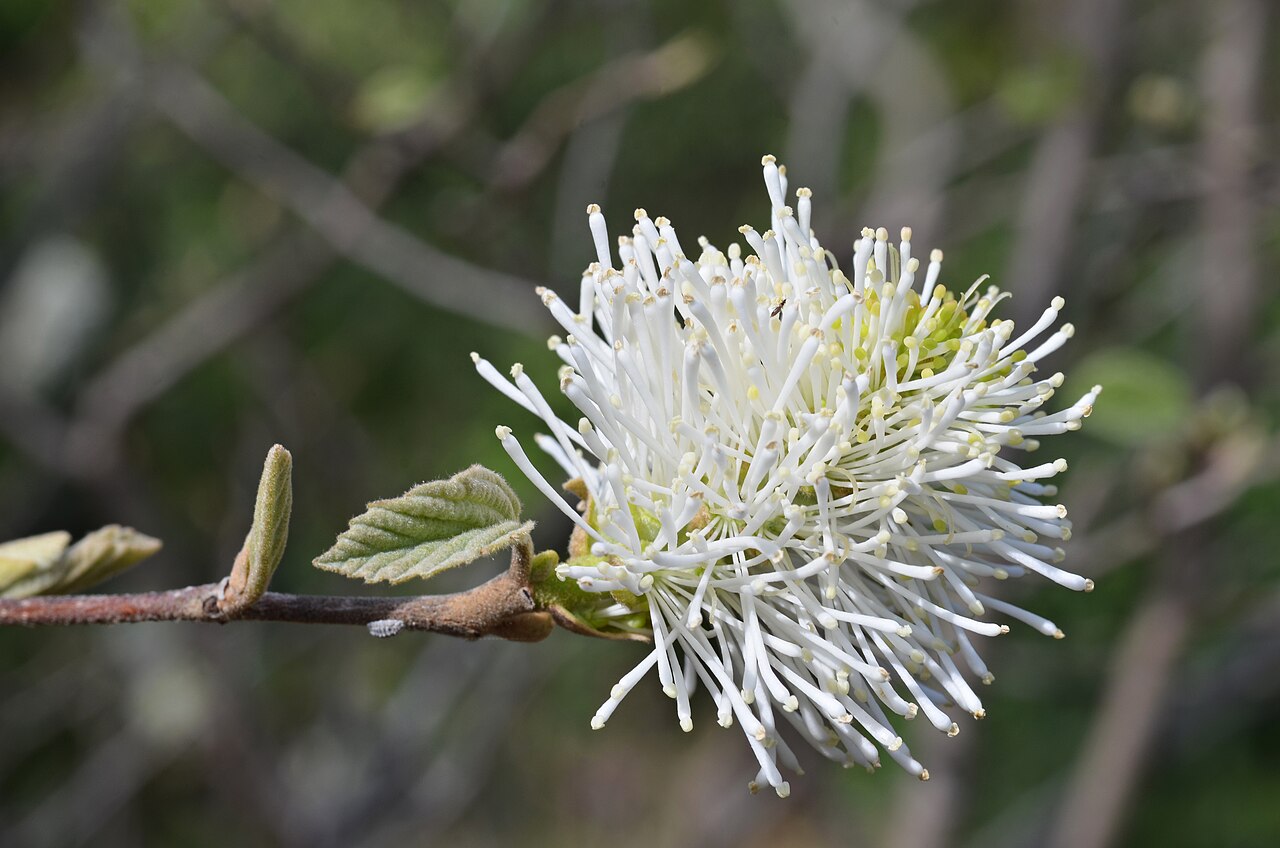
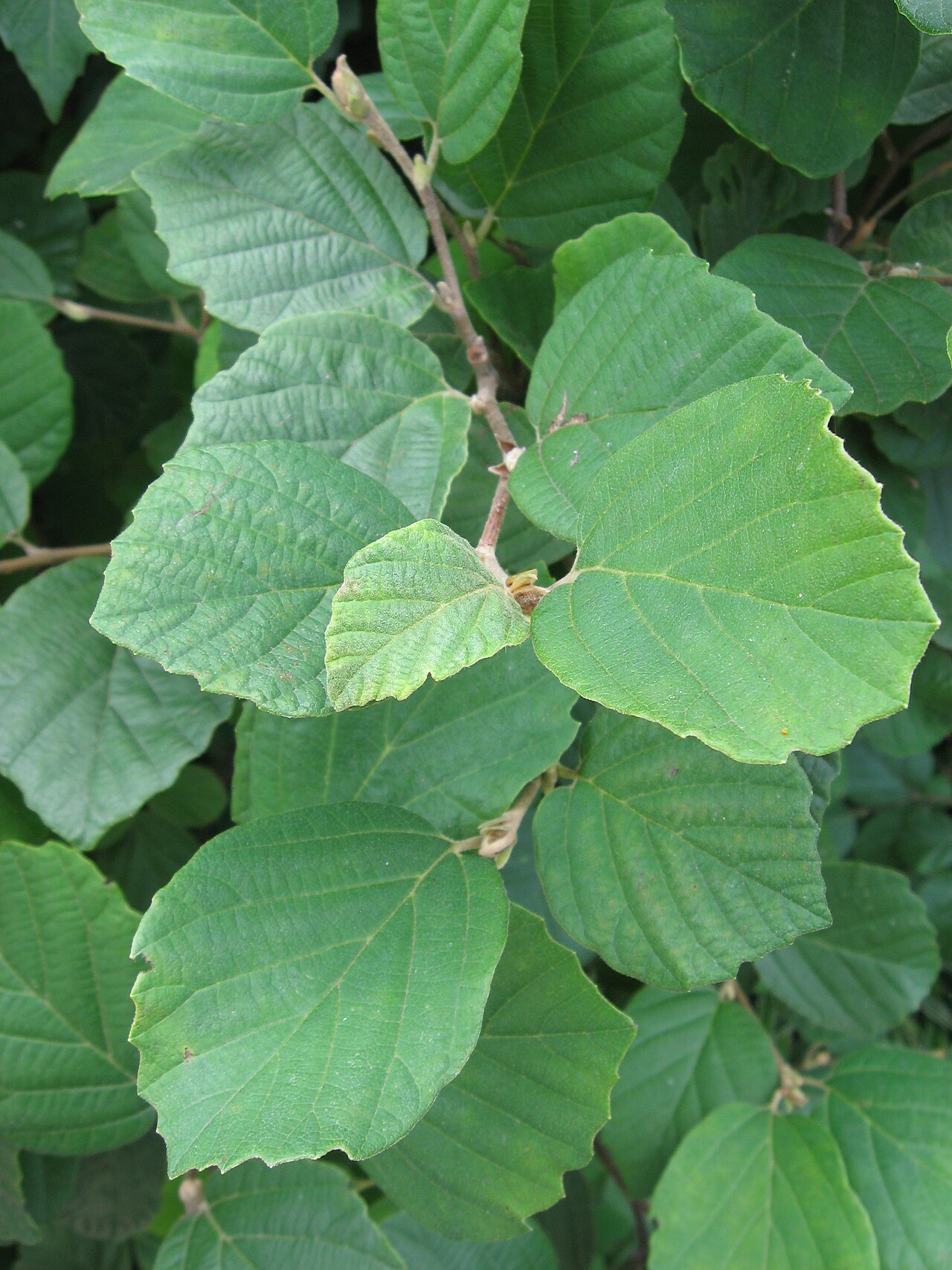
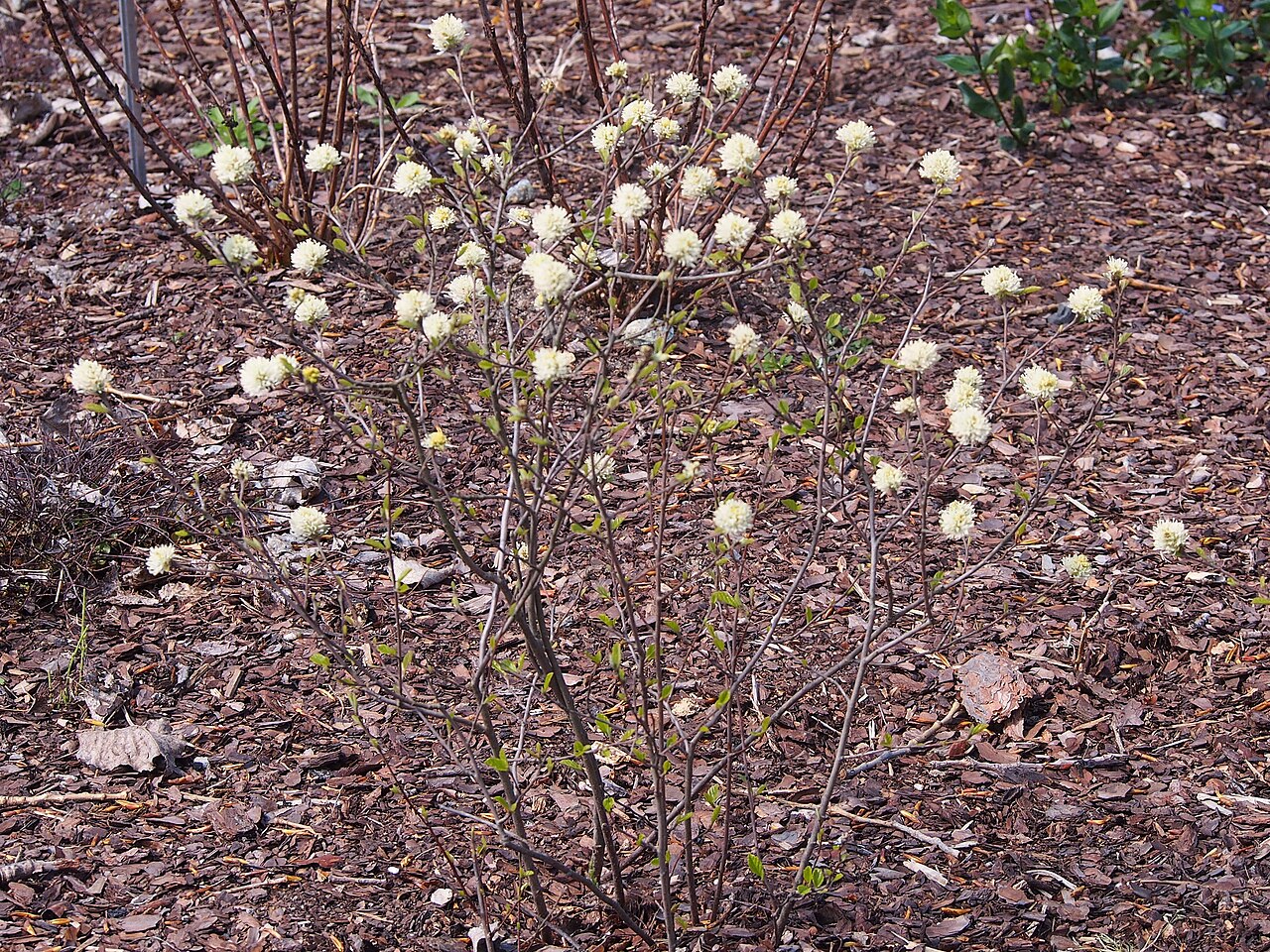
Dwarf fothergilla is the small native shrub that quietly steals two seasons a year. In spring, before the leaves fully open, it covers itself in soft white bottlebrush flowers — each bloom is really a cluster of showy stamens, which is why the flowers look feathery rather than petal-y — and they carry a faint honey scent on the breeze. In fall, the leaves turn a spectacular mix of yellow, orange, red, and purple, often all on the same plant. Summer is its quiet season: tidy blue-green foliage, dense rounded shape, no fuss.
A quick honesty note on size, because references disagree and you deserve to know before you buy: the Living Root native profile lists dwarf fothergilla at 2–3 feet tall and 2–4 feet wide, while UF/IFAS Extension’s fact sheet (FPS-214) lists 4–6 feet tall and wide. Selections and growing conditions account for much of the spread — named forms vary, and a happy plant in rich, moist soil grows bigger than a struggling one. The safe move is the one the Fothergilla guide already advises: buy the size you want rather than expecting this slow grower to hurry. And a naming footnote: some databases, including the Florida Native Plant Society’s, now file this plant as Fothergilla milleri, with F. gardenii as a synonym. Nurseries still overwhelmingly sell it as Fothergilla gardenii, which is the name this guide uses.
For the native-plant portrait, see the Dwarf Fothergilla native profile. This guide is the full growing companion to it.
The Florida reality check
Here is the part that matters most for Florida gardeners: in Florida, dwarf fothergilla grows only in the Panhandle’s wet savannas and bog margins. The native profile says it plainly — it is a northern Florida plant through and through, so gardeners farther south should admire it on nursery trips, not in their own yards. Its hardiness range (zones 5–8A per UF/IFAS Extension) tells the same story from the other direction: this shrub wants a real winter chill and a cooler summer than peninsular Florida offers. If you garden in the Panhandle, you are in luck. If you garden south of roughly Gainesville, plant something else for this job — the large fothergilla family has the same preference, and no amount of love will talk a Panhandle bog plant into enjoying a subtropical summer.
Within its range, give it what its wild home gives it: moist ground, acidic soil, and a spot that is sunny enough for good flowering. Its natural haunts are sandy pine woods, sphagnum swamps, and bog edges — wet feet in the sense of consistently moist soil, not standing water.
How to plant it
Plant in spring or fall. Dig a hole as deep as the pot and about twice as wide, set the shrub at the same depth it grew in the container, and backfill with native soil improved with compost or leaf mold. Water deeply, then mulch 2–3 inches deep with pine needles or shredded leaves — both help keep the soil acidic as they break down, which this shrub appreciates. Space plants 36–60 inches apart per UF/IFAS Extension, which gives each shrub room to become its dense, rounded self without elbowing its neighbors.
Sun is a trade-off worth understanding: best flowering and best fall color come with full sun, while afternoon shade is appreciated in hot summers. In the Panhandle, a spot with morning sun and light afternoon shade is often the sweet spot — flowers and fall color without the worst of the summer bake. It is slow-growing, so the first couple of seasons look like not much is happening. That is normal. UF/IFAS Extension calls the growth rate slow, and the group guide advises allowing two to three seasons for the shrub to reach full stride. Patience is genuinely the main care requirement.
Water & feeding
Keep the soil evenly moist for the first couple of seasons; established plants tolerate some drought, but flowering and fall color are both better with consistent moisture. In a dry spring, water deeply — a thirsty fothergilla in bloom season is a shrub wasting its best moment.
Feed lightly, if at all. Compost in spring is plenty. The one thing to avoid is lime: pushing the pH up can cause yellowing leaves (iron chlorosis), because acid-loving shrubs struggle to take up iron in alkaline soil. If the leaves yellow while the veins stay green, check your soil pH before reaching for fertilizer — the problem is usually chemistry, not hunger. Acidic mulches (pine needles, shredded oak leaves) and compost do more good here than any bagged product.
Pruning & shaping
Prune little, and prune at the right time. The only regular job is removing dead or crossing wood, ideally right after flowering in spring — fothergilla blooms on old wood, so a hard late-summer or winter prune can cut off next spring’s flower show. Never shear it into a meatball: the natural rounded form is the whole point, and a sheared fothergilla looks like a shrub that has given up on joy. If you want a single specimen, remove unwanted suckers promptly; if you want a natural hedge or colony, let it sucker and fill in. Named selections exist — ‘Blue Mist’ for blue-green summer foliage and ‘Jane Platt’ for a low, rounded habit are two that nurseries commonly carry — but the straight species is already a fine garden plant, and there is no need to chase a cultivar to get the show.
Common problems
- Yellowing leaves — usually alkaline soil or iron chlorosis. Check pH, mulch with acidic organic matter, and skip the lime.
- Slow growth — normal for this shrub. If it is alive, leafing out, and flowering a little more each year, it is doing fine; it is just on fothergilla time.
- Suckering colonies — a feature or a flaw depending on your plan. Remove suckers for a specimen, keep them for a hedge.
- Leaf spot — occasional and rarely serious. Clean up fallen leaves in autumn to reduce next year’s inoculum.
- Serious pests or diseases — UF/IFAS Extension reports that no pests or diseases are usually serious enough to be damaging. This is a genuinely low-drama shrub.
- Planted too far south — the most common “problem” in Florida, and the only one with no fix. Match the plant to its range and it will reward you; fight the range and it will merely survive, briefly.
Wildlife & garden partners
The fragrant white bottlebrush flowers open before the leaves in spring and attract honeybees and butterflies when little else is blooming — the native profile’s timing point is the ecological one: early pollinators need early flowers, and fothergilla delivers them before most shrubs have woken up. Plant it where you will smell it in spring (near a path, a patio, or a front walk) and where its fall color can stop traffic — against a dark evergreen backdrop, its gold-to-scarlet foliage looks lit from within. Good companions in its Panhandle home include other acid-loving, moisture-tolerant natives; keep lime-loving plants and fresh concrete leachate away from its root zone, since both push pH the wrong direction.
Saving seeds
Dwarf fothergilla does not so much release its seed as fire it. The fruit is a small, hairy, two-beaked woody capsule that matures in late summer and then splits explosively, flinging its one or two shiny black seeds a short distance from the parent. That is a wonderful dispersal strategy for a shrub and a terrible one for a seed saver who arrives a day late, so the whole game is beating the pop. Tie a small paper or fine-mesh bag over a cluster of capsules before they split, and check it often — or collect capsules while they are still green and showing no open seams, drop them into a closed paper grocery bag, and listen for the popping as they split indoors. Either way, the bag is not optional equipment; it is the harvest.
Once the capsules have popped, pick the brown-to-black, football-shaped seeds out of the debris and let them dry briefly on paper in a cool, dry place. Do not leave them sitting damp, and do not store them loose in a warm room: cleaned seed keeps best in a glass jar in the refrigerator with a desiccant packet to absorb moisture, and fresh seed beats stored seed, so plan to sow in the autumn after collection if you can.
Now the patience test, stated plainly. Fothergilla seed is deeply dormant, and references disagree on the exact prescription — some describe a period of cold stratification alone, while woody-plant specialists describe a warm period followed by a cold period, sometimes repeated, before the seed will wake up. The reliable summary is this: sow outdoors in autumn in a cold frame or seedbed, in acidic, humus-rich, well-drained mix kept moist, and expect germination in the second spring after sowing, not the first. Seed sown this autumn that does nothing next spring has not necessarily failed; it may simply still be working through its dormancy calendar. Seedlings are slow, so grow them on in pots, in light shade with steady moisture, until they are sturdy enough to plant out.
Will seedlings match the parent? Seed from the straight species grows into recognisable dwarf fothergilla, with the usual seedling-to-seedling variation in size and autumn colour. Seed from a named cultivar, such as ‘Blue Mist’ with its glaucous blue-green foliage, will not reliably repeat that cultivar — if you want that exact plant, take softwood cuttings in early summer and root them under mist or a humidity tent, or divide rooted suckers from an established colony, which is the simplest method of all for home gardeners. Seed is for the patient and the curious; cuttings are for the gardener who wants a clone.
One Florida reality check belongs here too. Dwarf fothergilla is a zones 5–8 shrub that in Florida is a Panhandle plant, and its seed expects a real winter. In the Panhandle, autumn sowing outdoors may supply that chill; further south, or after a mild winter, fridge stratification — seed in damp mix in a labelled bag in the refrigerator through winter — is the more reliable way to give it the cold it is waiting for. Either way, keep the soil acidic and moist, and do not expect a fast shrub: this one takes years to become the honey-scented, gold-to-scarlet plant you fell for.
Meet the native profile: Dwarf Fothergilla · Back to the Fothergilla guide · Browse all plant & pest guides
Sources: UF/IFAS Extension EDIS FPS-214, “Fothergilla gardenii: Dwarf Fothergilla” (Gilman); Florida Native Plant Society plant database (synonym note); Living Root Garden native profile for Dwarf Fothergilla; Living Root Garden Fothergilla group guide.