
🎄 American Holly
What it looks like
Quick facts
- Type: Broadleaf evergreen tree, holly family (Aquifoliaceae) — a tree, not a shrub, despite what the garden-center bench may imply
- Height and spread: 35–50 feet tall, 15–25 feet wide at maturity (UF/IFAS); a 35-foot tree can be about 20 feet wide in 40 years, so this is a slow, permanent decision, not a quick fix
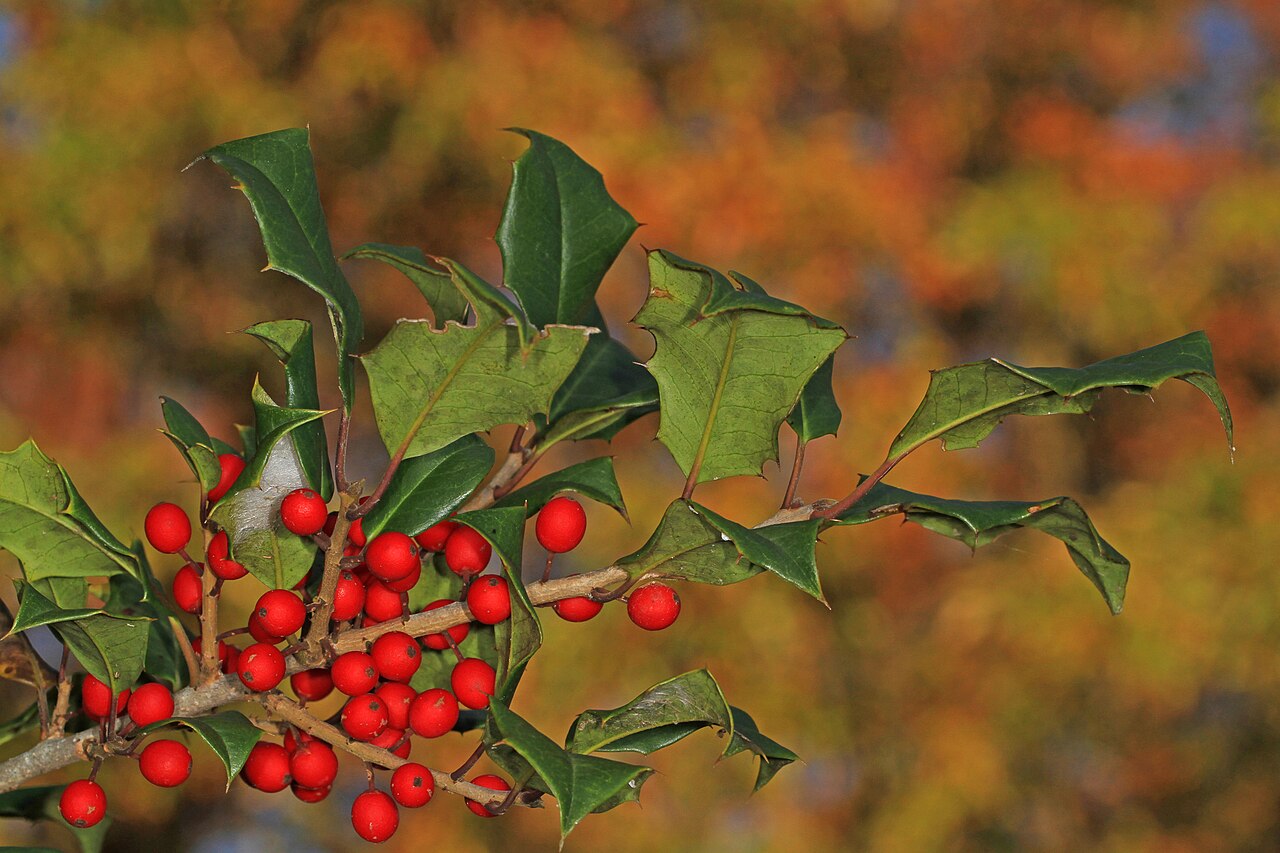
- Form: Symmetrical, dense, wide pyramidal crown; spiny, dull-green evergreen leaves; pale, almost white bark
- Sun: Full sun to partial shade; berry production is highest in full sun on female trees
- Soil: Fertile, well-drained but moist, slightly acidic soils below pH 6.5
- Water: Steady moisture; foliage thins during drought
- Pollination: Dioecious — male and female flowers on separate trees; plant one male for every several females
- Florida: Native to the eastern United States and a classic North and Central Florida landscape tree; slow but stately, and essentially permanent once established
See also the Florida native profile: American Holly (Ilex opaca), and the broader Holly: Growing Guide.
What it is
American holly is the Christmas card tree, and it has been doing that job since before Christmas cards existed. UF/IFAS calls it a popular landscape plant since the beginning of American history, and you can see why the moment you meet a mature one: a beautifully shaped, symmetrical, dense, wide pyramidal form, spiny evergreen leaves, and clusters of red berries that persist through fall and winter, set against bark so pale it looks like the tree got dressed for a wedding.
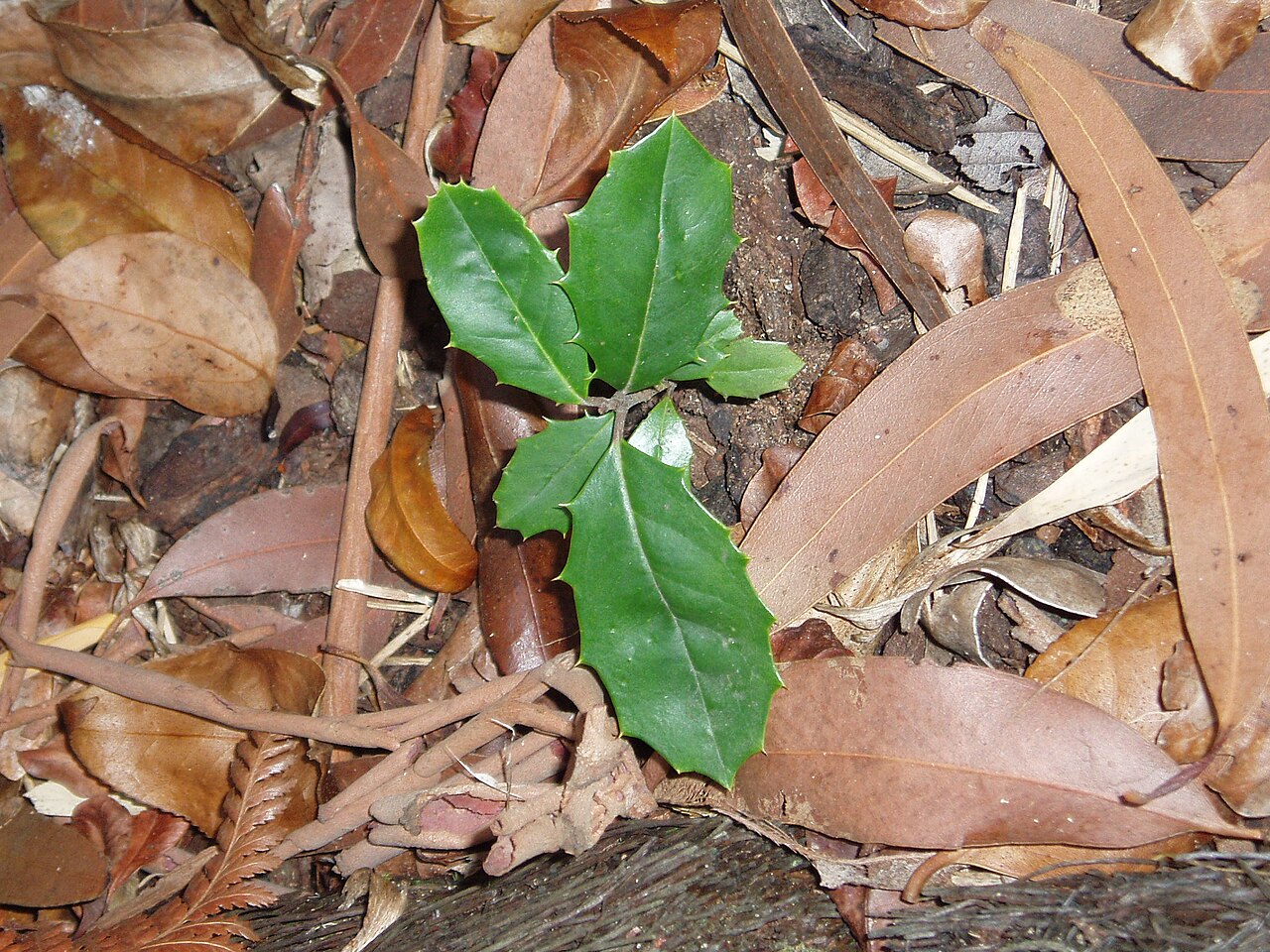
The leaves deserve a closer look, because they are smarter than they look. Lower branches carry the famous spines; higher branches, out of reach of browsing animals, often carry smoother leaves. The tree invests in armor exactly where browsers can reach it and stops paying for armor where they cannot — a defense budget managed with more discipline than most households. The berries, meanwhile, are technically drupes rather than true berries, each holding several seeds, ripening red and hanging on through winter precisely when birds need them most.
One more claim to fame, straight from the native profile: American holly wood is the whitest wood in North America, so white it has been used for piano keys and inlay work where ebony needs a pale partner. You are planting a landscape tree that doubles as a cabinetmaker’s curiosity. Not bad for a plant most people only think about in December.
Growing American holly in Florida — honestly
In Florida, American holly is a North and Central Florida tree. The native profile frames it as slow but stately in North Florida shade, and UF/IFAS zones it 6A through 9B, which covers the northern and central peninsula but is not a promise for the far south. Plant it where it can be what it is: a long-lived evergreen specimen, screen, or framing tree on moist, slightly acidic soil. It is ideal for naturalizing on moist, slightly acidic soils, in UF/IFAS’s words, and it has been found to be wind-resistant during hurricanes — a genuinely useful trait in a state that tests trees for a living.
The other honest note is speed. This is a slow-growing tree. If you need a screen next year, plant something faster and let the holly grow up behind it. If you want a tree your grandchildren will cut Christmas branches from, plant the holly now and be patient. Slow growth is not a flaw here; it is the price of a dense, symmetrical crown that holds its shape for decades with little pruning.
Planting and spacing
Plant in spring or fall in moist, well-drained, slightly acidic soil. Dig the hole no deeper than the root ball and wider than it, settle the tree at its nursery depth, water deeply, and mulch to keep the roots cool — the native profile stresses mulch for exactly this reason, and hollies repay it. Space specimen trees at their mature width, and use the native profile’s 10–15 feet apart as the working number for a screen or group planting where crowns will eventually meet.
Buy nursery plants, not a packet of seeds and a dream. Seeds need cold stratification and can take 2–3 years to germinate, and even then you will not know the sex of the tree until it flowers years later. Nursery plants come labeled — and the label is everything, for reasons the next section explains.
The berry rule: boys, girls, and why your holly has no berries
This is the section that saves more holly owners from disappointment than any other paragraph on this site, so read it twice. American holly is dioecious: male and female flowers grow on separate trees. Only female trees produce berries, and only if a male tree is nearby to pollinate them. UF/IFAS is blunt about it: trees of both sexes must be located in the same neighborhood to ensure berry production on female plants.
The practical recipe: plant one male for every several females, as the native profile advises, and check the tag before you buy. Nurseries often sell hollies labeled for sex, or in pairs, for exactly this reason. A lone female in a yard with no male within pollinator range will be a handsome evergreen tree with no berries at all, and no amount of fertilizer will fix a pollination problem. Conversely, a male tree will never berry no matter how well you treat it — it is doing its job, which is pollen, and it is doing it invisibly.
Berry production is highest in full sun on female trees, so if berries are the point, give your female the sunniest spot you can and put the male somewhere sensible nearby. The male does not need the spotlight; it just needs to be within range when the small white spring flowers open.
Sun, soil, water, and feeding
Sun: full sun to partial shade, with full sun winning for berries. Shade-grown hollies are perfectly healthy and make fine screens; they just fruit less, which is a fair trade if you wanted the evergreen structure rather than the December show.
Soil: fertile, well-drained but moist, slightly acidic, below pH 6.5. UF/IFAS lists soil tolerances including sand, loam, and clay, plus acidic to slightly alkaline — but the sweet spot for growth and berry set is that moist, slightly acidic ground. In alkaline soil, hollies often look yellowish and unhappy; if your soil runs alkaline, this tree will tell you about it in leaf color before it tells you in words.
Water: deeply the first two years, then steady moisture. Established hollies tolerate heat and moderate drought, but UF/IFAS notes the foliage thins during drought — the tree’s polite way of downsizing until the rain returns. Mulch keeps roots cool and moisture even, which matters more than any feeding program.
Feeding: hollies are not heavy feeders. A spring top-dress of compost or worm castings and a mulch refresh will do more good than a bag of fast nitrogen, which pushes soft growth that pests enjoy. If leaves yellow in alkaline soil, the fix is soil acidity and organic matter over time, not a rescue spray.
Pruning
Pruning requirement is little, in UF/IFAS’s phrasing, and that is one of the tree’s selling points. Prune in late winter or early spring before new growth to remove dead or diseased branches, to train a young tree, or to lift lower branches for a street or courtyard tree. Hollies tolerate shearing for hedges and respond to selective thinning, but a specimen American holly mostly needs to be left alone to be pyramidal in peace.
The fun pruning is the December kind: cut berried branches for decorations. The plant will not mind — the native profile even suggests pruning lightly after the holidays if you cut branches for decoration. Just remember the toxicity box below before you bring those branches inside and leave them where a curious toddler or dog can sample them.
Common problems
- No berries. Almost always a missing male, a male too far away, or a female in too much shade. See the berry rule. It is a pollination problem wearing a pruning costume.
- Leaf drop from drought stress or transplant shock. Hollies sulk the first year, then settle. Water deeply, mulch, and give it a season before declaring failure. First-year sulking is normal, not a disease.
- Holly leafminer. Pale trails traced in leaves. Cosmetic more than dangerous; prune out affected leaves if it bothers you.
- Scale and spider mites on stressed plants. These show up when the tree is already unhappy — usually drought, wrong pH, or root stress. Fix the stress first; the pests are the symptom, not the story.
- Thinning foliage in drought. UF/IFAS flags this directly. Steady moisture and mulch are the prevention.
Overall, insect and disease infestations are usually minimal on this tree, which is part of why it has survived centuries of landscape fashion without going out of style.
⚠️ Berries are for birds, not for people or pets
Let us be unambiguous: holly berries are toxic to humans, dogs, cats, and horses if eaten in quantity, causing nausea, vomiting, and diarrhea. The compounds responsible include ilicin and saponins. Birds, on the other hand, eat them happily all winter — different digestion, different outcome, and the reason the berries persist on the tree in the first place is that birds are the intended couriers of the seeds.
That does not make holly a dangerous tree; it makes it a tree to site thoughtfully. Enjoy the berries on the branches and in high arrangements, keep fallen berries and low branches in mind around small children and pets, and never treat a holly berry as an edible garnish, no matter how festive it looks. If a child or pet eats a quantity of berries, contact Poison Control or your veterinarian rather than waiting to see how it goes.
Wildlife value
Berries persist into late winter, feeding robins, bluebirds, and waxwings when other food is gone — the native profile names exactly those birds, and waxwings in particular are famous for descending on a holly like it is a buffet with a closing time. Dense evergreen branches shelter roosting birds through cold nights and make a nesting favorite for cardinals. Plant a female with her male nearby and you have not just decorated December; you have stocked a winter pantry.
Propagation
Propagation is by cuttings or grafting, per UF/IFAS — which is how nurseries produce named selections with known sex and known berry color. Some selections carry yellow fruit rather than red, if you want a holly that confuses the neighbors in a pleasant way. Seed propagation is possible but slow and sex-blind, which is why the honest advice remains: buy a labeled nursery plant, check whether it is male or female, and buy the partner at the same time so you do not spend three years wondering where the berries went.
One naming caution while you shop: if a tag reads Ilex × attenuata ‘East Palatka’, that is the hybrid between American holly and dahoon holly, discovered growing wild near East Palatka — a fine tree, but a different plant from straight Ilex opaca. Read the Latin, not just the common name, and you will never buy the wrong holly twice.
Florida native profile
American holly is a Florida native plant, profiled in our native-plant library: American Holly (Ilex opaca). That profile covers its landscape role, wildlife value, and North Florida character in brief; this guide is the full growing version, with the berry rule, pruning timing, and toxicity notes the profile does not have room for.
Sources
- UF/IFAS Extension, Gardening Solutions: Holly — gardeningsolutions.ifas.ufl.edu
- UF/IFAS Extension, ST305: Ilex opaca ‘Calloway’, American Holly — edis.ifas.ufl.edu/st305
- North Carolina Extension Gardener Plant Toolbox (via extension summaries): Ilex opaca berry toxicity
- Living Root Garden: Holly: Growing Guide and the American Holly native profile