
🏛️ Minaret Oriental Plane
What it looks like
Why this variety
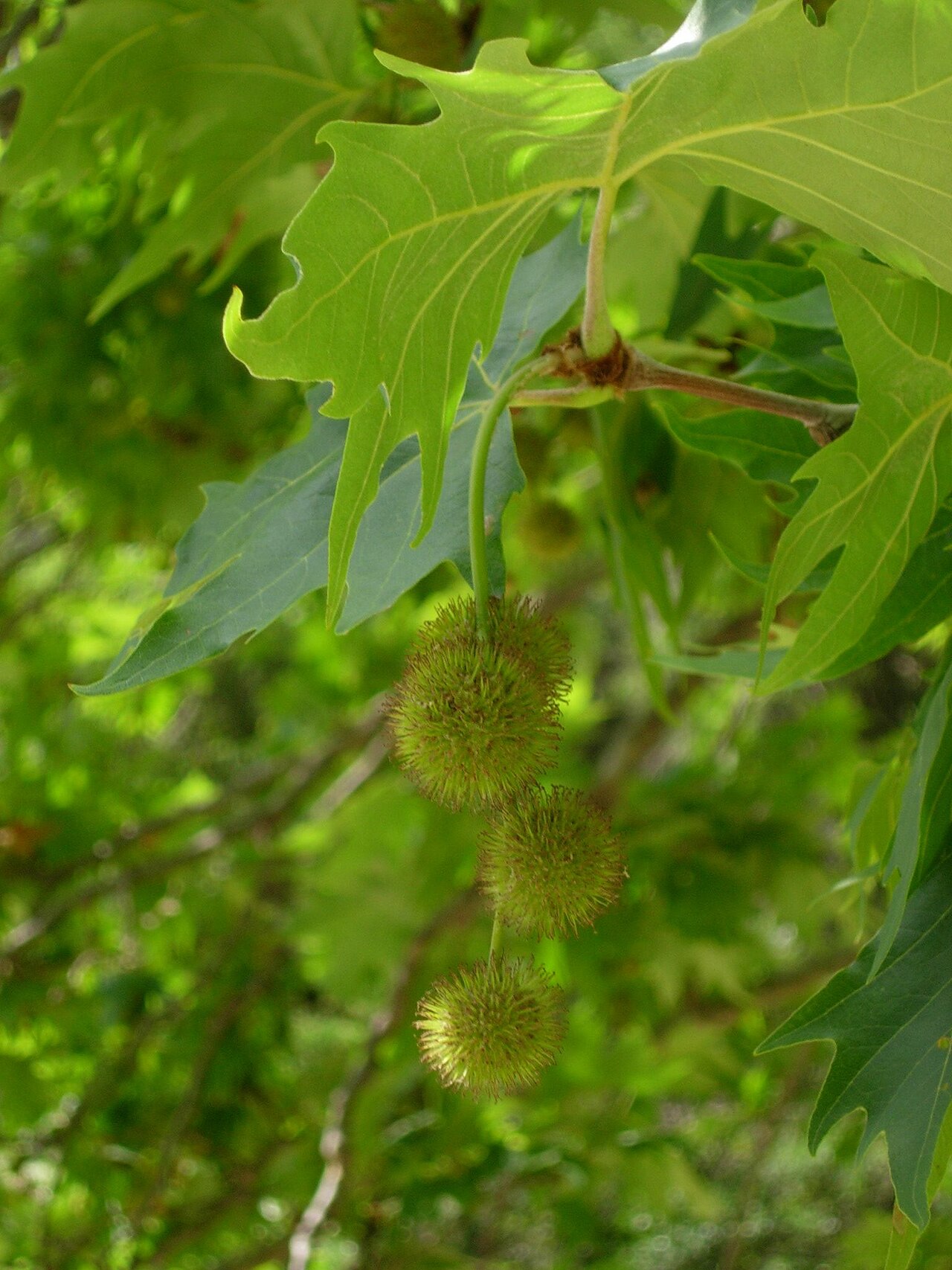
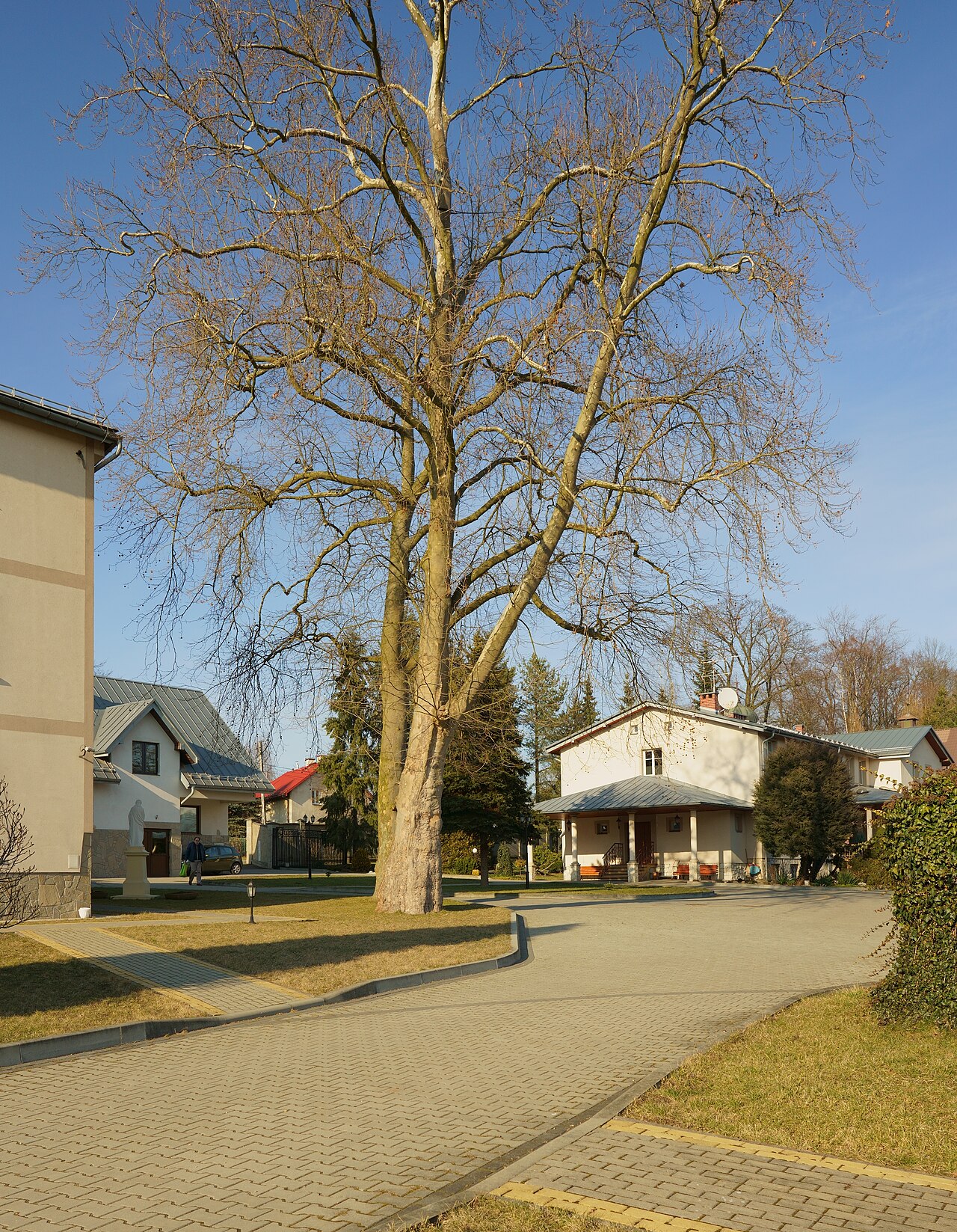
Minaret is the Oriental plane for narrow places: a cultivar found as a seedling of Digitata at Leenderheim Nursery in the Netherlands in 1997, forming a compact, column-shaped crown with very dense branches and growing more slowly than the species. It keeps the family’s deeply dissected leaves and flaking bark — yellow inner bark, green or gray outer bark peeling in small plates — but packs them into a tree 8 to 12 meters tall and 6 to 7 meters wide, a minaret instead of a mosque. Nurseries list it for avenues and narrow streets, and as a tree for the future, tolerant of paving, compaction, de-icing salt, and wind.
That narrowness is the whole point, and it comes with the usual plane honesty: Minaret is still a temperate tree, hardy to about zone 6b, and still not a Florida planting — columnar does not mean tropical, and a slender Eurasian plane still wants cool winters and moderate summers. Within its climate, though, it is the Oriental plane a modern street can actually use, and the seedling-of-Digitata story means its fingered leaves run in the family.
If you have not met the species yet, start with the Oriental Plane guide for the whole tree, then come back here for Minaret in detail.
How to grow
In a temperate climate, plant Minaret in the dormant season in full sun in moist, well-drained soil — it tolerates clay, loam, sand, paving, and compaction better than the species — with 20 to 25 feet of clearance for its column. Water through dry spells until established, mulch widely, and prune in dormancy to keep the column dense and the leader dominant; Minaret’s dense branching needs airflow pruning more than shaping, since the shape is already the point. Pollarding is possible, as with other planes, but a columnar tree rarely needs the full Parisian treatment.
Water & feeding
Water deeply until established and through dry spells; Minaret tolerates urban dryness better than a spreading plane, but steady moisture still gives the best leaves and bark. Compost at planting and mulch beat heavy fertilizer, and a tree over paving needs its water delivered to the root zone, not wished at from the sidewalk.
Common problems
- Florida climate — temperate only; heat and humidity rule it out as a planting, columnar or not.
- Dense crown airflow — thin lightly in dormancy so the interior does not stay damp and invite mildew.
- Anthracnose — Oriental plane is little affected, but no plane is immune in a wet, humid year.
- Leader competition — keep one leader dominant while young, or the column forks.
Harvest
The harvest, in its climate, is vertical shade: a slender plane that fits a narrow street, an avenue, or a courtyard, with dissected leaves, patchy bark, and fruit clusters of 3 to 6 balls on a stem. In Florida, the harvest is the same as Digitata’s — recognition, when you meet a minaret-shaped plane on a trip and know exactly what you are looking at.
Saving seeds
Minaret is the Oriental plane for narrow places: a cultivar found as a seedling of Digitata at Leenderheim Nursery in the Netherlands in 1997, forming a compact, column-shaped crown with very dense branches and growing more slowly than the species. It keeps the family’s deeply dissected leaves and flaking bark — yellow inner bark, green or gray outer bark peeling in small plates — but packs them into a tree 8 to 12 meters tall and 6 to 7 meters wide, a minaret instead of a mosque. As a named cultivar it is kept true by grafting or cuttings, not by seed — seedlings would not hold the column. In a temperate climate, plant Minaret in the dormant season in full sun in moist, well-drained soil, with 20 to 25 feet of clearance for its column. The full method is in the Saving seeds section of the Oriental Plane guide.