
🌸 Shidare Yoshino Yoshino Cherry
What it looks like
Why this variety
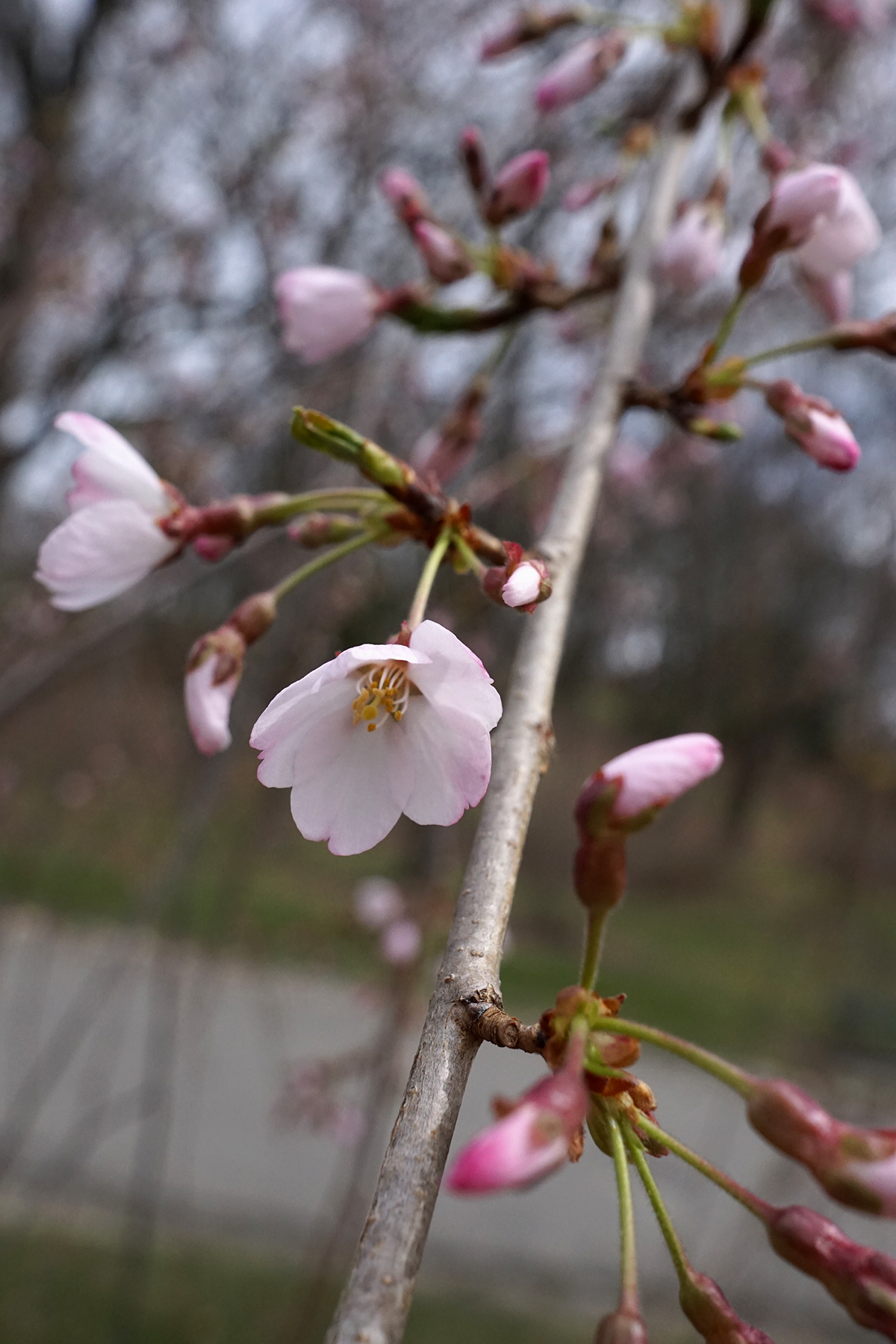
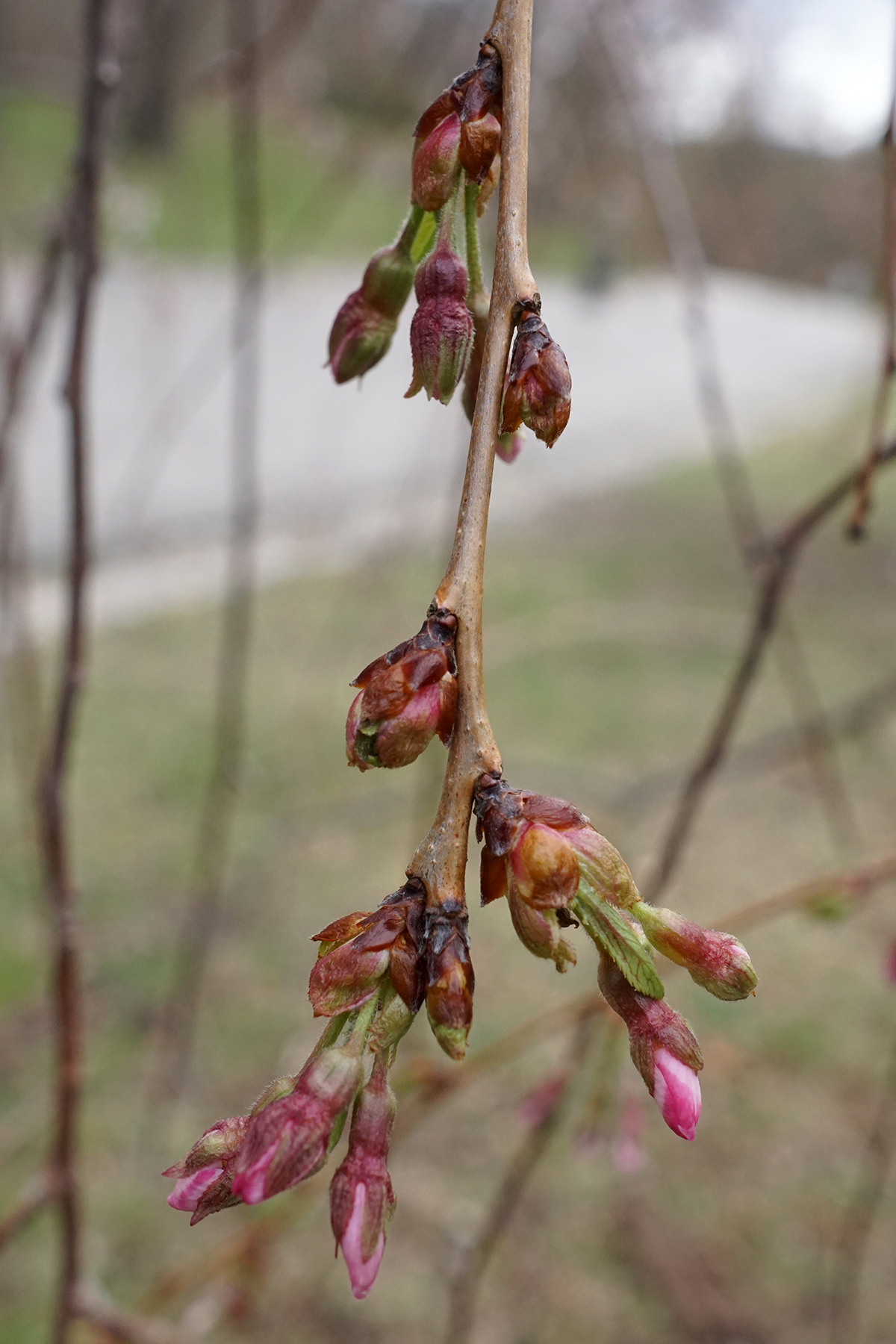
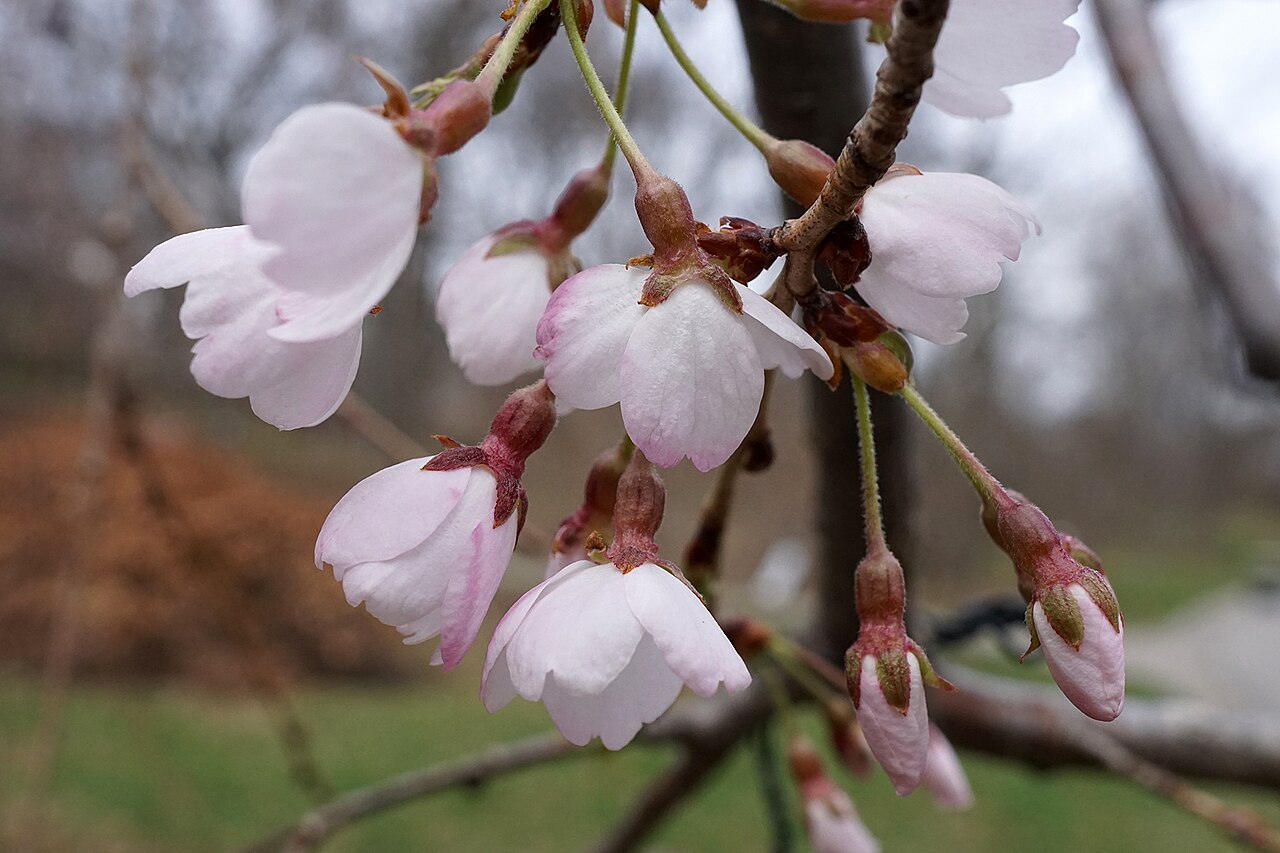
Shidare Yoshino — the weeping form of Yoshino cherry, also listed as forma perpendens — is the tree that made the Tidal Basin in Washington, D.C., famous: Connecticut notes it as the famous weeping form most notable for the grouping around the Tidal Basin, a graceful plant about 20 feet tall with a spread of 30 feet, covered in white blooms every spring. The branches cascade downward, so the blossom does not sit on top of the tree — it pours down the sides like a waterfall that smells faintly of almonds.
A weeping cherry is a grafted sculpture: the weeping top is grafted high on a straight trunk, so the trunk height is fixed at planting and the canopy spreads from there. That means site it once, with the full 30-foot spread in mind, and never plant it where you will need to walk through the curtain — unless you enjoy being blossom-bombed, which, to be fair, some people do.
Florida honesty: flowering cherries are zone 5–8 trees, so this is a north-Florida trial at best, never a statewide promise. They need winter chill, suffer in heat and humidity, and are famously short-lived and disease-prone even in their happy zone. In most of Florida, enjoy the blossom pictures and plant something that actually wants to live there; in the far north of the state, a trial in sun, airflow, and well-drained soil is an experiment, not a guarantee.
If you are new to choosing between cultivars, the Varieties Matter guide explains why the name after the plant matters as much as the plant itself. The species guide for Yoshino Cherry covers the species as a whole; this guide is about what makes this one selection different.
How to grow
Plant in autumn or early spring, in full sun, in fertile, moist but well-drained soil — flowering cherries hate wet feet and love airflow. Dig wide, plant at the same depth as the pot, water deeply, and mulch without touching the trunk. Most cultivars are grafted, so watch for suckers from below the graft and remove them promptly, or the rootstock will quietly take over the tree you thought you bought.
Plant Shidare Yoshino as a lone specimen with lawn all around, so the weeping branches can hang free to near ground level. Stake the trunk until established, keep the graft union clear of soil and mulch, and remove any upright suckers from the trunk promptly — an upright shoot on a weeping tree is a coup attempt.
Water & feeding
Water deeply to establish and in dry spells; a flowering cherry in drought drops flowers early and invites disease. Feed lightly in spring — worm castings around the drip line is plenty — because heavy nitrogen grows soft, disease-prone wood. Do not feed after midsummer: late growth does not harden before winter.
Common problems
- Bacterial canker and silver leaf — prune only in summer when wounds heal fast, sterilise tools, and remove infected wood promptly.
- Aphids, caterpillars, and scale on stressed trees — encourage predators, hose off light infestations, and keep the tree vigorous rather than spraying on a schedule.
- Short lifespan and graft failure — flowering cherries are sprinters, not oaks; a 20–30-year tree that flowered gloriously is a success, not a failure.
- Poor flowering in shade or after drought — sun, water, and patience; a cherry in shade is a leafy tree with regrets.
- Suckers and upright reversions — remove promptly, or the weeping form loses its shape to the rootstock’s ambitions.
Pruning & enjoying it
Prune in summer, thinning from inside the curtain rather than shearing the outside — shearing a weeping cherry turns a waterfall into a shower cap. Enjoy it from underneath: stand inside the canopy in bloom and look up, and you will understand why people travel across a country to see these trees. Then step out before the petals fall down your collar. They will anyway.
Browse all plant & pest guides
Saving seeds
Shidare Yoshino — the weeping form of Yoshino cherry, also listed as forma perpendens — is the tree that made the Tidal Basin in Washington, D.C., famous: Connecticut notes it as the famous weeping form most notable for the grouping around the Tidal Basin, a graceful plant about 20 feet tall with a spread of 30 feet, covered in white blooms every spring. The branches cascade downward, so the blossom does not sit on top of the tree — it pours down the sides like a waterfall that smells faintly of almonds. A weeping cherry is a grafted sculpture: the weeping top is grafted high on a straight trunk, so the trunk height is fixed at planting and the canopy spreads from there. As a named Yoshino cherry it is kept true by grafting, not by seed — plant in autumn or early spring, in full sun, in fertile, moist but well-drained soil: flowering cherries hate wet feet and love airflow. Dig wide, plant at the same depth as the pot, water deeply, and mulch without touching the trunk. Most cultivars are grafted, so watch for suckers from below the graft and remove them promptly, or the rootstock will quietly take over the tree you thought you bought. The full method is in the Saving seeds section of the Yoshino Cherry guide.