
🍋 Rainforest Pearl Finger Lime
What it looks like
Why this variety
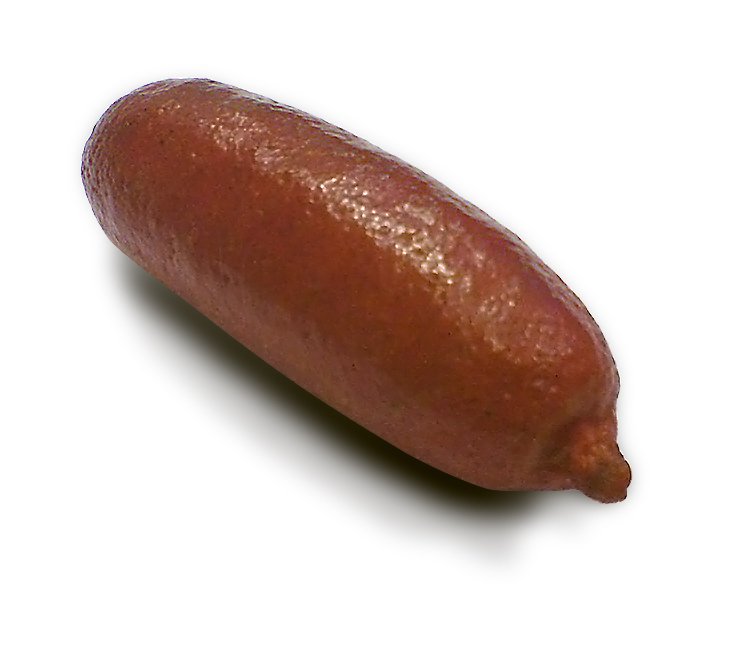
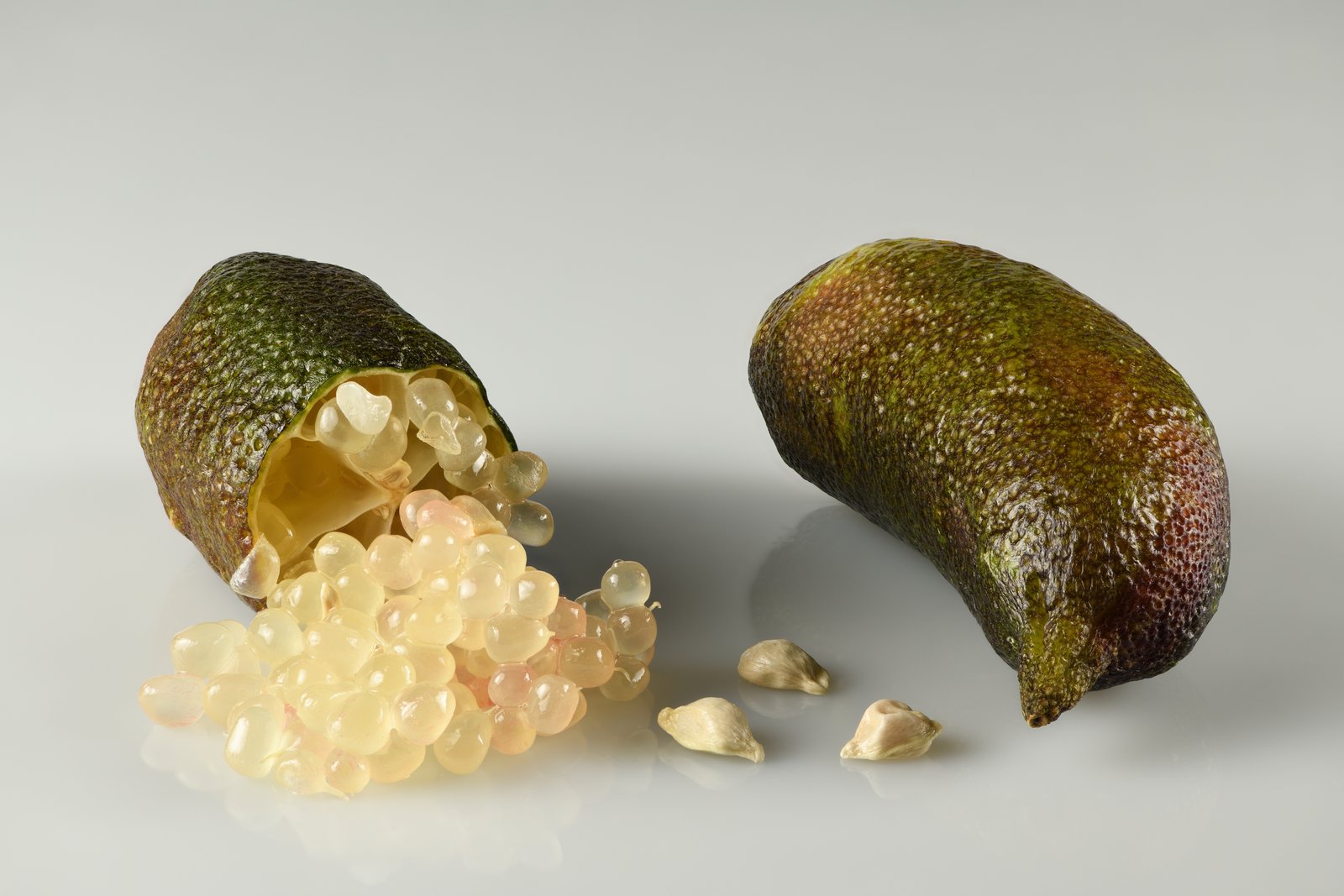
The red-fleshed branch of the family, with a name that sounds like a jewelry counter. Rainforest Pearl is a selection of Citrus australasica var. sanguinea — the red-fleshed finger lime — in the Citrus Gems range, with green fruit tinged with crimson and pink flesh. That lineage matters: sanguinea is not a marketing word, it is the botanical variety whose flesh runs red and pink, and Rainforest Pearl is the garden-friendly form of it, sold by Australian nurseries as a finger lime through and through.
Pink pearls are the point here. They are not a different flavor from green pearls in any dramatic way — they are lime, sharp and popping — but color changes how food is received, and pink caviar on a white plate, in a clear cocktail, or over a pale fish dish is a different experience from green. If you already grow a green finger lime, Rainforest Pearl is the complementary second tree, not a duplicate: same culture, different color story.
Florida note: No cultivar-specific Florida trial was found for this one, so be honest about what the Florida case rests on: it is inferred from species-level UF/IFAS work reporting that finger lime varieties have grown well in Central and South Florida conditions, not from a trial of this cultivar itself. That is still a good reason for optimism in zones 9 to 11 outdoors, with a pot and winter protection further north — it is just not the same as a cultivar trial, and this guide will not pretend otherwise. For the species, see the Finger Lime guide; for the crimson-blushed, pink-pearled selection, you are in the right place.
How to grow
Buy a grafted tree from certified disease-free stock, on a rootstock suited to your site — trifoliate orange is the usual pick where cold hardiness matters, sour orange where it thrives. Plant in the warmest, sunniest, best-drained spot you have, with the graft union above the soil line, and give it room: finger limes are thorny, so site the tree where those spines will not ambush a path, a hose, or a bare leg. A south or southwest exposure with a little reflected warmth from a wall or patio is ideal, and drainage is non-negotiable — citrus roots drown in standing water faster than almost any other fruit tree’s roots.
In Florida, citrus greening (HLB), spread by the Asian citrus psyllid, is the defining challenge for every citrus tree, finger limes included. There is no cure, and no finger lime is HLB-resistant, so start clean, scout new flush for psyllids, and keep the tree vigorous, because a stressed tree declines faster. Container growing works beautifully for finger limes in marginal zones: a big pot on wheels can live outdoors in the warm months and roll under cover for a freeze, which is the honest plan for most of the country outside zones 9 to 11.
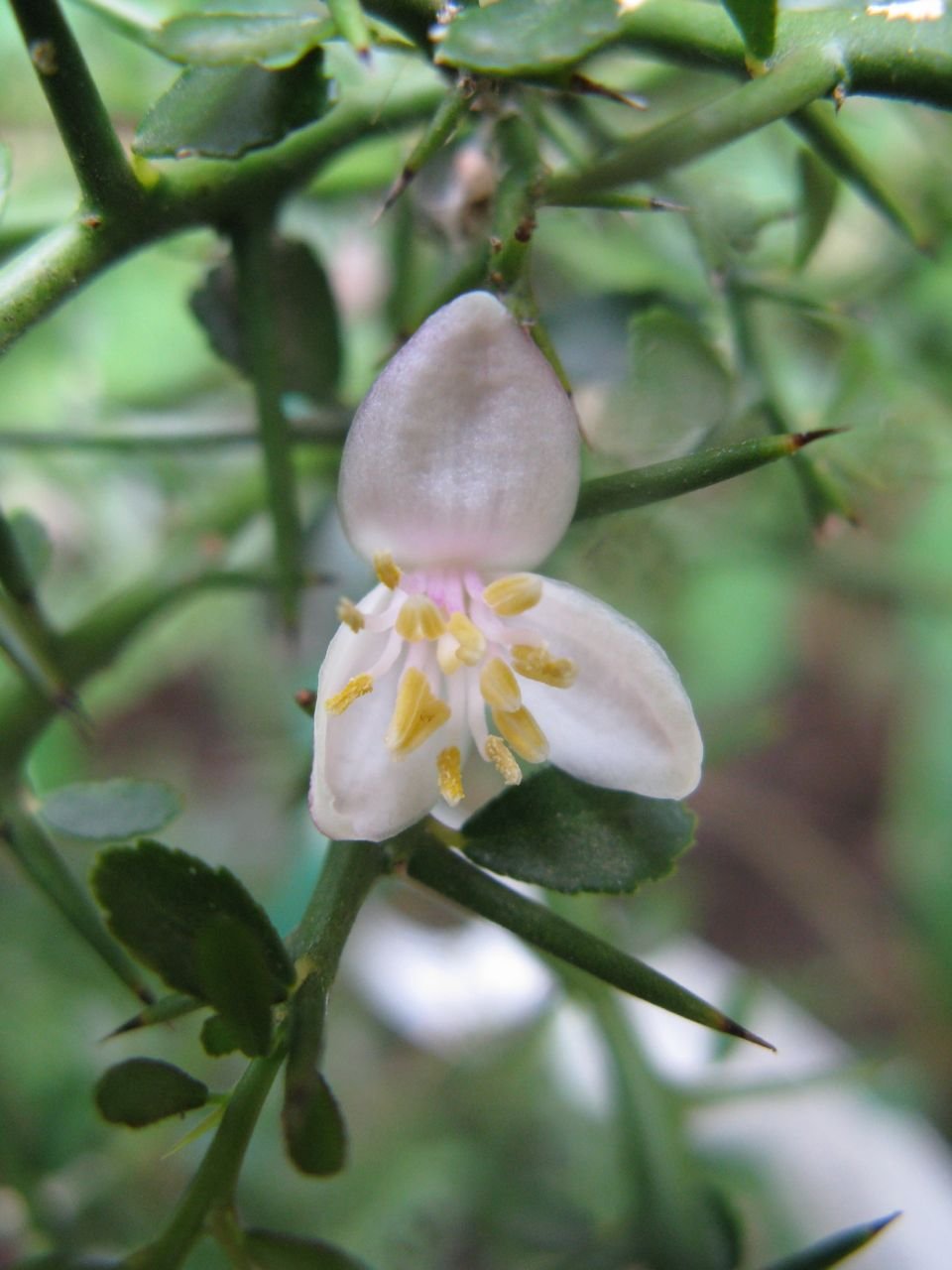
Prune lightly — dead wood out, canopy open enough for air and for your hands at harvest, and gloves on, always. Finger lime flowers are small and white to pinkish, fragrant in their quiet way, and the trees are self-fertile, so one tree fruits on its own. Do not expect a seedling to behave like a named cultivar: seedlings vary, take longer to fruit, and may not match the parent at all, which is exactly why you buy the named variety grafted.
Water & feeding
Water deeply, then let the top few inches of soil dry before watering again. Finger lime wants even moisture while fruit swells, but it hates wet feet — soggy roots invite Phytophthora root rot, and a drowned finger lime is a dead finger lime. Young trees need more frequent water through their first dry season, and container trees need it far more often, because a pot in Florida sun dries out with impressive speed. Mulch to hold moisture, keeping the mulch off the trunk itself.
Feed with a citrus fertilizer split across spring and summer rather than dumped in one dose, and watch for micronutrient deficiencies — yellowing between leaf veins often means zinc or manganese, which Florida’s sandy, high-pH pockets love to lock away. Castings help soil life, but they do not replace the citrus feed; use both. Skip fertilizer in late fall, when tender new growth would walk straight into a freeze.
Common problems
- Citrus greening (HLB) — yellowing, blotchy mottled leaves, lopsided bitter fruit, and slow decline, spread by the Asian citrus psyllid. There is no cure: buy certified disease-free trees, scout for psyllids, keep trees vigorous, and remove confirmed trees so they do not infect neighbors.
- Asian citrus psyllid — tiny insects on new flush that spread greening. Watch new growth, encourage beneficial insects, and treat flush carefully if psyllids appear.
- Citrus leafminer — squiggly trails in young leaves. Mostly cosmetic on an established tree; protect new flush on young trees and avoid pushing soft growth with late nitrogen.
- Scale insects — bumps on stems and leaves that sap vigor and invite sooty mold. Inspect regularly and treat with horticultural oil.
- Frost damage — finger lime is cold-tender and damaged below freezing. Move pots in before cold weather; in-ground trees in marginal zones need covering, and water before a freeze, since wet soil holds heat better than dry soil.
- Root rot (Phytophthora) — follows poor drainage and overwatering. Plant high, drain well, and water deeply but infrequently.
- Thorns — sharp spines up to about an inch long in the leaf axils. Prune with gloves and site thoughtfully; this is a plant that bites back.
Harvest
Pick when fruit feels full and heavy and the skin gives slightly; the crimson blush is a hint, not a guarantee, so taste-test. Cut and squeeze out the pink pearls, and use them fresh — they lose their pop if cooked hard and keep only briefly refrigerated. A little goes a long way when the color is doing half the work.
Browse all plant & pest guides
Saving seeds
The red-fleshed branch of the family, with a name that sounds like a jewelry counter. Rainforest Pearl is a selection of Citrus australasica var. sanguinea — the red-fleshed finger lime — in the Citrus Gems range, with green fruit tinged with crimson and pink flesh. That lineage matters: sanguinea is not a marketing word, it is the botanical variety whose flesh runs red and pink, and Rainforest Pearl is the garden-friendly form of it. As a named finger lime it is kept true by grafting, not by seed — buy a grafted tree from certified disease-free stock, on a rootstock suited to your site. Plant in the warmest, sunniest, best-drained spot you have, with the graft union above the soil line, and give it room: finger limes are thorny, so site the tree where those spines will not ambush a path. The full method is in the Saving seeds section of the Finger Lime guide.