
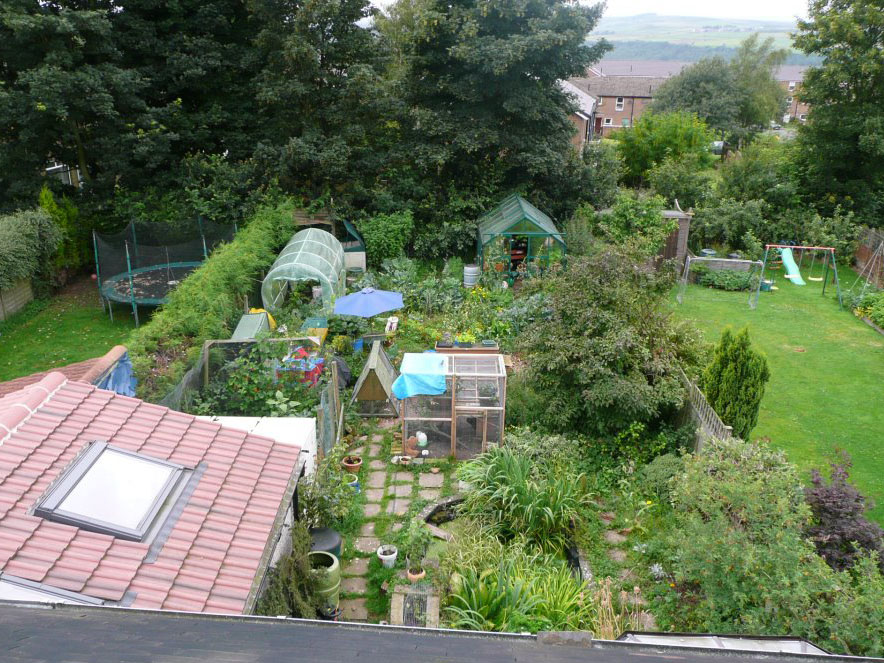
A food forest is a garden that stopped pretending to be a farm and started pretending to be a forest — except every plant in it is edible, medicinal, or useful, and the whole thing mostly takes care of itself once it is established. Florida is almost unfairly good at this. Florida is also uniquely good at humbling you. Here is the whole craft, Living Root style: real soil science, a few dad jokes, and no hand-waving.
What a food forest actually is
A forest has layers, and a food forest copies the architecture and stocks every layer with something you can eat or use. The classic seven layers are: canopy (tall fruit and nut trees), subcanopy (small trees like banana and papaya), shrub (berries, pigeon pea), herbaceous (herbs and greens), groundcover (sweet potato, pumpkin), root (cassava, ginger, turmeric), and vertical or vine (grapes, passionflower). Below all of it is the layer nobody photographs: the soil food web — bacteria, fungi, protozoa, nematodes, earthworms — the livestock you never see but always feed. A food forest is what happens when a garden gets tenure: it stops being replanted every season and starts compounding.
Why Florida is (almost) cheating
Year-round growing season. Summer rain. Sun like it is personal. But Florida collects its payment in other ways, and you should know them before you plant. The soil is mostly sand — a beach that forgot to go home — which means low organic matter, low cation exchange capacity (CEC), and nutrients that wash straight through unless something holds them. Root-knot nematodes are a fact of life in sandy soil. Summer fungal pressure is real. Hurricanes prune for you, rudely, so plant wind-firm and prune for airflow. And winter: in zone 9b you will get cold nights, so every tropical plant needs a frost plan or a willingness to die back and regrow. Florida does not forgive gardeners who only read the average temperature and ignore the coldest night.
Florida has three states in one state
North Florida is the coldest, with real chill hours for temperate fruit. Central Florida — that is zone 9b — is the transition zone: tropicals with protection, low-chill temperate fruit, and the widest edible palette in the state if you plan for both heat and cold snaps. South Florida is tropical, with almost no frost. The rule for buying plants is simple: buy for your yard’s coldest night, not its average day. Books that split the state into regions earn their keep here, because a plant that thrives in Miami and a plant that thrives in Tallahassee are not the same plant, even when the catalog says “Florida.”
Start with the soil, not the shopping list
Sheet-mulch the lawn: cardboard flat on the grass, then thick mulch on top. Do not till the food web to death — tilling shreds fungal hyphae, and fungal hyphae are the internet of the soil: the network that moves nutrients and water between plants. Feed the soil and let the soil feed the plants: compost, worm castings, and mulch that breaks down into organic matter. Mulch is not decoration in Florida; it is the difference between soil and a sandbox. It holds moisture, smothers weeds, feeds microbes as it decays, and keeps the sand from forgetting it was supposed to be soil. Water deeply and infrequently while plants establish, then wean them — daily sprinkles train shallow roots, and shallow roots are the first thing a dry spell collects.
The seven layers, Florida edition
Canopy: native red mulberry (Morus rubra), loquat, and — in the warmer pockets, or with a frost plan in 9b — mango. Subcanopy: banana and papaya, both cold-sensitive, so in 9b treat them as die-back perennials or be ready to protect them. Shrub: pigeon pea (Cajanus cajan), elderberry, Barbados cherry. Herbaceous: perennial greens and culinary herbs. Groundcover: sweet potato (Ipomoea batatas) and Seminole pumpkin (Cucurbita moschata), which will happily cover ground you were tired of mowing anyway. Root: cassava (Manihot esculenta), ginger, turmeric. Vertical: muscadine grapes and passionflower or passionfruit on a fence or trellis. Check cold-hardiness for your own yard before you fall in love with any tender plant on this list — 9b gardeners protect, or accept die-back, or both.
Guilds: plants that pay each other’s rent
A guild is a small community of plants that feed each other instead of competing. The classic recipe is a tree, a nitrogen fixer, a mulch-maker, a groundcover, a pollinator attractor, and a pest confuser, all sharing the same patch. Here is one example guild, not a prescription: a mulberry canopy overhead, pigeon pea beside it fixing nitrogen through rhizobia bacteria in its root nodules (the plant equivalent of a roommate who pays rent in fertilizer), Mexican sunflower (Tithonia diversifolia) grown to be chopped and dropped as mulch, sweet potato covering the ground, and herbs scattered in for pollinators. Chop-and-drop is the engine: grow the fast plants, cut them, drop them as mulch, and let the soil food web eat them and hand the nutrients back to the tree. The system feeds itself, which is the entire point — you are building a kitchen, not a vending machine.
The honest timeline: succession, not instant forest
Year one is soil, mulch, pioneers (pigeon pea, sunflower, cover crops), water, and observation. Year two is shrubs, small trees, and groundcovers filling in. Year three and beyond is canopy closing, shade changing everything underneath, and shade-tolerant layers going in below. A food forest is not planted; it is installed in stages. Anyone selling you an instant food forest is selling you a photograph.
Mistakes that kill Florida food forests
- No frost plan for tropicals in 9b. The coldest night is the exam; everything else is homework.
- Bare soil. Mulch, or it did not happen.
- Planting known invasives. A fast grower that escapes is not a food forest; it is a future removal bill. Check before you plant.
- Planting everything at once. Succession is not slow gardening; it is gardening that survives.
- Forgetting establishment water. “Drought-tolerant once established” is doing a lot of work in that sentence — the “once established” part is your job.
- Spraying the pollinators you planted the whole thing to attract.
Go deeper: two books worth owning
This guide teaches the craft. The plant-by-plant deep detail lives in two books that shaped it, and both are worth shelf space:
Transforming Florida Yards: A Regional Food Forest Guide by Amanda Pike (Pineapple Press, 2023, paperback, 288 pages, ISBN 9781683343295) — two hundred edible plants, one page each, arranged alphabetically, with hardiness zones, sun and water needs, propagation, culinary use plus a recipe, organized by Florida region. When this guide says “check the plant,” that book is where you check it.
Create Your Own Florida Food Forest by David the Good — the Florida food-forest book, written from the Florida gardening perspective: what actually grows here, what the climate does to it, and how to think like a food forest instead of a row garden.
Both books, plus the rest of the shelf for growing native fruits, vegetables, and herbs in Florida, are on our recommended reading list.
Free Living Root guides to start with
While the books ship, start from the plant side with our own free guides: the Florida native plant finder, Florida’s edible native plants, and the plant guides library. Plant the mulch first. The forest will follow.
🌱 Keep learning
Three related guides worth reading next:
- Grow Your Own Kitchen Garden — A kitchen garden is exactly what it sounds like — dinner, steps from the door.
- The Companion Planting Guide — Which plants help each other — and which combinations to avoid.
- Tomatoes Are Thirsty Drama Queens — A hydration intervention for the thirstiest plant in your garden.
🪱 Your Soil Needs This
Reading about healthy soil is great. Growing in it is better. Our small-batch, traceable worm castings are the shortcut your garden deserves.
Shop Worm Castings Subscribe & SaveEvery bag comes with a lot certificate. Know what's in your soil.