
🌿 Milkvetch
What it looks like
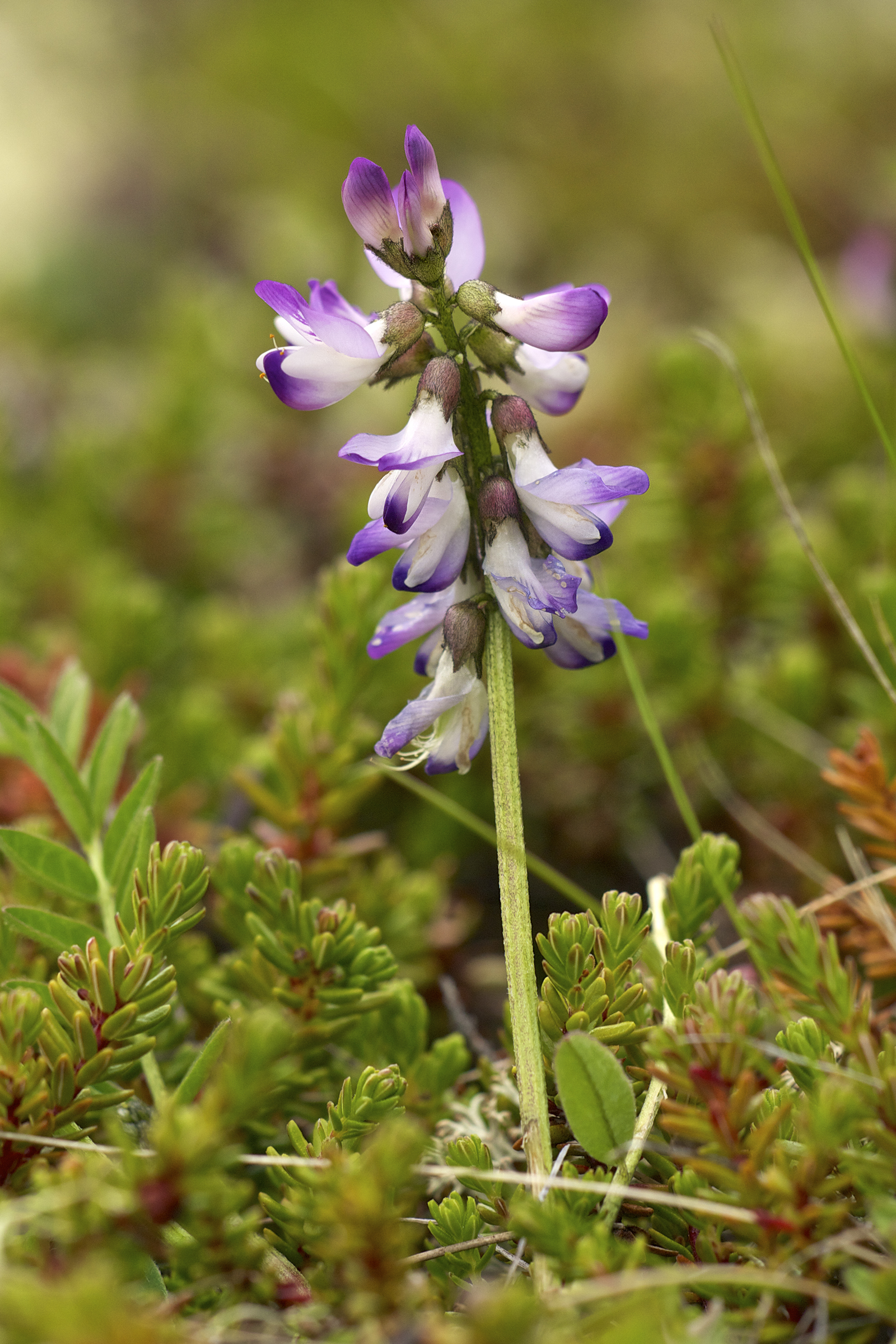
Milkvetch is not a plant. It is a continent of plants wearing the same surname. The genus Astragalus, in the legume family (Fabaceae), is one of the largest plant genera on Earth — sources put it at roughly 2,500 to more than 3,000 species, and it is routinely described as the largest genus of flowering plants by number of described species. That scale is worth sitting with for a moment. If you planted one Astragalus species a day, you would still be planting years later, and you would have covered alpine cushions, prairie perennials, desert shrubs and a fair number of plants that look almost identical until you look at their pods. Botanists find Astragalus identification difficult even with training, which is a polite way of saying: buy named seed from a reputable source, and do not try to identify a wild milkvetch from a phone photo alone.
What the species share is a family resemblance. Most are herbaceous perennials (some annuals, some small shrubs) with pinnately compound leaves — leaflets arranged along a central stalk — and pea-like flowers in spikes or racemes, in white, cream, yellow, pink, purple or bicoloured combinations. Canadian milkvetch (Astragalus canadensis) is a good representative: a stout, upright perennial, 1 to 4 feet tall with a spread of about 1.5 to 2 feet according to Missouri Botanical Garden, with compound leaves and dense, cylindrical spikes of pale yellow to greenish-white pea flowers, blooming in summer. Alpine milkvetch (Astragalus alpinus) is at the other end of the scale: a low, mat-forming plant of cold, rocky places, with nodding purple or purplish flowers, circumpolar in the far north and reaching south in the mountains to Colorado and New Mexico in North America.
The pods are the giveaway and the warning. Astragalus pods range from small and papery to inflated and bladder-like — groundplum (Astragalus crassicarpus) gets its name from its plump, plum-like pods that sit on the ground — and they rattle when dry in some species. Those pods, and the plants that bear them, are why this guide carries a warning that other guides in this series do not: many Astragalus species are locoweeds, toxic to livestock. More on that below, because it changes how and where you should grow them.
How to grow
Grow milkvetch like a prairie or alpine legume, not like a bedding plant. Canadian milkvetch, the most garden-friendly species in this guide, is best grown in evenly moist, well-draining soil in full sun, according to Missouri Botanical Garden, and it tolerates drought and a wide range of soil types as long as they drain. It is hardy in zones 3 to 8. That combination — sun, drainage, tolerance of lean soil — is the pattern for the genus: most milkvetches come from open, sunny, well-drained habitats, from prairies and bluffs to streambanks, roadsides and mountain scree, and they sulk in shade and soggy soil. Alpine milkvetch wants the leanest, grittiest version of that: a rock garden, scree bed or alpine trough with sharp drainage, full sun and cool roots.
Sow seed in autumn or stratify before spring sowing; many Astragalus seeds have hard coats and benefit from scarification (a gentle nick or a soak) and a cold period. Do not disturb established plants unnecessarily: Canadian milkvetch grows from a taproot with rhizomes, tends to colonise an area, and is noted as having low tolerance of root disturbance. Plant it where it can stay, give it room to form a clump — about 18 to 24 inches between plants — and let it settle. It is short-lived as individual plants go, around 3 to 4 years in some accounts, but it self-seeds, so a patch renews itself if you let some pods ripen.
Alpine species need a different conversation. Do not plant alpine milkvetch in a hot, humid lowland garden and expect it to thrive; it is a circumpolar, cold-climate plant, and heat plus humidity are its enemies. In a cool, northern or mountain garden, or in an alpine trough with gritty mix and careful watering, it is a charming, tough little plant. In Florida or the Gulf South, milkvetch as a genus is largely the wrong tool for the job — Canadian milkvetch is notably absent from Florida in distribution accounts — and a butterfly gardener there will do better with a senna, a ticktrefoil or a native legume suited to heat. Matching the plant to the climate is not snobbery; it is kindness.
Water & feeding
Water to establish, then water with restraint. Canadian milkvetch tolerates both dry and wet soils as long as they drain, but “tolerates wet” is not “loves wet,” and a milkvetch in standing water is a milkvetch on its way out. Deep, infrequent watering encourages the taproot to go down, which is exactly what a prairie legume wants. In a rock garden, water alpine species sparingly and always from below the foliage if you can, keeping the crown dry.
Feeding is, again, a legume story. Milkvetch partners with root-nodule bacteria to fix atmospheric nitrogen, so it makes some of its own fertiliser and enriches the soil for its neighbours. That is why Canadian milkvetch is used in prairie restoration and erosion control: it is not just pretty, it is working. A compost mulch in spring is enough. Do not feed heavily with nitrogen fertiliser — you will get soft growth, fewer flowers, and a plant that has forgotten why it evolved nodules in the first place. The soil science moral, repeated across this whole legume series, is simple: feed the soil, let the bacteria feed the plant, and spend the fertiliser money on more plants.
Common problems
- Toxicity — read this first. Many Astragalus species are locoweeds, toxic to livestock. The toxic principle in the classic locoweed syndrome is swainsonine, produced by a fungal endophyte living in the plant, and it causes neurological poisoning (“locoism”) in grazing animals; other Astragalus species accumulate selenium or nitro compounds that are also harmful. Horses are especially sensitive, and the University of Arizona extension advises treating all locoweeds as poisonous to herbivores, especially cattle and horses, unless there is positive evidence a species is harmless. Do not plant milkvetch in or next to pasture, do not feed it to livestock, and do not assume that because one species is grown as an ornamental, every milkvetch is safe to graze. This is not medical advice — it is a gardening warning, stated plainly, as it should be.
- Short life. Individual plants may live only a few years. Let some seed ripen so the patch renews, or sow fresh seed periodically.
- Root disturbance. Taprooted species resent moving. Plant once, plant well, and leave them alone.
- Wrong climate. Alpine species in hot, humid gardens, and prairie species in soggy shade, will fail no matter how much you water or feed them. Match species to climate first.
- Identification. With thousands of similar species, do not guess at a wild milkvetch’s identity, and do not eat or use any wild Astragalus on the basis of a garden guide. Buy named plants, keep the label, and enjoy them as garden and butterfly plants.
Harvest
There is no food harvest recommended for milkvetch in this guide. Some Astragalus species have long histories of use elsewhere, and some are sold as supplements, but this guide does not recommend harvesting, eating or using milkvetch medicinally — the toxicity variation across the genus, and the difficulty of identifying species reliably, make that a bad idea to improvise. The harvest that is safe and useful is seed, for renewing your patch, and flowers, for a vase. Collect pods when dry, store seed cool and dry, and cut flower spikes when freshly open. And keep the label: in a genus this large, “the milkvetch by the path” is not an identification, and the next gardener (or the next you, in three years) will be grateful for a species name.
Browse all plant & pest guides
Saving seeds
Milkvetch is a genus, not a single plant, so this section is genus-level on purpose: the details vary by species, but the seed habits hold across Astragalus. The seed wears a hard coat, and that coat is the whole story. Left alone, it can sit in the soil for years waiting for the right moment. To wake it up on your schedule, nick the coat with a file or sandpaper, or pour just-boiled water over the seed and let it soak overnight — the seeds that swell are the ones that are ready, and the ones that stay hard can go through the treatment again.
Sow in spring, barely covered, in lean, well-draining soil. Milkvetch is a legume, and like most legumes it fixes its own nitrogen with the help of rhizobia bacteria in the soil — rich, fertilized beds make floppy plants, and poor, sunny, stony ground is where it is happiest. Germination is uneven even with scarification, which is the plant hedging its bets, so sow more than you need and thin to the strongest.
Collect the seed when the pods are dry and papery and rattle when you shake them. Some species scatter their seed the moment the pod splits, so a paper bag tied loosely over a ripening pod catches what would otherwise be lost. Dry the seed thoroughly before jarring it — Florida humidity is the enemy of stored seed — add a silica gel packet, and keep the jar cool and dark.
One caution: a few milkvetches are toxic to livestock, and the genus includes some plants that accumulate selenium from the soil. That is a grazing concern, not a garden one, but know your species before you plant it where animals graze. For the garden, the seed you save is next spring’s nitrogen-fixer, grown from a plant that asked for almost nothing and gave the soil something back.
Species in this group
Alpine milkvetch — Astragalus alpinus — A low, mat-forming, circumpolar perennial with nodding purple or purplish flowers, for rock gardens and cool climates; not a Florida plant.
Astragalus frigidus — A cold-climate milkvetch of northern and alpine regions, for cool gardens with sharp drainage; check local hardiness before planting outside its range.
Canadian milkvetch — Astragalus canadensis — A stout perennial, 1 to 4 feet tall, zones 3 to 8, with dense spikes of pale yellow to greenish-white pea flowers in summer; the most garden-friendly species in this guide, for prairies, meadow edges and restoration plantings.
Groundplum — Astragalus crassicarpus — A prairie milkvetch named for its plump, plum-like pods that rest on the ground; a low, spreading plant for sunny, well-drained prairie gardens.
Spotted locoweed — Astragalus lentiginosus — A widespread western milkvetch with spotted pods, included here as a warning as much as a plant: it is a locoweed, toxic to livestock, and should not be planted near pasture or grazed.
Warning, repeated because it matters: many Astragalus species are locoweeds toxic to livestock, through swainsonine, selenium accumulation or nitro compounds, and toxicity varies by species. Do not plant milkvetch where livestock graze, and do not use any milkvetch as food or medicine on the basis of this guide.