
⛳ Bentgrass
What it looks like
Bentgrasses are the aristocrats of the turf world — fine-bladed, dense, and capable of being mowed lower than almost any other grass, which is why they own the putting green. The name “bent” comes from the plant’s habit: its stems bend along the ground, rooting as they go, before turning upward. Creeping bentgrass spreads by above-ground runners called stolons that root at the nodes, forming a smooth, tight mat; colonial bentgrass spreads more slowly by short rhizomes and stolons and forms a slightly looser turf; velvet bentgrass is the finest-textured of all, with a soft, velvety sheen that has launched a thousand lawn jealousies. Unmowed, bentgrasses grow anywhere from a few inches to about 3 feet tall, depending on species, and throw up delicate, airy panicles — colonial bent’s panicles look like a purple haze from a distance in May and June.
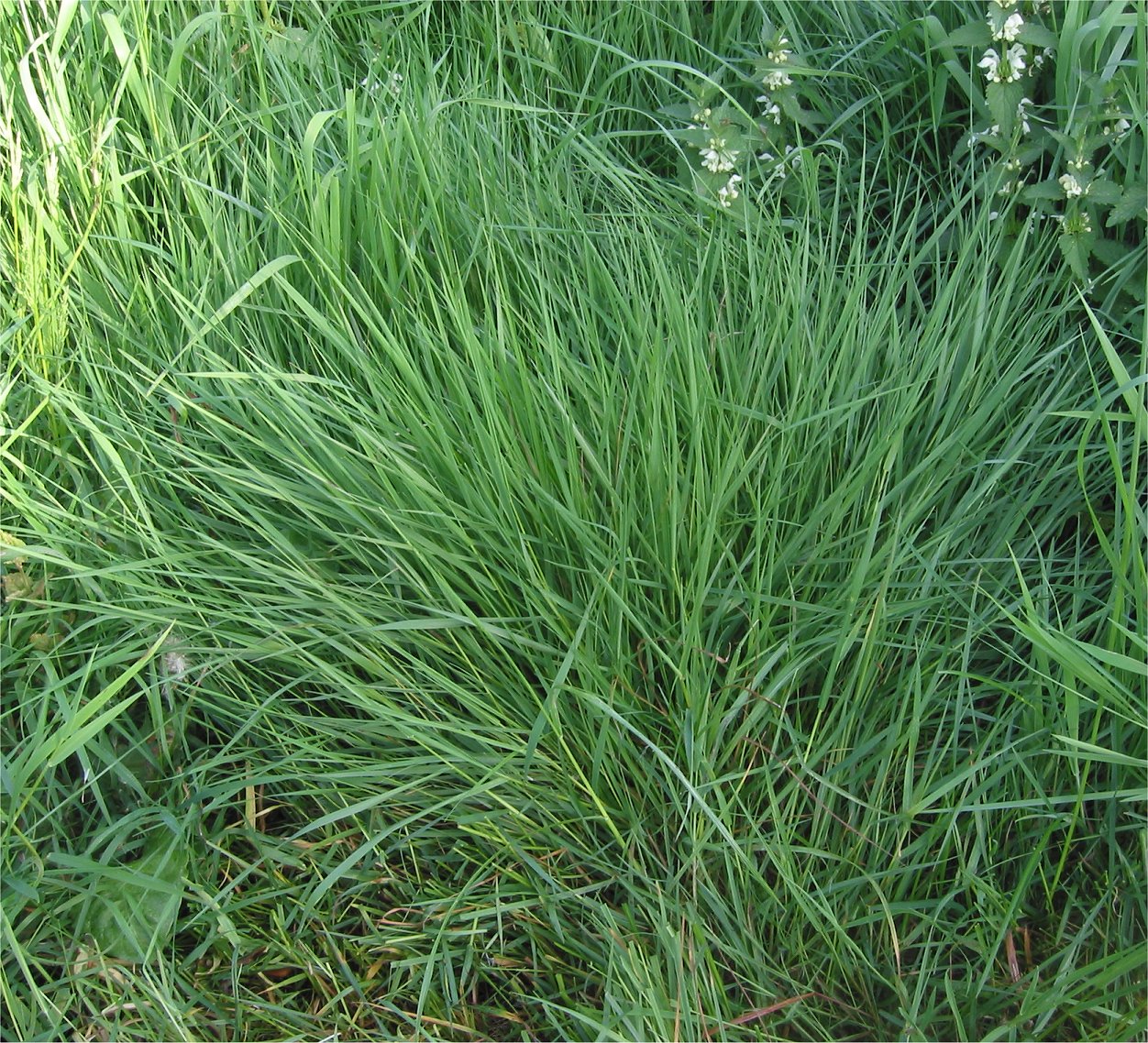
For butterflies, bentgrasses matter at the wild end of the spectrum, not the putting-green end. In meadows, pastures, and damp grasslands, Agrostis species serve as caterpillar host plants for grass-feeding skippers and other butterflies, which is the context in which they appear in butterfly guides. A bentgrass mowed at a quarter inch feeds no caterpillars at all; the same species left to grow in a meadow margin feeds several. As with bluegrass, the wildlife value lives in the unmowed edge, not the manicured middle.
Florida note: Bentgrass is a cool-season grass of cool, humid climates, and it is not a sensible lawn grass for Florida’s heat. It needs consistent moisture, struggles with heat stress, and is rarely used outside cool-season turf regions. Grow it in spirit in Florida — admire the meadow ecology — but choose a warm-season grass for an actual Florida lawn.
How to grow
Bentgrass is a cool-season perennial, and its calendar follows the cool seasons: establish in late summer to early fall, when soil is warm but air is cooling, or in spring where falls are short. It wants well-drained, fertile soil — sandy loams or loams are ideal — with a pH of 5.5 to 6.5, and full sun to light shade. Test your soil and amend with lime to raise pH or sulfur to lower it, as needed, before seeding. For turf, seed creeping bentgrass at roughly 0.5 to 1 pound per 1,000 square feet — a small amount goes a long way with such fine seed — or establish from sod or stolons. Keep the seedbed consistently moist until germination, then water deeply and less often as roots deepen.
Here is where honesty matters: creeping bentgrass is a high-maintenance turf. It wants frequent mowing — putting greens are cut at a fraction of an inch, home lawns higher but still often — regular feeding, and active thatch management, because its aggressive growth builds a thick thatch layer. Colonial bentgrass is the lower-input cousin, better suited to lawns and ornamental turf that does not need greenkeeper-level care. For a meadow or wildlife planting, skip all of that: sow or allow bentgrass in a damp meadow edge, mow once a year after seed set, and let the caterpillars do their work. Bentgrass in a meadow is a completely different plant, temperamentally, from bentgrass on a green — same genus, different job.
Water & feeding
Bentgrass loves moisture and hates drought. It thrives in cool, humid conditions with consistent water, and it is often grown on pure sand or sand-based root zones precisely because those drain freely while being irrigated often — a combination home gardeners rarely replicate. In a lawn, water deeply enough to wet the root zone and avoid letting the turf dry out in summer; bentgrass has only moderate heat tolerance and will thin out under drought stress. In a meadow setting, site it where soil stays average to moist — damp meadows, stream edges, and low ground — and it will largely take care of itself.
On feeding, bentgrass turf is hungry: regular, modest nitrogen applications through the growing season keep it dense and competitive, with fall feeding especially important for recovery. But rich feeding plus frequent watering plus low mowing is also the recipe for thatch, so the feeding program and the mowing program must be planned together, not separately. Meadow bentgrass, by contrast, wants lean soil — feeding a meadow only encourages rank grass at the expense of wildflowers and host-plant diversity. Know which bentgrass you are growing, and feed accordingly: the green gets dinner, the meadow gets left alone.
Common problems
- Thatch buildup: Creeping bentgrass’s aggressive stolon growth builds thick thatch, which harbors disease and blocks water. Regular aeration and topdressing are part of the deal for turf; meadow plantings sidestep the problem entirely.
- Heat and drought stress: Bentgrass tolerates cold beautifully — creeping bent is one of the most winter-hardy cool-season turf species — but it wilts in heat and drought. Do not plant it where summers are long, hot, and dry and expect a green lawn without irrigation.
- Dollar spot and other turf diseases: Bentgrass greens are famously prone to dollar spot, brown patch, and anthracnose, especially under humid conditions. Disease-resistant cultivars, morning watering, and avoiding excess nitrogen in summer heat all help.
- Weed invasion — in both directions: Bentgrass invades neighboring lawns of bluegrass or fescue by stolons, and is itself invaded by annual bluegrass. Keep bentgrass where it belongs, and do not mix it casually into other turf.
- High maintenance demands: The honest headline. Creeping bentgrass is rarely recommended for home lawns precisely because its maintenance needs exceed what most homeowners want to give. Colonial bent is the friendlier choice for a home lawn.
Harvest
Bentgrass is not a food harvest, but it does have a cutting rhythm that defines it. For turf, the “harvest” is mowing: creeping bentgrass tolerates extremely low mowing, down to a fraction of an inch on greens, while colonial bentgrass lawns are usually kept higher. Mow frequently, removing only a little at a time, and return clippings where practical. For forage, bentgrasses serve as pasture grasses, and they are cut for hay before they get stemmy. For a wildlife meadow, the harvest is patience: let the panicles flower in early summer, let seed ripen, let caterpillars feed, and cut once in late season. And for seed production, harvest when the panicles are ripe but before they shatter — fine grass seed waits for no one.
Saving seeds
Let us be blunt up front: a mown bentgrass lawn will never give you seed, because seed comes from flower heads and you have been mowing those off all season. Saving bentgrass seed means deliberately keeping a sacrificial patch — a corner of plants you do not mow, do not walk on, and allow to grow tall, head out, and go to seed. If that sounds like more devotion than your lawn inspires, the stolon method at the end of this section is the easier honest route.
Creeping bentgrass (Agrostis stolonifera) and its bentgrass cousins are wind-pollinated cool-season grasses, and their seed is famously, comically small — dust-fine grains that make cleaning and handling a fiddly business. Let the unmown patch flower and ripen until the panicles turn straw-coloured and the seed shakes free with a rub between your fingers. Cut the stalks into a paper bag, dry them thoroughly under cover, then rub and thresh them over a tray and winnow gently to separate seed from chaff. Expect contamination: other grasses, especially annual bluegrass, love to sneak into a seed patch, and with seed this tiny you cannot pick the intruders out by hand. A weeded, pure patch is the whole game — if your patch is a mixed lawn, what you harvest will be a mixed lawn.
Sow saved seed thinly on the surface of firm, moist soil — it needs light and constant moisture to get going, and a heavy covering will bury it out of existence — and keep it damp until established. Store any surplus seed thoroughly dry, sealed, cool and dark; bentgrass seed keeps well under good conditions, remaining usable for several years when it stays dry, which in Florida means an airtight jar with desiccant, not a paper packet in the shed.
And the cultivar caveat, stated plainly: a named bentgrass cultivar is a selected, bred line, and seed saved from it in a home garden — open-pollinated by whatever bentgrasses and weedy grasses were flowering nearby — will not reliably reproduce that cultivar. If you are maintaining a green where uniformity matters, buy fresh certified seed of the cultivar you want. Home-saved bentgrass seed is for experiments, patching, and meadow corners, not for a championship putting surface.
If all of that sounds like too much ceremony for a grass, take the vegetative shortcut the plant itself offers. Creeping bentgrass spreads by stolons — above-ground runners that root at the nodes — so you can lift rooted stolon pieces or small plugs from a healthy patch and plant them where you want new turf. It is faster, it is an exact clone of the parent, and it is how most home gardeners actually spread a good bentgrass patch. One last Florida note: bentgrasses are cool-season grasses that struggle in Florida heat, and no amount of careful seed saving changes that — save seed for the novelty and the learning, not as a cure for a lawn that is unhappy in the climate.
Species in this group
- Colonial bentgrass — Agrostis capillaris: Also called common bent or browntop. A rhizomatous and stoloniferous perennial, native to Eurasia and widely introduced elsewhere, growing from a few inches to about 3 feet tall but accepting mowing happily. Suited to cool-season regions and coastal zones, tolerant of a range of soils except strongly alkaline ones. The best bentgrass choice for a lower-input lawn.
- Creeping bentgrass — Agrostis stolonifera: The putting-green standard. A stoloniferous perennial whose prostrate stems run 0.4 to 1 meter long, rooting at the nodes, with a pointed ligule up to 5 millimeters long that distinguishes it from colonial bent. Native to Eurasia and North Africa, now naturalized across temperate regions. Flowers in spring and summer; the most commonly used Agrostis species in turf.
- Velvet bentgrass — Agrostis canina: The luxury lawn grass, prized for its exceptionally fine texture and velvety sheen. Needs consistent moisture and cool conditions, and rewards them with the softest turf in the genus. A connoisseur’s grass, not a beginner’s.
- Redtop — Agrostis gigantea: A taller bentgrass, sometimes called redtop or black bent, growing up to about 4 feet in the wild. Used for forage, erosion control, and in wetter meadows; less cold-tolerant than creeping bent and sometimes treated as a short-lived perennial in turf use.