
🍵 New Jersey Tea
What it looks like
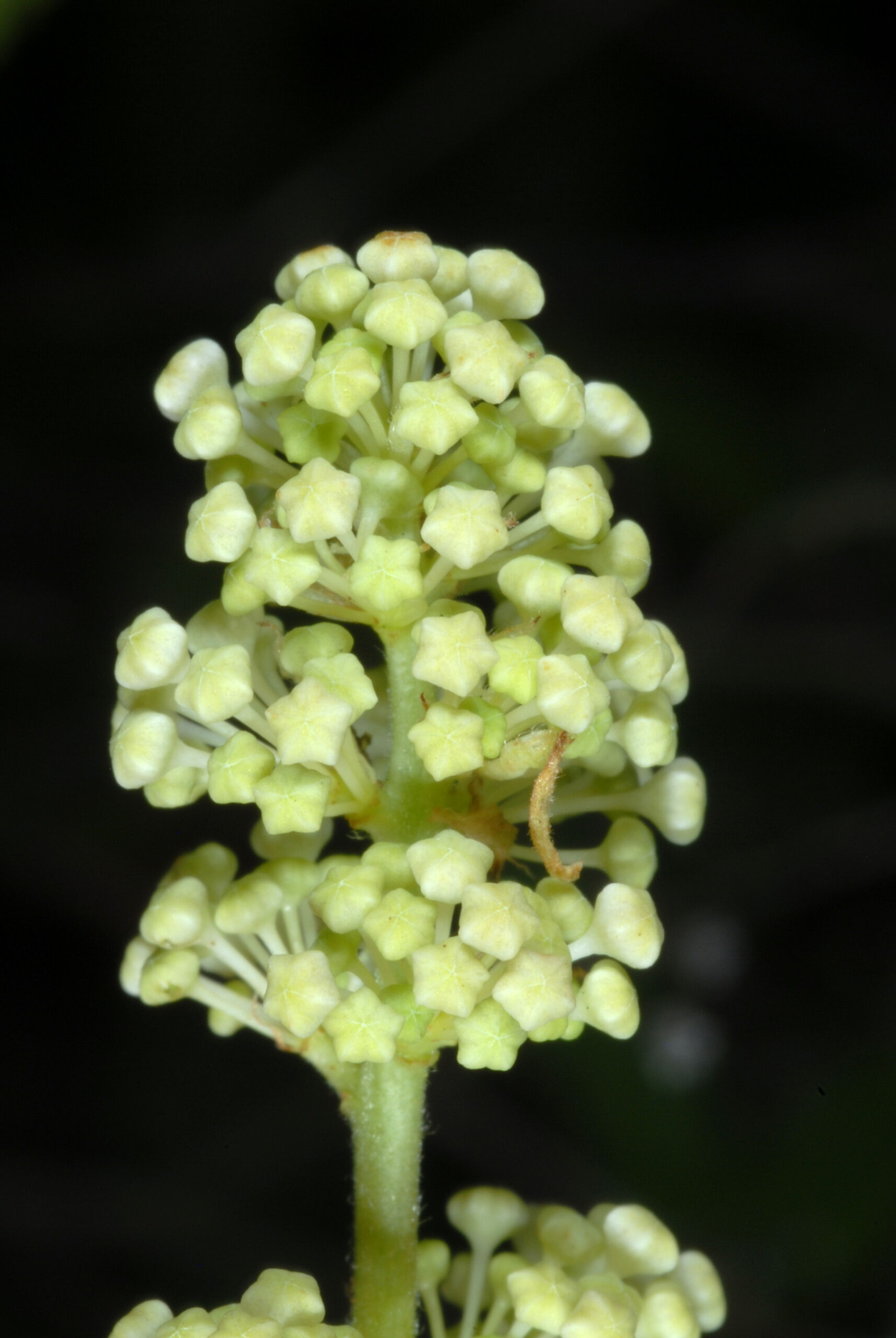
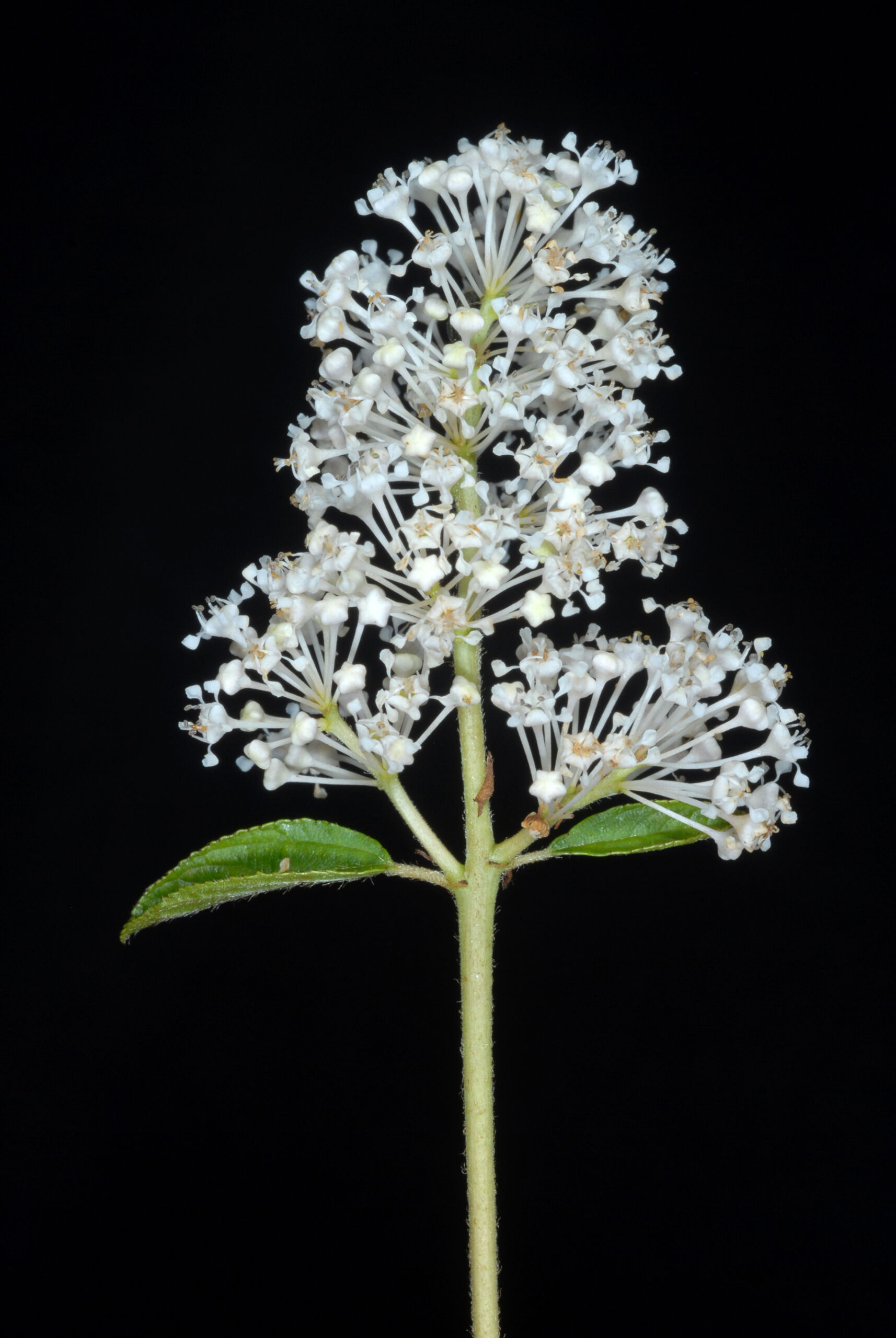
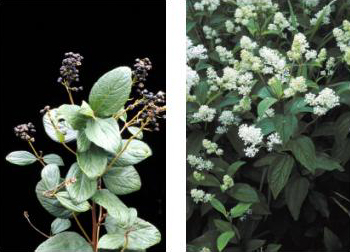
New Jersey tea is the shrub for the spot where nothing else wants to grow: dry, sandy, rocky, sun-baked, and poor. It is a compact, rounded, deciduous shrub, usually 3 to 4 feet tall and about as wide, though Flora of North America gives 0.8 to 1.5 meters and some garden sources report up to 5 feet wide — size varies with soil and age, and richer, moister soil makes it sprawl. In late spring and early summer it erupts into clouds of tiny, fragrant, white flowers in dense, oval to cylindrical clusters at the branch tips, and the effect is like a snowdrift that hums: bees, butterflies, and beneficial insects work the flowers for weeks. The leaves are oval, toothed, and three-veined from the base, dull dark green above and paler and softly hairy beneath, and the whole plant has a gray-green cast that reads as calm in a sunny border.
Underground is where the real story lives. New Jersey tea has thick, red, woody roots that go deep — so deep and so substantial that one source reports roots up to 8 inches in diameter, and the common name “redroot” comes straight from them. Those roots do two jobs: they anchor the plant on dry slopes and let it survive drought and fire by resprouting, and they fix nitrogen. New Jersey tea is one of the few non-legumes that fixes nitrogen, partnering with soil bacteria in root nodules the way legumes do, so it improves the soil around it while thriving in soil other shrubs would find insulting. It is, in short, a pioneer plant: the shrub you plant first on a degraded, sandy site so that other plants can follow.
Its other common name comes from history, and the history checks out. During the American Revolution, when imported tea was scarce or boycotted, American colonists dried the leaves of Ceanothus americanus and brewed them as a tea substitute — a caffeine-free stand-in that gave the plant its name. Flora of North America records the dried leaves being used as a tea substitute during the Revolution, and notes that infusions of the leaves or bark were also used widely by Native Americans in traditional practice. This guide tells that story as history; it makes no health claim about drinking the tea today, and anyone interested in traditional uses should consult reliable sources rather than treating a garden shrub as a medicine cabinet.
How to grow
Plant New Jersey tea in full sun for the best flowering and densest shape; it tolerates part shade but flowers less and grows looser. It wants well-drained soil — sandy, gravelly, rocky, or average loam — and it suffers in wet, soggy, or compacted ground, where its deep roots rot. That is the single most important rule of this guide: drainage first, everything else second. If your soil holds water, plant on a slope, in a raised bed, or in a pocket of sandy mix, and do not amend the planting hole with rich compost or peat. New Jersey tea prefers lean native soil and develops weaker roots in pampered conditions; skip the soil amendments and the fertilizer entirely.
Hardiness is generally zones 4 to 8, with some sources stretching to zone 9; the hero stat of 4–8 is the conservative, widely repeated range. Its native range runs from Ontario and Quebec south to Florida and Texas and west to Minnesota, in open woods, prairies, glades, barrens, sandhills, and roadsides — dry, open, disturbance-prone habitats where its deep roots and resprouting habit are advantages. Florida gardeners: it does occur in Florida, but in the north of the state, in dry, sandy, open sites — it is not a humid south-Florida garden shrub, and it needs the same sharp drainage in Florida as everywhere else. Buy from a native-plant nursery that knows your region.
Now the warning that every source repeats, so this guide will repeat it too: choose the planting spot carefully, because New Jersey tea is very difficult to transplant once established. The deep taproot snaps when the plant is dug up, and the plant rarely recovers. Plant a small nursery plant — container plants under one gallon establish best — in its final spot in spring, dig the hole deep enough to accommodate the taproot rather than bending it sideways, water it in, and then leave it alone. It is slow to establish, spending its first two or three years building that root system before it puts on much top growth, and then it takes off. Patience in years one and two buys you decades of a shrub that asks for nothing.
Water & feeding
Water deeply once a week through the first growing season to help the taproot push down, then water only in extended drought. Once established, New Jersey tea is exceptionally drought-tolerant — that is the whole point of those roots — and overwatering is a far greater risk than underwatering. Do not fertilize. The plant fixes its own nitrogen, and fertilizer pushes weak, floppy growth that blooms poorly and falls over in summer storms. If you must feed anything, feed the soil food web with a light leaf mulch in fall, kept off the crown, and let the plant and its bacterial partners handle the nitrogen budget themselves.
Pruning is minimal. The plant can be cut to the ground in spring to regenerate — it resprouts vigorously from the roots, and flowers form on new, first-year wood, so a hard spring cut does not sacrifice the season’s bloom the way it would on many shrubs — or it can be left unpruned to form its natural rounded shape. Remove dead wood in spring, and leave the rest alone. Deer browse the twigs and stems, which can cause dieback, but the plant resprouts; if deer are heavy in your area, protect young plants until they are established.
Common problems
- Root rot in wet soil. The most common cause of death, and the most preventable. If the plant sits in soggy or compacted ground, it will decline no matter how much you fuss over the top. Drainage is the cure; there is no spray that substitutes for it.
- Transplant failure. Moving an established plant usually kills it. Do not do it. Plant small, plant once, plant in the final spot.
- Slow establishment. Years one and two look unimpressive while the root system builds. This is normal, not failure. Resist the urge to fertilize it into action — that backfires.
- Deer browse. Deer eat twigs and stems, especially in winter. The plant resprouts, but repeated heavy browse keeps it small. Protect young plants if deer pressure is high.
- Leaf spot and mildew. Occasional in damp, crowded conditions. Improve airflow, avoid overhead watering, and accept minor cosmetic damage; the plant outgrows it.
Harvest
There is no vegetable harvest, and the “tea” in the name is history, not a recommendation. The harvest here is the flower show, the pollinator traffic — New Jersey tea is a host plant for butterflies including spring azure, summer azure, and duskywings, and its flowers feed a crowd of bees and beneficial insects — and the soil improvement it quietly performs year after year. For propagation, seed and cuttings both work, but neither is instant. Seeds need scarification (a hot-water soak or similar treatment to break the hard seed coat) followed by cold-moist stratification for 60 to 90 days, and germination is slow and irregular. Softwood cuttings from new spring growth and semi-hardwood cuttings from mid to late summer root with moderate success. The seed capsules eject their seeds abruptly when ripe, so if you collect seed, tie small cloth bags around the maturing fruit clusters to catch them — otherwise the plant will harvest itself, and you will be left holding an empty capsule and a life lesson about explosive dehiscence.
A practical note for butterfly gardeners: New Jersey tea earns its place in a butterfly garden twice over, as both a host plant for caterpillars and a nectar plant for adults. Plant it in a sunny, dry, well-drained spot at the edge of a border or on a slope, leave its leaf litter in place where you can, and let it do the quiet, deep-rooted work it evolved to do. It will not be the flashiest shrub in the garden. It will be the one still thriving in the drought year when everything else is asking for water.
Browse all plant & pest guides
Saving seeds
New Jersey tea has a seed with a double lock on it, and a harvest with a timing problem — both of which are worth knowing before you start. The fruits ripen in summer and then explode: each capsule fires its three seeds a short distance from the parent plant, which is charming in the wild and maddening in a garden. Tie a small cloth bag over the ripening flower heads to catch the seed, or check the plant daily as the capsules turn brown and collect them just before they pop.
The seed coat is waterproof, so the first step is heat. Pour near-boiling water — around 180 to 200°F — over the seed and let it soak for 24 hours as the water cools. A research trial found the best result came from two minutes in boiling water followed by 60 days of cold, moist stratification at about 40°F, with just under half the seed germinating — which tells you two things: the treatment works, and even with the treatment, not every seed sprouts. The standard home version is the hot-water soak, then 60 to 90 days in damp sand or vermiculite in the fridge, checking weekly for mold and for early sprouts. Some sources give the stratification range as one to three months, so two to three months is the honest middle.
After stratification, sow the seed shallowly in spring, in a well-draining mix, and keep it moist and bright. Germination is slow and irregular — weeks to months, with some seed waiting another year — so do not throw the pot away at six weeks. Seedlings grow slowly at first and want a season in pots before planting out.
Cuttings are the alternative for exact clones, since seed-grown plants vary. And one thing worth knowing about the plant you are growing: like its ceanothus cousins, New Jersey tea fixes nitrogen in its roots, so the seedling you raise is quietly feeding the soil it grows in. The seed itself keeps remarkably well — one study found little loss of viability after 15 years in an airtight, dry container in the fridge — but Florida humidity is still the enemy of stored seed, so dry it thoroughly and jar it with a silica gel packet.
Varieties
New Jersey tea is usually grown as the species, from seed or cuttings, rather than as named garden cultivars. No widely grown, verified named cultivar of Ceanothus americanus itself was found in reliable sources for this guide: older floras recognize three botanical varieties — var. americanus, var. intermedius, and var. pitcheri — distinguished by leaf shape and hairiness, but modern treatments note these intergrade clinally and varietal recognition is often deferred pending further research, so they are not sold as distinct garden cultivars. The famous blue-flowered Ceanothus cultivars of gardens (such as ‘Gloire de Versailles’ and the California lilacs) are hybrids or other species, not Ceanothus americanus, and they are not substitutes for this plant. Buy the straight species, by Latin name, from a native-plant nursery, and you will have the real New Jersey tea.