
🌿 Dock
What it looks like
Docks are the tall, blunt honesty of the weed world. A dock plant starts as a basal rosette of large, lance-shaped leaves, then sends up a stiff, upright flowering stalk that can reach 2 to 5 feet, hung with dense clusters of small greenish flowers that ripen into rusty-brown, papery seed heads. The leaves are the giveaway: curled dock (Rumex crispus) has long, narrow leaves with wavy, crinkled edges, like someone ironed them with a crimping iron, while broad-leaved dock (Rumex obtusifolius) has wider, flatter leaves with a blunt, rounded tip. The whole plant is anchored by a thick, yellowish taproot that can plunge several feet down, which is exactly why pulling a dock feels like arm-wrestling the earth itself. The genus Rumex holds around 200 species worldwide in the buckwheat family (Polygonaceae), and it is a family reunion with a split personality: the same genus gives us garden sorrel, grown for its lemony leaves, and the docks, mostly treated as weeds. Same bloodline, very different reputations.
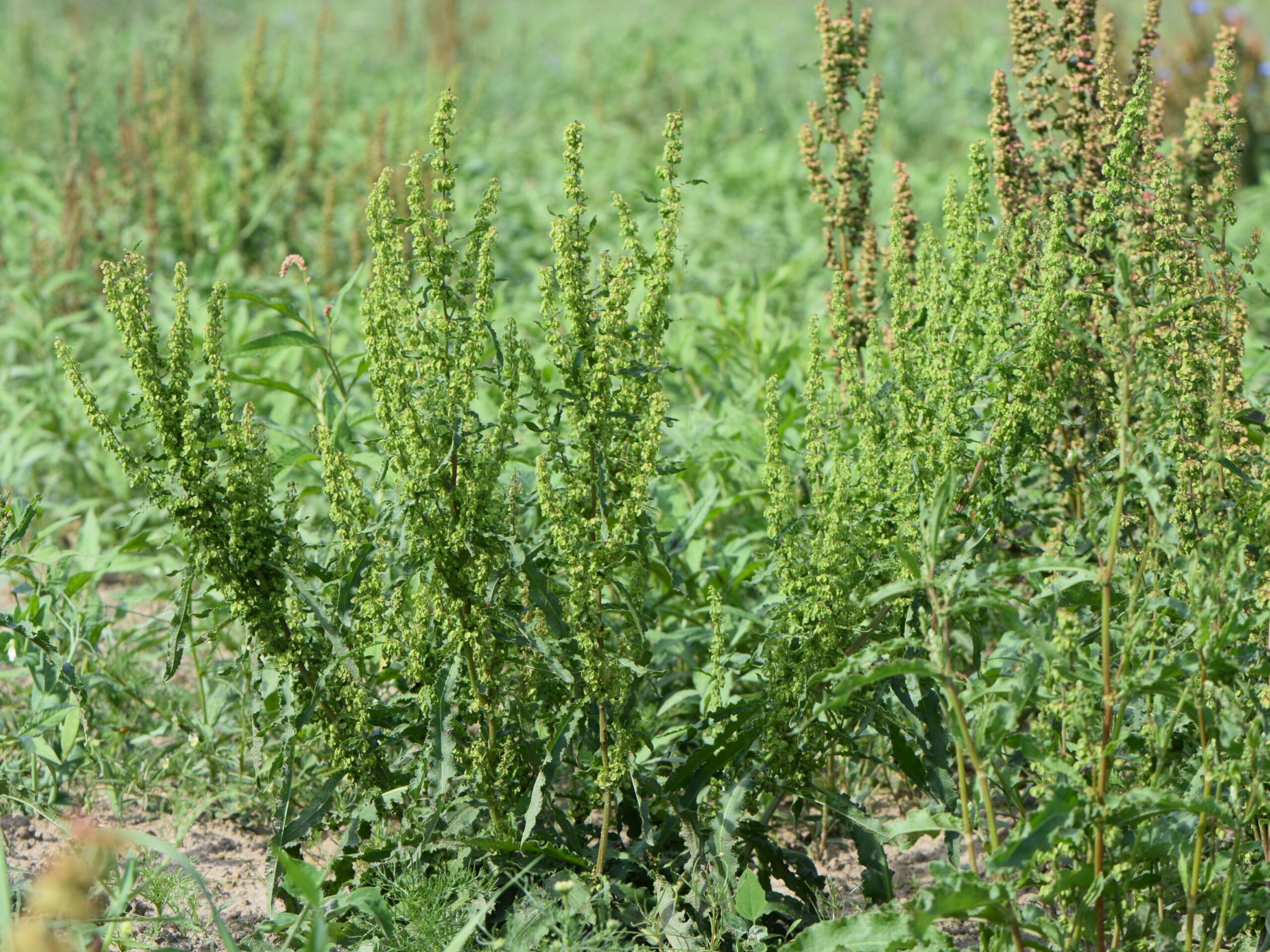
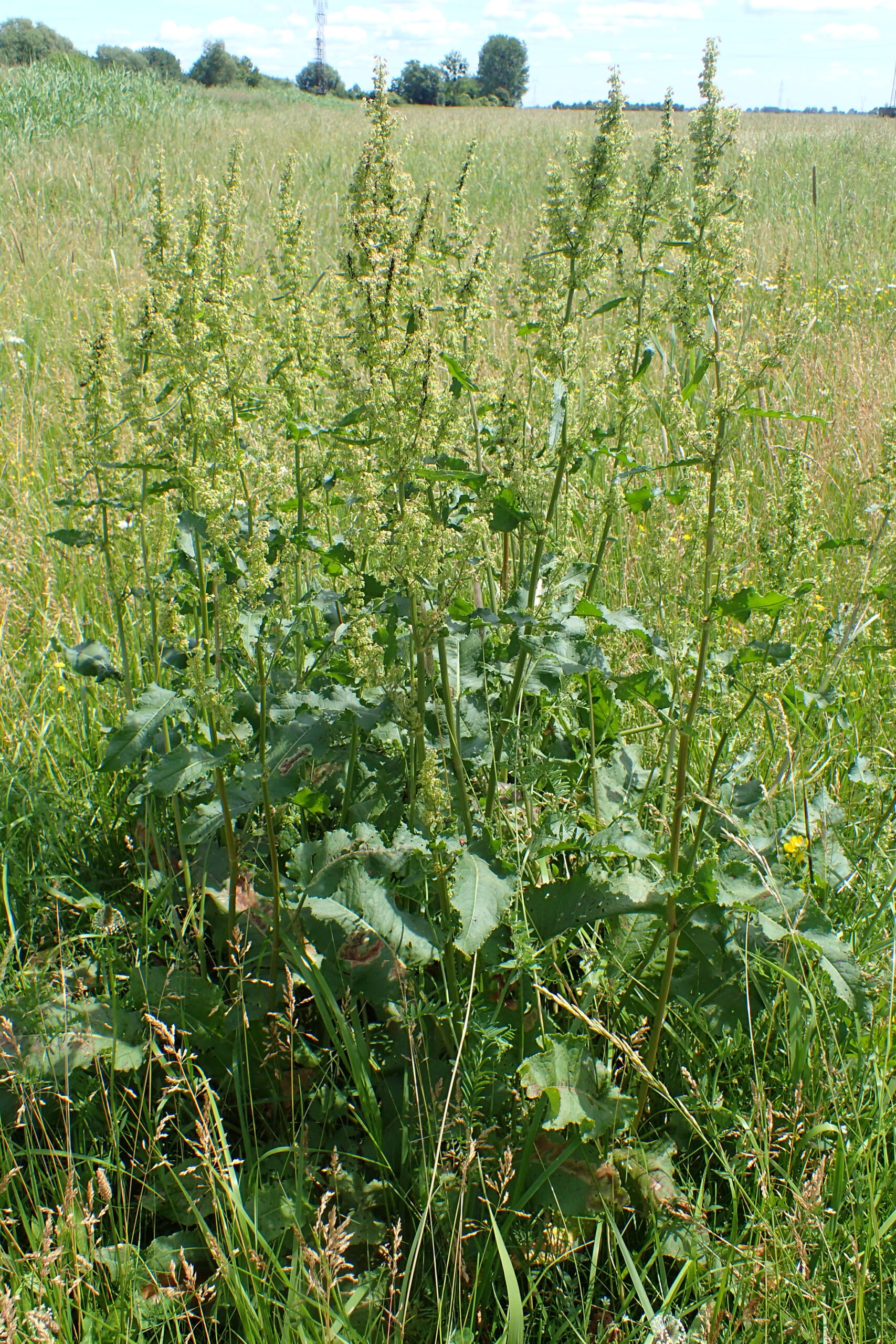
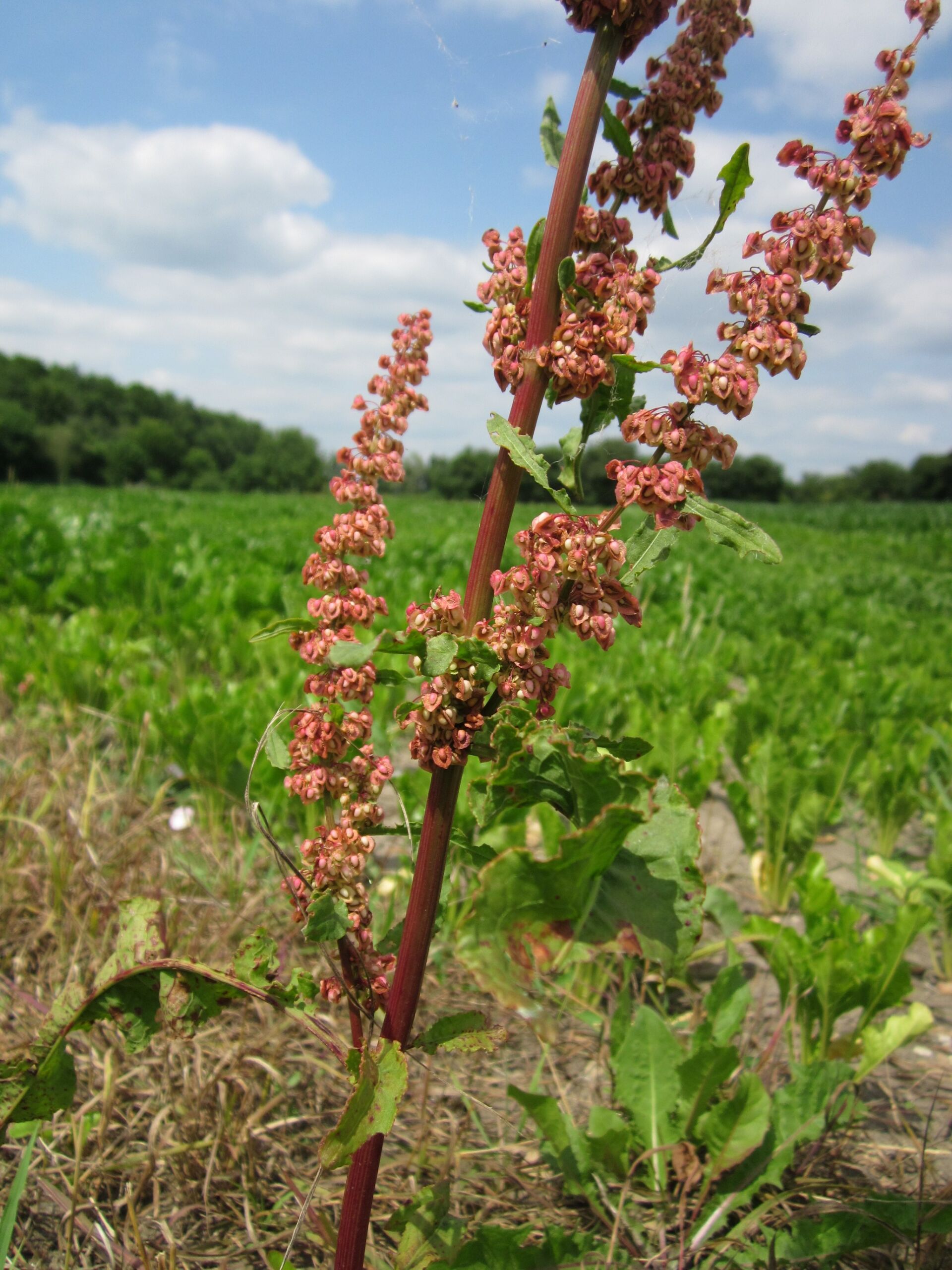
Butterflies are the reason dock earns a guide instead of a compost sentence. Copper butterflies — the American copper, the gray copper, the great copper, and their relatives — lay their eggs on docks, and their caterpillars eat the leaves. A dock patch left standing at the edge of a meadow or a farm lane is a copper nursery, which is a strange fate for a plant most gardeners spend their weekends trying to kill. The flowers are wind-pollinated and not much to look at, but the seeds feed birds into fall, and the whole plant is a small ecosystem wearing a weed costume.
Florida note: Be honest about the geography here. Docks are temperate plants that thrive in cool, moist ground and show up in Florida mainly as cool-season weeds, not as plants anyone should deliberately sow. This guide is for gardeners in dock country who want to understand, manage, or spare a patch for the coppers — not a recommendation to plant dock in a Florida yard, where it has no business being invited in.
How to grow
Here is the awkward truth about growing dock: you almost certainly do not have to. Dock grows itself. It colonizes roadsides, field edges, waste ground, garden beds, and anywhere soil has been disturbed and then left alone, and it does it from seed so prolifically that a single plant can scatter thousands of seeds that wait in the soil for years. If you are deliberately growing dock — say, for a butterfly meadow, a dye garden, or a wild-edibles patch — sow seed in spring or fall, barely covering it, about a quarter inch deep, and space plants 12 to 18 inches apart. Germination is not the problem; containment is.
Dock wants full sun to part shade and moist, fertile soil, though it tolerates a remarkable range of soils, from sand to clay, and a wide pH range. For curled dock, published figures put soil pH around 5.5 to 8. The seed bank is the long game: dock seeds can lie dormant in the soil for years, even decades, waiting for disturbance to wake them, which is why a patch cleared this year can reappear after the next digging project. Once established, it tolerates drought by going quiet and coming back, and it tolerates mowing, flooding, and general neglect with insulting ease. The plant is a perennial that lives several years from that deep taproot, and any piece of root left in the ground after digging can regrow — which is why half-hearted pulling just multiplies your dock problem. If you grow it on purpose, give it a bounded patch, cut the flowering stalks before seed sets, and never let it seed into a neighbor’s field or a natural area.
Water & feeding
Dock prefers moist soil and will look its lushest with consistent moisture, but it is not a thirsty plant by garden standards. Water a deliberate patch through dry spells to keep the leaves tender — important if you are growing it for caterpillars or for the kitchen — and otherwise leave it alone. It needs no fertilizer; in fact, dock is one of those plants that shows up precisely where soil is rich, and feeding it is like offering cake to a plant that already ate the bakery. In a meadow or wildlife patch, the best feeding program is none at all: lean management keeps the dock in check and favors the wildflowers around it. Mulch will not stop dock, by the way. The taproot laughs at mulch. Digging, cutting before seed, and patience are the only honest controls.
Common problems
- It spreads — a lot: The number one problem with dock is dock. Seeds spread readily, root fragments regrow, and a patch left to seed becomes a neighborhood project. Cut stalks before seeds ripen if you keep it at all.
- It is nearly impossible to dig out: That taproot runs deep and snaps easily, and every fragment can sprout. Dig after rain when soil is soft, get as much root as possible, and expect repeat visits.
- Slugs and aphids: Slugs chew the leaves and aphids cluster on the stalks, but damage is usually cosmetic. Caterpillars eating the leaves is not damage — it is the point, if you are growing dock for coppers.
- It shades out neighbors: A mature dock rosette is big and bold, and it will muscle out smaller meadow plants. Keep dock at the edge of a planting, not in the middle of it.
- Oxalic acid in the leaves: Dock leaves, like sorrel and rhubarb leaves, contain oxalic acid, which gives them their sour tang. Young leaves eaten occasionally and cooked are the traditional use; large quantities of raw mature leaves are not a good idea, and anyone with kidney trouble should skip wild dock greens entirely.
Harvest
Dock has three traditional harvests, and each uses a different part. For the kitchen, pick young spring leaves while they are tender and cook them like spinach — cooking tames both the sourness and the oxalic acid, and old leaves turn bitter and tough, so do not bother with midsummer foliage. For dyeing, the root is the prize: yellow dock root (Rumex crispus) has been used traditionally to dye cloth, with dark tones the most typical result, and roots are dug in fall when the plant’s energy is underground. For wildlife, the harvest is no harvest at all: leave the seed heads standing into fall and winter for birds, and leave some plants uncut so copper caterpillars have food through the season. If you are growing dock for butterflies, the seed heads you leave are doing more work than any harvest you take.
Seed prevention, not seed saving
Read this heading twice, because it is the whole point: this section is not going to teach you how to sow dock. Dock does not need your help. A single vigorous dock plant can throw tens of thousands of seeds into the world in one season, and those seeds are famously patient — sources disagree wildly on exactly how long they last in the soil, quoting spans from a couple of decades to well over half a century, which tells you everything you need to know. The precise number does not matter. What matters is that dock seed outwaits gardeners, rotations, and good intentions alike, and a patch you let seed this year can still be sprouting volunteers when you have forgotten you ever grew it.
So the skill to learn here is timing, and it is unforgiving. Cut the flower stalks while the flowers are still greenish and unremarkable, before they turn into those tall, rusty-brown seed heads dock is famous for. Once seed has actually started to form — roughly a fortnight after flowering — cutting the stalk no longer saves you, because seed can go on ripening on the cut stem. That is the trap: a stalk cut a week too late and tossed on the ground is not a dead plant, it is a seed delivery. Bag the heads, tie the bag shut, and put them in the trash. Do not compost them, and do not leave them in a brush pile to “rot down.” Dock seed has a well-earned reputation for surviving things that kill lesser seeds, including burial, manure, and slurry, so betting your compost heap on killing it is a bet you will probably lose.
The same ruthlessness applies underground. Dock regenerates from root pieces, so chopping a taproot into confetti while digging is how you accidentally plant a dozen new docks. Dig young plants out whole, while they are still small and before that taproot goes deep, and aim to take the top 12 to 15 centimetres of root with them; root sections left deeper than that are much less likely to regrow. Hoe seedlings off promptly, before they develop taproots of their own. In Florida, where the warm season runs long, do not assume winter will do any of this work for you — dock gets more chances here, not fewer, so check beds after rain when fresh seedlings show up.
There is one honest trade-off to name. The guide’s Harvest section suggests leaving some seed heads standing for birds and leaving some plants uncut for copper caterpillars, and that advice is real — dock feeds wildlife. But you cannot have both a wildlife seed bank and a weed-free bed from the same plant. If the wildlife value matters to you, pick your compromise deliberately: leave a head or two well away from your beds, accept that you will be hoeing seedlings around it, and be strict everywhere else. And if you are one of the gardeners deliberately growing a culinary dock such as patience dock as a leaf vegetable, treat it the same way — harvest the leaves, deadhead the spare plants, and never let the weedy relatives seed into a bed you will want back. Dock saved seed is not a gift to your future self. It is a mortgage.
Species in this group
- Curled dock — Rumex crispus: The classic dock. Long, narrow, wavy-edged leaves, tall rusty seed heads, deep yellow taproot, hardy roughly in zones 4 through 8 by NC State Extension, with other sources stretching that to 3 through 8. The copper host most gardeners actually meet.
- Broad-leaved dock — Rumex obtusifolius: Wider, blunter leaves and a stouter habit than curled dock, equally weedy, equally deep-rooted. The dock of damp pastures, ditches, and garden corners.
- Sheep sorrel — Rumex acetosella: A small, creeping dock relative with arrow-shaped leaves and a sharp, lemony tang. It spreads by rhizomes in thin, acid soils and is the host of the American copper in many places.
- Western dock — Rumex occidentalis: A big western North American dock of wet meadows, marshes, and stream banks, with broad leaves and tall stems. The western copper-country dock.
- Willow dock — Rumex salicifolius: A narrow-leaved western dock of shores, wetlands, and damp ground, named for its willow-like foliage.
- Patience dock — Rumex patientia: A large, old-world dock historically grown as a leaf vegetable, sometimes called patience or monk’s rhubarb’s cousin. Bigger and more garden-worthy than its weedy relatives.
- Alpine dock — Rumex alpinus: Also called monk’s rhubarb, a tall mountain dock of Europe and western Asia, grown historically as a vegetable and still found in alpine gardens.