
🌼 Cinquefoil
What it looks like
Cinquefoil is French for “five leaves” — cinq feuilles — and the name is the identification key, the marketing, and the whole personality in two words. Every cinquefoil wears its five in public: five-petaled flowers like small wild roses, and palmate leaves divided into leaflets that radiate from a single point like fingers on a hand. Count the petals and you are most of the way home, which is also why gardeners keep mistaking cinquefoils for strawberries. Strawberries are rose-family cousins with similar leaves, but a strawberry flower is white and its fruit is, famously, a strawberry. A cinquefoil flower is usually yellow, sometimes white, pink, or red, and its fruit is a cluster of tiny dry achenes that nobody is putting on shortcake.
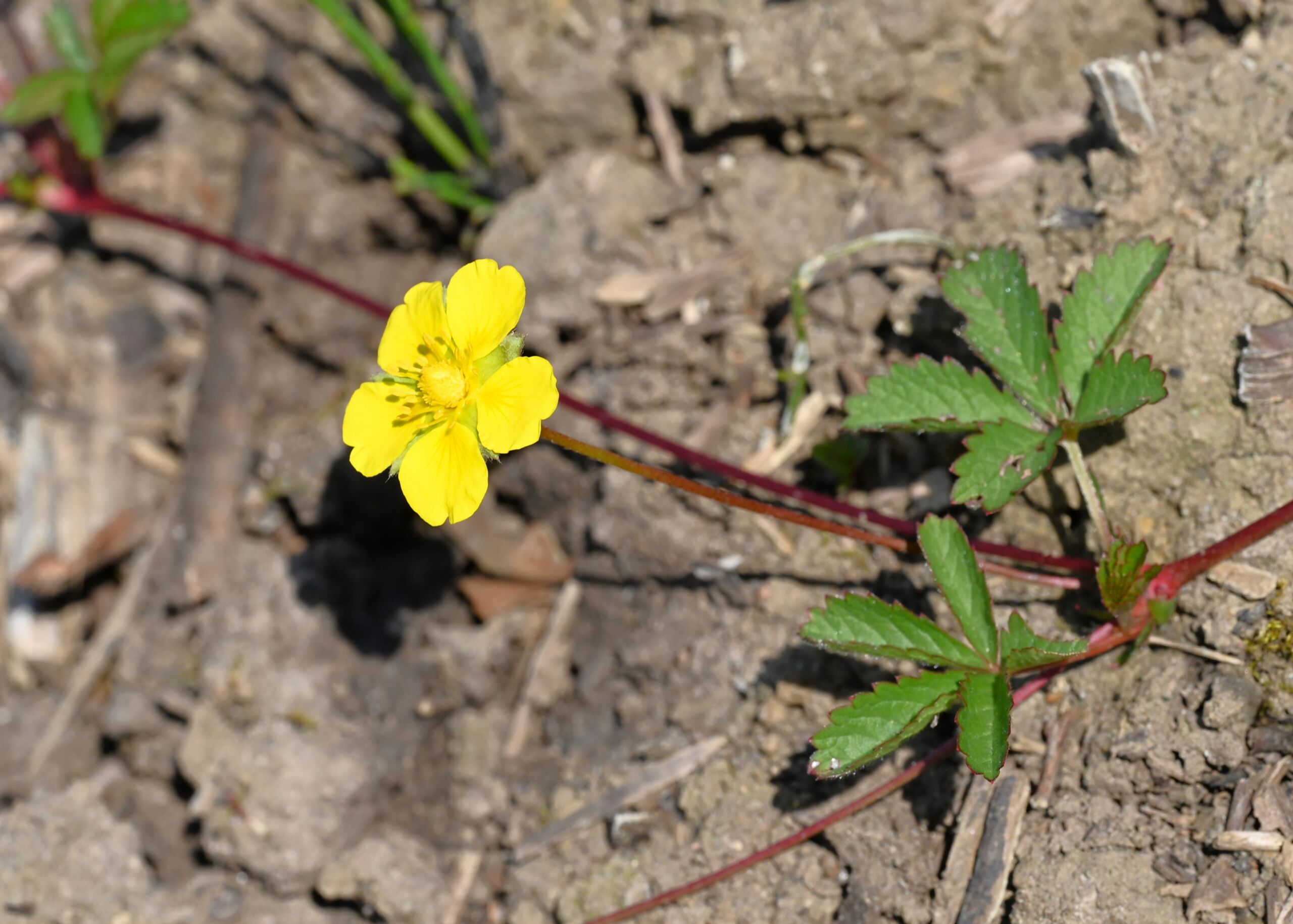
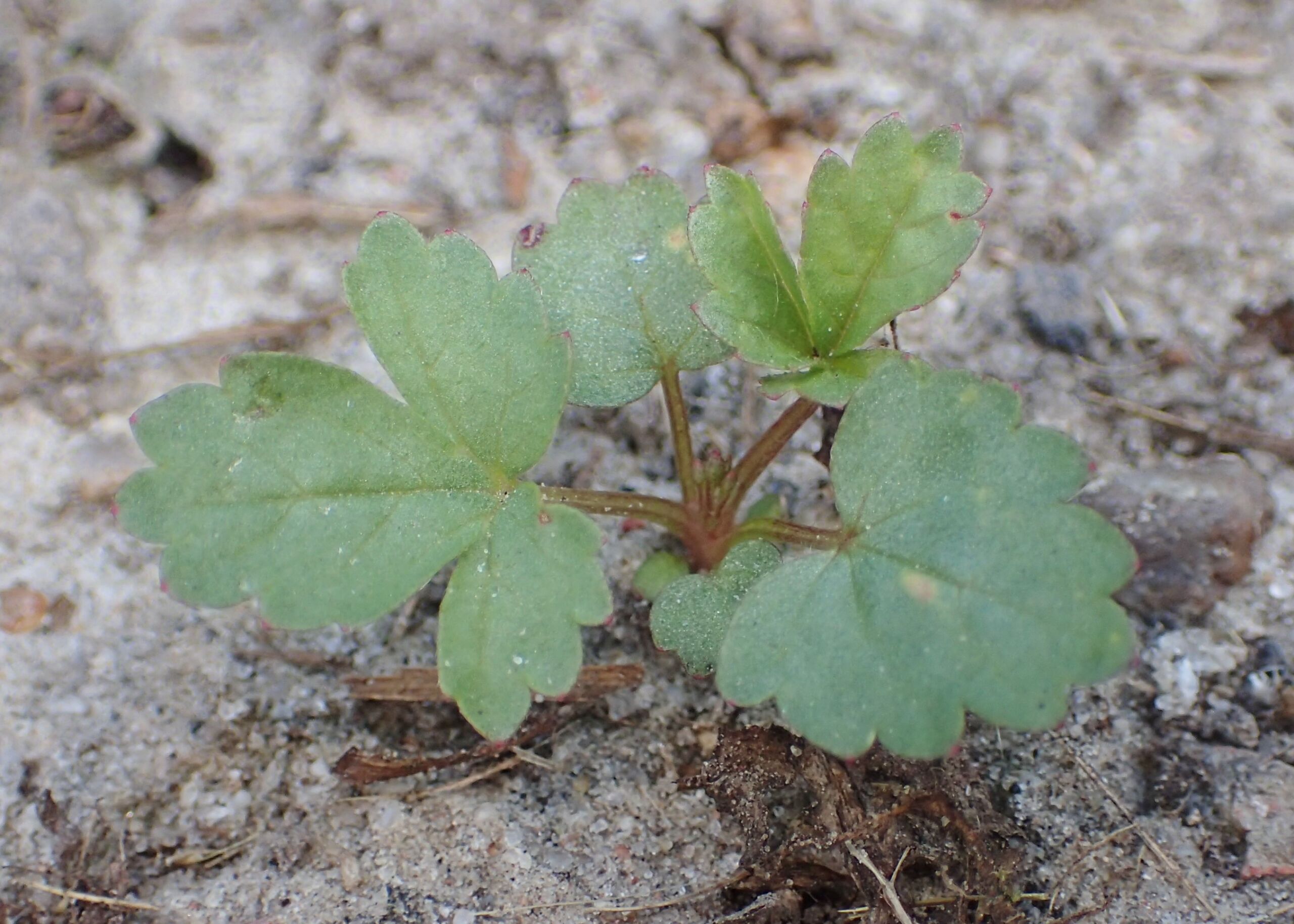

The genus Potentilla, in the rose family Rosaceae, is big — sources argue between about 300 and over 500 species, and the honest answer is that the number depends on which taxonomist you ask and which week you ask them, because species keep getting moved in and out of the genus. Most are herbaceous perennials of cool temperate regions worldwide, ranging from ground-hugging creepers barely a few inches tall to upright plants around 20 inches, with a few that grow into shrubs. The herbaceous types are the ones this guide is about: low, tough, long-blooming groundcovers and border plants with flowers from mid-spring into autumn, depending on species. The shrubby one — shrubby cinquefoil, Potentilla fruticosa, now often placed in Dasiphora — already has its own growing guide on this site, and it is a different beast: a woody shrub 2 to 4 feet tall and wide that blooms from late spring to frost. If you are shopping for a shrub, go read that guide. If you are shopping for a groundcover that laughs at poor soil, you are in the right place.
Butterflies notice cinquefoils twice over. The flowers are open-faced landing pads, and skippers and blues visit them for nectar. And the foliage is caterpillar food: grizzled skippers, mountain checkered-skippers, and two-banded checkered-skippers all use Potentilla species as host plants, which is why a patch of cinquefoil in a sunny, undisturbed corner is doing double duty even when you are not looking. A cinquefoil lawn edge that you mow twice a year instead of twice a week is a butterfly nursery with a flower show attached.
How to grow
Plant cinquefoils in spring or fall in full sun — they will take part shade, especially in hot climates, but flower best with sun — in average, well-drained soil. That last clause is doing a lot of work: cinquefoils tolerate a wide range of soils, including poor, rocky, and dry ones, which is why they show up as rock-garden plants, slope stabilizers, and erosion control on banks. What they do not tolerate is wet feet. Soggy soil rots their crowns, and a cinquefoil drowned in clay is a gardener’s error, not the plant’s fault. If your soil holds water after rain, plant on a slight mound or work in coarse organic matter for drainage, and then leave the plant alone.
Spacing depends entirely on which cinquefoil you bought, which is why the hero stat refuses to give you a single number. A creeping cinquefoil spreads by runners that root at the nodes, so a few plants will knit into a mat if you give them a season. An upright species like Nepal cinquefoil wants its own elbow room in a border, roughly a foot or more from its neighbors. Read the tag, then plant for the mature size, not the pot size — the classic beginner error with every groundcover ever sold. Water to establish in the first season, then back off: established cinquefoils are notably drought tolerant for rose-family plants, and overwatering pushes soft, floppy growth with fewer flowers.
Propagation is almost embarrassingly easy, which is both the charm and the warning. Creeping types layer themselves wherever a stem touches soil, so you can lift rooted runners and move them. Most species grow readily from seed sown in spring, and clumps can be divided in spring or fall. If you want more cinquefoil, you will have more cinquefoil. If you want less, see the problems section, where enthusiasm becomes a management topic.
Water & feeding
Water deeply for the first growing season until the roots are established, then treat cinquefoils like the tough customers they are. They prefer consistent moisture to outright drought while they are young, but mature plants handle dry spells with a shrug, and they dislike soggy soil far more than dry soil. A spring mulch of compost or worm castings is plenty of feeding; heavy fertilizer pushes leggy growth and fewer flowers, which is the opposite of what you planted them for. In a rock garden or on a slope, skip the fertilizer entirely — lean soil keeps them compact and floriferous, and it keeps the weeds down too.
Deadheading is optional and mostly cosmetic. The flowers keep coming through the season without it, and if you let some seed heads ripen, many species will self-sow politely into cracks and edges, which is either free plants or a weeding job depending on your attitude. Cut back tired foliage in early spring before new growth starts, and cut shrubby types by about a third if they get woody — but remember, the shrubby one has its own guide, and the herbaceous types mostly just want their dead leaves raked off and to be left in peace.
Common problems
- Too much enthusiasm: Creeping cinquefoil (Potentilla reptans) spreads by runners and self-seeds, and in rich, moist soil it can run through a border faster than you planned. Site it where a mat is welcome — a bank, a rock garden, a lawn edge — and edge it if it is next to fussy perennials.
- Wet feet and crown rot: The classic killer. Soggy soil, especially heavy clay that stays wet in winter, rots crowns. Improve drainage or move the plant; no spray fixes a drowning plant.
- Hoary cinquefoil going rogue: Hoary or silver cinquefoil (Potentilla argentea) is considered invasive in parts of North America and New Zealand. Know which species you are planting before you plant it, and do not let a “pretty yellow flower” become a neighborhood project.
- Too much shade, too few flowers: Cinquefoils in shade grow leaves and sulk. If the flowers thin out year over year, the usual cause is a tree that grew or a fence that went up. Move toward the sun.
- Strawberry confusion: Not a plant problem, a gardener problem. If your “cinquefoil” fruits into strawberries, it was a strawberry. If it flowers yellow and never fruits, it was the cinquefoil all along. Both are fine. Only one belongs in this guide.
Harvest
There is no vegetable harvest here, but there is a harvest of sorts, and it lasts months. The reward is flowers: five-petaled blooms from mid-spring into autumn on most species, with shrubby types blooming from late spring to frost. Cut a few stems for small posies — they are charming in a jam jar, and cutting does not hurt the plant. The historical harvest is tormentil root (Potentilla erecta), which has a long folk history as an astringent herb; this guide is not a medicine manual, and nobody should be digging medicinal roots on the strength of a growing guide. The modern harvest is simpler: leave the seed heads for birds, let the foliage feed skipper caterpillars, and enjoy a groundcover that asks for almost nothing and blooms for months.
Saving seeds
This is a genus-level method, because cinquefoil is a whole clan of Potentilla species rather than one plant, and the details shift a little from species to species. The good news is that the broad strokes hold across the genus: the seed is a tiny, dry achene, it ripens in a dry flower head, and it is almost embarrassingly willing to be saved, which is exactly why the creeping types need watching, as the problems section warns. Save seed from the clumping garden kinds you actually want more of, and think twice before deliberately scattering seed of a creeping type that is already colonising your paths.
Wait until the flower heads are dry and brown and the little seeds come away easily, usually in late summer. The home method is gloriously low-tech: hold an envelope or paper bag under a dry head and shake, or cut whole dry heads and rub them gently over a tray, then winnow off the chaff. The seeds are tiny, so work over a tray indoors rather than in a breeze, or you will save them for the lawn instead. Dry the cleaned seed thoroughly, then store it cool and dry in a labelled envelope or jar. In Florida humidity, that means fully dry first, then an airtight container with a desiccant packet in a cool, dark spot. Sow the freshest seed first, and do not count on a forgotten envelope from years ago behaving like new.
Many cinquefoils germinate far better after a cold, moist winter, real or simulated. Trials on one prairie species found almost no germination from untreated seed but strong germination after about a month of cold, moist chilling, while other sources report some germination without any treatment at all, so species and seed source clearly matter. The safe home default is to give saved seed about a month in damp mix in the refrigerator, or simply to sow outdoors in autumn and let winter do the chilling. Sow on the surface or barely covered, because seed this small cannot push up through a deep burial, keep the mix evenly moist, and expect sprouting within a couple of weeks once conditions are right.
Will seedlings grow true? For a straight species grown on its own, reasonably, yes, with the usual insect-pollinated caveat: if several cinquefoil species bloom cheek by jowl, bees may cross them, and the offspring may blur the lines. For a named cultivar, do not trust seed at all. The honest route to an exact copy is division or a rooted runner, which cinquefoils offer almost apologetically, layering themselves wherever a stem touches soil. Treat seed saving as the way to raise a crowd of healthy, slightly varied plants, and division as the way to clone the one you love. And never collect seed, or whole plants, from wild populations: take seed only from plants you grew or bought, and leave the wild ones to their own seed bank.
Species in this group
- Creeping cinquefoil — Potentilla reptans: The mat-former. Low, spreading by runners that root at the nodes, with bright yellow five-petaled flowers. The groundcover of the genus, and the one most likely to outgrow its welcome in rich soil.
- Tormentil — Potentilla erecta: The low, wiry one of heaths, meadows, and woodland edges, rarely more than a foot tall, with small yellow flowers that famously have only four petals — the exception that proves the five-petal rule, and a good way to win a plant-identification argument.
- Nepal cinquefoil — Potentilla nepalensis: The border plant of the genus, upright to around 20 inches, with pink flowers veined in darker red. The one to plant if you want cinquefoil to behave like a proper perennial in a flower bed.
- Hoary or silver cinquefoil — Potentilla argentea: Silvery-backed palmate leaves and yellow flowers on upright or sprawling stems to about 20 inches. Pretty, tough, and flagged as invasive in parts of North America and New Zealand — plant with eyes open.
- Golden cinquefoil — Potentilla aurea: A mountain species of mainland Europe with golden-yellow flowers and many garden cultivars. The rock-garden star of the genus.
- White cinquefoil — Potentilla alba: A low herbaceous perennial with white flowers, used for rockeries and alpine beds. Proof that the genus is not all yellow.
- Shrubby cinquefoil — Potentilla fruticosa (syn. Dasiphora fruticosa): The woody shrub, 2 to 4 feet tall and wide, covered in this site’s separate shrub guide. Included here so you know where it lives; it is not the subject of this guide.