
🌺 Ruellia
What it looks like
Ruellia is the plant world’s best impression of a petunia, performed by a plant that is not a petunia at all. The flowers are the giveaway and the trick: five-petaled, funnel-shaped trumpets in purple, lavender, pink, or white, about two inches across, opening fresh each morning and collapsing by afternoon like a firework that only does matinees. The leaves are opposite, often narrow and willow-like on the famous Mexican petunia, broader and softer on the native wild petunias. The plant grows as a shrubby perennial or subshrub, generally 12 to 48 inches tall depending on the species, with a habit that ranges from tidy clump to enthusiastic sprawl. True petunias belong to the nightshade family, Solanaceae. Ruellia belongs to the acanthus family, Acanthaceae, a mostly tropical family — so the resemblance is convergent evolution doing a very convincing costume job.
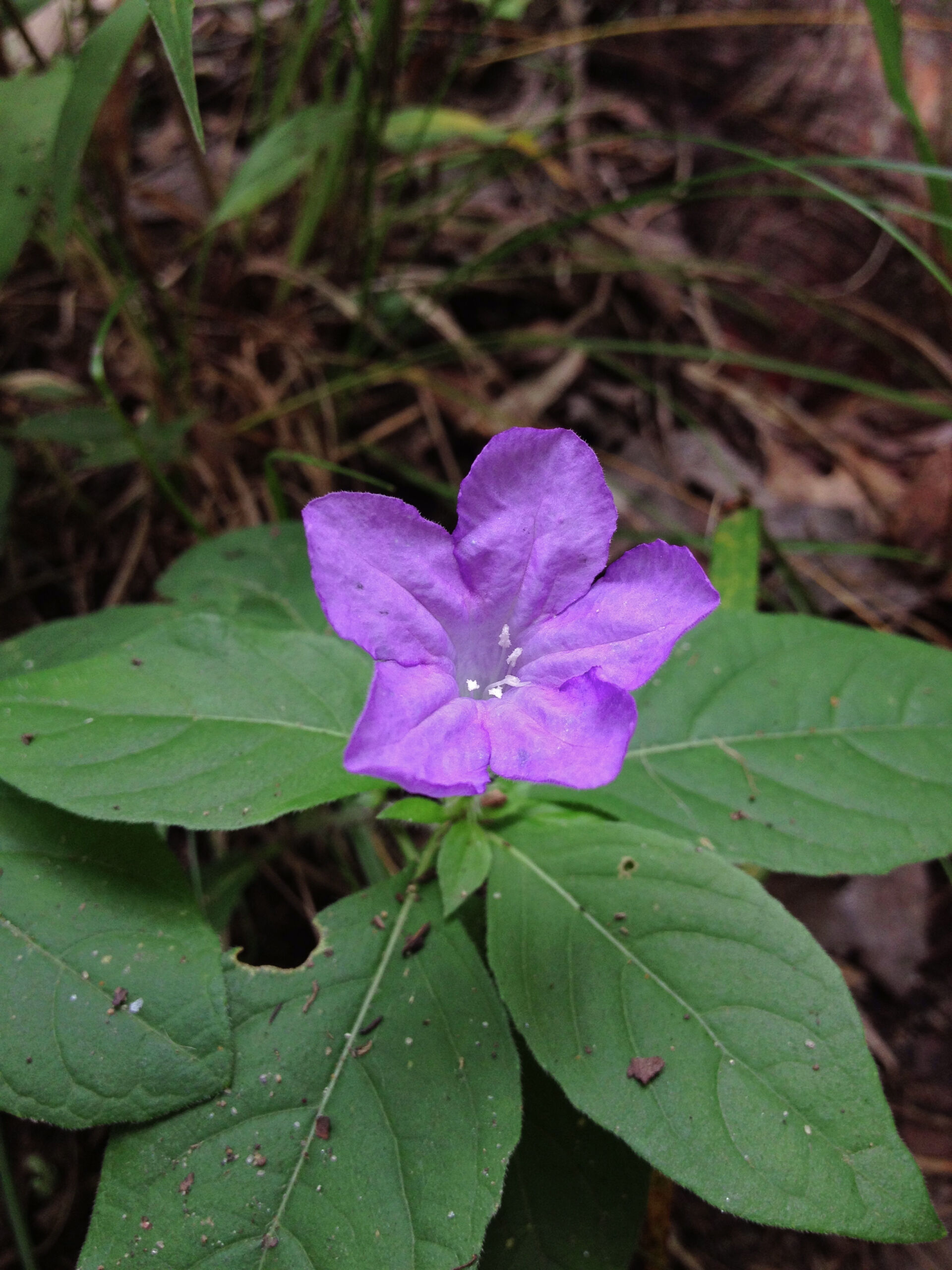
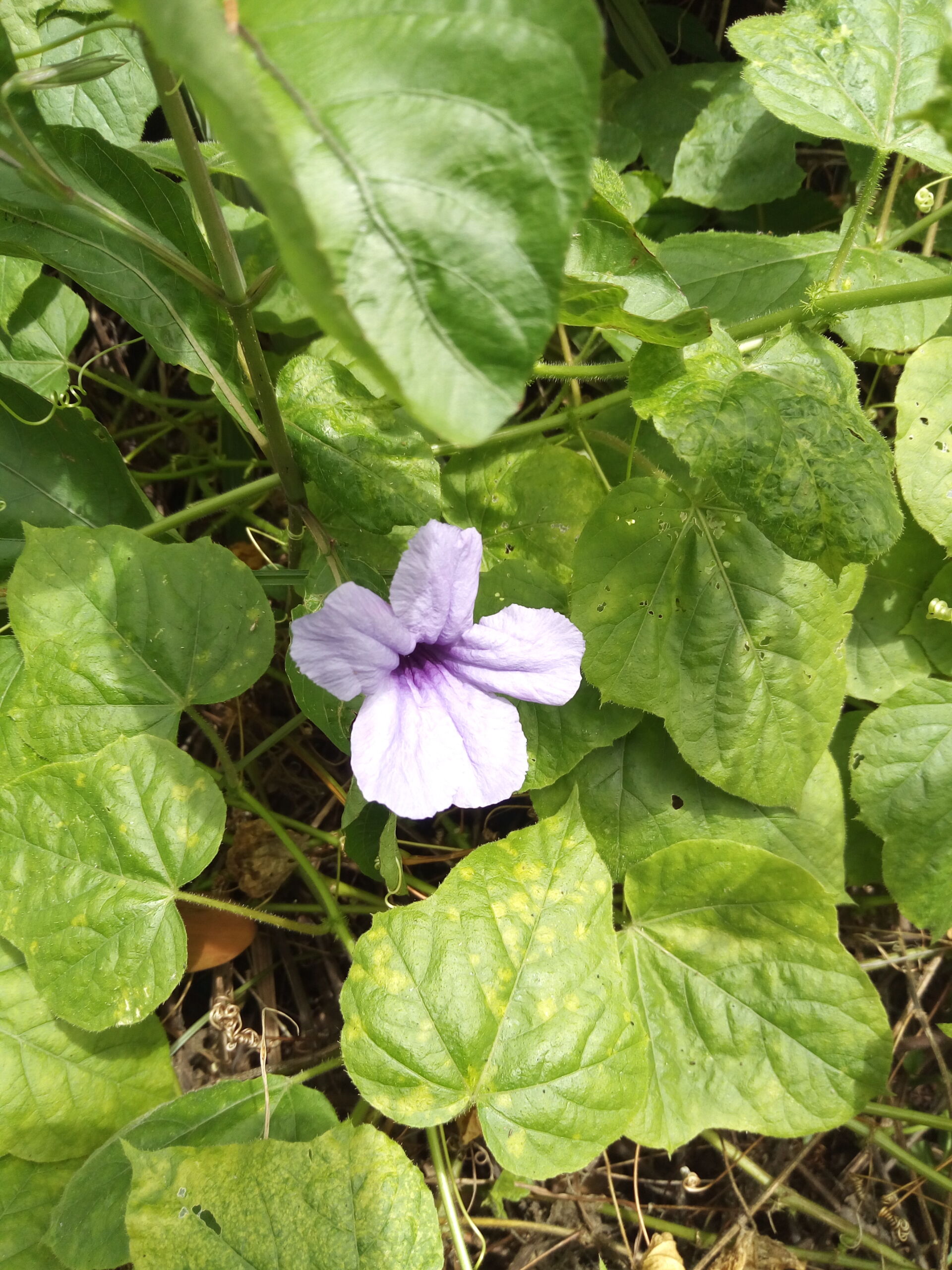
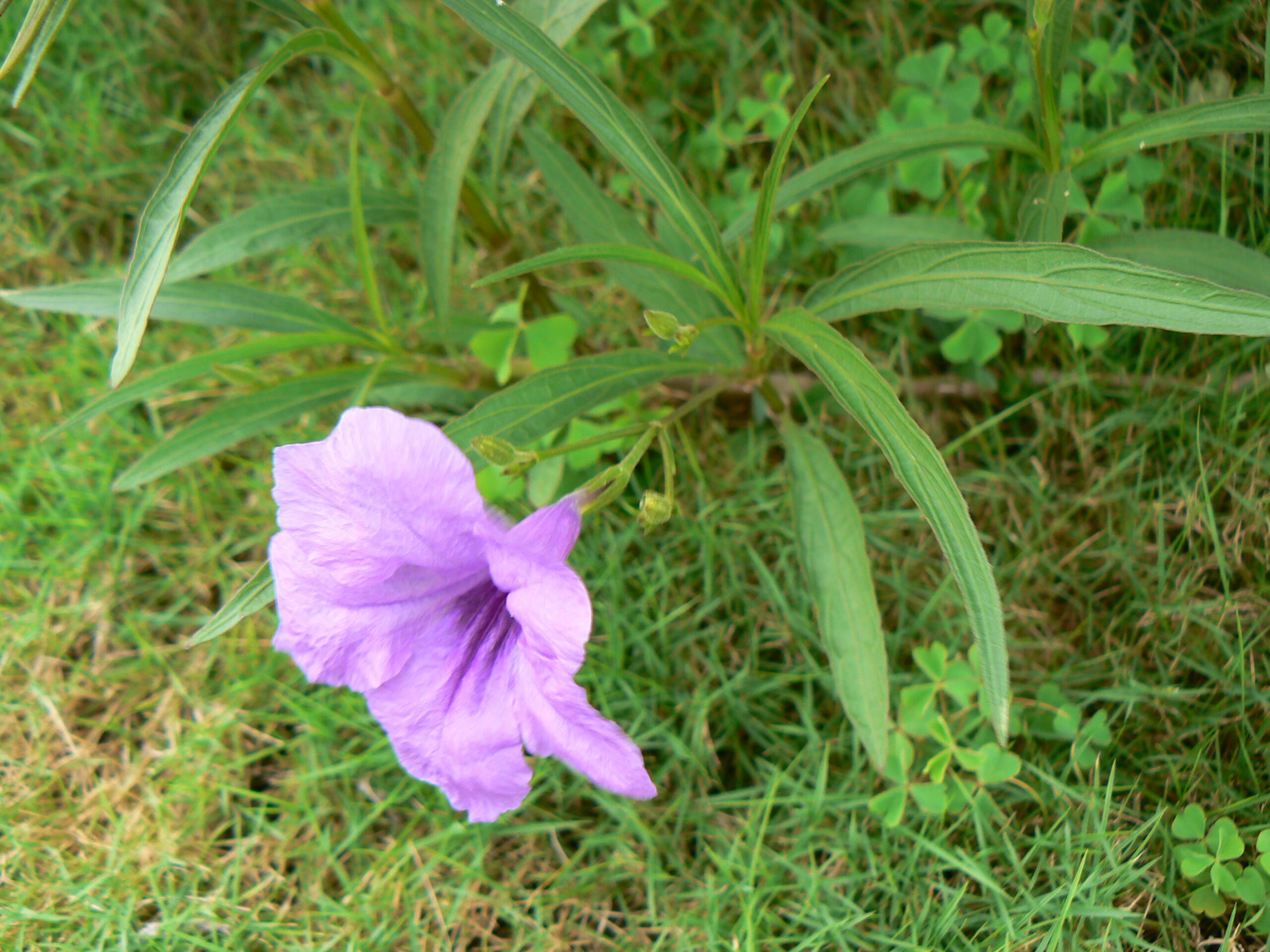
The genus holds more than 250 species, mostly tropical and subtropical, and they do not all behave alike — which is the whole point of this guide. The butterfly guides that mention ruellia are mostly talking about the plant as a caterpillar host: crescents and peacocks lay eggs on Ruellia, and their caterpillars eat the leaves. Banded peacocks, Cuban crescents, Texan crescents, and Vesta crescents all use it, which makes a patch of native ruellia a small butterfly nursery disguised as a flower bed. The flowers themselves are pollinator magnets too, visited by butterflies, hummingbirds, and long-tongued bees that can reach down the slender corolla tube.
Now the part that matters most if you garden in Florida: there are two ruellias in the garden trade, and they are moral opposites. Carolina wild petunia (Ruellia caroliniensis) is a long-lived native perennial of moist hammocks, flatwoods, sandhills, and roadsides, adaptable to dry or moist well-drained sandy soil, full sun to fairly dense shade, and a prolific self-seeder that stays where it belongs. Mexican petunia (Ruellia simplex, sold for years as Ruellia brittoniana or Ruellia tweediana) is a Category I invasive in Florida: it reproduces by underground rhizomes and by seed, escapes cultivation into natural areas and waterways, displaces native vegetation, and does not respond well to herbicides. Garden centers sell sterile cultivars — dwarf forms such as Katie are the famous example — and those are a different proposition from the fertile wild type. Rule of thumb for this guide: plant the natives, or plant a certified sterile cultivar, and never plant the fertile wild-type Mexican petunia in Florida. Outside Florida, check your own state’s invasive list before planting it either way.
Florida note: Carolina wild petunia is a genuine Florida native and a good garden plant statewide, though in North Florida it dies back in winter and looks like a patch of stems until spring, so do not use it for mass plantings where winter bare patches will bother you. It blooms spring through fall with delicate blue-lavender trumpets, tolerates drought once established, and self-seeds politely into mixed beds. It is the ruellia this guide wants you to plant.
How to grow
Ruellia is famously easy, which is both its charm and, for the invasive species, its crime. Plant in spring after the last frost, in full sun to part shade, in soil that drains well. The natives tolerate an impressive range: dry to moist sandy soils, sun to fairly dense shade, though shadier spots produce lankier plants with fewer blooms. Give plants 18 to 24 inches of space, water to establish, and then stand back. Carolina wild petunia is a long-lived perennial that largely takes care of itself, and Mexican petunia, where it is legal and appropriate to grow it, is a shrubby perennial to 3 or 4 feet tall that blooms from early summer through fall with purple or blue flowers and resists deer browsing.
The flower rhythm takes some getting used to. Each bloom lasts a single day. You will walk out in the morning to a plant covered in trumpets, and by late afternoon they will have collapsed into little twists. This is normal, not a disease, and the plant replaces them daily for months, so a healthy ruellia is never actually out of flowers during its season — it is just on a very fast rotation. Deadheading is unnecessary; the plant drops its spent blooms on its own. If a clump gets leggy, cut it back hard in spring and it will regrow bushier. In colder zones, tender species are grown as annuals or cut back after frost; the roots of hardy natives persist and resprout.
For butterflies, the advice is simple: grow the native species, let them self-seed a little, and do not spray. Crescent caterpillars eat ruellia leaves, so chewed leaves are a sign of success, not a problem to solve. If you want a butterfly patch, plant Carolina wild petunia or fringeleaf wild petunia in a mixed bed with grasses and other natives, skip the insecticide entirely, and accept that the plants will look a bit nibbled by late summer. That nibbling is the entire point.
Water & feeding
Water to establish and during dry spells; ruellia prefers consistent moisture for best bloom but tolerates dry soil once established, and Carolina wild petunia is drought-tolerant once settled in. Mexican petunia performs best in medium to wet soils and will happily colonize a damp ditch, which is one reason it escapes so effectively — do not plant it near waterways, storm drains, or natural areas, ever. Mulch to hold soil moisture and suppress weeds, but keep mulch off the crown.
On feeding: ruellia needs very little. A light application of compost in spring is plenty. Rich soil and heavy fertilizer produce lush leaves at the expense of flowers and, in the case of the invasive species, even more vigorous spreading. If your ruellia is all leaves and no trumpets, you are almost certainly feeding it too well or shading it too much. Move it into more sun, stop fertilizing, and it will flower out of what looks like spite.
Common problems
- Planting the wrong ruellia: The biggest problem in this guide, and it is entirely avoidable. Fertile wild-type Mexican petunia (Ruellia simplex) is a Category I invasive in Florida and invasive elsewhere in warm climates. Buy native species or certified sterile cultivars, and never accept a mystery ruellia from a neighbor’s ditch.
- One-day flowers: Each bloom lasts a day and collapses by afternoon. This is normal. If the plant keeps producing new buds, it is healthy.
- Self-seeding: Carolina wild petunia is a prolific self-seeder. In a mixed bed this is a feature; in a formal border it can be a nuisance. Deadhead seed capsules or pull volunteers while small.
- Rhizome spread: Mexican petunia spreads by underground rhizomes and is hard to remove once established. Contain it in a pot or a root-barriered bed if you grow it at all, and never compost its rhizomes.
- Winter dieback: In North Florida and colder zones, ruellia dies back in winter and looks dead. It is usually not dead. Wait for spring regrowth before declaring it gone, and cut the dead stems back once new shoots appear.
- Leggy growth in shade: Plants in deep shade grow lanky with few blooms. Move them into more sun or accept a wilder look.
Harvest
Ruellia is not a food crop, but it does have a harvest rhythm worth knowing: seed. The seed capsules are dry, and when ripe they split and fling their seeds a short distance — the acanthus family’s signature party trick, called explosive dehiscence, which is a very grand name for a seed pod popping. If you want to collect seed of a native species, bag a few capsules in a paper bag just before they split, or let the plant self-sow and transplant volunteers in spring. For cuttings, softwood stem cuttings root readily in moist soil in warm weather, which is how nurseries multiply the sterile cultivars without seed. Do not collect or share seed of fertile Mexican petunia. The world has enough of it, and your local natural areas would prefer you did not add more.
Saving seeds
Read the rule first, because with ruellia the rule is the whole point: save seed from the natives, never from the fertile wild-type Mexican petunia. This guide covers the whole genus, and the genus holds moral opposites. Carolina wild petunia (Ruellia caroliniensis) is a genuine Florida native — a long-lived perennial of hammocks and flatwoods, a butterfly host for crescents and peacocks, and a good garden plant statewide. Mexican petunia (Ruellia simplex) is a Category I invasive in Florida: it spreads by rhizomes and by seed, escapes into natural areas and waterways, and does not respond well to herbicides. Plant the natives, or plant a certified sterile cultivar like the dwarf Katie — and never plant, or save seed from, the fertile wild-type Mexican petunia in Florida. Outside Florida, check your own state’s invasive list before planting it either way.
For the native species, seed saving is easy. After the trumpet flowers fade, small capsules form, and they pop open explosively when ripe, flinging seed a short distance — which is why the trick is to catch them just before they split. When the capsules turn tan and papery, snip the stems into a paper bag and let them finish drying indoors. The seed will pop out on its own. Winnow away the chaff and store the seed in a paper envelope in a cool, dry place.
Sow in spring, when the weather is warm. Ruellia seed germinates best around 70 to 80°F, so sow on the surface of a moist, well-draining mix and press the seed in lightly — do not bury it, since it needs light to germinate. Keep it moist and warm, and expect sprouts in one to two weeks. Seedlings grow fast once they are up, and native ruellia self-seeds politely into mixed beds — which is a feature if you love wild petunias and a small matter of deadheading if you do not.
Save seed from a healthy native plant that flowered heavily and hosted butterflies, and sow more than you need. In Florida, native ruellia is in its element: it loves the heat, tolerates drought once established, and blooms spring through fall. And if you find a patch of fertile Mexican petunia spreading where it should not be, the seed-saving advice is simple: do not save it. Pull it, bag it, and plant a native instead.
Species in this group
- Carolina wild petunia — Ruellia caroliniensis: The native star of this guide. A long-lived perennial of the southeastern United States, 6 to 18 inches tall, with five-petaled funnel-shaped flowers about 2 inches across in purple, lavender, or pale pinkish-white, blooming late spring through early fall. Found in moist to wet hammocks, flatwoods, sandhills, and roadsides. Prolific self-seeder, adaptable to sun or shade, drought-tolerant once established.
- Fringeleaf wild petunia — Ruellia humilis: A low, bushy prairie perennial of the central and eastern United States, hardy roughly in zones 4 to 9, growing 12 to 18 inches tall with pale lavender flowers. Non-aggressive, a prairie restoration favorite, and a host for specialist bees.
- Mexican petunia — Ruellia simplex (syn. Ruellia brittoniana, Ruellia tweediana): The famous one, and the cautionary one. A shrubby perennial to 3 or 4 feet tall, hardy in zones 8 to 10, with vibrant lavender-blue flowers 2 inches across from midsummer to fall. Native to Mexico, the Caribbean, and South America. Category I invasive in Florida; plant only certified sterile cultivars, never the fertile wild type.
- Green shrimpplant — Ruellia blechum: A low, spreading tropical species naturalized in Florida, mentioned in butterfly guides as a host plant. Smaller and more ground-hugging than its cousins, with pale flowers.
- Ruellia coccinea: A tropical species mentioned in butterfly guides as a host plant, whose species name points to scarlet flowers. A reminder that this genus spans the tropics and wears many colors beyond purple.
- Night-flowering wild petunia — Ruellia noctiflora: A rare southeastern native that opens its flowers at night, the oddball of the eastern ruellias and a conservation concern in parts of its range.