
🌼 Sweet Clover
What it looks like
Sweet clover is a case of mistaken identity that has lasted for centuries, and the plant seems perfectly happy about it. It has trifoliate leaves — three leaflets, like a clover — and it grows in meadows and roadsides where clovers grow, so everyone calls it clover. It is not a clover. True clovers are Trifolium. Sweet clover is Melilotus, a separate genus in the legume family, and once you know the difference you can never unsee it: sweet clover is tall. Where white clover creeps along the ground at ankle height, sweet clover stands up, branches out, and grows into a rangy, upright plant that reaches about 3 feet in its first year and 4 to 5 feet in its second, waving long, slender spikes of small, sweet-scented pea-like flowers — white or yellow, depending on the species — above the garden like it owns the place. It usually does, by August.
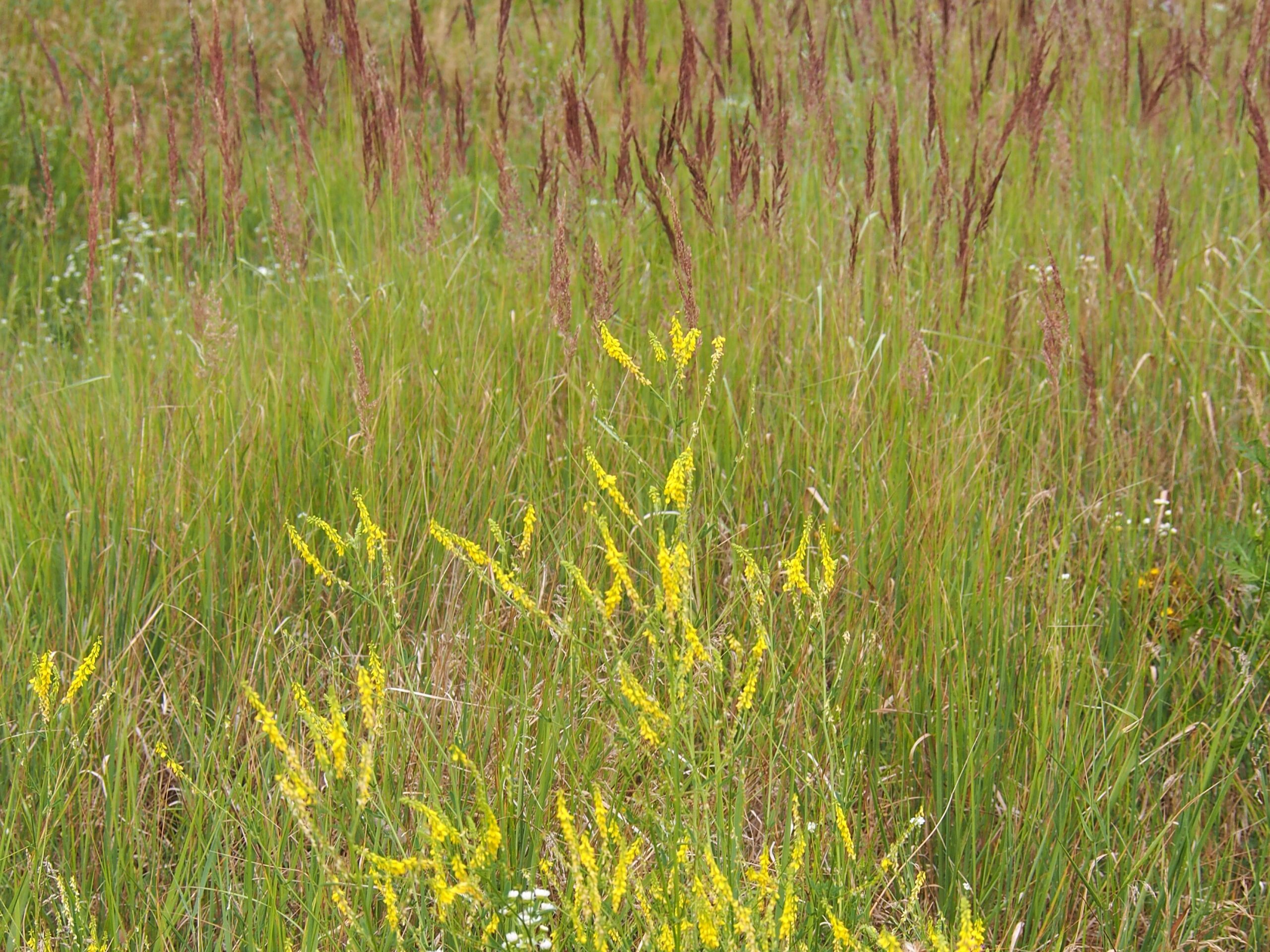
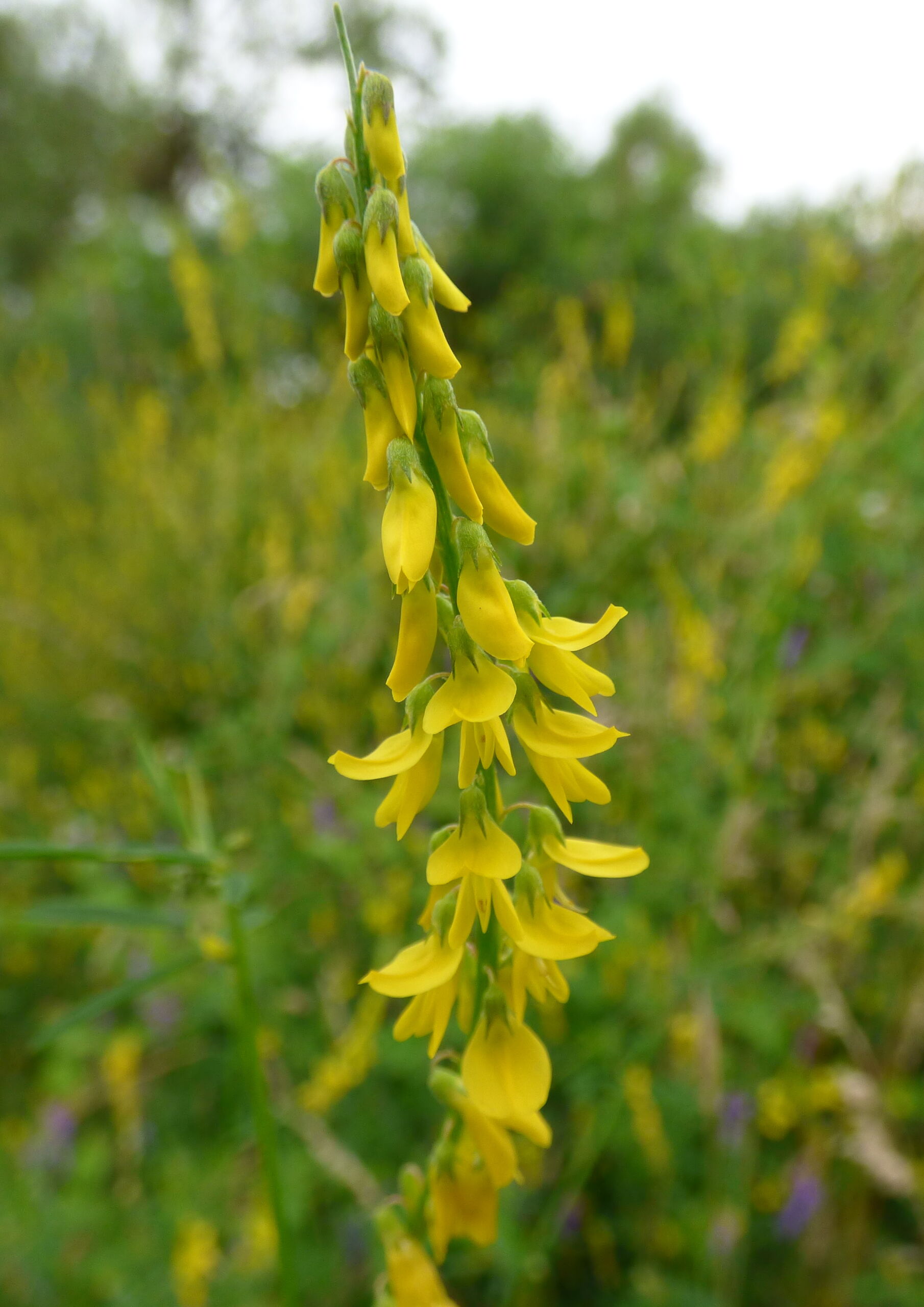
The flowers are the whole story. Sweet clover blooms from May through October, a long, generous season, and the blooms smell like fresh hay and vanilla and warm summer all at once. That scent is coumarin, the same compound that gives sweet woodruff its fragrance, and bees lose their minds over it. Sweet clover is one of the great honey plants of North America; beekeepers plant it deliberately, and a stand in full bloom hums so loudly you can hear it from the path. Butterflies use it too — sulphurs, blues, and hairstreaks visit it for nectar and lay eggs on it, which is why it turns up in butterfly guides as both a host plant and a nectar plant. The leaves are trifoliate and toothed toward the tip, the stems are smooth, upright, and grooved, and the root is a deep taproot that dives several feet into the ground, cracking compacted soil as it goes. First-year plants form a leafy rosette and a big root system; second-year plants bolt into tall flowering stems, set seed, and die. That two-year rhythm — biennial, with occasional annual forms — is the key to managing it.
A plain-text note to avoid confusion: white sweet clover, Melilotus albus, has its own separate growing guide on this site, and this genus guide does not replace it. Think of this page as the family portrait and that page as the individual sitting — same tall habit, same honey scent, white flowers instead of yellow, and all the detail in one place. Yellow sweet clover, Melilotus officinalis, is the other famous member, and the two are so similar that the easiest way to tell them apart in the field is flower color, with white for albus and yellow for officinalis, plus a slightly coarser, taller habit in the white species.
Florida note: Sweet clover is a cool-season, northern plant at heart, and Florida is not its happy place. It wants cool, fertile, moist conditions and a real winter; in most of Florida it will struggle through summer heat and humidity, and it is not a recommended Florida cover crop. Gardeners in North Florida can trial it as a cool-season cover in a managed bed, but southern gardeners should admire it from afar and plant a warm-season legume — such as cowpea or sunn hemp — for the same nitrogen-fixing job.
How to grow
Sweet clover is grown as a cover crop, a forage plant, a soil builder, and a bee plant — sometimes all four at once — and the growing method depends on which job you hired it for. As a cover crop, sow in late winter or early spring, or in fall for biennial types, broadcasting seed onto prepared ground and raking it in shallowly, about a quarter inch deep. It wants full sun and cannot tolerate dense shade; even a thick second-year stand shades its own lower leaves off. It prefers calcareous or loamy soils with a pH of 6.5 or above and fails below about pH 6.0, so lime acidic soil before sowing — a soil test first, lime second, seed third. It tolerates drought, frost, and cold, and it thrives in disturbed ground: roadsides, abandoned fields, pastures, and anywhere the soil has been opened up.
As a garden plant rather than a field crop, give it room and a firm hand. Sow in rows 6 to 12 inches apart in the row, thin volunteers ruthlessly, and expect a big plant: first year a rosette, second year a branching tower. Cut it back before it sets seed if you do not want it everywhere next year, because sweet clover self-sows abundantly and its hard seeds can wait in the soil for years. For nitrogen fixation, the magic is underground: rhizobium bacteria in root nodules fix atmospheric nitrogen, and when the plant is cut and left as mulch or tilled in, that nitrogen feeds the next crop. Sweet clover’s taproot also breaks up compacted soil and mines nutrients from depths other cover crops cannot reach, which is why old-timers called it a soil builder rather than just a cover crop.
For pollinators, the advice is to let it bloom. A sweet clover strip left to flower from May through October feeds honeybees, bumblebees, sulphurs, blues, and hairstreaks for months, and the long bloom season is genuinely hard to beat. Mow or cut only after bloom if you want the pollinator benefit, and leave a strip standing each year so there is always a flowering patch while the next biennial cohort establishes.
Water & feeding
Sweet clover prefers dry to moist soil and is drought-tolerant once established, but it grows best under cool, fertile, moist conditions. Water to establish and during dry spells in its first year; after that, its taproot does most of the work. It does not tolerate waterlogged ground, so do not plant it in a boggy corner. On feeding, the beautiful irony of a legume cover crop is that it feeds itself: it fixes its own nitrogen, so nitrogen fertilizer is pointless and counterproductive. What it does need is the right pH and, on poor soils, phosphorus and potassium per a soil test. Inoculating seed with the correct rhizobium strain helps on ground where sweet clover has never grown, because the bacteria are not automatically present in every soil.
The serious caution belongs here, not buried in fine print. Sweet clover contains coumarin, and spoiled or mouldy sweet clover hay or silage can develop dicoumarol, a compound that interferes with blood clotting and can be fatal to livestock. This is a storage problem, not a growing problem: properly dried, well-stored hay from low-coumarin varieties is the traditional forage, but mouldy material must never be fed. If you grow sweet clover for forage, choose certified low-coumarin varieties, dry hay thoroughly, store it dry, and discard anything mouldy. Gardeners growing it for bees and soil, not for hay, sidestep the issue entirely by not feeding it to animals.
Common problems
- It takes over: Sweet clover self-seeds abundantly and is considered invasive in many areas, including Midwestern prairies and open natural communities. Grow it only in managed beds, cover-crop rotations, or pollinator strips where you control seed set, and never sow it into or beside a natural area.
- It is not a clover for lawns: If you want a lawn, plant white clover (Trifolium repens). Sweet clover grows 4 to 5 feet tall and will not be mowed into a lawn, no matter how optimistic you are.
- Mouldy hay hazard: Spoiled or mouldy sweet clover hay can be dangerous to livestock because of dicoumarol. Dry thoroughly, store dry, use low-coumarin varieties for forage, and discard mouldy material.
- Acid soil failure: Sweet clover fails below about pH 6.0. If your soil is acidic and you will not lime it, plant a different legume.
- Second-year legginess: Tall second-year plants shade their own lower leaves, which drop, leaving bare stems below and flowers above. This is normal. Cut after bloom or accept the airy look.
- Heat and humidity: Sweet clover sulks in hot, humid summers. In warm climates it is a cool-season plant or not a plant at all.
Harvest
Harvest depends on the job. For hay or forage, cut in the first year or early in the second, before the stems get woody, and dry the cut material promptly and thoroughly — the mould warning above is the reason this sentence is not optional. For green manure, cut or mow the stand at full bloom in its second year and leave the residue as mulch or till it in, so the fixed nitrogen and the deep-mined nutrients return to the topsoil. For seed, let the plants stand until the pods ripen, then cut and thresh, and store seed dry; hard sweet clover seed stays viable for years, which is both a blessing for the seed saver and a warning for the gardener who let it set seed by the fence. For honey, the harvest is the bees’ — leave the flowers alone, and the beekeeper down the road will thank you.
Saving seeds
Sweet clover is easy seed with one extra step: the hard coat. Nick each seed with a file or rub it with sandpaper, then soak it overnight in warm water; the seeds that swell are ready. Sow in spring in moist soil, barely covered, and germination usually comes in one to two weeks after treatment. Untreated seed can sit in the soil for months and do nothing — or for years, which is how sweet clover seed banks work.
Let the flower spikes ripen until they are dry and brown, then strip the seed into a paper bag. Dry it thoroughly before storing; sweet clover seed keeps for years in a cool, dry jar, and it is famous for staying viable in the soil seed bank for decades.
It self-seeds freely and can be weedy, so deadhead if you do not want a patch of it everywhere, or let it go where you want a cover crop — sweet clover fixes nitrogen, feeds the bees, and improves the soil it grows in. A patch you planted on purpose is a cover crop; a patch you ignored is a weed problem.
Sweet clover crosses with other Melilotus, so grow only one type for seed at a time if you want it pure. And a caution: sweet clover contains coumarin, which becomes dicoumarol in spoiled hay and is toxic to livestock — this guide does not give animal-feed advice, and the seed note here is for the garden, not the barn.
Species in this group
- White sweet clover — Melilotus albus (syn. Melilotus alba): The tall, white-flowered species, covered in its own separate growing guide on this site. A tap-rooted biennial legume and pollinator favorite, growing best under cool, fertile, moist conditions, used for hay, grazing, and as a cover crop for fixing nitrogen. Slightly taller and coarser than yellow sweet clover, blooming later.
- Yellow sweet clover — Melilotus officinalis: The yellow-flowered species, the classic honey plant and the one in the photographs above. A biennial herb, easy to identify in flower, blooming May through October, found throughout the United States in disturbed habitats. Slightly earlier-blooming than white sweet clover, with a similar tall, branching habit.
- Indian sweet clover — Melilotus indicus: A smaller relative, generally 20 to 70 centimetres tall, with much smaller yellow flowers, usually about 2 to 3 millimetres long, compared with the 4 to 7 millimetre flowers of white and yellow sweet clover. A useful reminder that not every yellow-flowered melilot is the big one.
- Annual sweet clover types — Melilotus spp.: Annual forms exist, including the well-known Hubam type grown in the Deep South, where biennial types struggle. Annual sweet clovers establish fast, flower in their single season, and suit quick cover-crop slots where a two-year plant is not wanted.