
🍒 Cherries
What it looks like
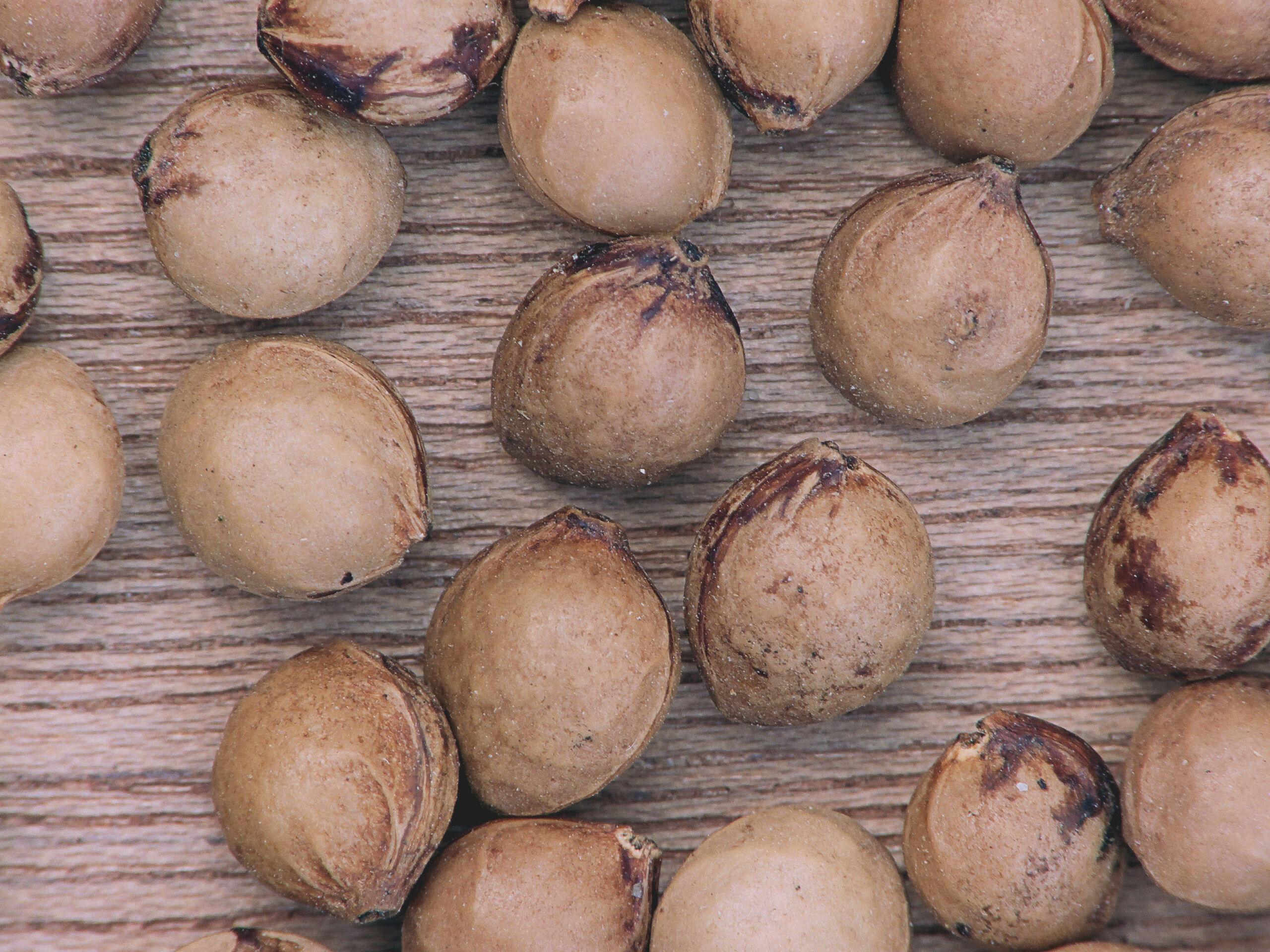
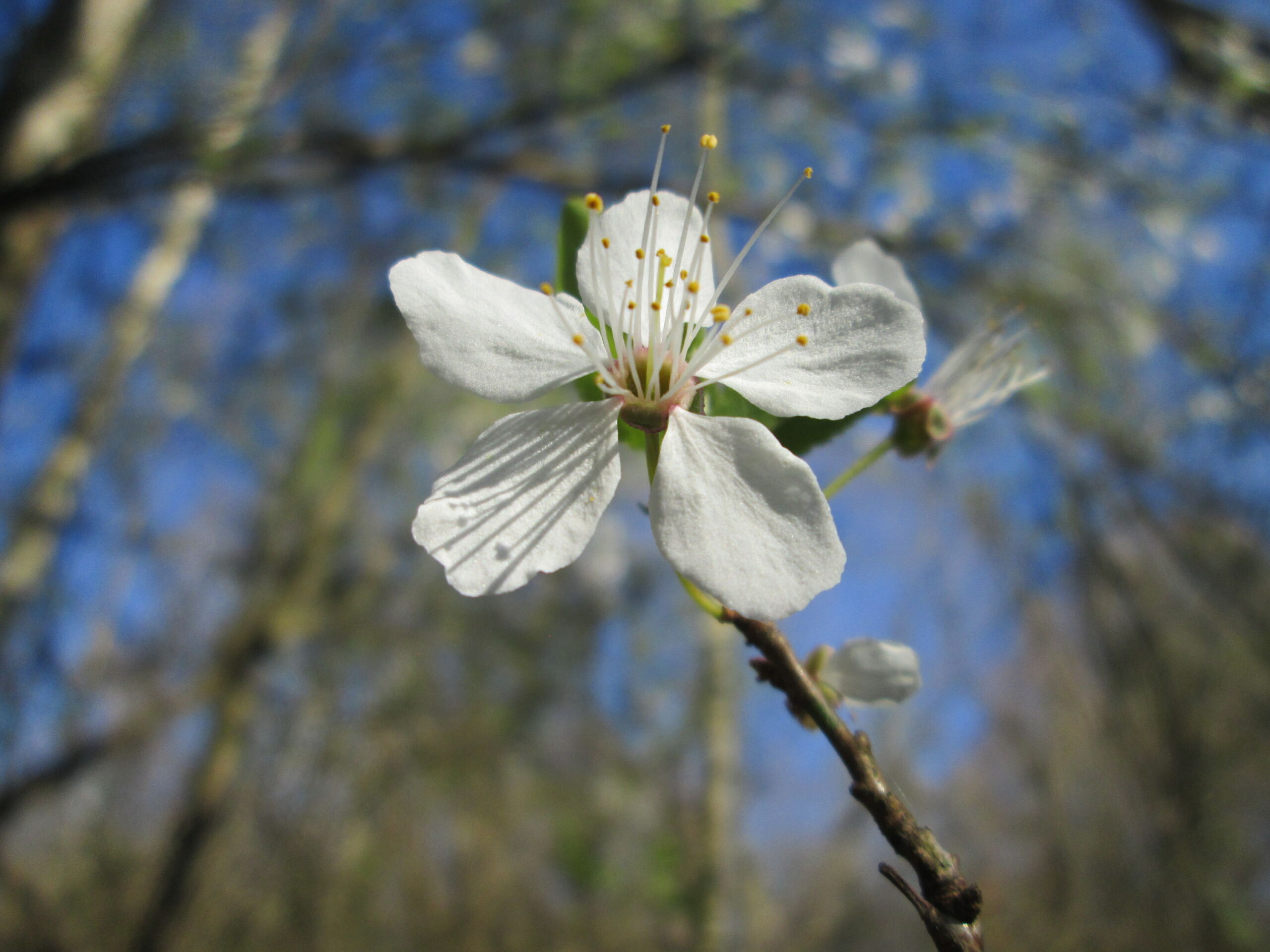
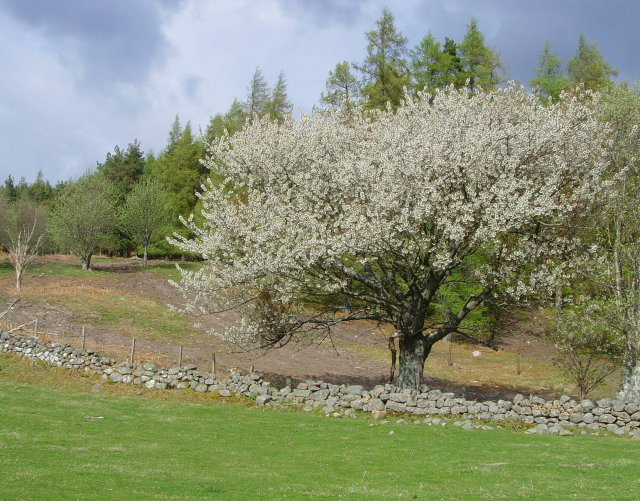
Cherries belong to the genus Prunus, in the rose family, Rosaceae, and the genus name itself is the Latin word for plum, which tells you something important right away: Prunus is a big, unruly family that also contains plums, peaches, apricots, almonds, and cherry plums, and this guide covers the cherry members of it, not the whole genus. A cherry, botanically, is a drupe, a fleshy fruit with a single hard stone inside, and cherry trees and shrubs share a family resemblance that is easy to learn: simple, alternate leaves with finely toothed edges, five-petaled white or pink flowers in spring, and fruit that ripens from green to red to dark purple or black. The details vary enormously with the species, from a 100-foot black cherry timber tree to a 3-foot sand cherry shrub, which is why this is a genus guide and not a single-tree guide.
The flower show is the reason most people plant a cherry, and it is worth planting for even if you never eat a fruit. Wild and cultivated cherries bloom in spring in clusters, either in long, drooping racemes, as in black cherry and chokecherry, where dozens of small, fragrant white flowers hang in a bottlebrush, or in smaller clusters of larger blossoms, as in sweet and sour cherries and the ornamental flowering cherries. The fruit follows in summer: sweet cherries are large, red to near-black, and eaten fresh; sour cherries are smaller, brighter red, and best cooked; wild cherries are small, dark, and tart or astringent, beloved by birds and useful for jelly, jam, syrup, and wine, but rarely pleasant straight off the tree. In autumn, many cherry species turn yellow, orange, or rose, and the bark becomes a feature in its own right: young cherry bark is smooth with horizontal lenticels, and mature black cherry bark breaks into dark, scaly plates that field guides compare, memorably, to burnt potato chips.
Two disambiguations, in plain text. First, sweet cherry (Prunus avium) already has its own species guide, and so do several other cherry species, including sour cherry, chokecherry, sand cherry, cornelian cherry, flowering cherry, Surinam cherry, and Barbados cherry. Those guides cover their species in depth. This genus guide does not replace them; it is the overview that helps you tell the cherry clan apart, choose between wild and cultivated types, and understand what all cherries share. Second, not everything called cherry is a Prunus cherry: ground cherry is a Physalis, a relative of tomatillos, and Surinam and Barbados cherries are different genera entirely, each with its own guide. If a cherry name puzzles you, check the Latin name first; the Latin name is the only part of the label that never lies.
How to grow
Plant cherries in full sun, in well-drained soil, and give them room. That sentence is short because it is the whole secret, and most cherry failures violate one of its three clauses. Cherries despise wet feet: their roots are shallow, they rot in soggy ground, and a cherry planted in a low, wet spot will decline no matter how much you fuss over the top. Sandy loam with moderate moisture is ideal; heavy clay needs a slope, a raised bed, or a different tree. Space according to mature size, which varies wildly: dwarf sweet and sour cherries 8 to 10 feet apart, standard sweet cherries 15 to 20 feet apart, black cherry 30 feet or more as a timber and shade tree, and shrub cherries like sand cherry and chokecherry 6 to 10 feet apart in a hedge or thicket. A cherry planted too close to a house, a path, or another tree will spend its life being pruned back, and a cherry hates being pruned back.
Hardiness, like size, varies by species, and the hero stat of zones 2 to 9 is the span of the clan, not a promise for any one tree. Chokecherry is hardy to zone 2, black cherry to zone 3, sour cherry to zone 4, and sweet cherry to zone 5, with some cultivars stretching to zone 8 or 9, and the ornamental flowering cherries sit in the middle of that range. Winter chill is the hidden constraint: most sweet cherries need 700 or more chill hours below 45 degrees Fahrenheit, which rules out nearly all of Florida and the warmest Gulf Coast, while sour cherries and low-chill types are the warm-climate workaround. Check chill hours, not just the zone number, before you buy, and buy a grafted tree from a nursery that knows your region, because a seedling cherry is a lottery ticket with a decade-long wait.
Pollination is the second hidden constraint, and it catches more new cherry growers than any disease. Most sweet cherries need a compatible pollination partner, a different cultivar that blooms at the same time, and a few are self-fertile, so check compatibility charts before buying, not after planting. Sour cherries are generally self-fertile. Wild cherries, black cherry and chokecherry, are insect-pollinated and set fruit freely where pollinators are present. Plant in spring in cold climates and in fall in mild ones, water deeply at planting, mulch the root zone while keeping mulch off the trunk, and then protect the fruit: net the trees or the birds will harvest before you do, and they will do it with great efficiency and no remorse.
Water & feeding
Water deeply and consistently during fruit development, because inconsistent moisture is what splits cherry fruit. A deep weekly watering in dry weather, enough to soak the shallow root zone, beats a daily sprinkle, and a mulch layer over the roots helps hold that moisture steady. Once established, wild cherries are reasonably drought-tolerant for a fruit tree, and black cherry in particular handles a range of soils, including moist ones, better than cultivated cherries do. Do not overwater: wet soil plus a cherry root system is an invitation to root rot and bacterial canker, and the tree will tell you about it by declining in a way that no fertilizer fixes.
Feed lightly, if at all. Cherries in average soil with a mulch layer usually need no fertilizer, and excess nitrogen pushes soft, leafy growth that invites aphids and disease while delaying fruiting. If growth is genuinely poor, a balanced fertilizer in early spring, before bloom, is plenty, and a soil test is cheaper than a guess. Prune in late winter or after harvest, never in wet weather, because pruning wounds are entry points for bacterial canker. Remove dead, crossing, and inward-growing wood, keep the center open so air and light reach the fruit, and remove root suckers from chokecherry and shrub cherries unless you want a thicket, which, to be fair, is sometimes exactly what you want.
Common problems
- Birds. The number one cherry pest, by a wide margin. Netting is the only reliable defense for a fruit crop; scare devices work for about a day, and the birds know it.
- Brown rot. A fungal disease that rots fruit in humid weather, especially on sour and sweet cherries. Improve airflow, remove mummified fruit, and do not let fallen fruit rot under the tree.
- Bacterial canker. Sunken, oozing cankers on trunks and branches, worst in wet climates and on trees pruned in wet weather. Prune in dry weather, disinfect tools, and remove cankered wood well below the damage.
- Eastern tent caterpillar. Silky nests in branch forks in early spring, most famously on wild cherry, which the caterpillars can strip bare. The tree usually refoliates; remove nests by hand where you can reach them.
- Cherry leaf spot and powdery mildew. Common cosmetic and defoliating diseases in humid summers. Airflow, sunlight, and fallen-leaf cleanup help more than spraying does in a home garden.
- Toxicity warning. All parts of cherry except the ripe fruit flesh contain cyanogenic glycosides, and wilted leaves and pits are poisonous to livestock and, in quantity, to people. Do not let livestock browse wilted cherry branches, do not crack and eat the kernels, and enjoy the ripe fruit flesh, which is the safe part.
Harvest
Harvest sweet and sour cherries when they are fully colored, glossy, and taste sweet or tart as the cultivar intends, and pick with the stem attached, because stemless cherries rot faster. Wild cherries are a different harvest: black cherry fruit ripens in late summer to dark purple-black, chokecherry in late summer to dark purple-black, and both are best cooked into jelly, syrup, sauce, or wine, where their astringency becomes an asset instead of a punishment. For wildlife gardeners, the harvest is simpler: leave the fruit for the birds, which is what wild cherries evolved for, and enjoy the parade of thrushes, waxwings, and orioles that a fruiting cherry draws in.
For butterfly gardeners, cherries earn their place as host plants, not nectar plants: the leaves feed caterpillars of hairstreaks, admirals, swallowtails, and the viceroy, among others. A wild cherry or chokecherry at the edge of a garden, allowed to keep some caterpillar damage, is doing exactly what a butterfly garden needs it to do. Do not spray a host cherry for caterpillars if butterflies are the point; the chewed leaves are the crop. And a practical note for the timber-minded: black cherry wood is among the most valuable native hardwoods in North America, prized for furniture and cabinetry, which is one more reason to let a wild black cherry grow where it volunteers, instead of clearing it as a weed tree.
Propagation
Read this warning before you touch a pit: this is a genus-level method, because this guide covers the cherry clan of Prunus rather than one species, and cherry pits, leaves, bark, and twigs contain cyanogenic glycosides that release cyanide when damaged. The ripe flesh is the safe part. Do not crack and eat the kernels, do not let livestock browse wilted cherry branches, and do not let a fallen, wilting branch sit in a pasture while you decide what to do with it, because wilted leaves are the dangerous form. Seed saving here is a propagation project, never a snack project.
Seed is how wild cherries travel, and birds have been running this program far longer than gardeners have. Eat or cook the flesh, clean every scrap of pulp from the pits, and give them the winter they expect. Cherry seed is dormant until it has had a long, cold, moist chill, so either sow outdoors in fall and let real winter do the work, or mix cleaned pits with damp sand or peat in a bag in the refrigerator for a few months, checking now and then for mold or early sprouting, and sow in spring. Sources vary on the exact chilling time by species, so a range of roughly two to four months is the honest bracket, not a stopwatch promise. Sow in a deep pot or a protected bed, because a cherry seedling makes a taproot with opinions, and protect young plants from birds, which will happily finish what they started.
What will you get? For wild species like black cherry and chokecherry, seedlings are recognizably that species, though individual trees will still vary in vigor, fruit size, and form. For named sweet and sour cherry cultivars, seedlings will not reliably repeat the parent at all: the fruit may be smaller, tarter, later, or simply disappointing, and the tree may take many years to confess. That is why orchards do not grow cultivars from seed. They graft or bud a known scion onto a rootstock chosen for size, soil tolerance, or disease behavior, and that grafted tree is the only way to guarantee the cherry on the label. If your grafted tree throws up suckers from below the graft union, pull them, because they are rootstock shoots, not your variety making a comeback.
Wild cherries also offer a free, low-tech route: volunteers. Seed dropped by birds germinates where it lands, and some species sucker from the roots. A volunteer in a good spot, left to grow, is a legitimate new tree, and a volunteer in a path or a pasture fence line is a weed with a blossom problem. In Florida, add a chill reality check before any of this: most sweet cherries need far more winter cold than most of Florida provides, and no amount of careful seed stratification fixes a tree that cannot get its chill hours in the ground. Propagate cherries for the climate you actually have, and let the wild, low-chill, and native members of the clan do the work they evolved to do.
Species in this group
One disambiguation first: sweet cherry (Prunus avium) and the other cherry species listed here with their own guides are not repeated in full; this section is the plain-text map of the clan.
- Sweet cherry — Prunus avium: The cultivated fresh-eating cherry, zones 5 to 8 or 9 depending on cultivar, large red to near-black fruit, needs winter chill and usually a pollination partner. Covered in full by its own species guide.
- Sour cherry — Prunus cerasus: The pie cherry, zones 4 to 7 and sometimes to zone 2, smaller, brighter, tarter fruit, generally self-fertile, and the cold-hardy cooking cherry. Has its own species guide.
- Black cherry — Prunus serotina: The great native timber and wildlife cherry, 50 to 100 feet tall, zones 3 to 9, fragrant white flowers in long racemes, small dark fruit in late summer, and bark that turns to dark scaly plates with age. Native from southern Canada to central Florida and Texas, and south into Mexico.
- Chokecherry — Prunus virginiana: A shrub or small tree, 20 to 30 feet tall, zones 2 to 7, profuse white racemes, dark purple-black fruit that is bitter and astringent fresh but excellent cooked. Suckers freely and forms thickets. Has its own species guide.
- Pin cherry — Prunus pensylvanica: A small, fast-growing northern cherry of burns and clearings, bright red fruit, and a pioneer tree that colonizes disturbed ground and then yields to longer-lived forest.
- Carolina cherry laurel — Prunus caroliniana: An evergreen southern cherry, glossy leaves, small black fruit, and a hedge and screening tree in the Southeast. The leaves and pits are toxic, as in all cherries; the ripe fruit flesh is eaten by birds.
- Sand cherry — Prunus pumila and relatives: Low, spreading shrub cherries, 2 to 4 feet tall, for cold climates and poor soils, with small dark fruit. Has its own species guide under the sand cherry name.
- Flowering cherries — Prunus serrulata and hybrids: The ornamental Japanese flowering cherries, including Kwanzan and Yoshino types, planted for spring blossom rather than fruit. Covered by their own guides; they are cherries in the botanical sense, even when the fruit is small and the show is the flower.
- Not cherries in this genus sense: Surinam cherry and Barbados cherry are different genera with their own guides, and ground cherry is a Physalis. Their common names are a reminder to check the Latin name before you plant.