
💛 Chamaecrista
What it looks like
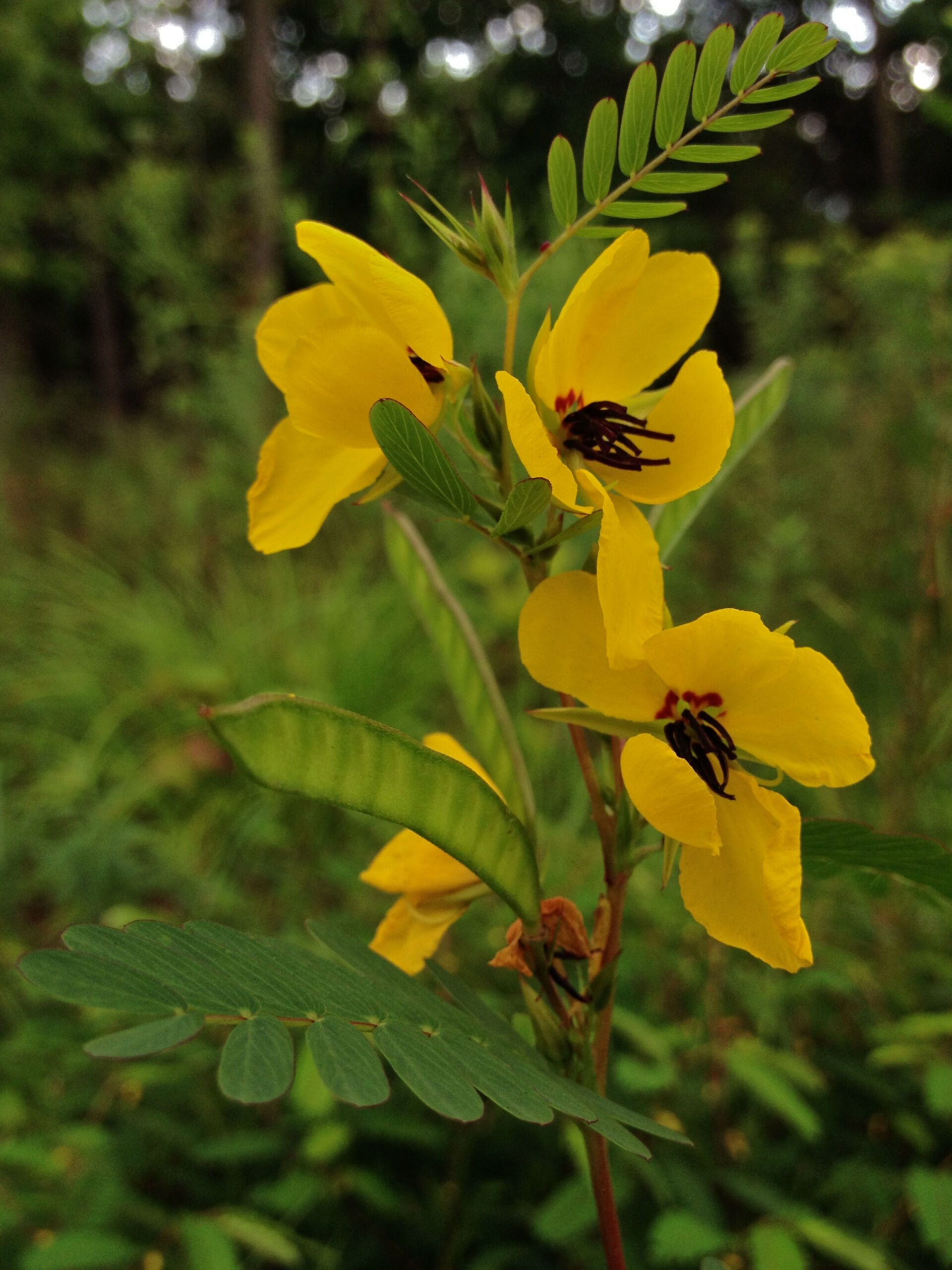
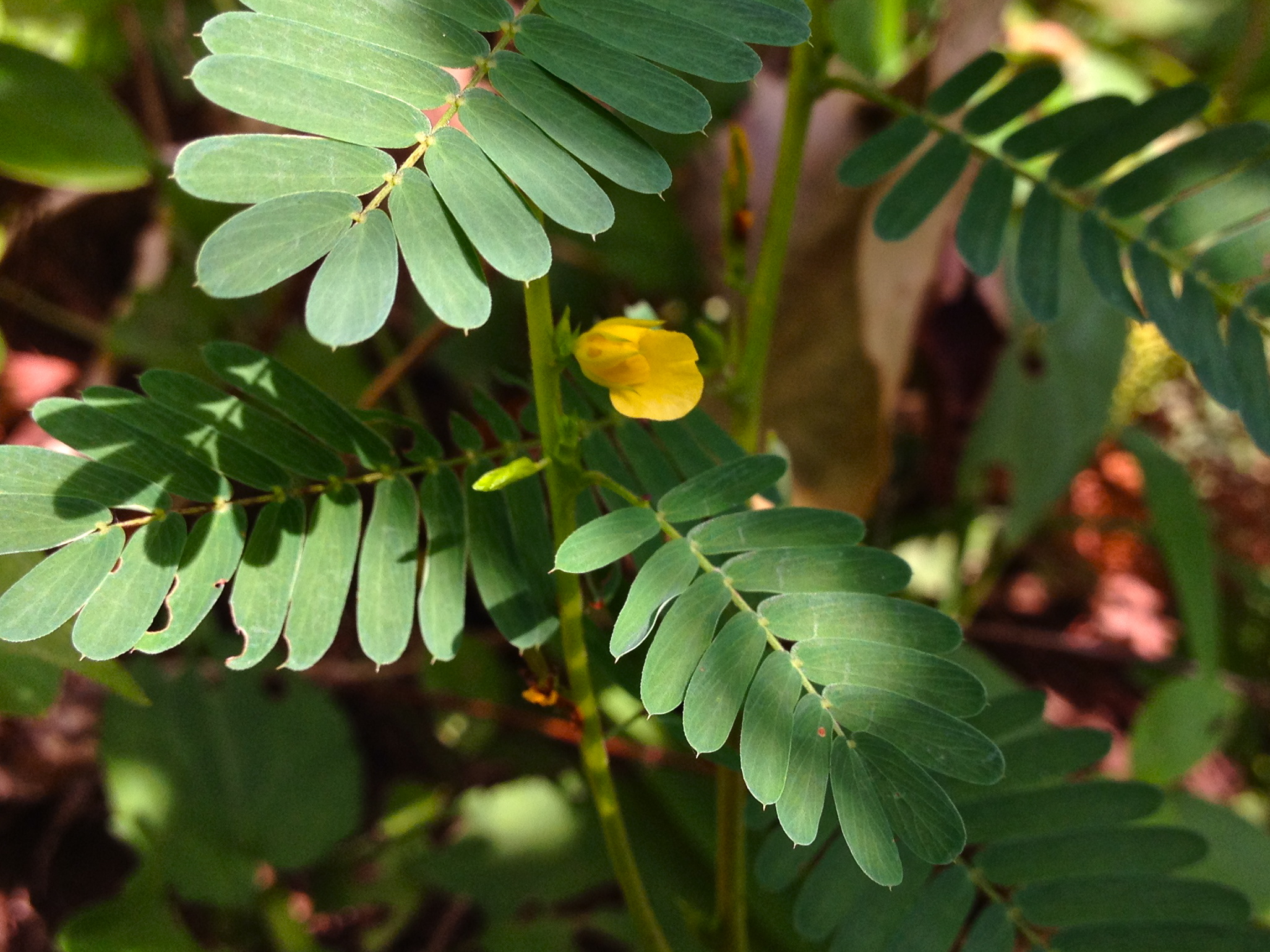
Chamaecrista is a genus of flowering plants in the pea family, Fabaceae, subfamily Caesalpinioideae, and it is much bigger than most gardeners realize: about 367 species, spread across the Americas from Minnesota to northern Argentina, sub-Saharan Africa, the Arabian Peninsula and Iran, the Indian subcontinent, Indochina, China, Korea, Japan, Malesia, New Guinea, and Australia. Members of the genus are commonly known as sensitive pea, and the name is a fair summary of the whole group: these are mostly herbs, with some shrubs, that live fast, flower yellow, and react to the world around them. The genus name comes from the Greek chamae, meaning low growth, and crista, meaning crested, and the low, spreading, scrappy habit is true of many species, though some stand upright to 3 feet and a few tropical species grow into shrubs.
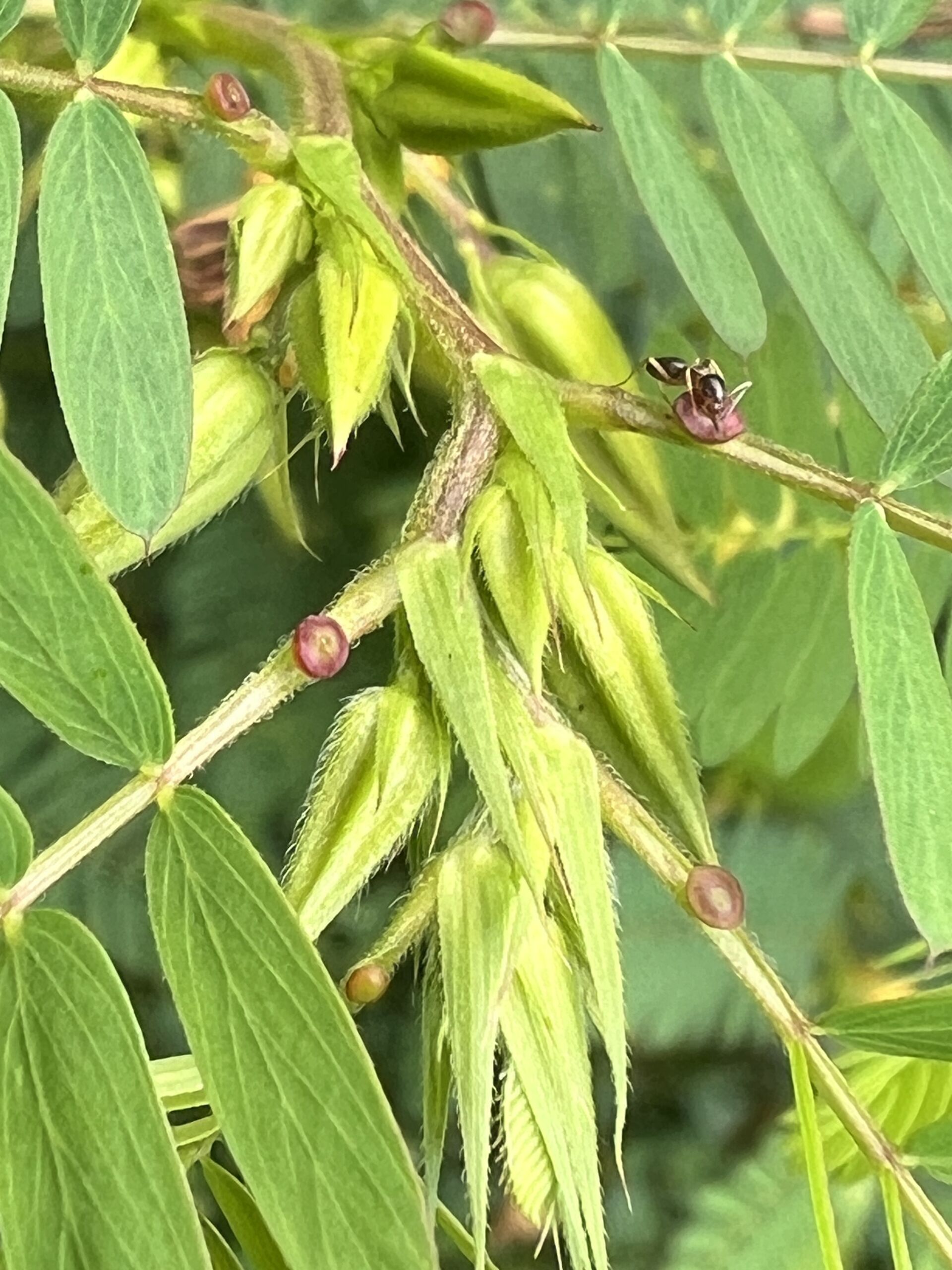
The leaves are the first field mark. They are pinnately compound, a central stalk carrying many pairs of small, narrow leaflets, 8 to 18 pairs in partridge pea, each leaflet linear or oblong and tipped with a tiny bristle, giving the whole plant a fine, fernlike texture that looks delicate and turns out to be tough. Touch them, and in the sensitive species the leaflets fold together, a rapid movement that gives the genus its common name and its party trick. The leaves also fold at night, for protection from cold and moisture loss, and the combination of touch-sensitivity and night-folding is why children love these plants and why botanists study them: this is a plant that visibly notices you. Look closer at the leaf stalks and you will find the second field mark, small glands, extrafloral nectaries, on the petioles, which exude nectar outside the flowers and attract ants. The ants, in turn, patrol the plant and prey on herbivorous insects, which makes the nectaries a protection racket run by the plant itself: sugar for the ants, bodyguards for the pea.
The flowers are the reason to plant Chamaecrista, and they do not look like a typical pea flower. They are bright yellow, about an inch across in partridge pea, with five rounded petals of uneven sizes in an open, irregular shape, often with a reddish-purple spot at the base of the petals and red stamens, blooming from early summer into fall, in partridge pea from June to September and often until first frost if rainfall is sufficient. The flowers sit in the leaf axils, sometimes 2 to 6 together, not in terminal spikes, so the yellow appears tucked among the foliage rather than waved above it. The flower is followed by a narrow pod, which is attractive to songbirds and game birds, and which splits when ripe to scatter the seed that keeps the colony going. Underground, the genus does its quietest work: unlike its former relatives Cassia and Senna, members of Chamaecrista form root nodules, partnering with bacteria to fix nitrogen from the air into the soil, which is why these plants thrive in poor ground where other flowers sulk.
Two plain-text disambiguations, because this genus has a confusing family history. First, Chamaecrista used to be lumped into Cassia, and older books and seed packets still call partridge pea Cassia fasciculata or Cassia chamaecrista. If you see those names, they are the same plants, under an old classification. The genus Senna is now separate again, and this site already has a Senna growing guide: Senna is the cousin, Chamaecrista is the plant in this guide, and the two should not be confused, even though butterfly guides sometimes list all three names in one breath. Second, partridge pea (Chamaecrista fasciculata) and sensitive pea (Chamaecrista nictitans) already have their own species profiles on this site. Those profiles cover those two species in depth. This genus guide does not replace them: it covers the whole genus, compares its members, and explains why a bare mention of Chamaecrista in a butterfly guide means the group, not one species.
How to grow
Grow Chamaecrista the way it grows in the wild: in full sun, in poor to average, well-drained soil, with no pampering. The temperate species that gardeners actually plant, partridge pea and sensitive pea above all, are annuals of open woods, meadows, prairies, plains, and roadsides across the eastern United States, and they are built for ground that other plants find too poor, too dry, or too sandy. Rich, heavily composted, heavily watered soil makes them leggy and floppy and buys you nothing: lean soil makes them compact, floriferous, and self-reliant. They tolerate acidity, they tolerate drought once established, and they positively prefer the kind of sunny, disturbed, open ground that a new meadow or a sunny border edge provides. In Florida, where partridge pea and sensitive pea are both natives, they are excellent meadow plants for sunny, sandy ground, and they fit the site’s Florida audience better than most of the genus, whose tropical members are not hardy in cold winters.
Hardiness for a genus this size cannot be one number, and this guide does not pretend otherwise. The temperate annual species are grown as summer annuals wherever summers are warm enough for them to flower and set seed, and they self-sow to return the next year, so their garden range is far wider than any perennial zone map would suggest. The tropical and subtropical perennial species, by contrast, are tender and belong in warm climates or greenhouses outside the tropics. Buy by species, check the hardiness of that exact species, and do not assume that a Chamaecrista from a tropical seed list will survive a temperate winter. For the temperate annuals, sow in spring after the last frost, directly where they are to grow, because they dislike transplanting and they germinate best in warm soil. Seed often benefits from scarification, nicking or hot-water treatment to break the hard seed coat, or cold-moist stratification, and germination can be patchy without it, which is normal for a legume with a seed built to wait out a bad year.
Plant in drifts, not in single specimens, because a single partridge pea is a curiosity and a drift of them is a meadow. Space plants roughly a foot or more apart and let them fill in, or broadcast seed thinly over a prepared sunny patch and thin to the strongest plants. They grow 1 to 3 feet tall depending on species and soil, with partridge pea usually around 1 to 2 feet in gardens and up to 3 feet in rich meadow conditions, and sensitive pea smaller and more compact. Do not stake them, do not deadhead them obsessively, and do not tidy them in fall: the pods are bird food, the seed is next year’s drift, and the leaf litter is the mulch the next generation germinates in. The best Chamaecrista bed is one you sow, water to establish, and then largely ignore, which is a rare and welcome sentence in a growing guide.
Water & feeding
Water to establish, then water sparingly. Through germination and the first weeks of growth, keep the soil evenly moist but not soggy, because a legume seedling with wet feet rots faster than it grows. Once established, the temperate species are notably drought-tolerant: partridge pea flowers through the entire season if rainfall is sufficient, and it keeps going in dry spells that flatten thirstier annuals. A deep drink in a prolonged drought is kinder than a daily sprinkle, and in most eastern gardens summer rain is enough. In a container or a very sandy Florida bed, water more often, but always let the soil dry between waterings, because this genus wants drainage more than it wants a schedule.
Do not fertilize, and especially do not add nitrogen. Chamaecrista fixes its own nitrogen through its root nodules, and nitrogen fertilizer pushes soft, leggy growth, suppresses the nodulation that makes the plant valuable, and invites the flopping that lean soil prevents. If your soil is so poor that even a legume struggles, a light application of a phosphorus- and potassium-rich, nitrogen-free amendment is the most that is ever warranted, and in most meadow soils nothing at all is needed. The plant’s job in your garden is partly to feed the soil for whatever follows it, and the way to let it do that job is to leave it alone.
Common problems
- Self-sowing enthusiasm. The most common complaint, and the most easily managed. A happy drift of partridge pea will seed itself generously, and seedlings will appear in paths, beds, and lawn edges the following spring. If you want boundaries, mow or pull the plants before the pods split, or edge the drift. If you want a meadow, let them come, and thin the seedlings to the strongest.
- Patchy germination. Hard seed coats mean some seed waits a year, or two, before germinating, and a first sowing can look thin. This is not failure, it is the seed bank doing its job. Scarify seed, sow generously, and judge the drift in its second year, not its first month.
- Confusion with Senna and Cassia. Seed packets, old books, and butterfly guides use all three names, and sellers sometimes mislabel one for another. Check the Latin name on the packet: Chamaecrista fasciculata and Chamaecrista nictitans are the temperate species in this guide, and a packet labeled only Cassia may be any of several genera. When in doubt, buy from a native-plant nursery that lists the current name.
- Tropical species in cold winters. A tropical Chamaecrista grown as a perennial will die at the first frost, and no mulch reliably saves it. Grow tender species as annuals, or keep them in containers to overwinter indoors, and do not mistake an annual’s autumn death for a disease.
- Caterpillar damage, which is the point. Sulphur and other butterfly caterpillars eat Chamaecrista, and a drift grown for butterflies will show chewed leaves. That is not a problem to spray, it is the reason the plant is in a butterfly garden. The ants on the extrafloral nectaries will eat some caterpillars too, which is the plant’s own balance, and the gardener’s job is to let that balance play out.
- Flopping in rich soil. Tall, soft growth in compost-heavy ground falls over in rain and wind. The cure is leaner soil and more sun next year, not staking, which only props up a problem the soil created.
Harvest
The harvest from Chamaecrista is measured in wildlife, not in baskets. The flowers feed bees, and the pods feed birds: partridge pea pods are eaten by songbirds and game birds, including quail, and the dense stands of the plant give cover to upland game birds, small mammals, and small non-game birds. For butterfly gardeners, the harvest is caterpillars: bare mentions of Chamaecrista in butterfly guides mean the genus as a host, and the guides that name it include the boisduval’s yellow, the cloudless sulphur, the little yellow, and the tailed orange, all as host plants, which is why this genus guide exists at all. If you want seed for next year, let some pods ripen until they are brown and dry, collect them before they split and scatter, and store them cool and dry. The seed is the harvest, and the birds will take their share whether you invite them or not, which is fair, because the plant was feeding them long before it fed your meadow.
Saving seeds
First, a warning that doubles as the reason this section exists: Chamaecrista is a vigorous self-seeder, and in a tidy bed it can go from welcome wildflower to cheerful weed with alarming speed. The pods split with a twist that flings seed several feet, and a single uncollected plant can seed a whole border. So save seed deliberately, collect the pods you want, and leave the rest for the birds — partridge pea seed feeds quail and songbirds. This section describes the genus-level method, anchored on the two species Florida and temperate gardeners actually meet: partridge pea (Chamaecrista fasciculata) and sensitive pea (Chamaecrista nictitans), which share the same hard-coated, explosive-pod seed story.
Collect when the pods turn from green and slightly hairy to dark brown and dry, and beat the explosion: a ripe pod twists open and throws its seed, so gather pods just before they split and drop them straight into a paper bag. Leave the bag somewhere cool and dry for a few weeks and the pods will finish the job themselves, popping open inside the bag where the seed can be caught instead of scattered. Shake out the contents, pick away the pod fragments, and you will have squarish seeds that ripen from pale greenish-white to near-black when fully dry. Only fully ripe, dark seed is worth storing — pale, soft seed picked too early is compost, not crop.
The seed’s armor is the whole story. Like many legumes, Chamaecrista seed wears a hard, waterproof coat that can sit in soil for years waiting for a cue, which is why it forms a persistent seed bank and why unsown seed in your garden will keep volunteering long after you thought you were done with it. To wake stored seed on purpose, scarify it: nick the coat gently with sandpaper, an emery board, or a nail clipper, or soak it in hot water and let it cool. Then give it a cold, moist period — sources disagree on the length, from around ten days to a few weeks — or skip the fridge entirely and sow outdoors in fall, letting winter’s freeze and thaw do both jobs, which is how the plant has managed for millennia without our help.
Sow scarified seed about a half-inch deep in warm soil, keep it moist until seedlings emerge — often within a couple of weeks once warmth arrives — and do not be surprised by staggered germination: hard-coated seed hedges its bets, and some of it will wait for a later cue. Dry stored seed thoroughly before it goes into an envelope or jar, label it with species and year, and keep it cool and dark; hard legume seed keeps well for a few years in those conditions. Seed saved from a single species, grown on its own, comes back true to that species, but if you grow several Chamaecrista species cheek by jowl and save seed from all of them, expect the possibility of crossing — one species per seed patch is the simple rule.
And remember the annual’s bargain: for partridge pea, seed is the plant’s entire future, since the parent dies with the season. Save every year, even if you only need a pinch, because a year you forget is a year with no partridge pea unless the volunteers save you. Keep some pods standing for the birds, keep some seed in an envelope for yourself, and let the plant’s own enthusiasm do the rest — it will, with or without your permission.
Species in this group
The genus holds about 367 species, most of them tropical and most of them never offered in nurseries. The species below are the ones a temperate or Florida gardener is actually likely to meet, in plain text.
- Partridge pea — Chamaecrista fasciculata: The showy one, an annual of most of the eastern United States, 1 to 3 feet tall, with large, bright yellow flowers, 10 stamens, and 8 to 15 pairs of leaflets per leaf. The petiolar gland is usually sessile, attached directly to the stalk, which is the magnifier-level detail that separates it from its sensitive cousin. Already covered by its own species profile on this site.
- Sensitive pea — Chamaecrista nictitans: The smaller, shyer cousin, an annual of nutrient-poor habitats from the southeastern United States south through much of South America, often mat-forming, with smaller, strongly asymmetrical flowers, 5 stamens, and a petiolar gland on a short but distinct stalk. Its leaves fold dramatically when touched, more so than partridge pea’s, which is why it owns the sensitive name. Already covered by its own species profile on this site.
- Narrowleaf sensitive-pea — Chamaecrista lineata: A perennial herb of the southeastern United States, including Florida, with narrow leaflets and the sensitive habit, sold under names including Florida cassia, wild sensitive plant, and narrow-leaf sensitive plant. A good Florida native for sunny, sandy ground.
- Roundleaf cassia — Chamaecrista rotundifolia: A tropical, mat-forming species used as forage and groundcover in warm climates, with roundish leaflets and yellow flowers. Tender outside the tropics and subtropics, and grown as an annual or a container plant in temperate gardens.
- Chamaecrista desvauxii and the tropical majority: The remaining hundreds of species are mostly tropical shrubs and herbs of South America, Africa, and Asia, rarely in the nursery trade and never needed for a temperate butterfly garden. They are listed here only to make the honest point: this guide covers the genus, but the garden species are a handful, and the rest of the genus belongs to the tropics.