
🥬 Lambsquarters
What it looks like
Lambsquarters is the plant you have been pulling out of your garden beds for years, possibly while standing next to a far more expensive plant that is less nutritious than the weed in your hand. It is a fast-growing summer annual in the amaranth family (Amaranthaceae, formerly its own goosefoot family, Chenopodiaceae), and its signature look is dusty: the young leaves and stems are coated in a whitish, mealy wax that makes the whole plant look like it got caught in a flour explosion. The Latin name tells the story — Chenopodium means “goose foot,” for the shape of the leaves, and album means “white,” for that powdery coat. The common name, meanwhile, probably comes not from lambs at all but from Lammas, the old English harvest festival on August 1st, when this green was traditionally gathered — “Lammas quarter” sliding over centuries into “lambsquarters.”
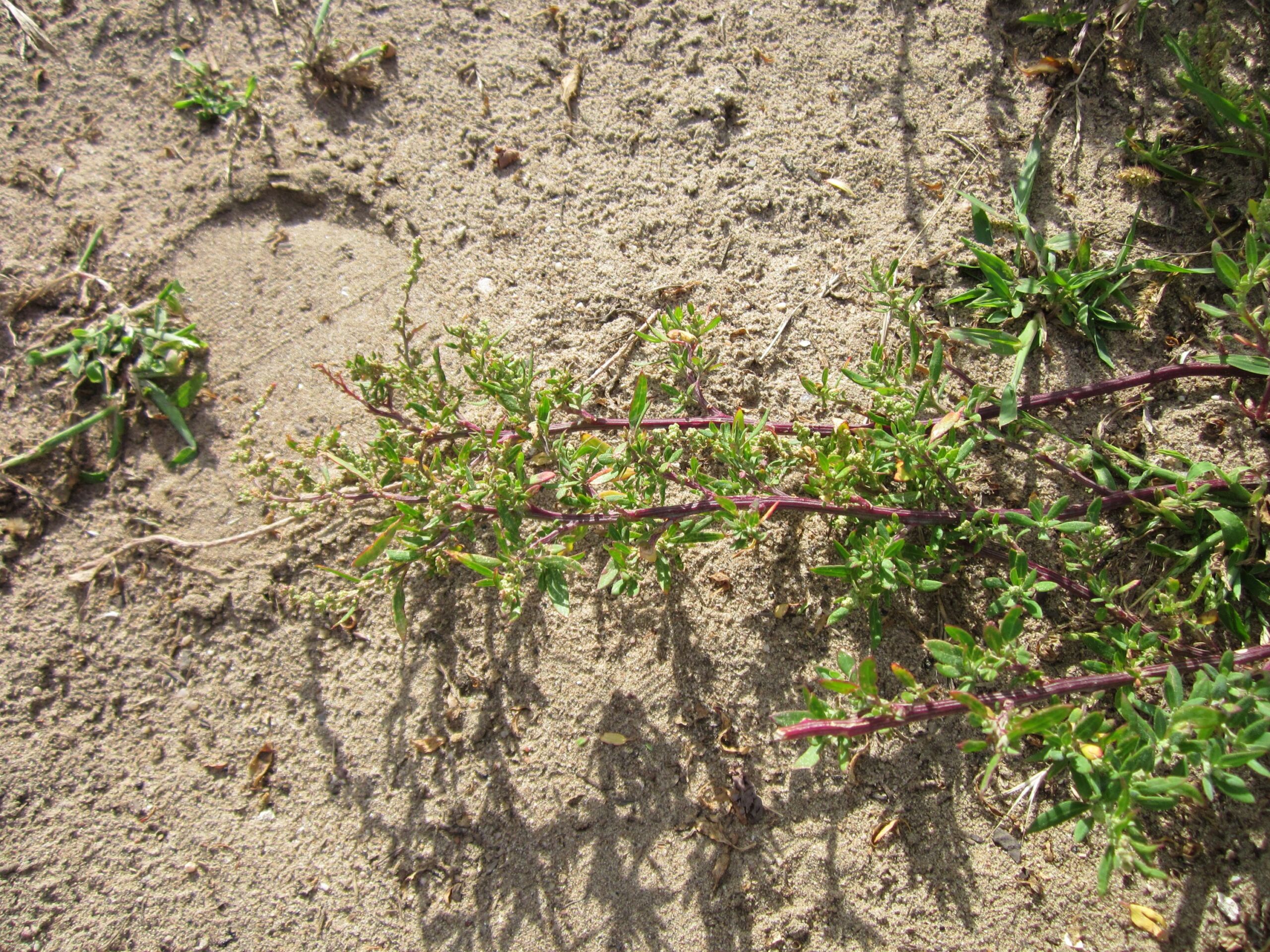
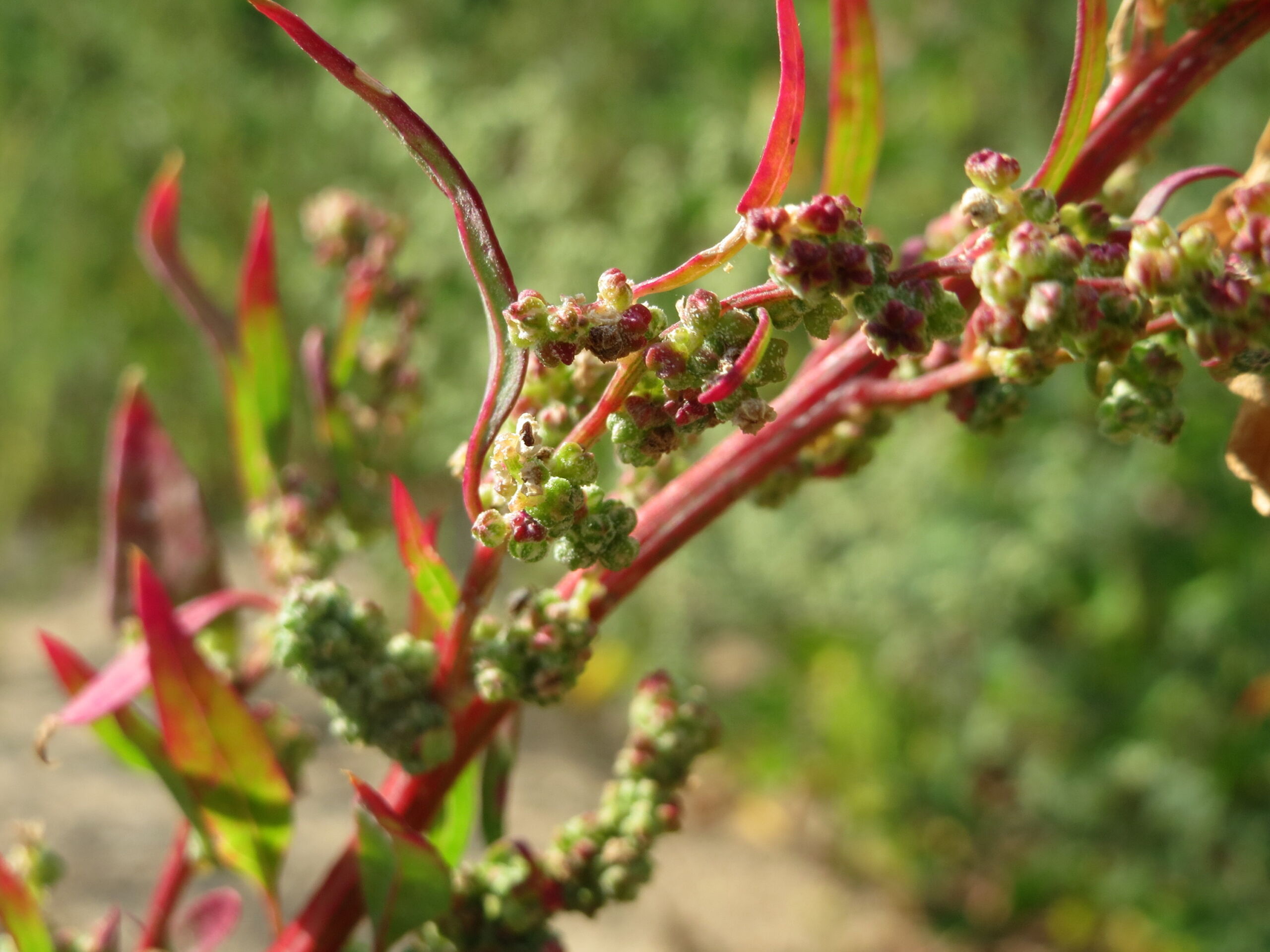
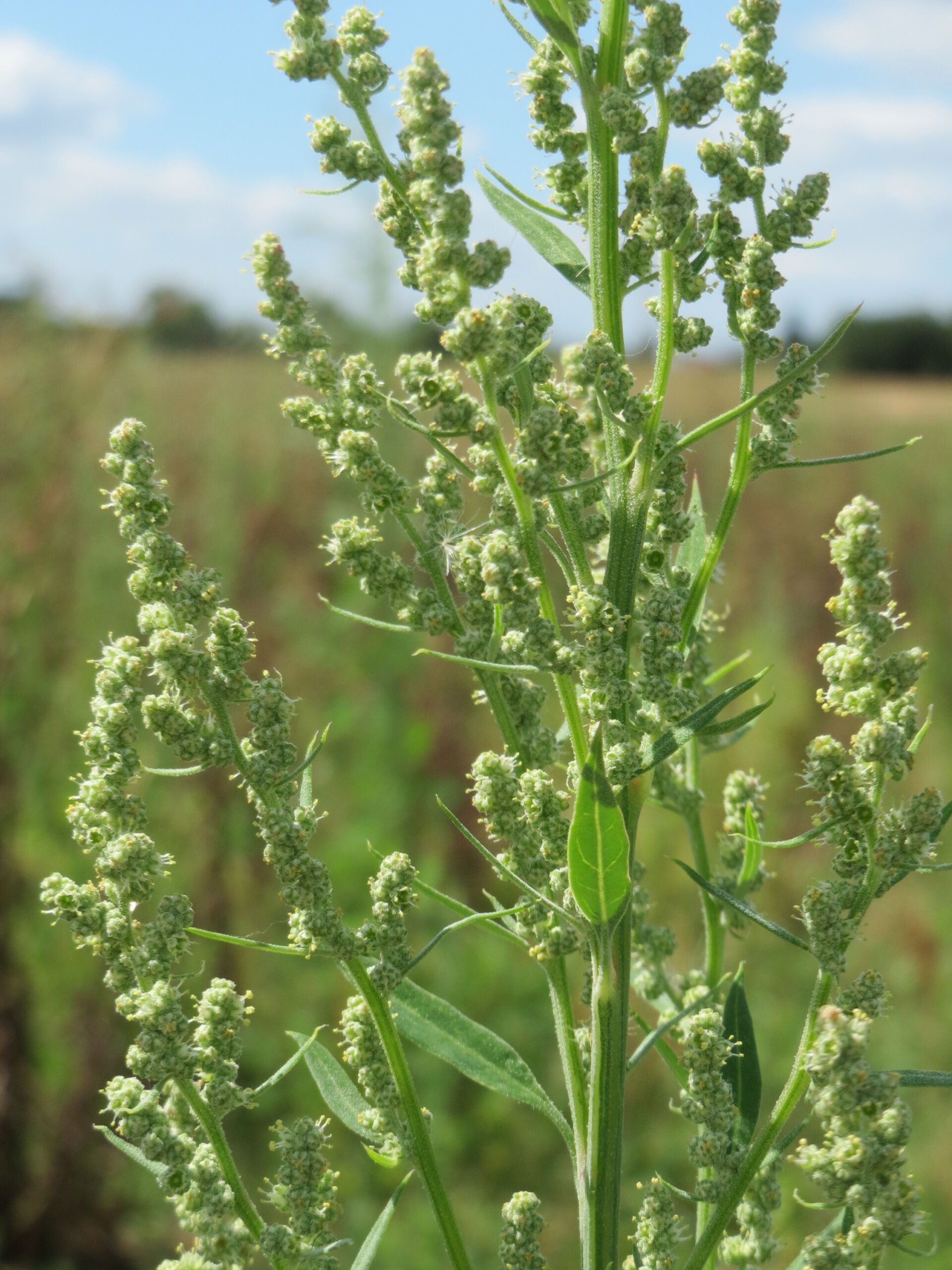
Identification is straightforward once you know the tells. The first leaves are roughly diamond-shaped and toothed, like a goose’s foot; the upper leaves are narrower, more lance-shaped, and often toothless. The undersides are whitish and mealy, the stems are grooved and often streaked with red or purple, and the whole plant feels a little waxy and unwettable — water beads up and rolls off the leaves instead of soaking in. Height depends almost entirely on how well-fed the plant is: North Carolina Extension describes plants from 4 inches to 6 feet tall depending on soil fertility, Iowa State gives 5 to 6 feet, and most garden references land around 3 to 5 feet. A lambsquarters in rich garden soil is a bushy, branching plant up to shoulder height; the same species in a sidewalk crack is a scrappy foot-tall thing, and both are doing their best.
The flowers will not win any beauty contests, and that is the point. They are tiny, greenish, petal-less clusters packed along the upper stems and branch tips from summer into fall, pollinated mostly by wind rather than insects. Each flower has five mealy tepals and no petals at all, and the seeds that follow are small, shiny, black discs about 1 to 1.5 millimeters across. One plant can produce tens of thousands of seeds — some references say up to 75,000 — and those seeds can stay viable in the soil for 30 to 40 years. Lambsquarters is not just a weed; it is a weed with a retirement plan.
For butterflies, lambsquarters matters more than its looks suggest. It is a caterpillar host plant for the sootywing butterflies: the common sootywing and the Mexican sootywing both use Chenopodium, and the western pygmy-blue uses it too (listed as “pigweed” in its host list, which is one of lambsquarters’ many aliases). The plant also feeds birds, which eat the seeds, and small mammals. If you are growing a butterfly garden, a tolerated patch of lambsquarters at the wild edge is doing quiet, genuine work — just do not let it set seed over your vegetable beds unless you enjoy weeding for the next four decades.
Important disambiguation — pigweed is a trap: The name “pigweed” is shared by lambsquarters AND by several Amaranthus species (the redroot pigweeds and their cousins). In the butterfly guides, the “pigweeds” listed for the common sootywing and the golden-headed scallopwing carry the Latin Amaranthus — those are NOT this plant, and they have their own story. Only the pigweed mention paired with Chenopodium album (as in the western pygmy-blue guide) belongs to this guide. If a butterfly guide says “pigweeds” with Amaranthus, do not follow it here.
Florida note: Lambsquarters grows in Florida — Flora of North America records it in the state — but it is a cool-season-leaning annual that does its best work in spring and fall in the Sunshine State, sulking through the worst summer heat. In Florida, treat it as a spring green and a butterfly host at the garden’s wild edge, not as a summer crop.
How to grow
Here is the honest truth about growing lambsquarters: you almost certainly do not need to. It volunteers in disturbed, fertile soil — garden beds, compost heaps, field edges, barnyards — and if you have gardened anywhere in North America, it has probably already introduced itself. But if you want to grow it deliberately as a spinach-like green, the method is delightfully low-effort. Sow seed in spring in full sun and average to fertile, well-drained soil, thin seedlings to 1 to 2 feet apart, and then step back. It germinates in early spring, grows fast, peaks in height by early July, and flowers from July into August, with seeds maturing from early August onward.
Because it is an annual, there is no overwintering to manage and no perennial crown to divide. The entire “growing” job is deciding where you will tolerate it and where you will not. For a kitchen patch, give it a defined bed and harvest aggressively before it flowers; for a butterfly patch, let a few plants at the wild edge go to seed for the birds and the sootywings, and pull the rest. If you want a continuous supply of tender leaves, succession-sow every few weeks through spring, or simply pick the shoot tips — the plant responds to tip-pinching by branching out and producing more tender growth, like a weed that rewards you for bullying it.
Water & feeding
Lambsquarters is at its best in full sun and moist, fertile, loamy soil, though it tolerates partial shade and a wide range of soil types, according to North Carolina Extension. Plants in richer soil taste better and grow bigger, which is a polite way of saying that the weed in your compost heap is a better vegetable than the weed in your gravel driveway. Water new sowings until established; after that, ordinary garden moisture is plenty, and the plant handles short dry spells by thickening its waxy leaf coating to conserve water. It does not need fertilizer — it is, famously, the plant that shows up uninvited in fertilized ground — but if you are growing it as a crop, a compost-rich bed produces the most palatable leaves.
One caution belongs in the feeding section, because lambsquarters is a little too good at absorbing what is in the soil: it can accumulate nitrates, especially in heavily fertilized ground, and it will also take up pesticides from treated soils. Never harvest lambsquarters from ground that has been sprayed or artificially fertilized, and do not gather it from roadsides where runoff collects. Grow your eating patch in clean soil, on purpose, and leave the ditch plants for the butterflies.
Common problems
- Self-seeding tsunami: One plant, tens of thousands of seeds, viable for decades. If you do not want lambsquarters forever, harvest before flowering or deadhead ruthlessly. This is the number-one lambsquarters problem and it is entirely self-inflicted.
- Leaf miners: Lambsquarters is famously vulnerable to leaf miners, which tunnel squiggly trails through the leaves. In a vegetable garden this is actually useful — it works as a trap crop, luring miners away from crops you care about more — but mined leaves are not the ones you want for dinner. Pick clean young leaves and tolerate the rest.
- Beet leafhopper: Lambsquarters hosts the beet leafhopper, which transmits curly top virus to beets and related crops. Do not grow an eating patch cheek-by-jowl with your beet bed.
- Oxalic acid: Like spinach, lambsquarters is high in oxalates. Eat it in moderation, and cook it rather than eating large quantities raw — cooking reduces the oxalate load and improves the texture.
- Lookalikes: Young lambsquarters can resemble young black nightshade, which is poisonous. The tells are the white mealy coating and the reddish streaks in the leaf axils on lambsquarters — but if you are not certain, do not eat it. When in doubt, throw it out is not just a food-safety slogan; it is a foraging rule.
- Pollen allergies: Lambsquarters pollen can contribute to hay-fever-like allergies. If you are sensitive, harvest before flowering and keep the patch away from bedroom windows.
Harvest
Harvest lambsquarters like spinach, because for most of human history, it WAS the spinach. Pick young, tender plants whole, and once stems get tough, take just the leaves and tender shoot tips. The greens can be eaten raw in small quantities, steamed, sautéed, or added to soups and stews, and they taste like spinach with a slightly nuttier, earthier edge. They are genuinely nutritious — rich in vitamins A and C, calcium, iron, and protein, and by some analyses more nutrient-dense than domestic spinach itself. In India it is called bathua and cooked into curries, parathas, and raita; in Nepal it becomes saag; in North America, Indigenous peoples including the Zuni cooked the young greens, and a close relative, Chenopodium berlandieri, was one of the earliest crops grown on this continent.
The seeds are edible too — they are sometimes called wild quinoa, and quinoa itself is a close cousin — but use them in moderation: the seeds contain saponins that are potentially irritating in excess, so rinse and cook them rather than eating them raw by the handful. Older leaves get less palatable and mildly less friendly raw, so the rule is simple: young and tender for the table, older plants for the compost or the birds. And remember the golden rule of this plant: a lambsquarters patch you manage is a vegetable garden; a lambsquarters patch you ignore is a seed bank that will outlive your mortgage.
Saving seeds
Lambsquarters is the easiest seed in the garden to save, which is exactly why it deserves a warning label first. One well-grown plant can shed tens of thousands of tiny black seeds, and those seeds can sit alive in the soil for years, waiting for the next patch of disturbed ground to wake them up. Save seed on purpose, from one plant, and cut the rest down before they shed — or next spring your whole garden will be lambsquarters, and it will not ask permission.
Pick your seed plant early: the strongest, healthiest plant in the patch, the one that grew fast and stayed clean while its neighbours sulked. Let it bolt and flower while you keep harvesting leaves from the others. The tiny green flower clusters along the upper stems will turn reddish-brown as the seed ripens, usually in late fall. When the clusters are dry and the seeds inside are shiny black, they are ready. If the seeds still look dull brown, that is just the papery coating — rub a few between your fingers and check for the glossy black seed underneath.
Harvest on a dry day. Strip the dried heads into a paper bag, crush them gently, and winnow away the chaff by pouring the seed slowly from one container to another in a light breeze, letting the light bits blow off. Then spread the seed thin on a tray indoors for another week or two until it is bone dry. This is the step Florida gardeners must not skip: our humidity will turn a jar of half-dry seed into a mouldy science experiment. Seed that snaps rather than bends is dry enough to store.
Store the clean seed in a labelled paper envelope inside a sealed jar, in a cool, dry place — a jar with a little silica gel packet, kept in the fridge, is ideal. Kept dry, lambsquarters seed stays viable for several years.
Here is the good news for purists: lambsquarters is mostly self-pollinating, so seed you save usually grows true to the parent plant. It will not cross with beets, chard, or spinach, which are cousins, not the same species. If you also grow quinoa, a close relative, bag a few seed heads in large paper bags to be safe and mark them so you know which heads were protected at harvest time.
To sow, scatter the seed in spring onto moist soil and barely cover it — about an eighth of an inch, since the seed needs light to wake up. Seedlings usually appear within one to two weeks. And remember the golden rule of this plant: harvest or pull every plant you do not want seeding before its seed ripens, and never toss seed-bearing plants on the compost heap. A managed lambsquarters patch is a free, generous green. An unmanaged one is a weed with a five-year plan.
Varieties
No named garden varieties or cultivars of Chenopodium album are verified for this guide, and this page does not invent any. Lambsquarters is grown and gathered as the wild species, not as a bred cultivar. What botanists do recognize are botanical varieties, listed here in plain text:
- Chenopodium album var. album: The typical form — temperate Eurasia, the Indian subcontinent, North Africa, and Ethiopia; widely naturalized elsewhere.
- Chenopodium album var. missouriense: Eastern and central United States form (formerly treated as its own species, Chenopodium missouriense). Considered native in parts of the United States where the typical form is introduced.
- Chenopodium album var. reticulatum: France and Great Britain form.
One more disambiguation: several other Chenopodium species share the lambsquarters name in different regions — most notably Chenopodium berlandieri, the pitseed goosefoot, which is what “lambsquarters” usually means in North American foraging references outside the strict botanical sense. If your foraging book describes a North American native lambsquarters, check whether it means berlandieri before you assume it is album.