
🌼 Ox-eye Daisy
What it looks like
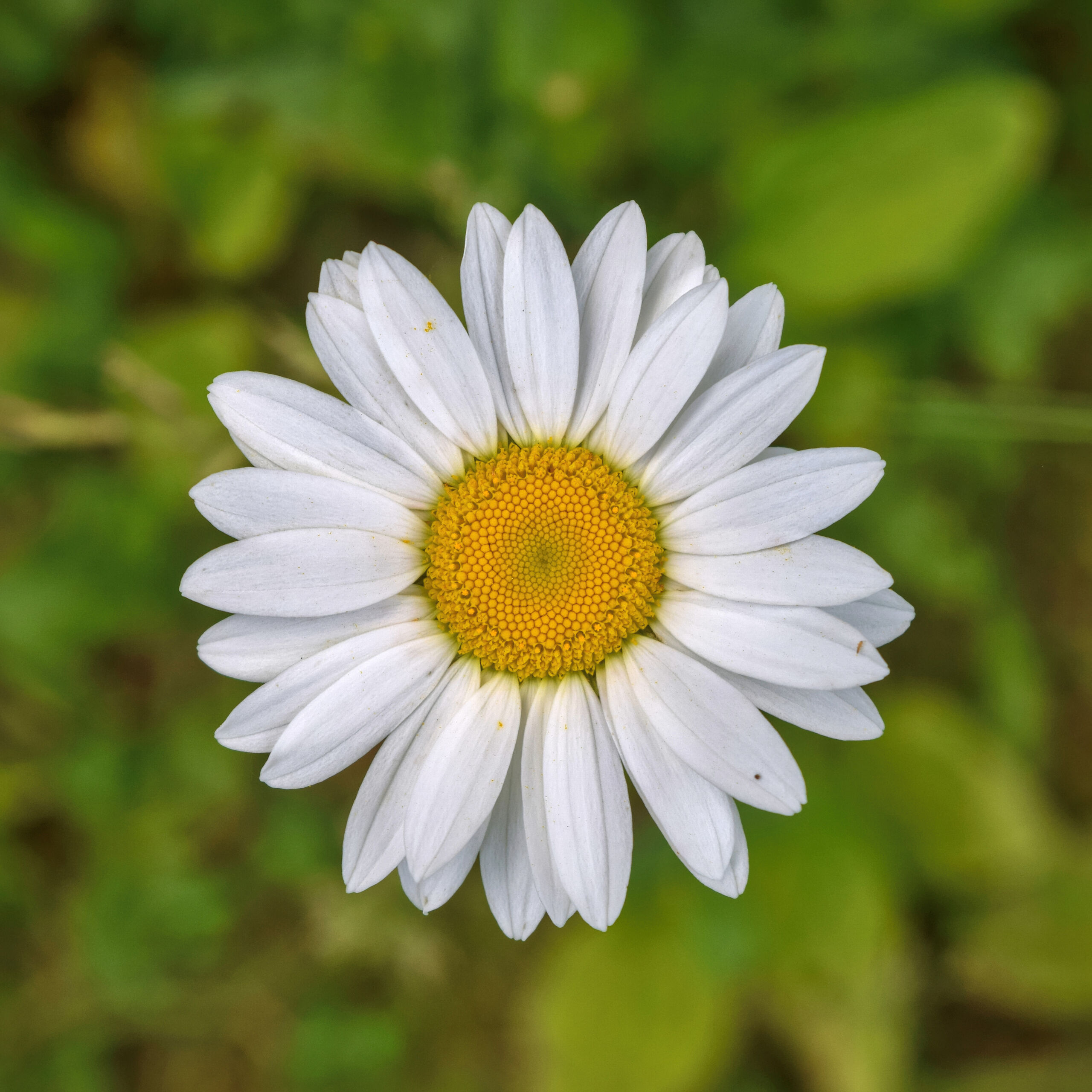
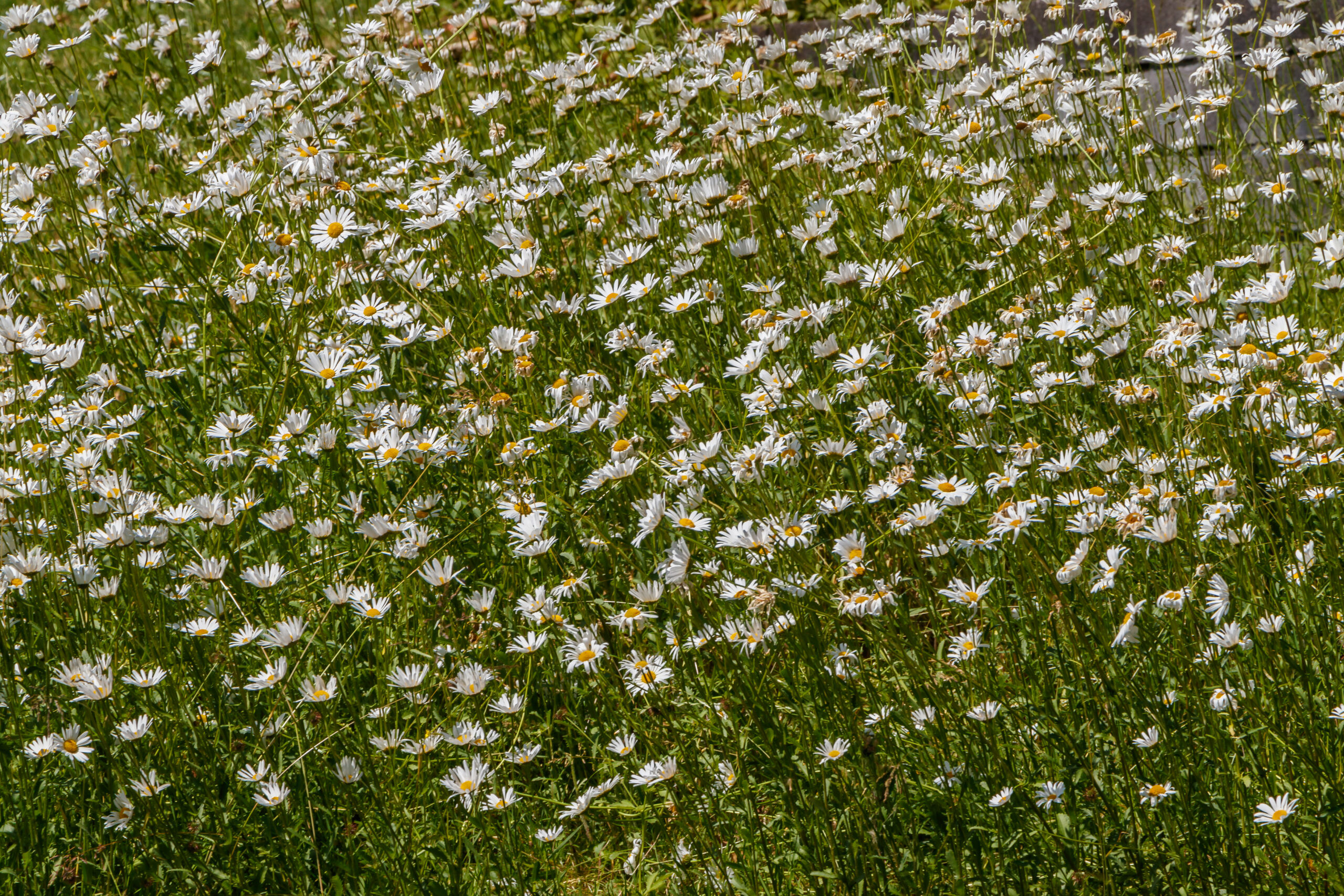

If you picture a daisy — white petals, yellow center, drawn by a child on a sunny day — you are picturing this plant, or something very close to it. Ox-eye daisy is an erect, rhizomatous, herbaceous perennial in the aster family, Asteraceae, and it wears the classic daisy look without apology: a single flower head made of many white ray florets spread around a button of tiny yellow disc florets. Botanists will remind you that what looks like one flower is actually a whole crowded flower head, dozens of little flowers pretending to be one big one, and that is exactly the kind of overachieving teamwork that makes the aster family so successful. Each plant sends up anywhere from one to about forty flowering stems, so a happy clump looks less like a plant and more like a small fireworks display that forgot to stop.
The plant itself grows 1 to 3 feet tall and 1 to 2 feet wide, with spoon-shaped basal leaves and narrower leaves clasping the upright stems. It blooms from May through August, and the flowers are about 1 to 2 inches across — big enough to spot from across a meadow, small enough to look right in a cottage border. Underground, creeping rhizomes do the quiet work of spreading the clump outward, and above ground, the seeds do the loud work: a single plant can scatter seed generously, which is why a meadow sown with ox-eye daisy one year can look like an ox-eye daisy farm the next. That vigor is a feature in a wildflower meadow and a problem in a tidy border, and the difference is entirely about where you plant it and how much attention you pay to the seed heads.
Ox-eye daisy is native to Europe and parts of temperate Asia, and it arrived in North America in the 1800s as an introduction that wasted no time making itself at home. Today it grows in disturbed open areas, grasslands, forests edges, riverbanks, and roadsides across much of the continent. It is a butterfly plant in the honest sense: adult butterflies visit the open flower heads for nectar, and the butterfly guides that mention it list it as a nectar plant, not a caterpillar host. A meadow dotted with ox-eye daisies is a nectar bar with the doors wide open, and the coppers and metalmarks that show up are the regulars.
Florida note: Be straight with yourself before planting this one in Florida. Ox-eye daisy is a cool-temperate meadow plant; it likes cool summers and struggles where summers are long, hot, and humid. It is also listed as a noxious or invasive weed in a number of states, so check your local noxious weed list before you plant it anywhere, and never let it seed into wild areas. In most of Florida, native daisy relatives and other meadow flowers will serve pollinators better with far less ecological baggage.
How to grow
Ox-eye daisy is famously easy to grow, which is both the sales pitch and the warning label. Sow seed directly in late fall or early spring, or set out nursery plants in spring, in full sun. It tolerates some afternoon shade, particularly in hot, humid climates, but deep shade is a deal-breaker: this is a sun plant, and shade makes it leggy and flowerless. It accepts sandy, loamy, or clay soil, and it is happiest in medium-moist to dry, well-drained ground. The one non-negotiable is drainage. Soggy soil rots the crown, while dry soil once established barely slows it down — North Carolina Extension lists it as drought tolerant, deer tolerant, rabbit tolerant, and dry-soil tolerant, which is a plant that has clearly decided to survive you.
Space plants 18 to 24 inches apart and give them room to form clumps. They need little fussing: no staking for most plants, though tall stems in rich soil can flop, and no pampering with fertilizer. In fact, rich soil and heavy feeding can backfire by producing lush, floppy growth that falls over at the first summer storm. Lean to average soil gives you sturdier stems and a plant that behaves more like a meadow flower and less like a teenager. Divide clumps every two to three years to keep them vigorous, and do the division in spring or fall, replanting the outer, younger pieces and composting the tired centers.
Deadheading is the single most useful chore. Snip spent flower heads before they set seed and you get two rewards: more blooms, because the plant keeps trying, and far less self-seeding, because you have removed the escape plan. If you want a meadow effect, do the opposite: let a patch go to seed in a contained area where seedlings are welcome, and mow or cut it back after seed has dropped. Either way, decide which outcome you want before the flowers fade, because ox-eye daisy decides fast.
Water & feeding
Water new plants regularly until they are established, then back off. Established ox-eye daisy prefers soil that dries out a little between waterings, and it tolerates drought once its roots are in. The pattern to aim for is the meadow pattern: rain when it comes, a deep drink in a dry spell, and no daily sprinkling. Shallow, frequent watering trains shallow roots and invites crown rot in heavy soil, while a deep soak followed by a drying interval builds the tough, spreading root system that makes this plant so hard to kill.
On feeding, less is more, and usually none is enough. A top-dressing of compost in spring is all a meadow planting needs, and a border planting in decent soil needs nothing at all. Skip the high-nitrogen fertilizer: it buys you tall, weak stems and fewer of the sturdy, long-lasting flowers you actually wanted. If a soil test shows a genuine deficiency, correct that deficiency; otherwise, let the plant do what meadow plants have done for centuries, which is thrive on neglect.
Common problems
- Self-seeding everywhere: The number one complaint, and it is the plant doing exactly what it evolved to do. Deadhead before seed sets, or confine it to a meadow patch where seedlings are a feature. Never dump seed heads in wild areas.
- Flopping stems: Tall growth in rich, moist soil falls over, especially after rain. Grow it leaner, site it in full sun, and cut back floppy stems by a third in late spring to encourage bushier regrowth.
- Crown rot in wet soil: Poor drainage is the killer. Plant on a slope or in raised, gritty soil, and never mulch thickly right against the crown.
- Fading clumps: Older centers die out while the edges march on. Divide every two to three years and replant the vigorous outer pieces.
- Confusion with Shasta daisy: Shasta daisy (Leucanthemum × superbum) is a garden hybrid, bigger-flowered and better behaved, and it is not the same plant. If you bought a named Shasta cultivar, you did not buy ox-eye daisy, and your plant will not behave like this one.
- Aster yellows and leaf spot: Like many asters, ox-eye daisy can pick up leaf spots and, occasionally, aster yellows, a disease spread by leafhoppers that twists growth and turns flowers green. Pull and destroy badly affected plants rather than composting them.
Harvest
Ox-eye daisy has two harvests, and both are simple. For cut flowers, cut stems in the morning when the flowers have just opened, strip the lower leaves, and put them straight into water; they are excellent, long-lasting fresh-cut flowers, which is one reason cottage gardeners have forgiven this plant so much bad behavior. For seed, let a few chosen heads ripen and dry on the plant, then shake them into a paper bag — but only if you have a contained place to sow them, and only where the plant is not a listed weed. The third harvest is the meadow harvest: cut the whole patch back after flowering, or mow a meadow planting once the bloom is done, and the clump will regrow for another round. Whatever you do, do not leave spent heads standing over a wild edge and then act surprised in spring.
Saving seeds
Ox-eye daisy is the classic white-and-yellow daisy of meadows and roadsides, and its seed is as easy as the flower is cheerful. Let a few flower heads ripen fully on the plant: the white petals fall, the yellow center turns brown and dry, and the seed shakes loose at a touch. Snip the dry heads into a paper bag on a dry day, crush them gently, and winnow out the chaff. The seed is small and dark, and a single plant produces far more than one garden needs.
There is almost nothing to get wrong. Ox-eye daisy seed needs no special treatment: sow it directly where you want it to grow, shallowly, in spring or fall, and it will sprout within a couple of weeks in moist soil. A short chill in the fridge does no harm, but it is not required. The seedlings are small at first and need a season to establish, and by the second year they will be flowering.
Here is the caution that belongs in any ox-eye daisy seed section, and it is an important one: this plant self-seeds with enthusiasm, and it is listed as invasive in parts of the United States, particularly in the West and in some eastern states, where it escapes gardens into meadows and roadsides. In Florida it is less of a problem, but the habit is the same everywhere — a plant you grew once will volunteer for years. Deadhead the flower heads you do not want to keep, and do not scatter the seed in wild areas. Grow it in the garden, enjoy it in the garden, and keep it there.
Save seed from your healthiest, best-flowered plants, and dry it thoroughly before jarring it — Florida humidity is the enemy of stored seed. Properly dried, ox-eye daisy seed keeps for several years in a cool, dark jar with a silica gel packet.
Varieties of this species
Ox-eye daisy is mostly grown as the straight species, and that is part of its charm: no cultivar catalog required. A few named selections exist, and they are worth knowing about precisely because they show what breeders thought was worth fixing. The cultivar Filigran is a free-flowering, compact selection with abundant blooms, growing to about 26 inches tall — a tidier, more floriferous version of the wild plant, though still rhizomatous and still happy to self-seed. Beyond named selections, the honest statement is that no long list of verified, distinct garden varieties of Leucanthemum vulgare is in general cultivation; the big daisy catalogs belong to its hybrid cousin, Shasta daisy, and to other Leucanthemum species. If a seller offers you a long list of ox-eye varieties, check the Latin name on the tag: you are probably looking at Shasta daisies wearing a borrowed common name.