
💜 Blazing Star
What it looks like
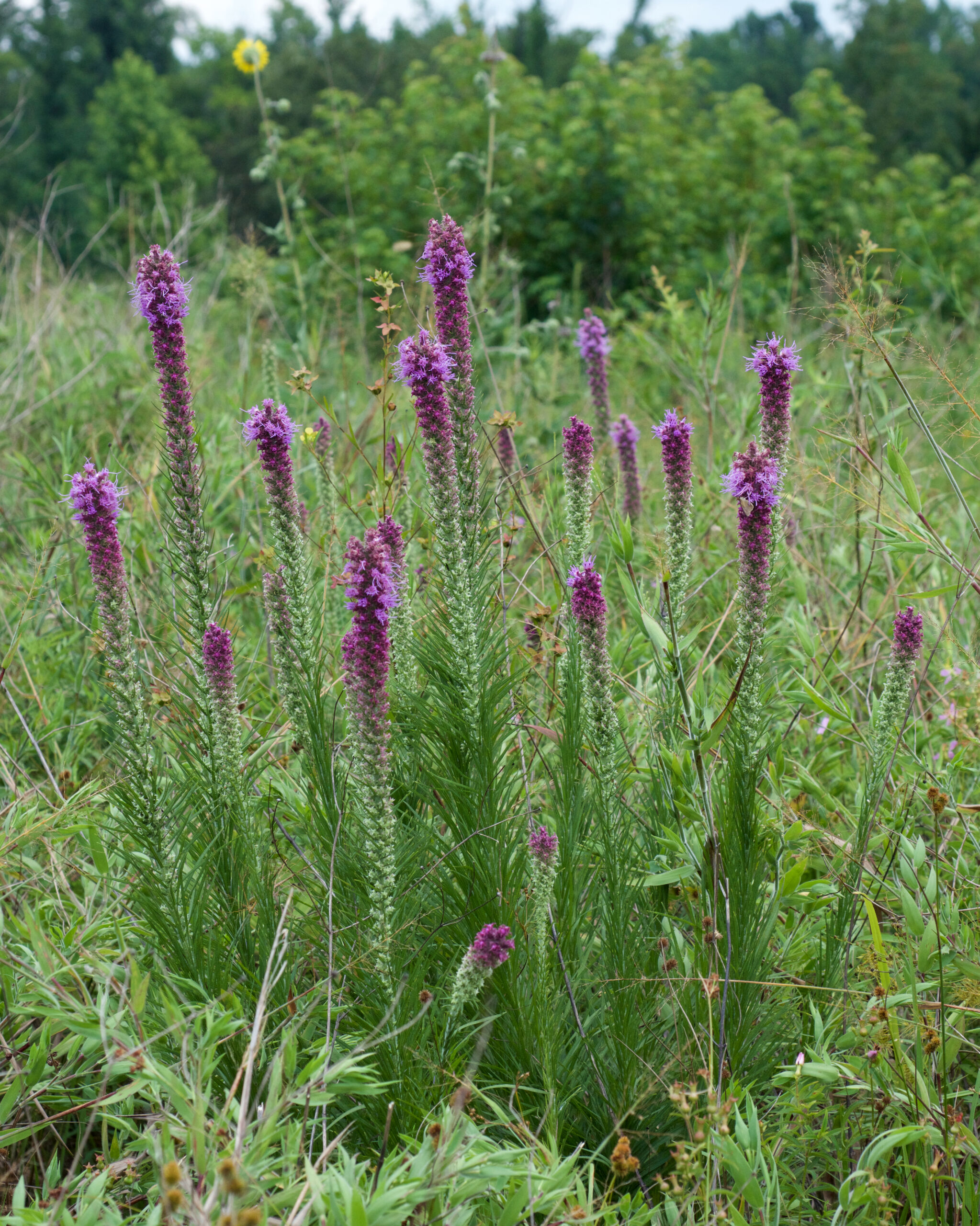
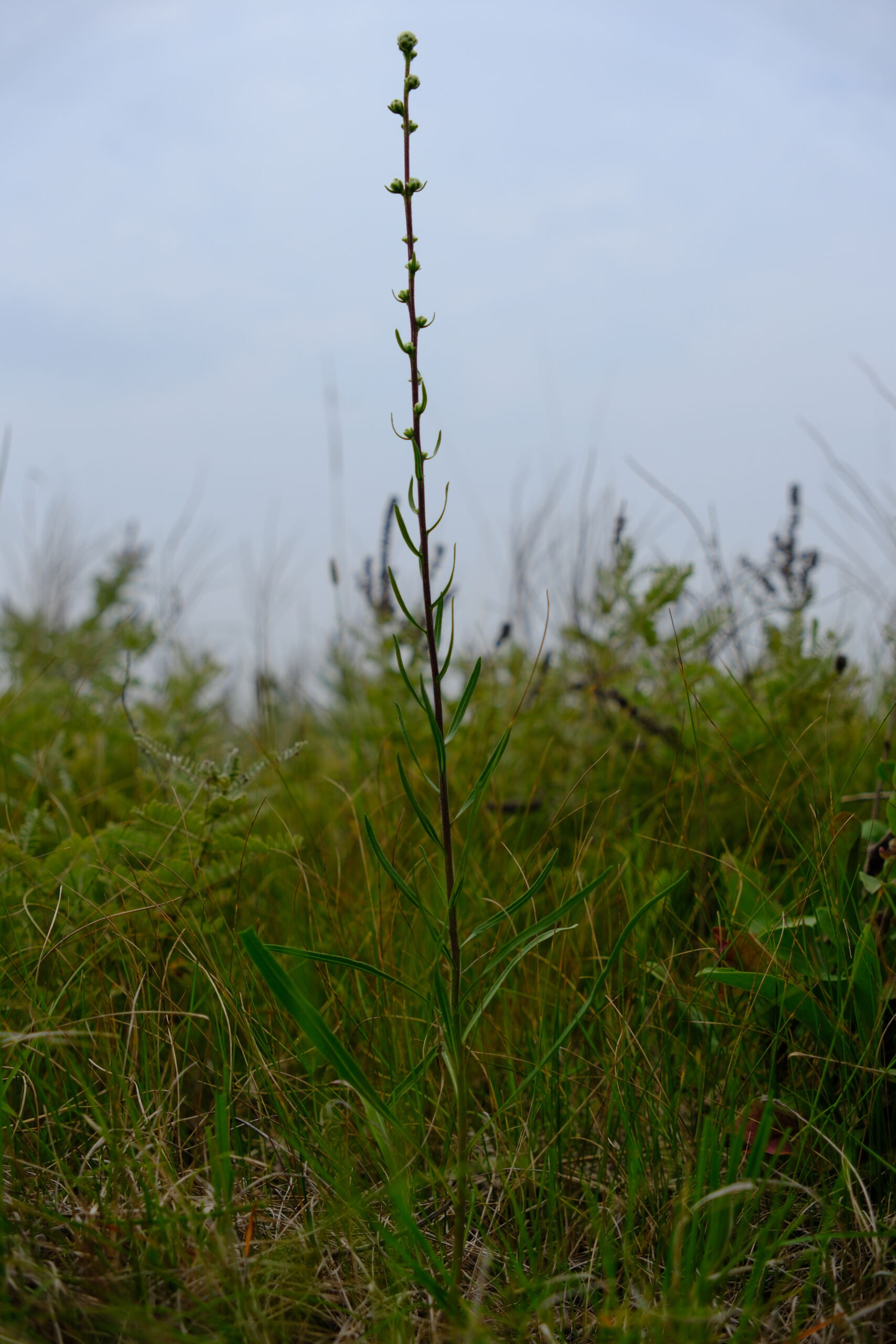
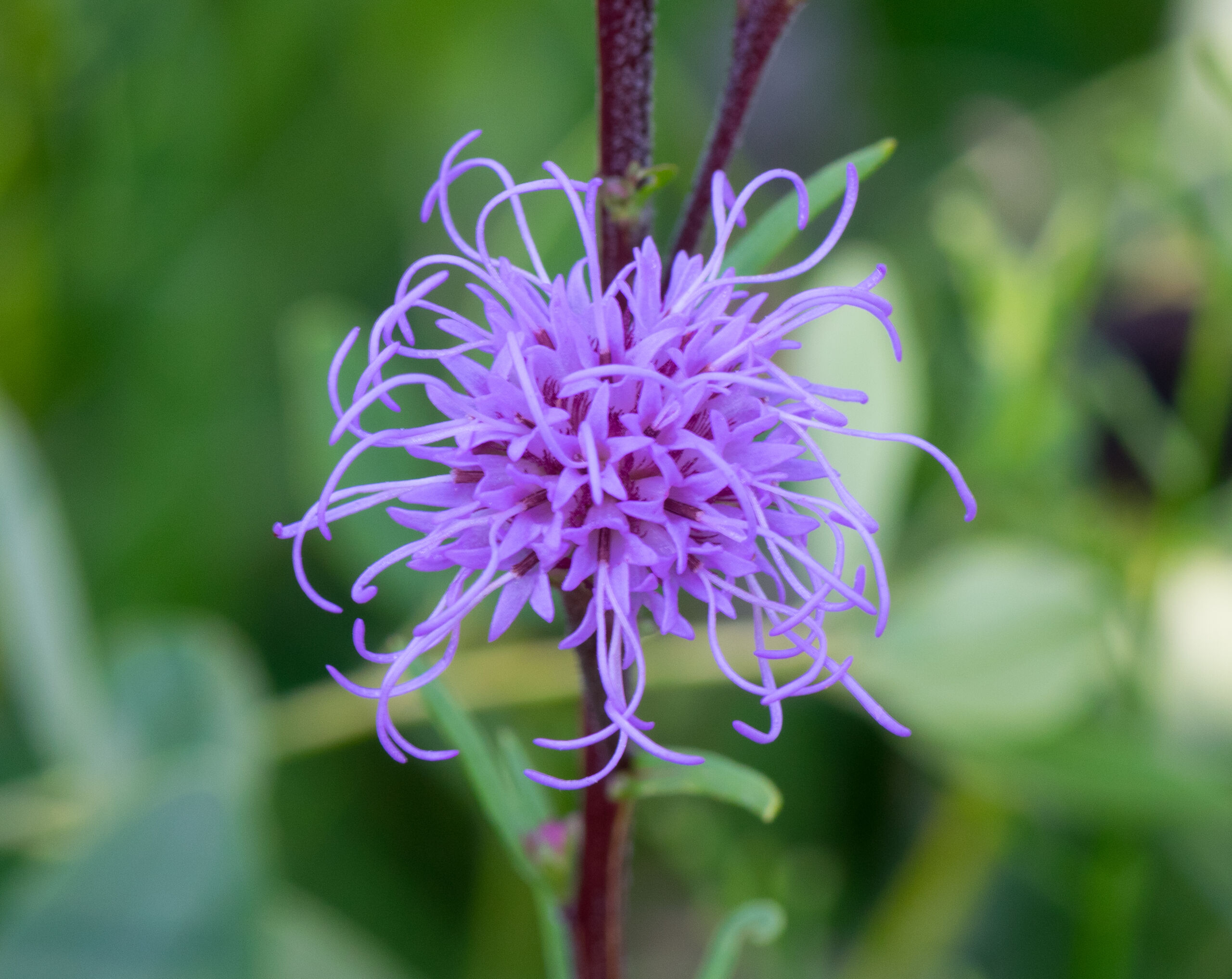
Blazing star is the whole genus Liatris, a clan of North American prairie perennials in the aster family (Asteraceae) that North Carolina Extension puts at at least 40 species, with many cultivars on top of that. Gardeners also call them gayfeather and button snakeroot, and all three names describe the same plant: a tall, unbranched spike crowded with fuzzy, thistle-like flower heads, rising out of a fountain of narrow, grassy leaves. If you have ever seen a purple bottlebrush standing in a meadow in midsummer and thought “that flower looks like it is celebrating something,” you have met a blazing star.
The look is unmistakable once you know it. Every blazing star grows from a corm — a squat, hard, underground storage stem, not a true bulb — and sends up long, linear, arching leaves that get shorter and narrower as they climb the stem. Then comes the spike: a dense column of flower heads, each one made of disc florets only. That last detail is a fun piece of aster-family trivia. Most daisies cheat with a ring of showy ray florets (the “petals”) around a button center. Blazing stars skip the rays entirely. What you are looking at is a spike of buttons, and the fuzz is the florets themselves, each one splitting into a little star of lobes. Up close, a blazing star spike looks like a purple feather duster. From ten feet away, it looks like an exclamation point.
And then there is the party trick, the one that makes blazing star the contrarian of the border: it blooms top-down. Almost every other spike flower on earth opens from the bottom up, like a candle burning upward. Blazing star opens at the tip first and works its way down, so the top of the spike is in full fluffy bloom while the bottom buds are still waiting their turn. It is a small thing, and it is completely backwards, and it is the easiest way to identify a blazing star from across the garden.
How to grow
Blazing stars are prairie plants, and prairie plants have one non-negotiable demand: drainage. Give them full sun — six or more hours of direct light — and well-drained soil, and they mostly take it from there. North Carolina Extension’s genus guidance is to plant corms about 5 inches deep and 6–8 inches apart, and to plant in groups, because a single spike looks lonely and a dozen look like a celebration. Lean soil suits them fine. Rich, wet soil does not. This is a plant that evolved in prairies, glades, savannas, and open woodlands, places where the sun is direct and the soil dries out between rains. Treat it like a pampered bedding plant — shade, rich compost, daily watering — and you will get floppy stems and rotted corms, which is the plant’s way of filing a formal complaint.
Plant corms in spring, once the soil has warmed, with the growing point facing up. If you are buying bagged corms, they look like small, knobby, slightly alarming lumps, and that is normal. They are not dead. They are just corms. Settle them into their holes, water them in, and be patient: blazing stars spend their first season building roots and a corm worth blooming from, and the real show usually arrives in the second year. You can also start from seed, but seed-grown plants take longer to reach blooming size, and division is the faster route to more plants. Established clumps multiply by spinning off additional corms, and every few years you can dig a crowded clump in spring, pull the corms apart, and replant the plumpest ones. Free plants, courtesy of the plant doing what it does anyway.
Once established, blazing stars are drought-tolerant and low-maintenance to a fault. Water regularly while they are settling in, then water only in dry spells. Overwatering is a bigger risk than underwatering, and soggy soil rots corms fast — the single most common way gardeners kill a blazing star is by loving it with the hose. Feed lightly if at all. Compost at planting is enough, and heavy fertilizer makes soft, floppy growth that needs staking and looks embarrassed about it. If a tall species flops, the usual causes are too much shade, too much water, or too much fertilizer, and the fix is sun and restraint, not a taller stake.
Height varies a lot across the genus, which is why the stats grid gives a range instead of a number. North Carolina Extension lists the genus at 1 to 5 feet tall. Dwarf species stay around a foot and a half. Tall prairie species push toward five feet, and the tallest selections reach about six feet in good conditions. That spread is the whole point of a genus guide: “blazing star” is not one plant with one height, it is a family of plants that share a shape and a habit, and the species you pick decides whether it belongs at the front of the border or the back.
Notable species
Dense blazing star, Liatris spicata, is the one most gardeners mean when they say “blazing star,” and it has its own species-focused guide. It is the classic garden blazing star: a dense, tightly packed spike of rose-purple flowers, 2 to 5 feet tall, hardy across a wide range, and the parent of the familiar white and compact cultivars. If you buy a bag of blazing star corms with no species name on it, odds are good you are holding spicata.
Prairie blazing star, Liatris pycnostachya, is the tall one, and its name gives it away: pycnostachya means “dense spike.” It grows in moist to dry prairies across the central United States, typically 20 to 60 inches tall, with a solid purplish-pink spike that can run more than a foot long. It is one of the best-known species and one of the most widely cultivated, and it tolerates moister soil than most of its cousins — a useful trait if your garden holds water a little longer than a prairie would.
Rough blazing star, Liatris aspera, also called tall blazing star, is the widespread prairie and savanna species of the eastern and central United States, growing 2 to 3 feet tall in most accounts and up to 5 feet in others, with flower heads spaced more loosely along the stem than spicata’s packed column. It prefers acidic, sandy or rocky soil in full sun to partial shade, and it is a tough, adaptable plant for meadow plantings.
Rocky Mountain blazing star, Liatris ligulistylis, also called meadow blazing star, is the northern plains and mountain species, growing 1 to 3 feet tall in dry to medium, well-drained soils in full sun. Unlike the acid-lovers, it prefers dry, sandy or rocky, alkaline soils, which makes it the blazing star to reach for if your soil leans chalky. It is also a famous monarch magnet: its nectar is a noted fuel stop for migrating monarchs crossing the plains.
Scaly blazing star, Liatris squarrosa, is the earliest bloomer of the family, growing 1 to 3 feet tall from corms in dry, sandy prairies and woodlands, with one-inch flower heads and squarish bracts spaced along an erect, unbranched stem. It likes well-drained, dry, slightly acidic, sandy or rocky soil in full sun and is hardy in zones 4 to 8. Dwarf blazing star, Liatris microcephala, is the small one at 1.5 to 2 feet tall, native to the southern Appalachians, for rocky outcrops and pine barrens, hardy in zones 6 to 9.
Florida gardeners have their own blazing stars, and the site already profiles several of them as Florida natives: Chapman’s blazing star (Liatris chapmanii), slender blazing star (Liatris gracilis), and savanna blazing star (Liatris savannensis), along with the dense blazing star that also grows here. Several other Florida species, including Garber’s blazing star (Liatris garberi) and scrub blazing star (Liatris ohlingerae), are rare endemics of Florida scrub and sandhills — plants to admire in the wild, not to dig up. The genus as a whole is a North American native story, from Canada to Mexico and the Bahamas, and Florida sits near the southern end of that range, which is why our species tend to be the sand-loving, sun-baked ones.
Butterflies, bees, and moths
Blazing stars are pollinator plants first and ornamentals second, and the nectar list reads like a butterfly field guide. North Carolina Extension recommends them for the native pollinator garden to attract butterflies, bees, and moths, and that is not marketing — the fuzzy disc florets are open, accessible flowers, and butterflies work them eagerly. Fritillaries are regular visitors, and blazing stars show up as a nectar plant for the aphrodite fritillary, the regal fritillary, and Leonard’s skipper in butterfly guides. Monarchs fuel up on them during migration, hummingbirds visit, and goldfinches eat the seeds if you leave the spikes standing.
The relationship runs deeper than nectar, too. Blazing star leaves and flowers feed the caterpillars of several moths, including species of Schinia (the flower moths), and the scaly blazing star is a larval host for the blazingstar flower moth, the blazingstar borer moth, and the liatris borer moth. A blazing star patch is not just a pretty spike. It is a small, working ecosystem: nectar for the adults, food for the caterpillars, seeds for the birds, and a winter skeleton that still looks good in the border after everything else has collapsed.
Water & feeding
Water to establish, then water only in dry spells. Blazing stars prefer dry to medium, well-drained soil and do not like sitting in water; once settled, they are drought-tolerant, and overwatering is a bigger risk than underwatering. Mulch lightly to hold soil moisture, but keep mulch off the corms and crowns, and never plant in a low spot that puddles. Feed lightly if at all — compost at planting is enough, and heavy fertilizer makes soft, floppy growth. Prairie plants do not need a rich diet. They need sun, drainage, and to be left alone.
Common problems
- Corm rot in wet soil — the number one killer. Improve drainage, plant on a slight mound, or choose a drier spot; never plant in a low spot that puddles, and ease off the hose.
- Flopping — usually too much shade, water, or fertilizer. Give full sun and lean soil; tall species in rich soil may need staking, but the real fix is less food and more light.
- Voles eating corms — plant in wire mesh baskets in vole country, the same trick that protects other corm and bulb plants.
- Short bloom if cut too early — for cut flowers, cut stems when the top third is open for the longest vase life, and leave some spikes standing for the goldfinches.
- Slow first year — corms planted in spring often bloom lightly or not at all in year one. This is normal. The plant is building a corm, and the second year is the payoff.
Harvest
Cut flower spikes for bouquets when the top flowers open — remember, blazing star blooms top-down, so “top third open” is the cutting signal — and leave some spikes standing for seed. Goldfinches eat the seeds, and the dried spikes look good in winter arrangements. Leave foliage to die back naturally so the corm can recharge, and divide crowded corms in spring every few years, replanting the plumpest ones. Some species are used as ornamentals and in flower bouquets, and blazing star’s long, straight spike and long vase life made it a florist staple long before it was a garden staple.
Saving seeds
Blazing star (Liatris) saves from seed with one special requirement and one long wait, and both are worth knowing before you cut a stalk. The requirement is cold: the seed needs a period of cold, moist stratification — roughly sixty days is the figure most references give — before it will germinate well. The wait is the corm: a seed-grown plant spends its first year building an underground corm and may bloom lightly or not at all, with the real flower show arriving in year two. If you want instant gratification, divide an established clump instead. If you want a meadow’s worth of plants for the price of a paper bag, seed is your method.
Wait until several weeks after bloom, when the purple spike has faded to a fluffy, tawny seed head. Each little flower leaves behind one feathery seed — an achene with a tuft of bristles that catches the wind, which is why goldfinches love these heads and why you should not dawdle once they are ripe. Cut the stalk below the seed head, hold it over a bucket or bag, and run your hand along it to strip the seed free. Do this on a dry day. Fresh seed germinates best, so the simplest path is to winter-sow it: press the seed into moist potting mix in a vented container left outdoors, and let real winter supply the cold period. If you are stratifying in the fridge instead, mix the seed with damp sand or vermiculite in a sealed bag, refrigerate for about two months, then sow.
When you sow, remember the second quirk: blazing star seed needs light to germinate. Press it firmly into the surface of the mix and cover it with barely a dusting of soil — no deeper. Keep it moist and warm, and expect sprouts in spring once temperatures rise. Grow the seedlings on until they have built a small corm, then plant them out in lean, well-drained soil in full sun; rich, wet soil rots corms faster than anything else in this plant’s life.
Genetics, as always, gets a vote. Open-pollinated species plants grown away from other blazing stars come reasonably true, but Liatris species hybridize with each other, so seed saved from a mixed planting may produce in-between plants. Named cultivars are the bigger trap: many garden selections are vegetatively propagated precisely because they do not repeat from seed, and seed from an F1 hybrid will scatter, not copy. For an exact cultivar, divide the corms of a mature clump in spring or fall, making sure each piece carries a growing point. For a drift of wild-type blazing stars — the kind butterflies actually evolved with — saved seed is perfect.
Florida note: dry saved seed thoroughly before storing, then keep it airtight with a desiccant packet, cool and dark, until winter sowing. Florida’s humidity turns a paper envelope into a damp sponge, and damp seed either molds or germinates in the packet. And if you are winter-sowing in Florida, remember that a mild winter may not deliver as much chill as a northern one — a fridge stratification is the more reliable cold clock in the peninsula.
Florida notes
Florida is blazing star country, but it is specific blazing star country. The species that thrive here are the sandhill and scrub species — Chapman’s, slender, and savanna blazing stars — plants built for deep sand, full sun, and fast drainage. The classic northern garden blazing star grows in Florida too, but it wants the same thing every blazing star wants, only more so in our climate: drainage that never lets the corm sit wet, especially through a humid summer and a wet winter. In Florida’s sandy soils, that drainage is usually free. In amended, compost-heavy beds that hold water, it is not. Plant blazing stars in the sunniest, sandiest, best-drained spot you have, skip the rich potting mix, and let the plant do what its prairie ancestors did: stand tall, bloom backwards, and feed everything that flies past.