
🌶️ Zanthoxylum
What it looks like
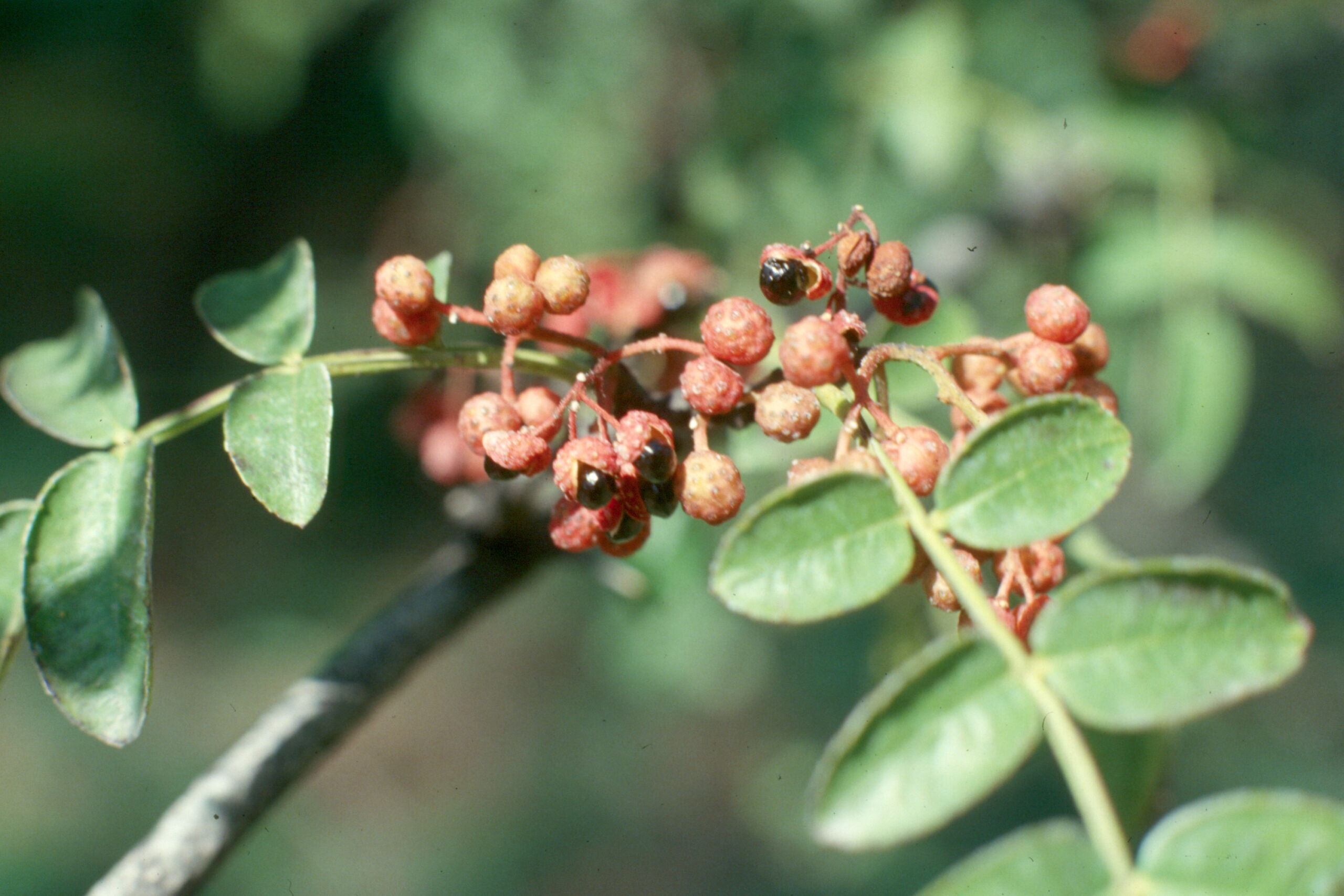
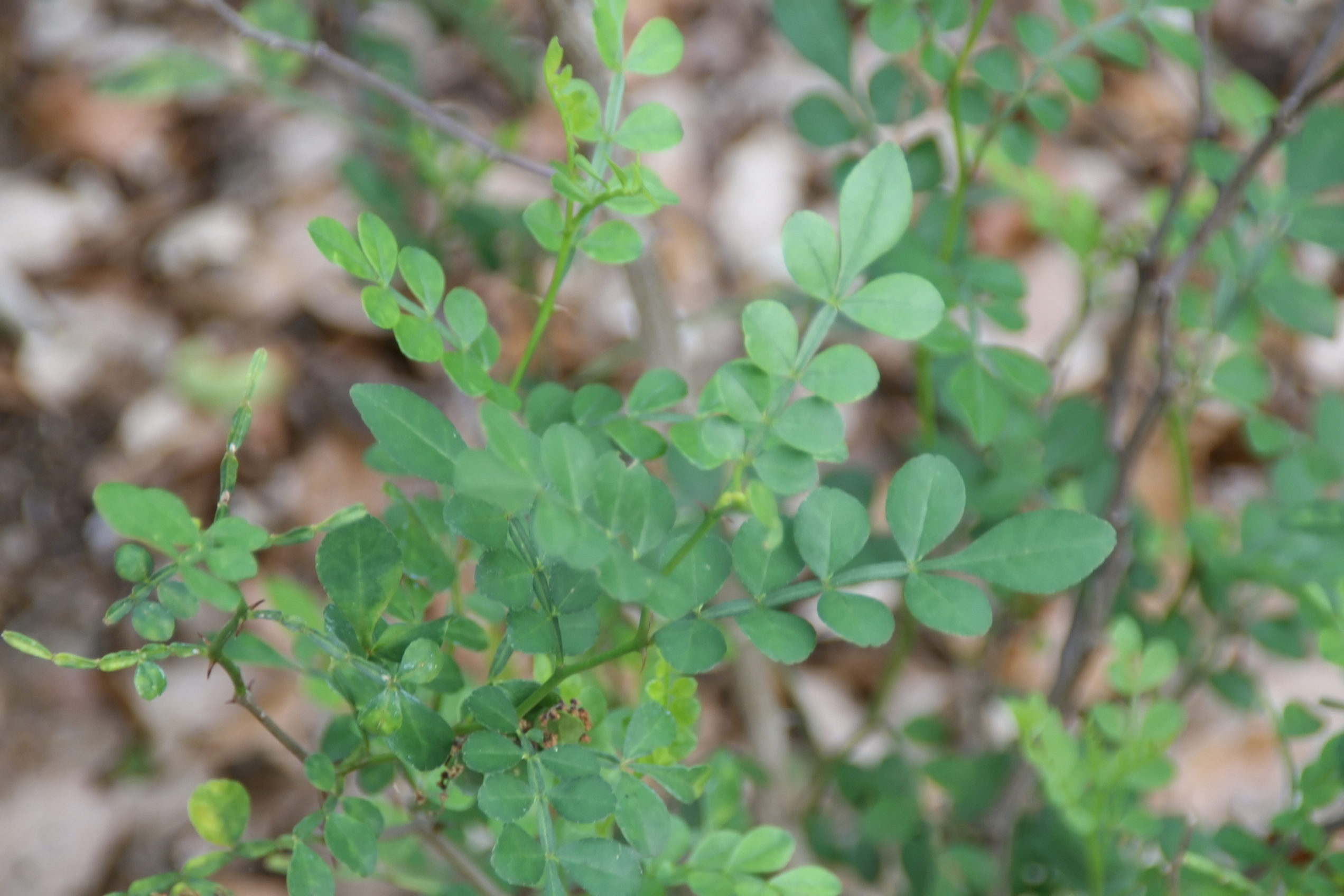
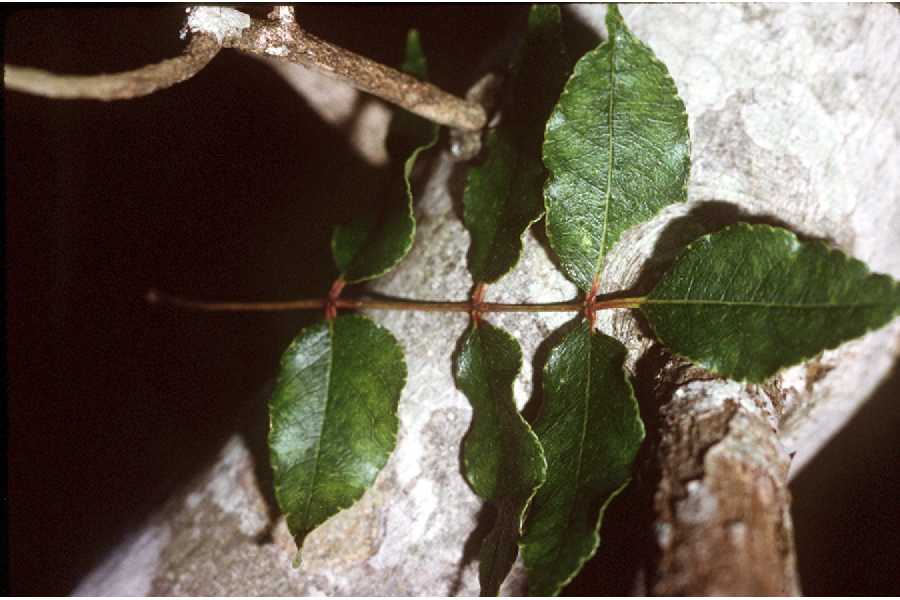
Let us clear up the biggest misunderstanding first, because it is written right there in the common name. Prickly ash is not an ash. It is not related to true ashes (Fraxinus species) at all — the Morton Arboretum says so plainly, and so does every other authority that bothers to mention it. The name comes from the leaves, which are pinnately compound like an ash leaf, and from the prickles, which are very real. Zanthoxylum is a genus of about 250 species of deciduous and evergreen trees, shrubs, and woody climbers in the citrus family, Rutaceae — yes, the citrus family, which makes prickly ash a distant cousin of oranges and lemons, not of ash trees. The genus name itself alludes to yellow wood, from Greek xanthos (yellow) and xylon (wood). It is sometimes misspelled Xanthoxylum in older literature, which is a spelling to recognize, not to copy.
What unites this big, worldwide genus is armor. Most Zanthoxylum species are armed with stout prickles or sharp trichomes on their stems, branches, and often on the leaf stalks — paired prickles flanking the leaf scars and buds are a signature of the northern species, and encountering a specimen without prickles is very rare. The leaves are alternate and usually pinnately compound, with 5 to 11 leaflets in the northern prickly ash, each leaflet oblong to egg-shaped with toothed edges. Crush a leaf and you will smell the citrus connection: the foliage is aromatic, and that lemony, tingling scent is the plant’s chemical signature. The flowers are small, yellow-green, and unimpressive, borne in clusters in spring before or with the leaves — and here is a practical detail that matters for fruit: most Zanthoxylum species are dioecious, meaning male and female flowers grow on separate plants, so a lone female tree with no male nearby will flower beautifully and fruit not at all. The fruit is a small, reddish follicle that splits open when ripe to reveal a glossy black seed, and birds eat the fruit and spread the seed. The whole plant, from prickles to perfume, is a study in not being messed with — except by swallowtails, which brings us to the butterfly story.
For butterflies, Zanthoxylum is giant swallowtail country. In butterfly guides the genus appears as a host plant for the androgeus swallowtail, the Bahaman swallowtail, the Chinese swallowtail, the ruby-spotted swallowtail, the thoas swallowtail, and the sickle-winged skipper. The caterpillars that eat it include the giant swallowtail clan, whose larvae are famous for their bird-dropping camouflage and their osmeterium — the forked, orange, foul-smelling organ they evert when disturbed. A prickly ash in the garden is therefore a swallowtail nursery disguised as a thorny shrub, and that is a very good trade. One more naming note for butterfly-guide readers: when a butterfly guide says “prickly ash” or “prickly-ash,” it means Zanthoxylum in this context, not Fraxinus. The guides previously flagged this exact confusion, and this genus guide is the destination those mentions point to. If you see “Japanese prickly-ash” in a swallowtail guide, that is a Zanthoxylum too — an Asian species in the same genus, not a Japanese ash tree.
How to grow
Here is the honest genus-level problem: Zanthoxylum spans the planet, from a shrub that survives zone 3 winters to tropical trees that would faint at a frost, so there is no single set of growing instructions that fits all 250 species. The right way to use this guide is to pick your species first, then apply the general pattern below with that species’ hardiness in mind. The general pattern is forgiving. Grow prickly ash in full sun to part shade — in shadier spots it may fail to flower and fruit — in average, well-drained soil with moderate moisture. The northern species tolerates clay soil, alkaline soil, occasional drought, occasional flooding, and wet sites, and it does well in poor soils. It also grows near black walnut trees, which is a useful talent, since juglone from walnuts poisons many plants and prickly ash shrugs it off. Plant in spring or fall, water to establish, and then let it get on with it.
The management question is not watering or feeding. It is suckering. Northern prickly ash is colony-forming, spreading by root suckers into thickets, and that suckering habit is both its charm and its warning label. The USDA plant guide is candid: the plants are not generally used as landscape ornamentals because of their small yet sharp thorns and suckering habit, but those same qualities make an efficient barrier planting. If you want a hedge that no sensible creature will push through, prickly ash is your plant. If you want a polite specimen tree in a small formal garden, it is not. Site it where a thicket is welcome — a hedgerow, a screen, a naturalized woodland edge, a native planting — and give it room to sucker, or plan to mow or cut suckers to hold its boundary. Wear gloves and long sleeves when you work around it. The prickles are up to half an inch long, flattened, slightly curved, and they mean it. Propagation is by seed, suckers, or root cuttings; seed may need scarification to germinate unless sown in fall immediately after collecting, when the capsules have opened on drying.
The genus also carries a long human history that explains its other common name, toothache tree. The bark and fruit were traditionally chewed or infused for toothache, colic, and rheumatism, and chewing a leaf or a bit of bark produces a distinctive numbing, tingling sensation — the same family of compounds that makes Sichuan pepper tingle. That is a traditional use, not a recommendation to chew your hedge, and the fruit and bark of American species are described in foraging references as slightly toxic if swallowed in quantity. Admire the chemistry, respect the dose, and leave medicinal use to people who know what they are doing. The spice connection is real, though: the fruit of several Asian Zanthoxylum species is dried and ground as Sichuan pepper, the tingling, citrusy spice that makes your mouth buzz. Your prickly ash is the American cousin of that spice, growing in your hedgerow instead of a Sichuan hillside.
Florida note: Florida gardeners, your Zanthoxylum species are the warm-climate ones, not the northern one. Wild lime (Zanthoxylum fagara) and Hercules’ club (Zanthoxylum clava-herculis) range through the warmer southern states including Florida, and they are the species behind the Florida swallowtail host records — the sickle-winged skipper’s lime prickly-ash is Z. fagara, and the thoas swallowtail’s prickly ash records include southern species. The northern prickly ash (Z. americanum, zones 3 to 7) is not a Florida plant. Match the species to your climate first, and the genus will take care of the rest.
Water & feeding
Water to establish, then let rainfall do most of the work. Northern prickly ash tolerates occasional drought and occasional wet feet once established, and it grows naturally on bluffs, rocky hillsides, open woods, moist ravines, and thickets — a range of moisture conditions that tells you it is not fussy, as long as the soil is not a permanent swamp. In a normal garden, supplemental water during dry spells is enough. In a wet site, it will cope better than most shrubs, but standing water for long periods is still not ideal.
Feeding: do not bother. Prickly ash grows well in poor soils and needs no fertilizer program. Rich feeding produces soft, fast growth that is more vulnerable to the prickles’ own logic — a barrier plant should be tough, not pampered. A light mulch to hold moisture and suppress grass around a young plant is useful; a bag of fertilizer is not. The soil science is simple: this is a plant of woodland edges and rocky slopes, evolved to make do with what the site offers, and its aromatic chemistry is part of how it defends itself without your help.
Common problems
- The prickles. This is not a metaphor. Twigs, stems, and leaf stalks carry stout, sharp prickles, and working around the plant without gloves is a mistake you make once. Site it away from paths, play areas, and anywhere bare arms brush past.
- Suckering thickets. Northern prickly ash spreads by root suckers into colonies. In a hedgerow that is a feature. In a small bed it is a takeover. Mow or cut suckers to hold the line, or give the plant a site where roaming is welcome.
- No fruit on a lone plant. Most species are dioecious, with male and female flowers on separate plants. If you want fruit for birds (and for the full swallowtail story), plant more than one, and accept that you cannot tell the sexes until they flower.
- It is rarely in nurseries. The Morton Arboretum notes prickly ash is rarely found in the nursery trade, largely because of the thorns. Expect to hunt for it at native-plant nurseries, or propagate from seed, suckers, or root cuttings.
- Very few pests. Prickly ash has no serious insect or disease problems in most gardens. The insects on it are mostly the swallowtail caterpillars you planted it for, plus the birds that eat its fruit.
- Do not eat it casually. Traditional toothache-tree use is not a snack recommendation. Foraging references describe the bark and leaves as slightly toxic if swallowed, so keep the tingling experiment to a tiny taste, if at all, and keep children from chewing the bark.
Harvest
For most gardeners, the harvest of prickly ash is not a crop but a cast of characters: giant swallowtails in summer, birds eating the red fruit in fall, and a thorn hedge that keeps deer and trespassers honest all year. If you grow an Asian spice species, the harvest is the dried fruit husks, picked when the follicles split, dried until they open fully, seeds removed, and husks ground as Sichuan pepper — the tingling spice that is the genus’s most famous product. If you grow an American species, some cooks dry the husks the same way as a Sichuan-style seasoning, but treat that as an experiment for experienced foragers, not a beginner project. The simplest harvest, and the one this guide recommends most warmly: plant it, step back, and watch a giant swallowtail lay eggs on a plant that most people walk past without noticing. That is the crop, and it is a spectacular one.
Browse all plant & pest guides
Saving seeds
Genus-level honesty first: Zanthoxylum is the prickly-ash genus — the thorny shrubs and small trees, dozens of species across the warm world — and the seed playbook is shared across most of it. Let the berries ripen fully — the darkest fruit on the healthiest shrub — and clean the pulp off the seed, because pulp inhibits germination. Sow fresh in moist mix, barely covered, and keep it warm and damp. Germination usually comes in a few weeks to a few months, and it is slow and uneven, so do not throw the pot out after a month of nothing.
Sow fresh if you can; Zanthoxylum seed does not store well, and dried seed may never germinate. Save from the shrub with the best fruit — the fullest berries, the densest growth — and dry the seed thoroughly before storing; it keeps a year at most, and viability drops fast if it is stored warm or damp.
Seedlings will vary, and the named forms come only from cuttings. Cuttings root readily in warm, moist mix, and every cutting is a clone of the parent. Seed is for the species itself and for the patient gardener. A seedling will be a Zanthoxylum, but it will not be a named cultivar.
Zanthoxylum is thorny from the start, so wear gloves when you handle it, and plant it where the thorns are a feature — a hedge, a boundary — not where children play. In Florida, a few Zanthoxylum species are native, happiest in sun and well-drained soil, and the giant swallowtail lays its eggs on them.
Species in this group
Northern prickly ash (Zanthoxylum americanum) — the cold-hardy one, zones 3 to 7, a colony-forming shrub or small tree 15 to 25 feet tall and wide, with paired prickles and aromatic compound leaves; the type species of the genus and the northernmost New World member of the citrus family.
Hercules’ club (Zanthoxylum clava-herculis) — the southern prickly ash of the southeastern United States, a tree with famously spiny, club-like trunk bumps; a giant swallowtail host and a Florida-relevant species.
Wild lime, or lime prickly ash (Zanthoxylum fagara) — the warm-climate, Florida-relevant species of the southern states, the Caribbean, and the Neotropics; host of the sickle-winged skipper and the giant swallowtails.
Zanthoxylum monophyllum — a Neotropical species named in sickle-winged skipper host records.
Zanthoxylum elephantiasis — a species named as a host in androgeus swallowtail records; a reminder that the genus’s butterfly story extends well beyond the United States.
Sichuan pepper (Zanthoxylum bungeanum and relatives) — the Asian spice species whose dried fruit husks are ground as Sichuan pepper; the culinary end of the genus, grown for tingle rather than thorns.