
🌾 Amaranthus
What it looks like
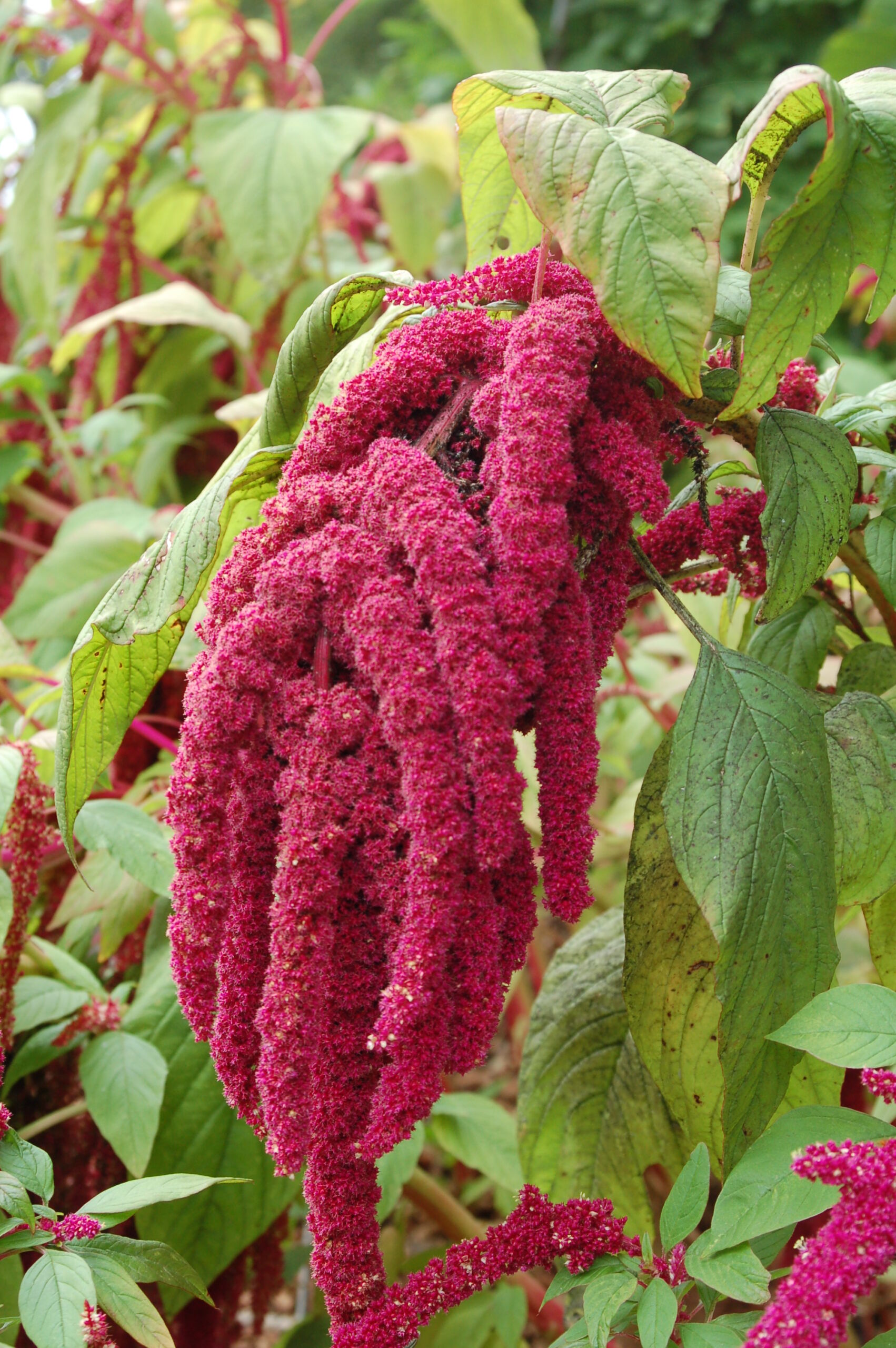
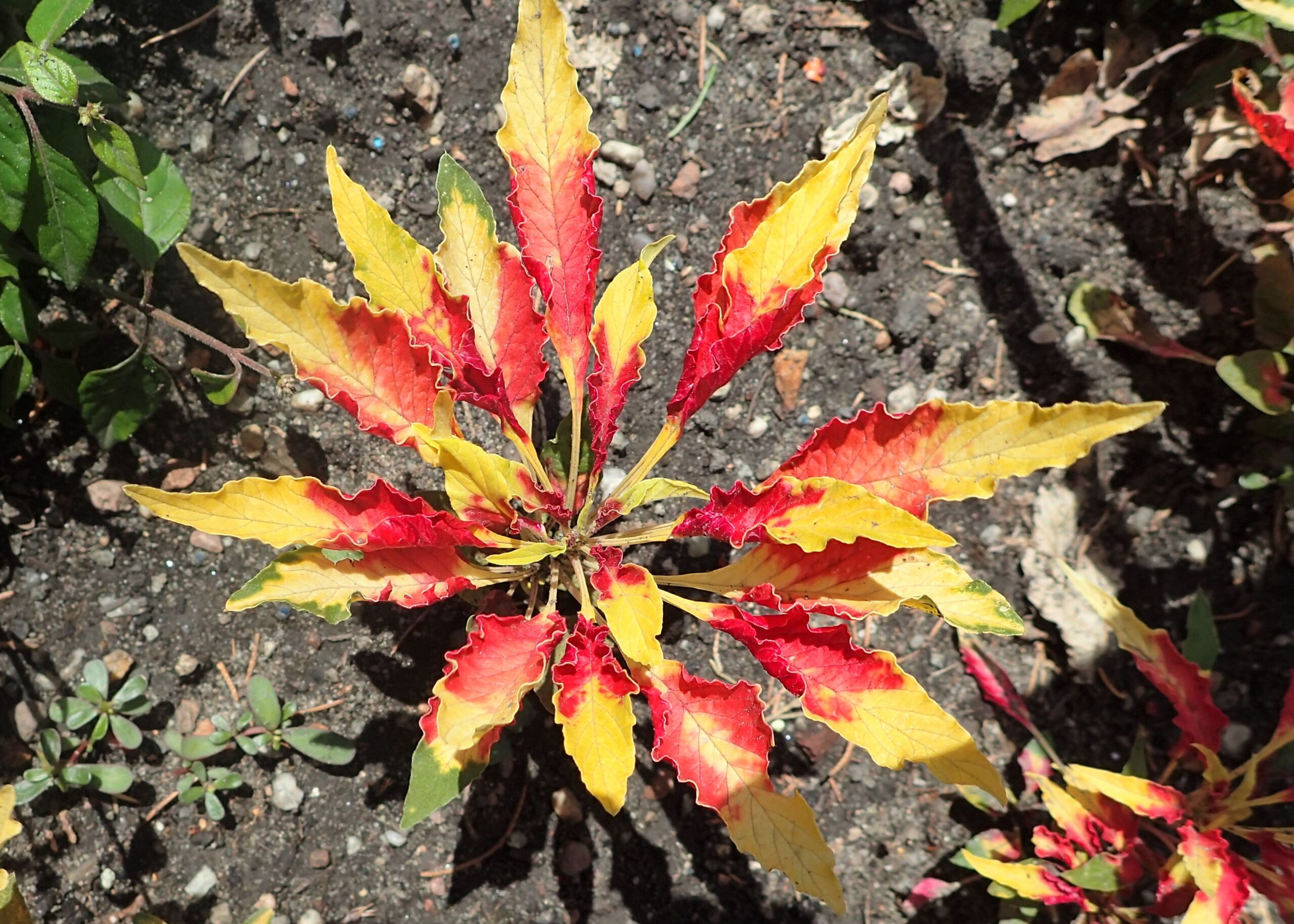
Amaranthus is a genus that refuses to pick a lane, and that is exactly why gardeners love it. It is a large genus — at least 75 recognized species, mostly annuals with a few short-lived perennials — in the amaranth family (Amaranthaceae), and it contains, all at once, an ancient grain crop, a leafy vegetable grown across the tropics, a Victorian garden showpiece, and a weed so successful it has its own fan club of annoyed farmers. The common names tell the same story from different angles: amaranth for the crop, pigweed for the weed, love-lies-bleeding for the ornamental with the drooping tassels, Joseph’s coat for the one with leaves like a paint spill. Same genus, four reputations, and every one of them is earned.
What amaranths look like depends on which job they are doing, but the family resemblance is clear. Plants are upright, fast-growing, and usually 2 to 4 feet tall, though grain giants can top 8 feet, with broad, alternate leaves that range from plain green to splashed red, gold, bronze, and purple. The flowers are the giveaway: amaranth flowers are tiny, individually unremarkable, and packed by the thousands into dense plumes, spikes, or tassels that can be upright, like a torch, or drooping, like a rope. Love-lies-bleeding (A. caudatus) carries its crimson tassels hanging down like velvet curtains, sometimes 2 feet long. Grain types carry upright, bristly plumes that turn from green to gold to rust as the seed ripens. Joseph’s coat (A. tricolor) barely needs flowers at all — its leaves do the showing off, in red, yellow, and green that looks airbrushed. The name Amaranthus comes from the Greek amarantos, meaning unfading, because the dry bracts keep their color long after cutting. A bouquet of amaranth does not wilt into sadness. It dries into a second career.
The history is older than most of our garden vegetables. Amaranth was grown as a high-protein grain and leafy vegetable for thousands of years in the Americas, including by the Aztec civilization in Mexico in the 1400s, where grain amaranth was cultivated in quantities similar to maize and treated as a sacred food. In Asia, varieties of A. tricolor have been grown as a green vegetable since the beginning of recorded history, and leaf amaranths remain staple greens across tropical Africa, South and Southeast Asia, the Caribbean, and Brazil. Then the genus went weedy, as successful plants do: redroot pigweed (A. retroflexus) and its cousins colonized disturbed soil on six continents, which is why the word pigweed follows the genus around like a shadow. The same vigor that makes amaranth a crop makes it a weed. The difference is mostly whether you planted it on purpose.
For butterflies, the pigweed side of the family is the point. In butterfly guides, pigweeds (Amaranthus) appear as host plants for the common sootywing and the golden-headed scallopwing — skippers whose caterpillars eat the leaves of wild amaranths. That is worth knowing before you declare war on every pigweed in the garden: the weedy amaranth at the edge of the vegetable bed may be feeding caterpillars, and the garden amaranth you planted for grain is the same genus, just better behaved and better dressed. A patch of amaranth left to flower and seed is a small, hot-weather wildlife pantry, and its wind-blown pollen and tiny seeds feed more than butterflies — the seeds are eaten by birds, and the flowers, though wind-pollinated, still draw insects.
How to grow
Amaranth is a warm-season annual for almost everyone, and the instructions are gloriously simple. Sow after the last frost, in full sun — at least six hours a day, more if you want the best grain and flower show — in average, well-drained soil. It grows well in average soils and even in poor soils, and only dense clay is really unsuitable. Seed can be started indoors in late winter and transplanted out after frost, or sown directly where it will grow, about 4 inches apart and covered lightly, germinating in 8 to 10 days at around 68 to 75 degrees Fahrenheit, then thinned to about 10 to 12 inches apart. Leave about a foot between plants when transplanting. In warm southern climates, afternoon shade is tolerated, especially for leaf harvest, but full sun is the default. The plant thrives best between 70 and 85 degrees Fahrenheit, which is a polite way of saying it loves the heat that makes lettuce bolt and spinach give up. If your summer is a sauna, amaranth is your plant.
Choose your type before you sow, because the genus splits into three jobs and each wants slightly different handling. Leaf types, principally A. tricolor, A. dubius, and A. hybridus, are grown for fast, tender greens — pick the young leaves for salads, cook the older ones like spinach, beet greens, or chard. Grain types, principally A. cruentus, A. caudatus, and A. hypochondriacus, are grown for seed and need a long, warm season, 90 to 120 days to maturity, and a taller, sturdier plant. Ornamental types, led by love-lies-bleeding (A. caudatus) and the upright-spiked A. cruentus selections like Red Spike and Hot Biscuits, are grown for the plumes and the foliage color. All three types follow the same basic care, and all three are edible in the broad sense — but choose a type bred for your purpose, because a leaf variety grown for seed will disappoint, and a grain giant grown for salad will tower over the lettuce and laugh.
Amaranth’s secret weapon is photosynthesis. Like maize and sugarcane, amaranths use C4 carbon fixation, a photosynthetic pathway that largely prevents photorespiration and increases drought tolerance and heat tolerance. That is the biochemical reason a plant from the tropics can shrug off a hot, dry August that flattens cool-season greens. It is also why amaranth needs no coddling: average water, no special soil, and sunshine are enough. The plants are wind-pollinated and mostly monoecious, with male and female flowers on the same plant, though a few, like Palmer amaranth (A. palmeri), are dioecious — and because amaranth pollen is small and light, different varieties cross readily, so if you save seed, expect surprises unless you isolate varieties or accept a little genetic adventure.
Florida note: Florida is amaranth’s happy place. The long, hot growing season that defeats cool-season crops is exactly what grain and leaf amaranths want, and leaf types can be sown for much of the warm season. Grow leaf amaranth as a summer spinach substitute when spinach has long since bolted, grow grain types where you have room for a 4- to 8-foot plant, and grow ornamentals for the sheer drama of a crimson tassel against a summer sky. Just remember the pigweed lesson: amaranth self-seeds enthusiastically, so deadhead the plumes you do not want reseeding, or next year’s garden will plant itself.
Water & feeding
Water needs are average, which in amaranth terms means unremarkable. About an inch of water a week is plenty, and once established the plants tolerate drought thanks to that C4 machinery. Water to establish transplants and during dry spells, especially for leaf harvest, where steady moisture keeps leaves tender — drought-stressed leaves get tougher and more bitter. Do not keep the soil soggy. Well-drained is the rule, and amaranth would rather be a little dry than waterlogged.
Feeding: do not bother, or barely bother. Amaranth does not require supplemental feeding, and excess nitrogen makes plants leggy and less suitable for harvest. Rich soil can actually hinder flowering and seed production, which is the opposite of what a grain grower wants. A light amendment of compost before planting, to help the soil hold moisture and supply nutrients, is enough. This is a plant that evolved to turn poor, hot, disturbed ground into food, and it resents being treated like a prima donna. The soil science note is worth repeating: amaranth’s C4 photosynthesis and deep, fast root growth make it a genuinely useful summer cover and food plant on ground where other crops struggle, and its biomass returns to the soil as organic matter when the season ends.
Common problems
- Self-seeding everywhere. The big one. A single plant produces thousands of tiny seeds — roughly 1,500 seeds per gram — and volunteers will appear next year in beds, paths, and cracks. Deadhead plumes you do not want reseeding, or embrace the volunteers as free greens.
- It crosses readily. Wind-pollinated varieties cross with each other and with wild pigweeds, so saved seed may not come true. Isolate varieties by distance or hedges if seed purity matters, or enjoy the genetic lottery.
- Pigweed confusion. Wild pigweeds (A. retroflexus, A. palmeri) look like garden amaranths because they are the same genus. Learn to tell your planted varieties from the weeds, especially Palmer amaranth, which is a notoriously aggressive agricultural weed — do not let it set seed in your garden.
- Leggy in too-rich soil. Excess nitrogen and very rich soil produce tall, floppy plants with less seed. Lean soil and full sun produce sturdier plants and better harvests.
- Frost ends it. Amaranth is frost-tender. A freeze ends the growing season, so in cold-winter climates it is strictly a warm-season annual, started indoors or sown after the last frost.
- Leaves get tough with age. Older leaves are tougher and more bitter than young ones. Pick young leaves for salads and cook older leaves, the way you would spinach or chard.
Harvest
Harvest depends on which amaranth you grew, and the genus gives you three harvests for the price of one planting. For greens, start picking young leaves about 30 to 40 days after sowing, when they are small and tender for salads, and keep picking — the plant regrows, and older leaves are excellent cooked. For grain, wait 90 to 120 days until the plumes dry and the seeds shake loose, then cut the plumes, dry them further, and thresh by rubbing or beating over a sheet; winnow away the chaff, and you have a gluten-free, high-protein pseudo-grain that cooks like a tiny cereal. For ornament, cut the plumes at their peak and use them fresh in bouquets, or dry them — remember amarantos, unfading — for arrangements that hold their color for months. And the simplest harvest: leave a few plumes standing for the birds, who will pick the seeds clean through fall and winter. That is the crop, and it feeds everyone.
Browse all plant & pest guides
Saving seeds
Amaranthus is a genus that does not do anything by halves, and seed saving is no exception: a single plant can shower you with thousands of tiny, shiny seeds, and if you are careless it will also shower your entire garden next summer with volunteers. The method is easy. The discipline is the whole job.
Start with the right plants. Save seed only from vigorous, healthy plants that did what you wanted — big grain heads for grain types, tender abundant leaves for leaf types, outrageous color for ornamentals — and save from several plants, not one lonely specimen, so the next generation keeps its vigor instead of sliding into inbreeding sulk. Note the genus split that matters here: grain amaranths like Amaranthus cruentus and Amaranthus hypochondriacus grow tall with heavy seed heads, leaf and color types like Amaranthus tricolor are grown for foliage, and ornamental tassel types like Amaranthus caudatus are grown for drama — but all of them save the same way, and all of them cross with their relatives.
Amaranth seed ripens unevenly, from the bottom of the head upward, over weeks. Wait until most of the head is dry and the seeds are hard — press one between your fingers and it should resist crushing rather than squashing — then cut the whole head with a short length of stem before it shatters and gives the crop to the birds and the soil. Dry the heads further on a tarp or in paper bags indoors, out of direct sun, until they are brittle, then rub or beat them over a tub, sieve out the big chaff, and winnow the rest by pouring the seed slowly in a light breeze or in front of a fan on low. Wear gloves if your type has bristly heads, and do this somewhere you do not mind sweeping, because amaranth seed gets everywhere with cheerful enthusiasm.
Now the crossing problem, which is real and which sources argue about endlessly. Amaranth is wind-pollinated, its pollen is small and light and travels, and different varieties — and weedy pigweed relatives — cross readily. Published isolation distances disagree wildly, from hundreds of feet to hundreds of meters, so rather than pretending one magic number will save you, use the home-gardener rules that actually work: save seed from only one variety per season if purity matters; or bag flower heads in paper bags before they open and shake the bagged heads gently each day so pollen moves between flowers of the same variety; or stagger plantings so different varieties flower at different times. And rogue out any pigweed-looking weeds before they flower anywhere near your seed plants, because a cross with weedy amaranth is how a grain crop quietly becomes a weed problem. Never let seed heads shatter into beds you care about — volunteers will carpet them next summer, and amaranth volunteers are enthusiastic.
Two final truths. Seeds from F1 or hybrid varieties will not grow true, so only save from open-pollinated or heirloom types if you want the same plant back. And storage: dry the seed completely — in Florida, that means thoroughly dry, then airtight with a desiccant packet, cool and dark, because humidity is the enemy of stored seed. Sources disagree on exactly how many years amaranth seed stays viable, with figures spanning a few years, so treat fresh seed as gold, use the oldest seed first, and do not bet a season on a decade-old envelope.
Species in this group
Joseph’s coat and vegetable amaranth (Amaranthus tricolor) — the leaf-and-color star: brilliant red, yellow, bronze, and green leaves, grown both as a leafy vegetable and as an ornamental; the species behind Joseph’s coat cultivars.
Love-lies-bleeding (Amaranthus caudatus) — the Andean ornamental and grain plant with long, drooping crimson tassels; also known as kiwicha in South America, where its seed is a traditional grain.
Grain amaranth (Amaranthus cruentus) — a principal grain species with upright plumes, including ornamental selections like Red Spike and Hot Biscuits; also grown for leaves.
Prince’s feather grain amaranth (Amaranthus hypochondriacus) — one of the three classic grain species, tall and upright, bred for pale, plentiful seed.
Redroot pigweed (Amaranthus retroflexus) — the archetypal wild pigweed: the weedy cousin that colonizes disturbed soil everywhere and feeds sootywing and scallopwing caterpillars as a host plant.
Palmer amaranth (Amaranthus palmeri) — the notorious agricultural weed of the genus, dioecious where most amaranths are monoecious; know it so you can keep it out of your seed-saving and your beds.
Leaf amaranths (Amaranthus dubius, Amaranthus blitum) — widely grown tropical and subtropical leaf vegetables, fast, tender, and heat-loving, alongside tricolor in markets from Africa to Southeast Asia and the Caribbean.