
☁️ Cotton
What it looks like
Cotton is a genus of about 50 species in the mallow family (Malvaceae), and it is one of the most consequential plants humans have ever grown. The cultivated cottons are perennial shrubs that are almost always grown as annuals: in modern farming systems they reach 1 to 2 metres tall, and as woody shrubs they can reach 6 feet, with a dense, rounded, much-branched habit. The genus name comes from the Arabic goz, meaning a soft substance, which is as good a description of cotton fiber as any botanist has managed. Cotton is not a flower garden plant that happens to be useful; it is a fiber crop that happens to be beautiful, and a home planting of a few plants is one of the best ways to understand why this plant reshaped economies, empires, and wardrobes.
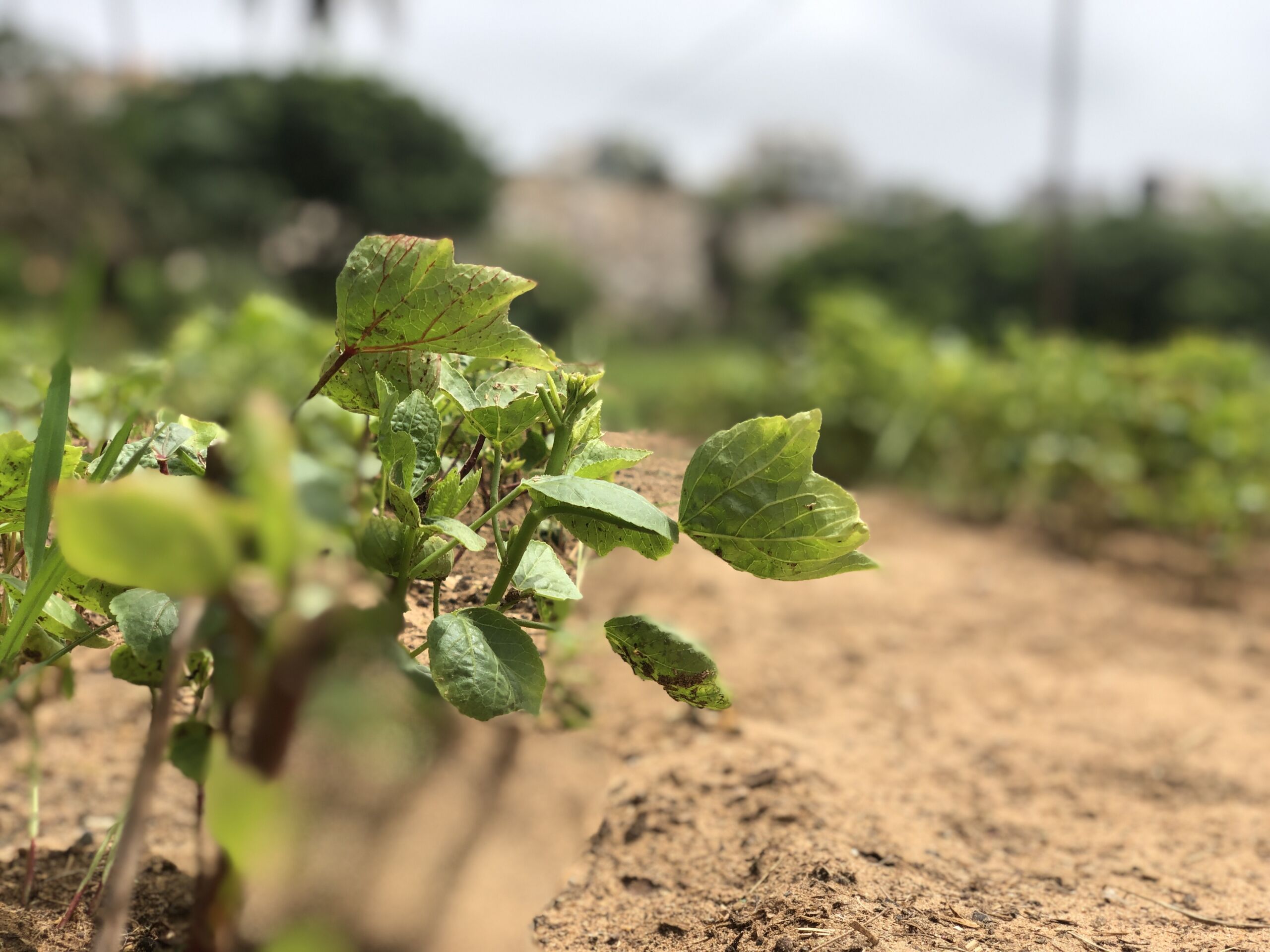

The leaves are broad and palmately lobed, usually with 3 to 5 lobes (rarely 7), on long stalks, and they look like what they are: the leaves of a mallow, generous and maple-like, with a slightly rough texture. The flowers are the surprise for first-time growers. They are large, hibiscus-like, and cup-shaped, about 4 inches across, with five petals and a prominent staminal column in the center, exactly like a hibiscus flower, because cotton and hibiscus are cousins. Each flower opens white or pale yellow in the morning and turns pink or red by the end of the day — a single flower lasts about a day, changing color as it ages — and in upland cotton the petals often carry a purple spot near the base. Flowering runs through the summer, roughly July into September in temperate plantings.
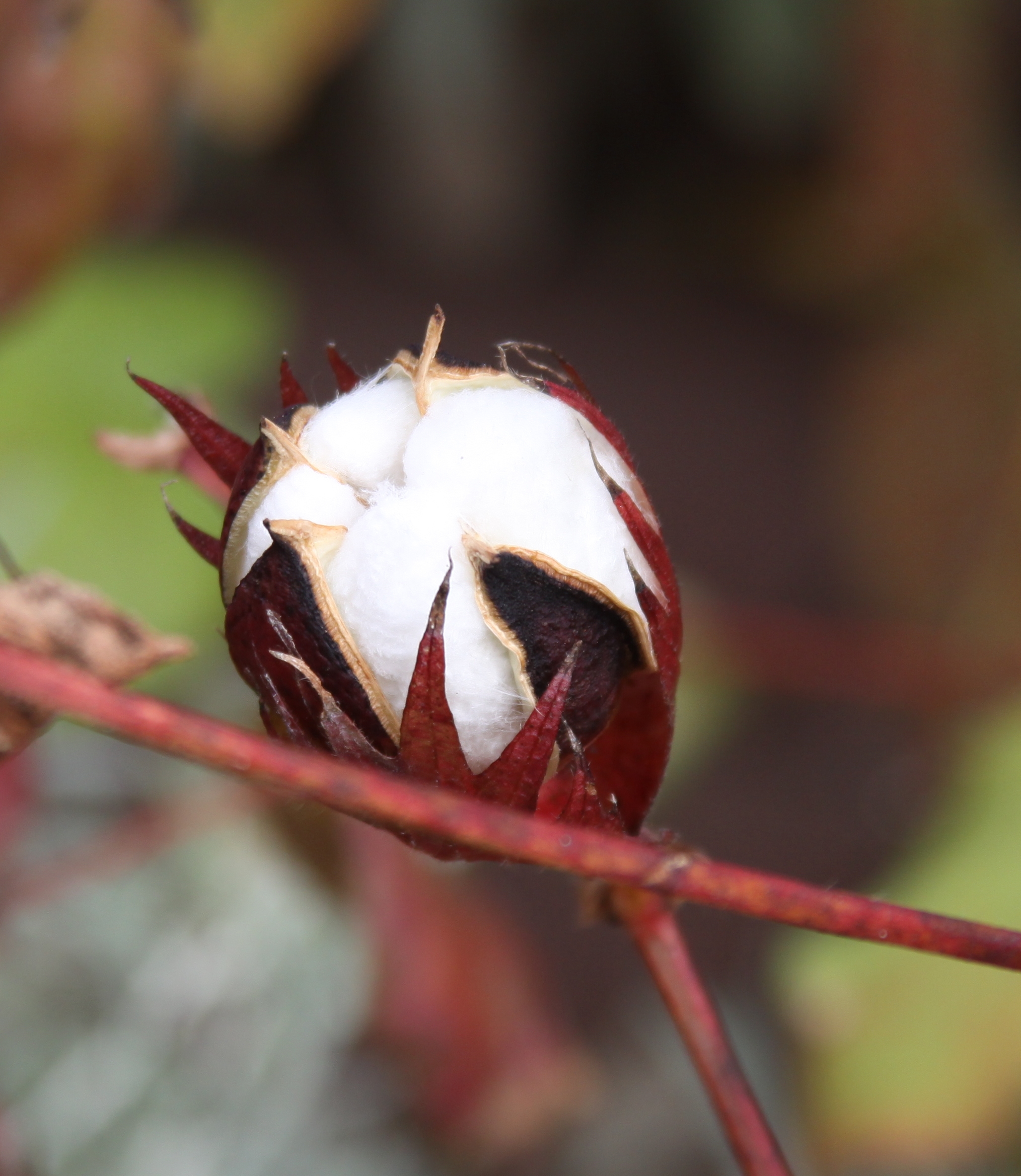
The fruit is the point of the whole plant. It is a capsule, called a boll, 1.5 to 2.5 inches across, round to ovoid, that matures from green to brown and then splits open along 3 to 5 seams to reveal the seeds, each one wrapped in a puff of fiber. That fiber is of two kinds: long, spinnable lint, the cotton of commerce, and short, fuzzy linters that cling to the seed. A single boll holds around 36 seeds in upland cotton, each seed carrying both kinds of fiber. The fiber is not decoration; it is the seed’s dispersal strategy, a parachute for wind travel, and humans simply industrialized a trick the plant invented for getting its children downwind. For butterflies, cotton is a host plant: the gray hairstreak and the common checkered-skipper are the two butterfly guides that list plain “cotton” as a host plant, and their caterpillars feed on the plant’s foliage and buds.
How to grow
Cotton is a long-season, heat-loving plant, and the first thing to check is not your soil but your calendar. It needs a minimum of 180 to 200 frost-free days at uniformly high temperatures, averaging 21 to 22 degrees Celsius, and it is frost-sensitive at every stage of growth. That requirement is why cotton is a crop of the American South, the Mediterranean, India, Central Asia, and other hot-summer regions, and why a gardener in a short-summer climate will struggle no matter how good the soil is. Plant after the last frost, when the soil has warmed to 60 to 65 degrees Fahrenheit, because seed sown into cold soil rots or emerges weakly. Full sunlight is critical — shade a cotton plant and you will get a tall, leafy plant with few bolls — and the site should be open, sunny, and sheltered from strong wind where possible.
The soil should be deep, friable, moisture-holding, and well-drained, and the plant tolerates a range of textures as long as drainage is good. The optimum soil pH for cotton is generally given as 5.2 to 7, with upland types tolerating slightly acidic to neutral soils around 6.0 to 8.0 and Pima types preferring neutral to moderately alkaline soils around 7.0 to 9.0, so the honest statement is that cotton is not fussy about pH within the broad middle of the scale, but it is fussy about drainage and depth. Sow seed about an inch deep, thin seedlings to about a foot apart in rows, and give the plants room: a cotton plant wants to branch, and crowded plants produce fewer bolls. In zones 8 to 11 cotton can persist as a perennial shrub, but it is almost always grown as an annual even there, because the second-year plant is woodier and less productive, and because annual culture breaks pest and disease cycles.
Before you plant, one administrative check matters more for cotton than for almost any other garden plant: because cotton is a commercial crop with pest-eradication programs in some states, check with your local extension office before planting. Some regions regulate home cotton growing to protect commercial fields from boll weevil and other pests, and the rules vary by state and by year. A five-minute call to extension is cheaper than a regulatory surprise, and extension can also tell you which varieties suit your area. Florida gardeners have a long growing season in their favor — cotton is grown in the state and is recorded as a frequently cultivated crop in the sandy soils of the Coastal Plain — but the same extension check applies, and the same heat and humidity that suit the plant also suit its pests.
Water & feeding
Cotton wants moderate rain during vegetative growth and then a dry period while the bolls mature, which is the rainfall pattern of a monsoon summer followed by a dry autumn, and it is the pattern to imitate in the garden. Water regularly and deeply while the plants are growing and flowering, keeping the soil evenly moist but never waterlogged. Where rainfall is below about 500 mm a year, irrigation is necessary; where rainfall is ample, drainage matters more than watering. As the bolls begin to open, ease off the water: a dry finish helps the bolls open cleanly and keeps the fiber from weathering, and wet weather at boll-opening time is one of the main causes of boll rot.
Feeding is moderate. Cotton is a hungry crop by field standards, and a home planting benefits from compost worked into the bed before planting and a balanced fertilizer as growth gets going, but overfeeding with nitrogen produces lush, leafy plants with delayed fruiting and more pest pressure, which is the opposite of what you want. A soil test is worth more than a guess here, because cotton’s needs vary with soil type: sandy soils need more frequent, lighter feeding, and heavy soils need less. Mulch to conserve moisture and suppress weeds, keeping mulch off the stems, and stop feeding once flowering is well underway so the plant puts its energy into bolls rather than leaves.
Common problems
- Boll weevil: Anthonomus grandis, the boll weevil, is the most famous cotton pest in history, and for good reason: the weevil’s larvae feed inside squares and bolls, causing them to drop. It devastated the American cotton industry in the early twentieth century and is the reason for the eradication programs that make the extension check in this guide necessary. Home plantings are rarely the front line, but do not ignore weevil damage, and report it to extension if you see it.
- Bollworm and budworm: The bollworm, Helicoverpa zea, and related caterpillars bore into squares and bolls. Hand-picking on a small planting is effective, and encouraging beneficial insects helps; commercial controls are not appropriate for a home guide and are unnecessary at garden scale.
- Cotton aphid: Aphis gossypii colonizes undersides of leaves and growing tips, causing curling and honeydew, which then grows sooty mold. A strong jet of water, or patience while ladybirds and lacewings arrive, usually handles it.
- Spider mites and thrips: Both thrive in hot, dry conditions and on stressed plants. Mites cause stippled, bronzed leaves; thrips cause distorted young growth. Keep plants watered and unstressed, and avoid broad-spectrum insecticides that kill the predators that control both pests.
- Fusarium and Verticillium wilts: Soil-borne fungal wilts that cause yellowing, wilting, and death, with no cure once established. Rotate cotton out of a bed for several years, do not plant it where wilt has occurred, and choose resistant varieties where they are available.
- Boll rots: Wet weather at boll-opening time invites bacterial and fungal rots that stain and ruin fiber. The prevention is a dry finish, good air movement, and spacing that lets the canopy dry after rain.
- Short season: The most common home-garden failure is not a pest but a calendar: a cool summer, a late start, or an early frost leaves the plant with unopened bolls at the end of the season. Start seed indoors in short-season areas, transplant only after the soil is warm, and choose the earliest variety you can find.
- Gossypol: Cotton seeds contain gossypol, a toxin that is removed from commercial cottonseed products by processing. Do not eat raw cotton seeds, and do not feed them to animals; glandless cultivars, bred to be free of gossypol glands, exist but are specialist material, not general garden stock.
Harvest
Harvest cotton when the bolls have split open and the fiber is dry, fluffy, and white. Pick by hand on a dry day, pulling the lint and seeds out of the opened boll — this is the satisfying part, and a few plants yield a surprising handful of fiber. Dry the harvest thoroughly before storing, because damp cotton molds, and store it in a dry place. At garden scale, the fiber is a curiosity and a craft material: it can be spun by hand, used for stuffing, or simply kept as a demonstration of where cloth comes from. Commercial harvest is a different world — mechanical pickers, ginning to separate lint from seed, grading by staple length — and it is worth knowing that the cotton in a single T-shirt represents the fiber of many bolls from many plants. If you grow cotton for seed saving, save seed from the earliest, healthiest bolls, dry it well, and keep it labeled by variety, because cotton varieties cross readily and a mixed planting will not stay true. And when the season ends, pull the plants and compost them only if they are pest-free; plants with weevil or wilt problems should be bagged and discarded, not composted, so the problems do not overwinter in your garden.
Saving seeds
A note on scope first: this is a genus-level method for Gossypium species, the cultivated cottons, because the garden-scale seed process — boll, lint, fuzzy seed, dry storage — is shared across them. It is not a variety-specific recipe, and if you live in commercial cotton country, check your state’s rules before planting or moving cotton seed, since commercial cotton is regulated for pests in some regions. Save seed only from plants you grew yourself from untreated seed, never from commercially treated planting seed.
Choose your parent plants like a breeder, not a hoarder. Save from the earliest, healthiest bolls on vigorous plants, and wait until the boll has split fully open and the fibre is dry and fluffy — immature bolls give immature seed. Pick on a dry day, pulling lint and seed out of the opened boll by hand. Cleaning is satisfyingly low-tech at garden scale: pick and rub the seed free of the lint, and discard anything pale, soft, shrivelled, or mouldy. The seed will still wear a coat of short fuzz, and that is normal. Commercial growers remove that fuzz chemically, a process called delinting, but home growers neither need it nor should attempt acid delinting at home; fuzzy seed sows perfectly well by hand.
Crossing is where cotton quietly breaks hearts. Cotton is largely self-pollinating, but bees do visit the flowers and will carry pollen between varieties, so a mixed planting will not reliably stay true. If keeping a variety pure matters, grow one variety for seed, bag flowers before they open, or accept that the next generation may be a mix. F1 hybrids are a separate honesty note: their saved seed will segregate, so the plants you get back will vary in height, boll size, and fibre, and none of them is guaranteed to match the hybrid parent. Label every batch with variety and year the moment it is dry, because all cotton seed looks alike in January.
Drying and storage decide whether all that work survives to spring, and Florida humidity is the test. Spread the cleaned seed thin until it is thoroughly dry — the lint should feel dry, not clammy, and the seed hard — then store in an airtight jar with a desiccant packet, cool and dark. Cotton seed is oil-rich, and oil-rich seed loses vigour faster in heat and humidity than a dry garden seed like a bean, so at home plan to use your saved seed within a season or two rather than banking on multi-year storage. Research cold storage can keep cotton seed viable far longer, but a kitchen cupboard in a Florida summer is not a seed bank, and pretending otherwise is how a spring sowing fails. When sowing time comes, wait for genuinely warm soil: cotton seed sown into cold, wet ground rots or sulks, and no amount of careful winter storage rescues a seedling chilled at imbibition.
Species in this group
The genus holds about 50 species, of which four are cultivated and the rest are wild. The cultivated species below are the ones that matter, in plain text, with the roles the sources give them.
- Gossypium hirsutum (upland cotton, Mexican cotton): The world’s cotton. A New World species, native to Mexico and the Caribbean, that provides roughly 90 percent of the world’s cotton production (some sources put the figure as high as 97 percent; the honest statement is that it is the overwhelming majority). The most commonly planted agricultural cotton in the United States, an annual to perennial subshrub, usually about 5 feet tall in gardens, with large yellow or white cup-shaped flowers in July and a 1.5 to 2.5 inch round capsule maturing to brown. The named cultivar Burgandy is listed for this species in North Carolina Extension material.
- Gossypium barbadense (Pima cotton, Egyptian cotton, Sea Island cotton): The extra-long-staple cotton, prized for fine yarns and expensive garments. A New World species of the Caribbean and South America, providing only about 1 to 2 percent of world production, but the finest fiber of any commercial cotton. Prefers neutral to moderately alkaline soils and a long, hot season.
- Gossypium arboreum (tree cotton): An Old World species, native to India and Pakistan, and one of the two cottons domesticated in Asia. A woody shrub or small tree, historically important in Indian textile traditions, now a minor commercial crop but still grown in its home region.
- Gossypium herbaceum (Levant cotton): The other Old World domesticate, native from southern Africa through the Middle East to Syria and Afghanistan. A shorter plant, with stems 60 to 180 cm tall, yellow flowers with a purple center, and short staple fiber about 25 mm long. Historically important in the Mediterranean and Middle East, now largely replaced by upland cotton in commercial production.
- Gossypium tomentosum and Gossypium darwinii: Two wild tetraploid species, native to Hawaii and the Galápagos Islands respectively, listed here only to complete the picture: they are not commercial crops, but they are close relatives of the cultivated tetraploids and matter to cotton breeding and to the genus’s evolutionary story.