
🌸 Bayleaf Caper Tree
What it looks like
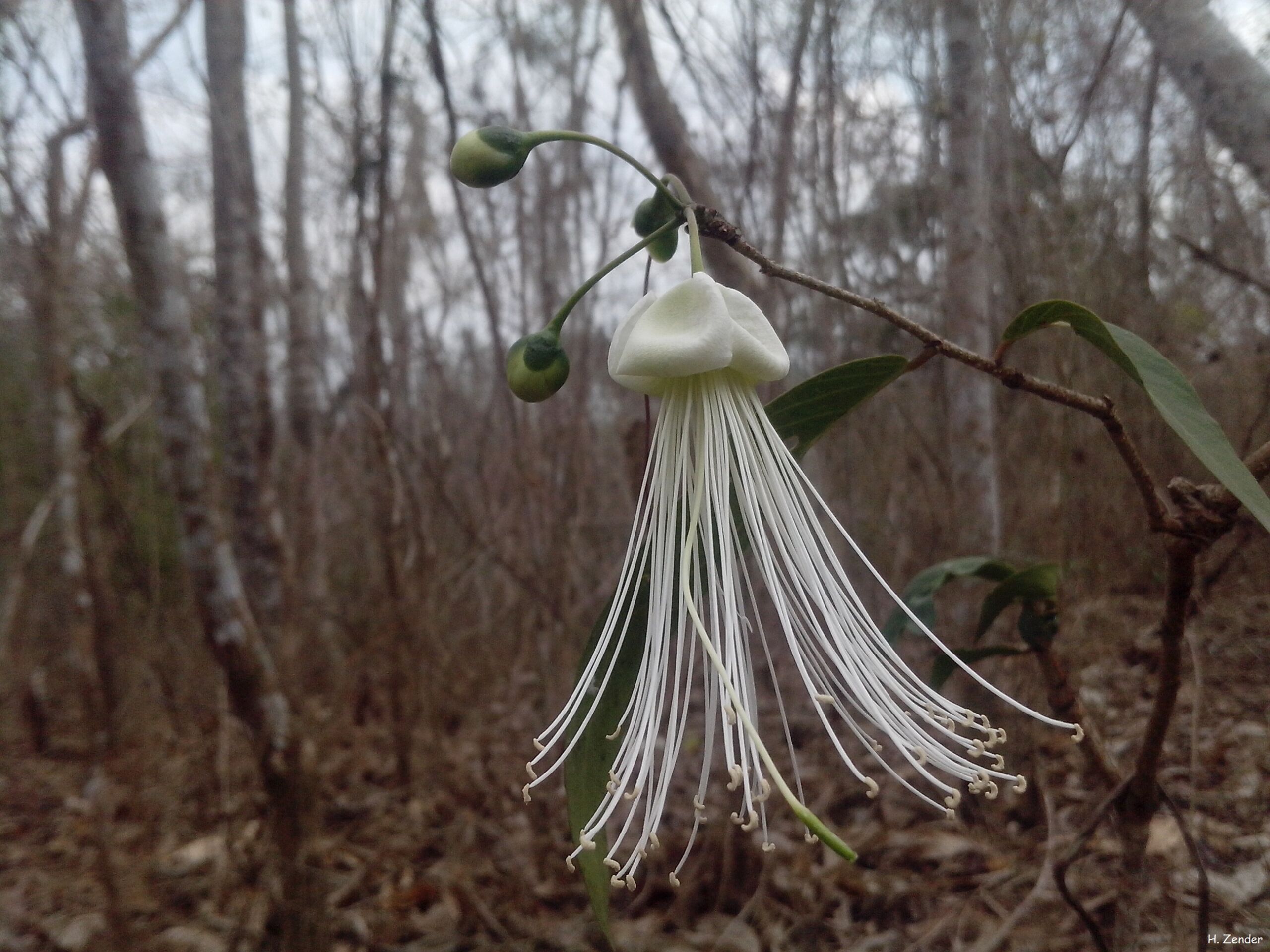
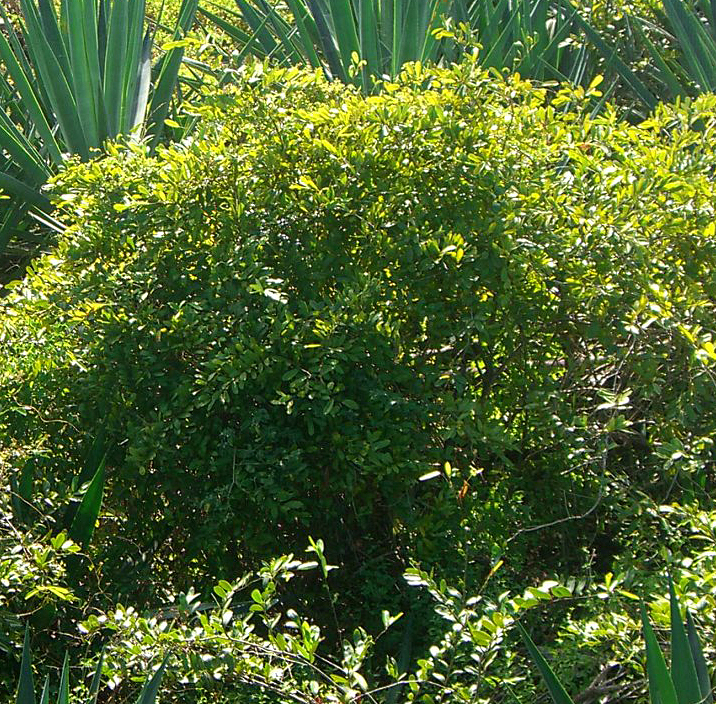
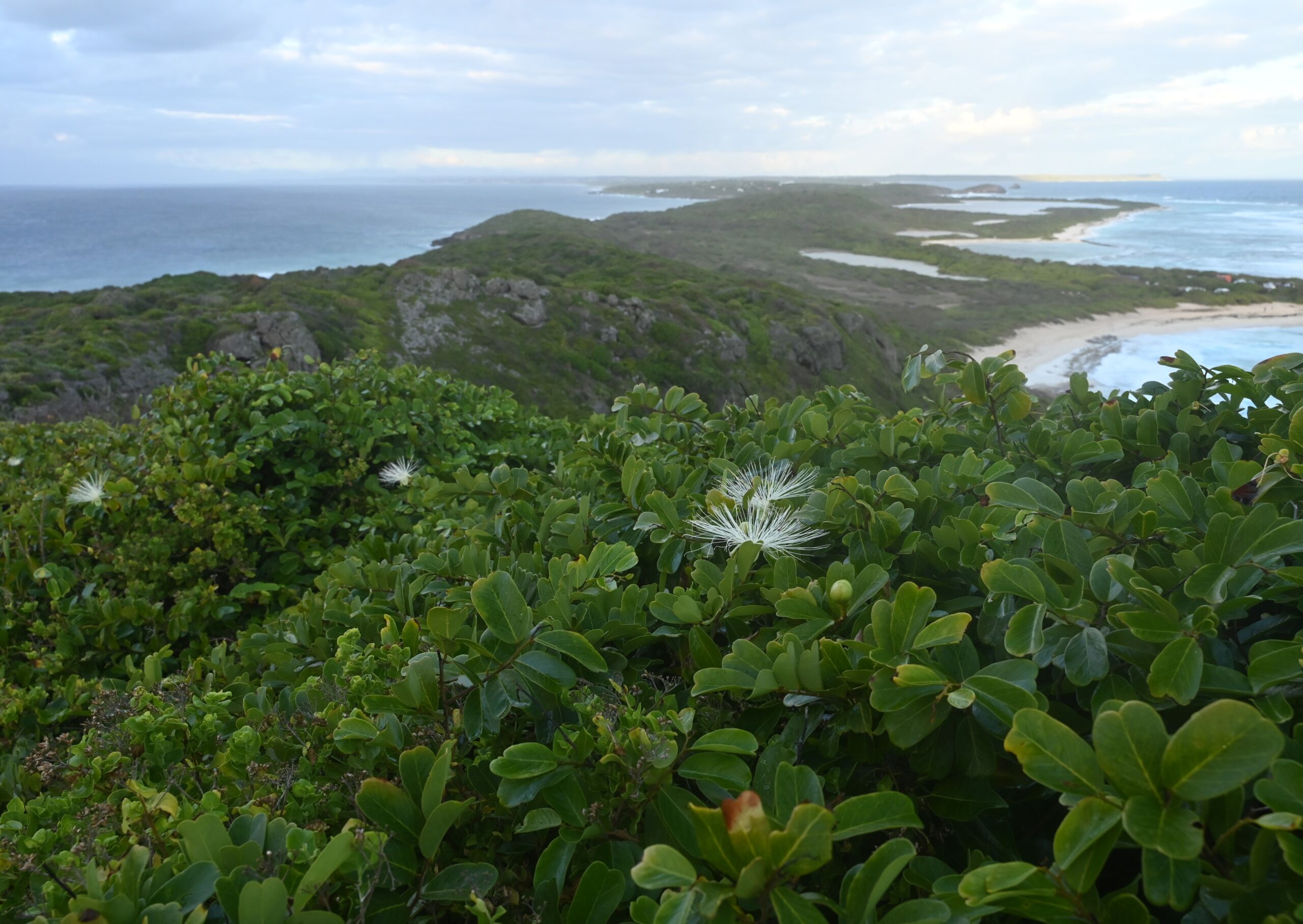
Bayleaf caper tree is a sprawling evergreen shrub or small tree of the caper family (Capparaceae) that refuses to stand up straight — and that is exactly its charm. Left alone it grows into a loose, vine-like tangle of slender branches, typically 10 to 20 feet tall and about as wide, with glossy, bay-like evergreen leaves. Trained up a trellis it climbs; left unpruned it sprawls; either way it looks like a plant that is having a good time. In South Florida, where it is native, it haunts coastal berms, tropical hammocks, and shell mounds, the kind of hot, sandy, salty places where fussier plants give up and go home.
The flowers are the main event, and they keep vampire hours. They open at night — white fading to pink, with a spray of long stamens that stick out like whiskers — and they are built for moth pollinators doing the night shift. By day the show belongs to butterflies, in a different sense: this is a caterpillar plant. The larvae of the Florida white and the great southern white both feed on caper-family plants, and bayleaf caper is one of their best native hosts in Florida. If you plant it in South Florida, do not be surprised — or disappointed — to find caterpillars munching the leaves. That is the plant doing its job. The small fruits that follow the flowers feed birds, so the whole cycle, from night moth to day butterfly to bird, runs through one shrub.
A word on names, because this plant has collected them like shells. Botanists now mostly call it Cynophalla flexuosa, and older books and nursery tags call it Capparis flexuosa. The butterfly guides use the older name, so this guide keeps it in the title line, with the current name alongside. Other common names are limber caper, bay-leaved caper, and bayleaf caper — all the same plant, all referring to the same limber, flexible branches. Do not confuse it with its upright cousin, Jamaica caper (Capparis cynophallophora), which grows into a neat pyramidal shrub or small tree. Bayleaf caper is the sprawling, recumbent relative; if your caper wants to lie down, you have the right one.
How to grow
Bayleaf caper tree is a South Florida plant, full stop, and it wants to be grown like one. Plant it in full sun to part shade in sandy, well-drained soil — it tolerates poor, dry soils that would starve a hungrier shrub, and it handles salt wind and even brief saltwater flooding from storm surge once established. That salt tolerance is a genuine superpower for coastal gardens, and it is one of the reasons this plant belongs in seaside butterfly gardens rather than in a pampered inland bed. Space plants 8 to 10 feet apart and then get out of the way: this is not a plant for tight, formal spacing, and crowding it only makes the sprawl harder to manage.
Water until established, then back off. Once its roots are down, bayleaf caper is drought tolerant and asks for almost nothing — overwatering and rich, soggy soil are far more dangerous to it than a dry spell. Prune after flowering to control the sprawl and to keep it off paths, fences, and neighboring plants that did not consent to being hugged. If you want a tidier shape, train the long branches up a trellis or a sturdy fence while they are young and flexible; the plant’s own limber habit makes it a willing climber, and a trellised caper in bloom at dusk is a genuinely lovely thing.
Propagation is where honesty matters. From seed, sow fresh seed in warm weather — but detailed germination protocols are thin in the literature, so the reliable route for most gardeners is a nursery-grown plant from a Florida native nursery, or an experiment with fresh seed in a warm, bright spot if you enjoy a gamble. Do not buy this plant expecting it to behave in Central or North Florida the way it does in Miami: it is a tropical-subtropical native, native to the Florida peninsula, the West Indies, Mexico, Central America, and northern South America, and cold is its limit, not heat. Outside its warm range, grow it in a large container you can shelter, or admire it on visits south and plant something hardier at home.
Florida note: this is a butterfly-garden essential in South Florida precisely because it is both native and a host plant, not just a nectar plant. Nectar plants feed adult butterflies for a day; host plants raise the next generation. A garden with bayleaf caper is a garden that makes more Florida whites and great southern whites, not just one that waves at passing adults. Plant it where caterpillar damage will not break your heart — a back corner, a coastal hedge, a wild butterfly border — and let the chew marks be the sign that the garden is working.
Water & feeding
Water deeply at planting and through the first dry season while roots establish, then taper to almost nothing. Mature plants are drought tolerant and prefer soil that dries between waterings; constant wet feet in heavy soil will rot a plant that evolved for sandy berms and shell mounds. If you garden on Florida sand, that is a feature, not a problem — the plant is already in its element.
Feeding: barely bother. Bayleaf caper tolerates poor soils and needs no fertilizer program; a light topdressing of compost at planting is plenty, and rich feeding mostly produces soft, leggy growth that sprawls even harder. This is a plant that evolved to turn a sunny, salty, sandy corner into a butterfly nursery with no help at all. Let it.
Soil science note: sandy, well-drained soil is the whole story here, and it is worth understanding why. Sand drains fast and holds little, so plants that love it tend to be plants that hate wet roots and love air around them. Bayleaf caper’s roots are built for that bargain — quick drainage, low fertility, high salt — and the microbes and fungi around those roots are the coastal-hammock kind, not the rich-loam kind. Amending the planting hole with heavy compost and peat until it holds water like a sponge does not help this plant; it drowns the bargain. Plant it in sand, mulch lightly, and let the soil be what it is.
Common problems
- Sprawl. The main management issue, and it is a feature as much as a fault. Prune after flowering, trellis young growth, and site it where 10 to 20 feet of enthusiastic sprawl is welcome.
- Cold damage. This is a zones 9–11 plant at best, and many sources put its safe range at 10a–11 (see the zone note below). A hard freeze will damage or kill it. In marginal areas, plant against a warm south wall or keep it containerized.
- Caterpillar damage. Not a problem — it is the point. Florida white and great southern white caterpillars eat the leaves. If you spray them off, you have removed the reason to plant it.
- Wet, heavy soil. Soggy ground and clay that holds water will rot the roots. If your soil stays wet, plant on a berm or in a raised, sandy bed, or choose a different host plant.
- Slow or patchy germination from seed. Fresh seed in warm weather is the best shot, and even then results vary. Nursery plants are the reliable route.
Harvest
Bayleaf caper is not harvested like a vegetable, and nobody should confuse it with the culinary caper bush of the Mediterranean — that is a different species, and this guide makes no food claims for this plant. Its harvest is wildlife: night-blooming flowers for moths, leaves for white butterfly caterpillars, and small fruits for birds. Cut a few flowering stems for the vase if you like — the whiskery night blooms are striking indoors — but leave most of the plant standing for the caterpillars, because a caper with no caterpillars is a butterfly garden with the nursery closed.
For seed savers: collect fruits when ripe, clean the seed, and sow fresh in warm weather, knowing germination is variable. For everyone else, the simplest harvest is an evening walk past the plant at dusk, when the flowers are opening and the moths are clocking in. That is the crop, and it smells faintly of a South Florida night.
Browse all plant & pest guides
Saving seeds
Bayleaf caper tree (Cynophalla flexuosa, still sold and shelved under its older name Capparis flexuosa) saves seed the way it does everything else: dramatically, at night, and on its own schedule. The long, green, cylindrical fruits split open when ripe to show off rows of white seeds sitting in bright pink pulp, like a botanical jewellery box left ajar. Collect the fruit once it has split, clean the pulp off the seeds, and sow fresh — this is the single most important instruction in the whole section, because caper seed that dries out tends to go dormant and sulk, and detailed germination protocols for this exact species are thin in the literature. Treat seed-saving here as a joyful experiment, not a guaranteed production line.
Sow the fresh, cleaned seed shallowly in a warm, bright spot in a sandy, well-drained mix, and keep it moist but never soggy — the same drainage this sprawling South Florida native demands as a grown plant. Do not give it a cold treatment: this is a tropical-subtropical shrub, not a temperate one, and a refrigerator is not winter to it, it is just cold. Germination is variable and uneven, so sow more seed than you think you need, be patient for weeks rather than days, and do not throw the pot out in a fit of tidiness just because nothing has appeared yet. Warmth, light, and moisture are the whole recipe; the rest is the plant’s decision.
What you do get for your patience is reassuringly straightforward. This guide lists no named varieties — nursery stock is the straight species — so seedlings are the species itself, with the usual small variations between individuals, rather than a named cultivar that refuses to come true. That also means there is no hybrid warning to print in bold: open-pollinated species seed grows true to type in the broad sense, even if no two seedlings are identical twins. And one firm boundary, repeated because it matters: this is not the culinary caper bush of the Mediterranean, which is a different species, and this guide makes no food claims for bayleaf caper tree. Its crop is night-blooming flowers for moths and leaves for white butterfly caterpillars, and seed is simply how you make more of that.
Florida notes: this is a zones 9–11 plant, so outside South Florida, grow seed-grown plants in a large container you can shelter from cold, or accept that a freeze may end the experiment. If you must store seed rather than sowing it fresh, dry it thoroughly first, seal it airtight with a desiccant, and keep it cool and dark — Florida humidity is the enemy of stored seed — but know that stored caper seed is a weaker bet than fresh seed every time.
Varieties
No named varieties of bayleaf caper tree were verified for this guide. The plant is grown as the species — sometimes under its older name Capparis flexuosa, sometimes under its current name Cynophalla flexuosa — and nursery stock is the straight species, not a named cultivar. If a seller offers you a fancy named form, ask which species it actually is, because the caper family is full of lookalike cousins.