
🌳 Black Oak
What it looks like
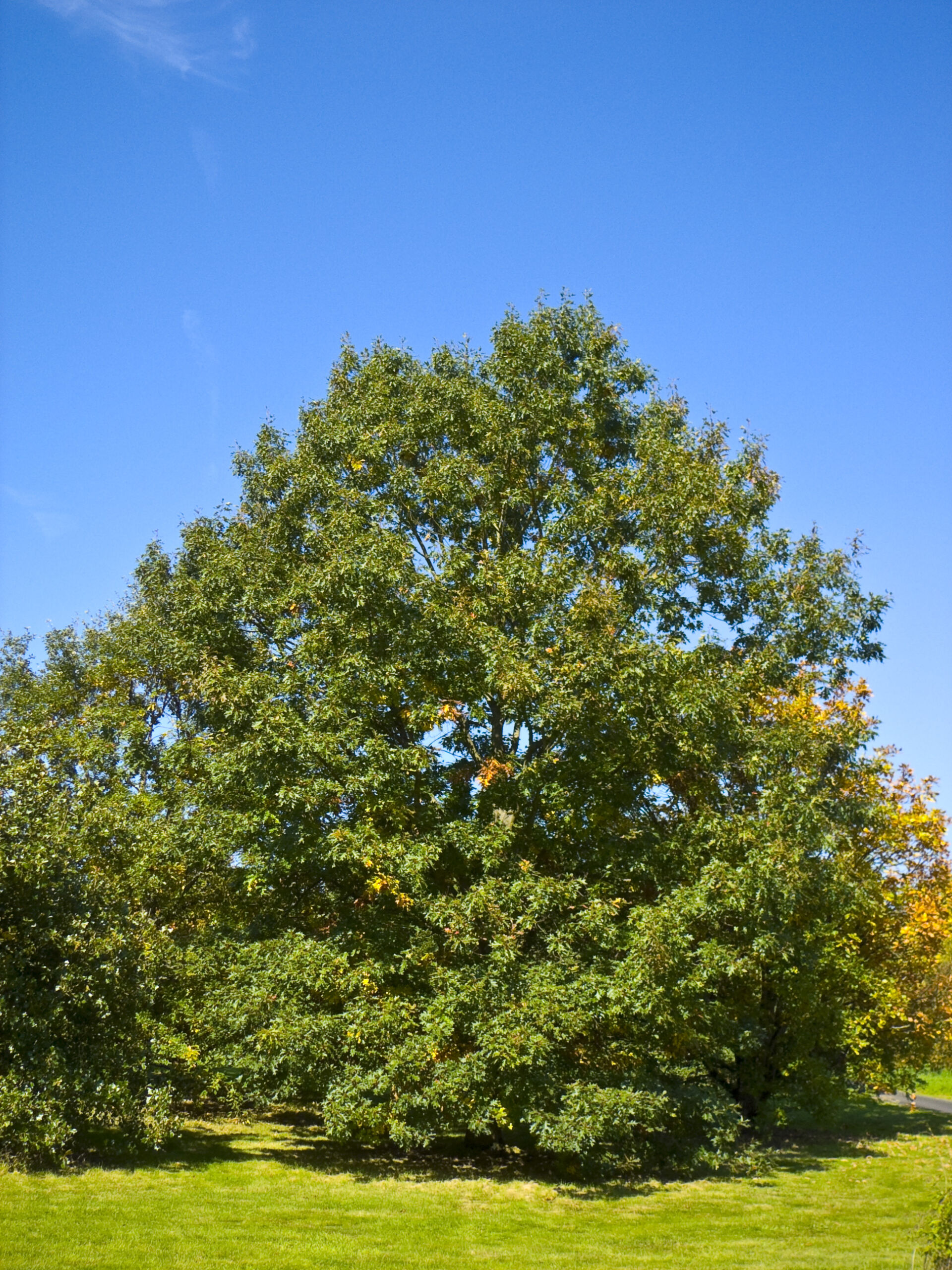
Black oak is a large, deciduous shade tree of the red oak group, native to the eastern and central United States and southeastern Canada, from Maine and southern Ontario west to Minnesota and south to Florida and Texas. In gardens it typically grows 50 to 60 feet tall with a similar spread and a globular, spreading crown; wild trees on good sites can reach 80 feet or more, and old champions have topped 100. This is not a tree for a small lot. It is a tree for a yard with room to be a yard, a ridge to hold, and a century to fill.
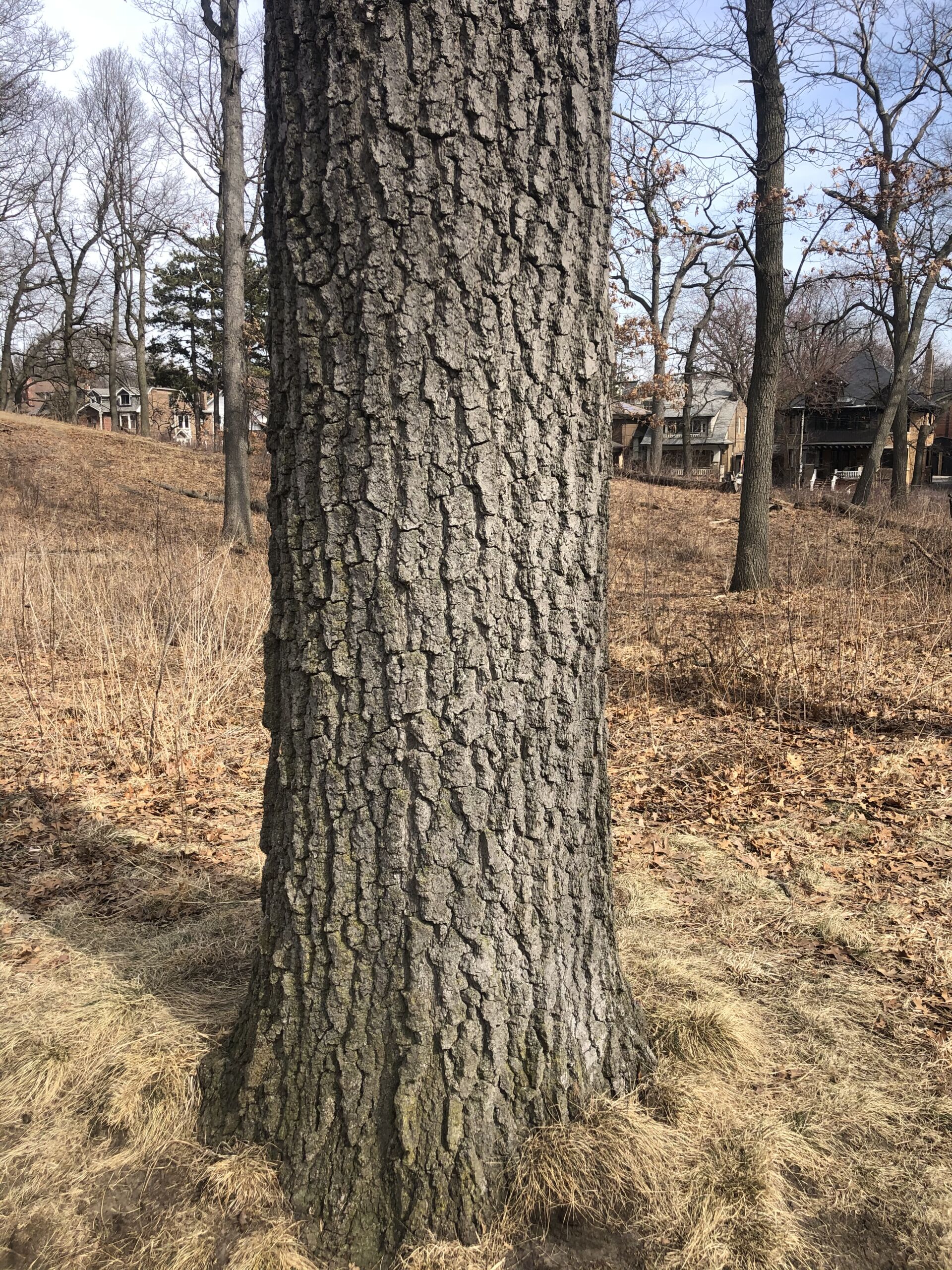
Identification starts with the bark, which is where the name comes from: on mature trees it is almost black, rough, and cut into deep vertical furrows with horizontal breaks, much more rugged and fragmented than the smoother, striped bark of its famous cousin. Peel back a chip and the inner bark is bright yellow to orange-yellow and bitter — the tree’s best field mark, and the reason it was once called quercitron oak. The leaves are large and leathery, deeply lobed with bristle-tipped points (the red-oak-group signature), glossy dark green above, and they tend to be wider toward the tip and narrower at the base. The buds are large, downy, and sharp-pointed, like little felted cones at the twig tips all winter.
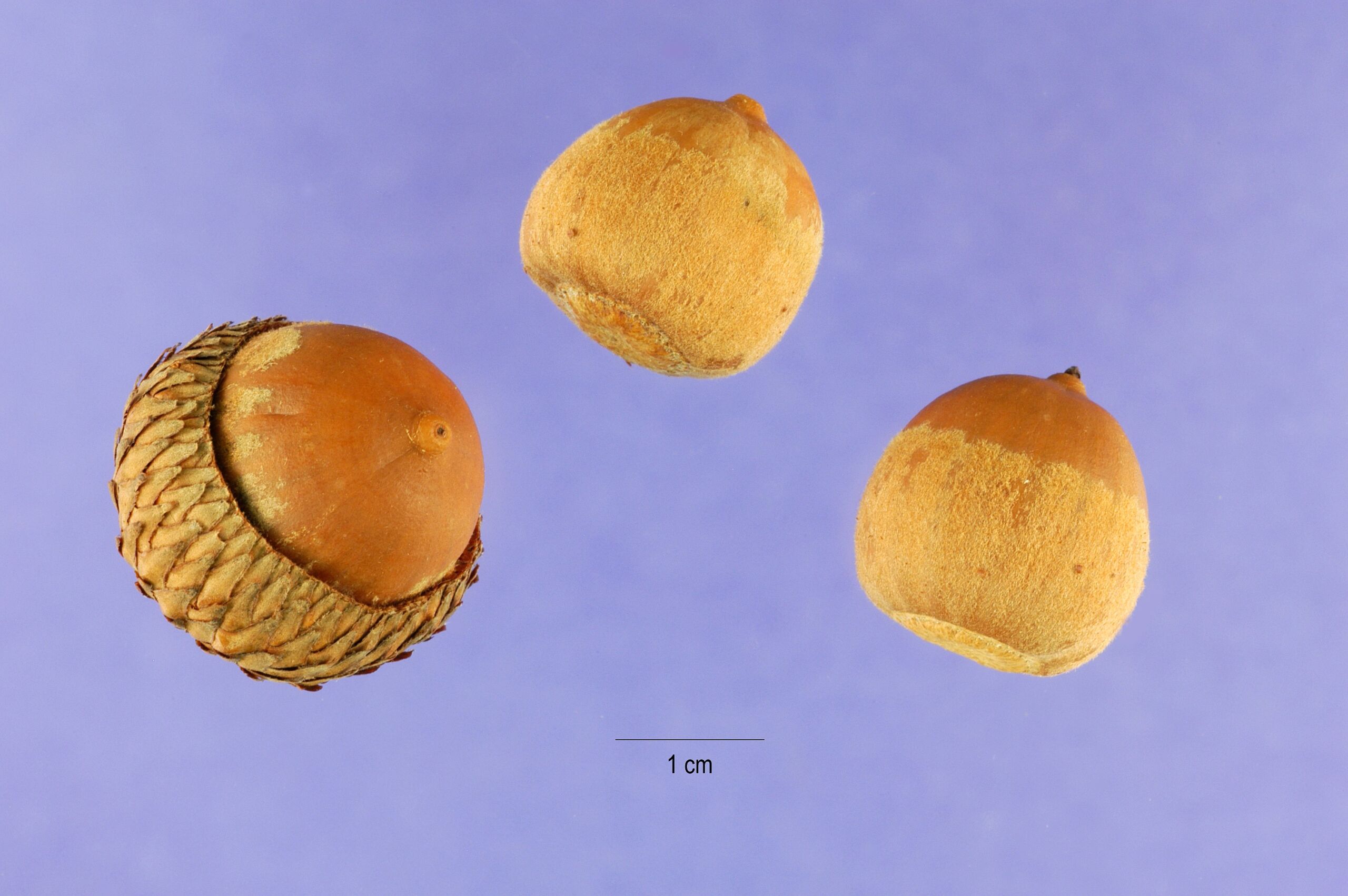
The acorns tell the rest of the story. They are small, about half to three-quarters of an inch long, half-enclosed in a bowl-shaped, scaly cap whose inner rim is downy, and like all red-group oaks they take two years to mature — so in any autumn you can find both this year’s tiny young acorns and last year’s maturing ones on the same tree. The kernels are yellow and bitter, which does not stop wildlife from eating them: jays, squirrels, deer, turkeys, and wood ducks all feast on black oak mast, and the caterpillars of hairstreaks and duskywings — including the Edwards’ hairstreak — feed on its leaves. An oak is never just a tree; it is a food web with a trunk.
And now the clarification this guide exists partly to make: black oak is not northern red oak. Northern red oak is a different species, Quercus rubra — taller and straighter on good soils, with smoother, striped bark, larger acorns in shallow caps, and buds that are nearly hairless. The two are cousins in the red oak group, they hybridize where they meet, and they confuse even experienced tree people, but they are not synonyms and they are not interchangeable. One butterfly guide pairs the name “northern red oak” with black oak’s Latin name, and another pairs it correctly with Quercus rubra; this guide claims only “black oak” and Quercus velutina, and northern red oak is flagged as its own separate species for a future guide.
How to grow
Black oak is a tree you plant once and then mostly leave alone, which suits it fine, because it evolved for places other trees find rude: dry ridges, sandy soils, upland woods, and nutrient-poor ground where it outlasts fussier hardwoods. Plant it in full sun in acidic, well-drained soil, and give it the space a 50- to 60-foot crown will eventually demand — away from houses, driveways, and power lines, because this is a century tree and it will not stay polite about its size. Plant nursery stock in spring or fall, water deeply through the first couple of growing seasons, and then step back: established black oaks are drought tolerant and deeply taprooted, which is why they hold dry ridges so well and why you should never try to transplant a big one.
Do not plant black oak in wet, heavy, alkaline ground and expect it to thrive. It tolerates poor soil, but it does not tolerate wet feet or high-pH soil with grace — leaves yellow on alkaline ground, and soggy roots invite decline. If your soil is limestone-heavy or stays wet, pick a white-group oak or a bottomland species instead, and let black oak have the dry, acidic corner it prefers. Mulch widely with wood chips or leaf litter, keep the mulch off the trunk itself, and let fallen leaves stay under the tree where they belong: oak leaf litter is the nursery floor for the moths and butterflies whose caterpillars fed on the canopy, and raking it all away every autumn breaks the cycle the tree exists to run.
Pruning is minimal and mostly structural. While the tree is young, remove crossing or competing leaders to build one strong central trunk, and prune in the dormant season — late fall through winter — when oak wilt fungus and its beetle carriers are least active. Never prune oaks in spring and early summer in oak-wilt country without a compelling reason, and paint any wound made out of season, because an open oak wound in warm weather is an invitation the fungus accepts promptly. Mature trees need little beyond the removal of deadwood and the occasional clearance prune, and they resent heavy topping or lion-tailing the way any big tree does.
Florida note: black oak reaches the northern part of the Florida peninsula and the Panhandle, but it is a northern-Florida tree, not a South Florida one — its range runs from Maine to the northern edge of the peninsula, and gardeners in Central and South Florida should plant live oak, laurel oak, or another southern oak instead. In North Florida, though, it is a genuine native for dry, sandy, acidic sites, and a yard with a black oak is a yard with a real piece of the eastern forest in it.
Water & feeding
Water deeply and infrequently through establishment — a slow soak that reaches the deep taproot beats frequent sprinkles that keep only the surface damp. Once established, black oak is notably drought tolerant for a big shade tree; it evolved on dry ridges, and it handles dry spells that would stress a maple or a birch. In a prolonged drought a deep soak now and then is kind, but this is not a tree that wants irrigation as a lifestyle.
Feeding: do not fertilize a black oak the way you would a lawn. It is adapted to nutrient-poor soils, and heavy nitrogen mostly produces soft, fast growth that is more vulnerable to pests and storm damage. If the tree is chlorotic — yellow leaves with green veins — on alkaline soil, the problem is usually pH locking up iron, not a lack of fertilizer, and the honest fix is soil acidification or a different tree, not a bag of generic tree food. A yearly blanket of its own leaf litter, left in place, feeds the soil food web that feeds the tree, which is how oaks have managed for millennia without anyone’s help.
Soil science note: black oak’s preference for acidic, well-drained soil is chemistry, not snobbery. In acidic soil, iron and other micronutrients stay soluble and available; in alkaline soil they lock up, and the tree starves while standing in plenty. Its deep taproot also pulls water and minerals from layers shallow-rooted plants never reach, which is part of why it holds dry ridges: it is drinking from a deeper well. Plant it where the soil matches its chemistry and it will outlive the planter; plant it where the chemistry fights it and it will spend its life apologizing.
Common problems
- Oak wilt. The serious one for red-group oaks, which are highly susceptible. Prune only in the dormant season, paint out-of-season wounds, and never move firewood from an infected tree. If a red oak wilts suddenly in summer, call your extension service fast.
- Chlorosis on alkaline soil. Yellow leaves, green veins, poor growth — usually a pH problem, not a hunger problem. Test the soil before reaching for fertilizer.
- Gypsy moth and oak-feeding caterpillars. Periodic defoliation happens; healthy trees usually refoliate, but repeated defoliation plus drought can weaken a tree. The same caterpillar habit that worries homeowners is what makes oaks the top wildlife trees in the East — judge accordingly.
- Acorn litter. A mast year drops a lot of acorns on drives, roofs, and lawns. Rake them, compost them, or let the jays handle the harvest — they are better at it than we are.
- Size. The most common black oak “problem” is planting a 60-foot tree 10 feet from a house. Measure the mature spread before you dig, not after.
Harvest
Black oak’s harvest is shade, mast, and time. The shade of a mature crown can drop a summer cooling bill and make a yard livable in August; the acorn crop feeds birds and mammals through winter; and the tree itself, living two centuries on a good site, is a harvest for grandchildren. Acorns can be gathered, leached of their bitter tannins, and ground into meal by people who know the traditional process — but that is a craft with real steps, not a snack, and the bitter kernels are not for casual nibbling. Timber from black oak is serviceable but considered inferior to northern red oak lumber, being more limby and tapered, which is one more reason this tree’s best use is standing, not sawn.
For the butterfly gardener, the harvest is caterpillars: Edwards’ hairstreak caterpillars feed on black oak leaves, and a yard oak is a nursery whether you notice the tenants or not. Leave some leaf litter, skip the spring spray, and the tree pays you back in hairstreaks.
Browse all plant & pest guides
Saving seeds
Saving black oak seed means saving acorns, and the first thing to know is that black oak (Quercus velutina) plays the long game. It belongs to the red oak group, whose acorns take two full years to mature on the tree before they drop in autumn. Gather them as they fall, caps off, and sort ruthlessly: discard any with holes (acorn weevils got there first) and run the float test — floaters are usually hollow or damaged, sinkers are your keepers. Plant promptly and never let good acorns dry out, because unlike a bean, an acorn is a living, breathing thing that dies if it desiccates.
The second thing to know is dormancy. Red oak acorns fall asleep and need a winter to wake them, a treatment called cold-moist stratification. Sources disagree on the exact dose — extension guidance generally quotes around 30 to 90 days, while some growers use 60 to 120 days — so treat the range honestly: a month or two of cold will wake some, three or four months wakes more. The easy home method is a bag of moist peat or sand in the fridge, just above freezing, checked monthly for mold and for the first root tip, which is your signal to plant. Or sow in autumn outdoors and let winter do the work. In Florida, the fridge is the reliable route, since our winters may not deliver the sustained chill an acorn expects.
Sow an inch or two deep, on its side, in a tall pot — oaks throw a taproot fast and resent shallow containers — and protect the pot like treasure, because squirrels will dig up freshly planted acorns with insulting efficiency and deer will browse the seedling. A tree tube or wire cage is not paranoia, it is the plan. One more honest note: oaks are wind-pollinated outcrossers, so a seed-grown tree is not a clone of its parent. It will be a genuine black oak with its own character, which is perfect for a shade tree and useless if you wanted an exact copy of a named cultivar — those are grafted, not grown from acorns.
Storage, if you must delay planting: keep acorns moist and just above freezing, and even then think in months, not years. Nursery guidance allows a year or three only when seed moisture stays high, and a dried-out acorn is a dead acorn. Label your bag with the tree and the collection date, and remember what you are really doing: planting a tree you may never sit under at full size. That is not a drawback. That is the whole glorious, slightly absurd, deeply human point.
Varieties
No named varieties of black oak were verified for this guide. The species is grown as the species, from nursery stock or acorns, and its natural variation — in leaf shape, crown form, and fall color — is part of the tree, not a catalog of cultivars. Plant the straight species, give it room, and let it be a black oak.