
🤍 Boneset
What it looks like
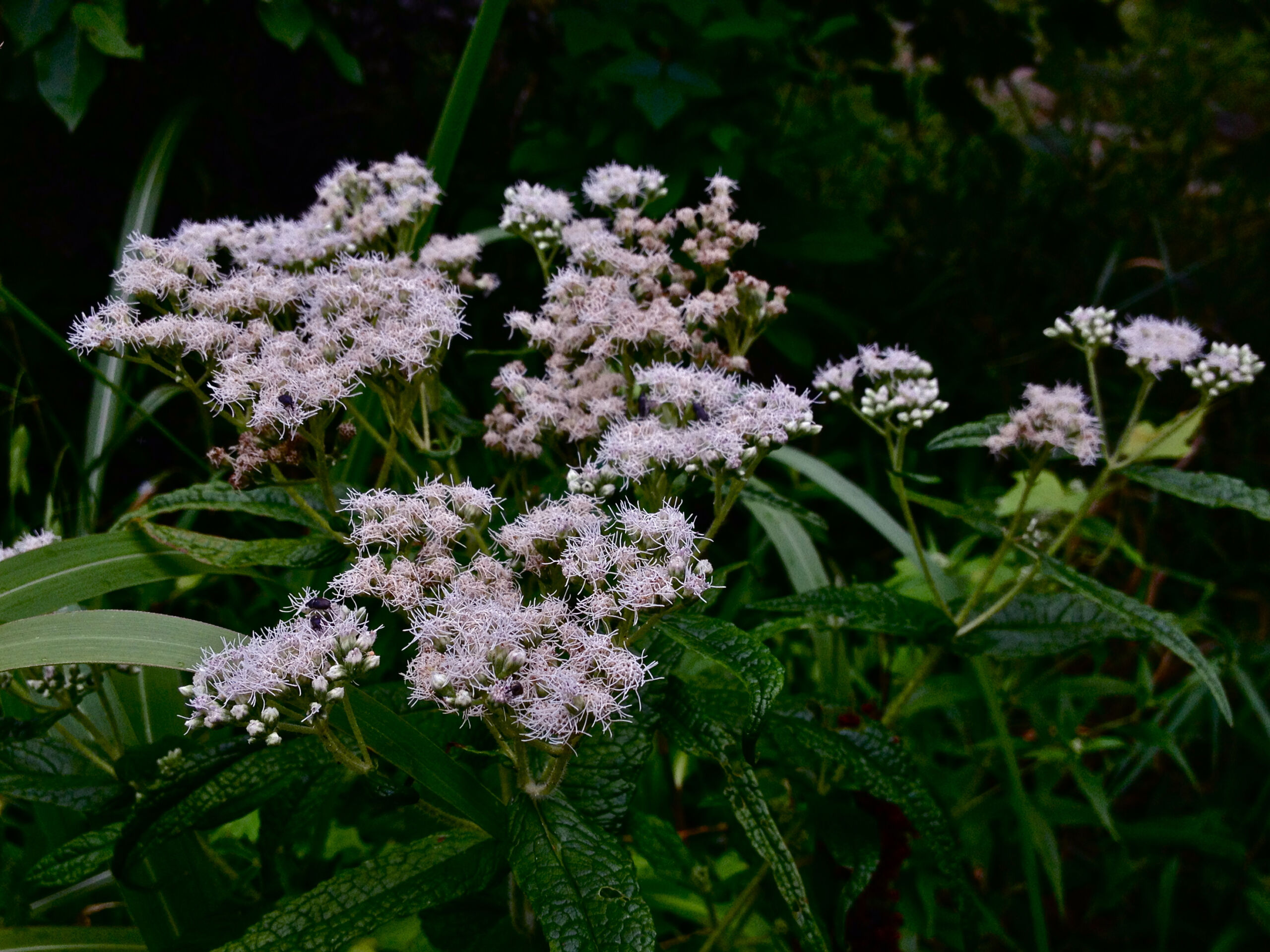
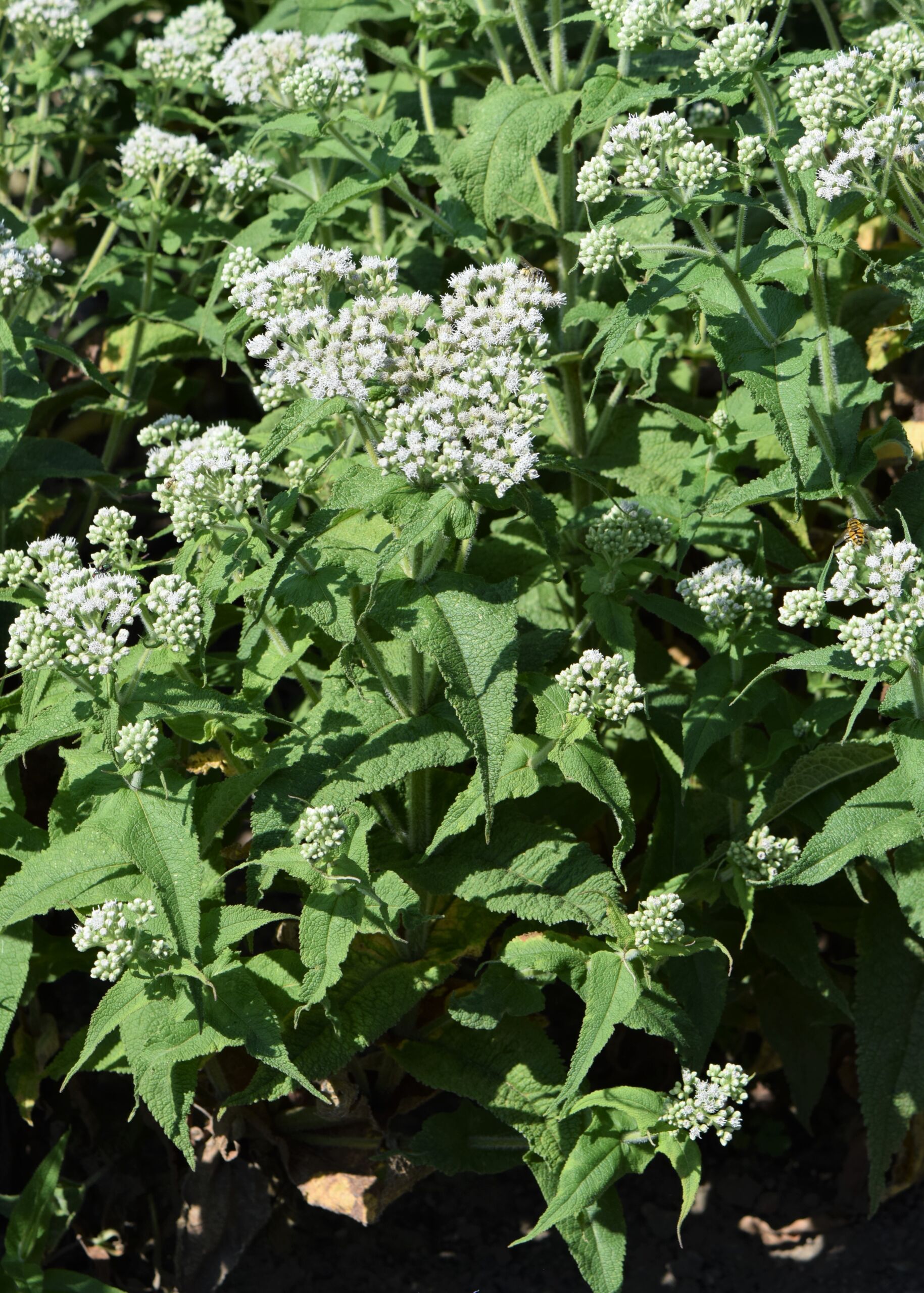
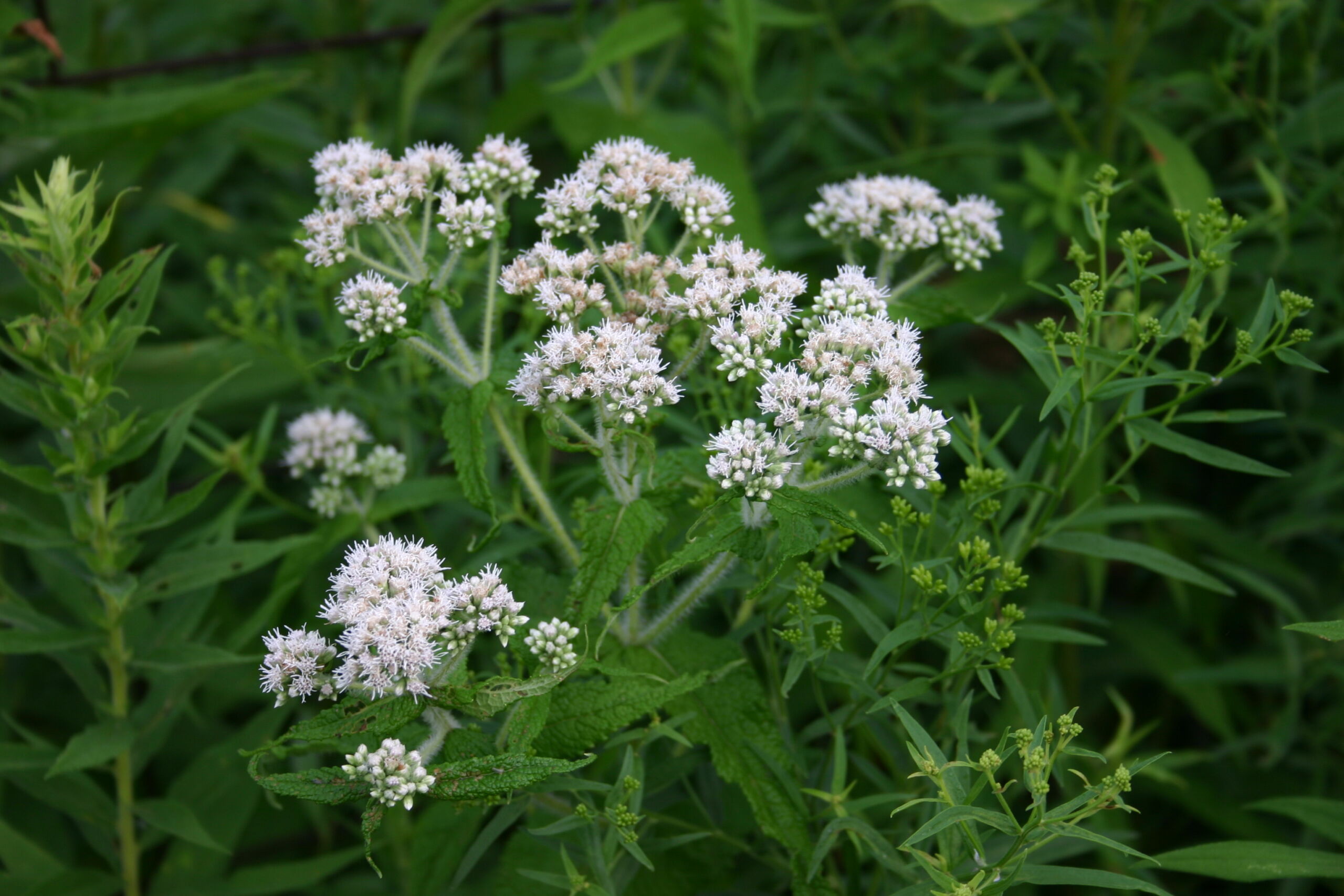
Boneset is a large, clump-forming, rhizomatous perennial herb in the aster family (Asteraceae), native to the eastern United States and Canada and west to Texas and the Dakotas, and it is one of those wildflowers that looks like it was designed by someone with a sense of humor and a ruler. It grows, in moist ground, 4 to 6 feet tall with a 2- to 4-foot spread, on erect stems that are often tinged purple, and it carries its flowers in flat-topped, dome-like clusters of tiny white florets that bloom late in summer and into fall — exactly when the pollinator buffet is thinning out and a big white landing pad is most welcome.
The identification trick is in the leaves, and it is the reason for both the scientific name and the common name’s folk history. The leaves are opposite, long, prominently veined, and toothed — and each pair is joined at the base around the stem, so the stem appears to pierce straight through a single leaf. Botanists call that perfoliate, from Latin per (through) and folium (leaf), and the species name perfoliatum is just that observation turned into Latin. Once you have seen a stem growing through its own leaf, you will never confuse boneset with another tall white wildflower again. Look for that, plus the flat white flower clusters, and you have your plant.
In the wild, boneset haunts the wet places: marshes, bogs, fens, seeps, the edges of rivers, sandy flats, and ditches — anywhere sunlight and steady water meet. In Florida it reaches only the northern part of the peninsula, where it grows along wet ditches, swamps, and stream banks, which makes it a North Florida plant rather than a statewide one. Wherever it grows, it is a pollinator magnet: the flat-topped clusters are built for butterflies and short-tongued bees, which can walk across the flower head and sip from floret to floret, and the butterfly guides list plain “boneset” as a nectar plant for the bronze copper and for Horace’s duskywing. It is also naturally deer resistant, because the foliage is bitter — a plant that weaponized bad taste, and the deer, to their credit, got the message.
One warning, stated plainly and early because the folk history invites trouble: boneset has a long folk-medicine history, and it is worth knowing about and not acting on. Enjoy it as a wildlife plant, not a remedy. The plant is potentially toxic, it appears in the FDA’s Poisonous Plants Database, and no part of this guide is a recommendation to brew, eat, or otherwise ingest it. The butterflies can have the flowers; you can have the view.
How to grow
Boneset has exactly one non-negotiable rule, and everything else is negotiable: keep it moist. Plant it in full sun to part shade in average, medium-to-wet soil with a consistent water source — a rain garden, a pond edge, a stream bank, a low spot that stays damp after rain, a ditch you have made peace with. It tolerates sandy and clay soils alike, provided there is plenty of organic matter and the soil does not dry out, and it will even tolerate short-term occasional flooding. What it will not tolerate is drought. Let the soil dry out and the leaves scorch, the plant sulks, and a dry summer will punish it in a way no pest ever will. If you do not have a moist spot, do not plant boneset and hope for the best — plant it in a container you can keep watered, or plant something else.
Plant in spring or fall, space plants 2 to 4 feet apart to allow for the clumps, and mulch to hold moisture. In spring, cut the stems back for a bushier, less floppy plant — boneset left entirely alone can reach its full 4 to 6 feet and lean, especially in part shade, and a spring cut-back keeps it sturdier. Expect it to spread: it forms colonies by rhizomes and self-seeds politely in wet spots, which is a feature in a rain garden and a management task in a formal border. Divide clumps every few years in spring if they outgrow their space, and deadhead after flowering if you do not want volunteers — or leave the seed heads standing, because birds work them and the winter structure is handsome in a naturalistic garden.
Florida note: in Florida, boneset is a northern-peninsula plant of wet ditches, swamps, and stream banks, and North Florida gardeners with a genuinely wet spot have a real native for it. Gardeners in Central and South Florida should not force it: the plant wants the moisture and the milder summers of its northern range, and a dry, sandy South Florida bed is the opposite of its habitat. For the wettest North Florida gardens, though, it is a superb late-summer nectar plant, and it pairs naturally with the plants it grows beside in the wild — swamp milkweed, blue vervain, and Joe Pye weed, all fellow citizens of the wet meadow.
Do not confuse common boneset with shrubby boneset (Ageratina havanensis), a different plant that appears in another butterfly guide’s host list. Shrubby boneset is a woody shrub of a different genus; common boneset, this guide’s plant, is a herbaceous perennial of Eupatorium. Same folk family of names, different plants, different habits — and only this one has the stem-through-the-leaf trick.
Water & feeding
Water is the whole game. Boneset needs constant moisture: rain-garden wet, pond-edge wet, low-spot wet. In a normal summer with normal rainfall in a genuinely moist site, it largely waters itself; in a dry spell, water deeply and do not let the root zone dry out, because scorched foliage is the plant’s first and loudest complaint. A thick mulch of wood chips or leaf litter helps enormously, holding moisture and cooling the roots, and it doubles as habitat for the soil life that keeps wet soil healthy rather than sour.
Feeding: modest. Boneset prefers rich soil with organic matter, and a spring topdressing of compost is the right scale of feeding — not a heavy fertilizer program, which mostly produces taller, floppier stems that need staking. In a rain garden, the nutrients arriving with runoff are often plenty on their own. The plant’s real fertilizer is water: give it the moisture it wants and it will do the rest, growing tall, blooming late, and feeding the pollinators that show up for the white flower show.
Soil science note: wet soil is not dead soil, and boneset is proof. The microbes, fungi, and invertebrates of a moist meadow edge are a different community from those of a dry bed, and they cycle nutrients in waterlogged conditions that would suffocate dryland soil life. Boneset’s roots live in that community, and its yearly dieback returns a large crop of biomass to the wet soil as organic matter, feeding the next cycle. Planting boneset in a rain garden is therefore not just decorating a wet spot — it is installing a pump that turns runoff, sediment, and nutrients into pollinator food and soil.
Common problems
- Drying out. The number-one problem, by a wide margin. Scorched leaves mean the soil dried. Mulch deeply, site it wet, and water in dry spells — or do not plant it.
- Flopping. Tall stems in part shade or rich soil can lean. Cut back in spring for a bushier plant, site it in full sun, and let neighboring plants support it in a meadow planting.
- Spreading. Rhizome colonies plus self-seeding in wet spots. Divide every few years, deadhead if volunteers are unwanted, and site it where a colony is welcome.
- Few pests. Bitter foliage deters deer and most browsers, and boneset has no serious insect problems in most gardens. The insects on it are mostly the pollinators you planted it for.
- Medicinal misuse. Not a garden problem, a people problem: do not brew or eat boneset. It is potentially toxic, and its folk history is not a safety record.
Harvest
Boneset’s harvest is flowers, seeds, and late-season wildlife value. Cut stems for bouquets in late summer and fall — the flat-topped white clusters are striking in a mixed arrangement, and cutting encourages no harm to the plant — but leave plenty standing, because the flowers are still feeding butterflies and bees into fall, and the seed heads that follow feed birds. If you want to save seed, collect the fluffy heads after flowering and sow with cold, moist stratification (several weeks chilled in moist substrate) before spring sowing, because boneset seed, like many wetland natives, wants a winter before it wakes up.
The simplest harvest, though, is a September afternoon beside a boneset patch in a rain garden: butterflies working the white clusters, bees walking the flower heads, and the knowledge that the wettest, least “useful” corner of the yard is now the busiest. That is the crop, and it arrives exactly when the rest of the garden is winding down.
Browse all plant & pest guides
Saving seeds
Boneset is a generous seed parent and a terrible procrastinator’s plant, because its seeds are built to leave. Each tiny flower in those flat white clusters ripens into a small dark achene topped with a tuft of fluffy hairs — a pappus — designed to catch the wind and go. So the first rule of saving boneset seed is timing: watch the flower heads in early fall, and harvest when the centers start to look dry and fluffy and the first seeds begin to loosen, rather than waiting for the whole head to go full dandelion. Cut the stalks below the seed clusters, drop them head-first into a paper bag, and finish drying indoors for a few days before shaking the seed free.
The second rule is patience, twice over. Boneset seed needs a cold, moist winter before it will germinate — this is cold stratification, the seed’s way of making sure it does not sprout in October and die in January. Sources vary on the exact dose, generally somewhere around one to two months of cold, damp conditions. The easy Florida-friendly method is to sow outdoors in fall and let winter do the work; the controlled method is to mix the seed with damp sand in a bag in the refrigerator for roughly a month or two, then sow in spring. Either way, sow on the surface and press the seed in lightly without burying it — boneset seed needs light to germinate, and buried seed mostly just sits there sulking.
Expect modest and uneven germination even when you do everything right; this species is famous for it. Sow thickly, keep the seedbed consistently moist (boneset is a wetland plant and its seedlings have no drought tolerance to speak of), and do not panic if sprouts take weeks to appear. Plants grown from seed may also take a couple of seasons before they bloom — boneset builds its root system first and puts on the flower show later, which is a reasonable life strategy.
Florida notes: dry your harvested seed thoroughly before storing it airtight with a desiccant, cool and dark — Florida humidity will quietly ruin a paper envelope of seed left in a shed. And a practical trade-off worth stating: if you want seed, you must leave some flower heads standing; if you deadhead everything, you get a tidier plant and no next generation. Leaving a few heads up through winter also feeds goldfinches, which treat a boneset patch like a buffet. If you would rather multiply a plant you already love exactly, division of the clump in spring is the reliable route — seed gives you boneset, division gives you that boneset.
Varieties
No named varieties of common boneset were verified for this guide. The plant is grown as the straight species, Eupatorium perfoliatum, from nursery stock or seed, and its variation in height — sources report anywhere from 2 to 6 feet depending on moisture and site — is a response to growing conditions, not a catalog of cultivars. Plant the species, keep it wet, and let it be tall.