
🌾 Junegrass
What it looks like
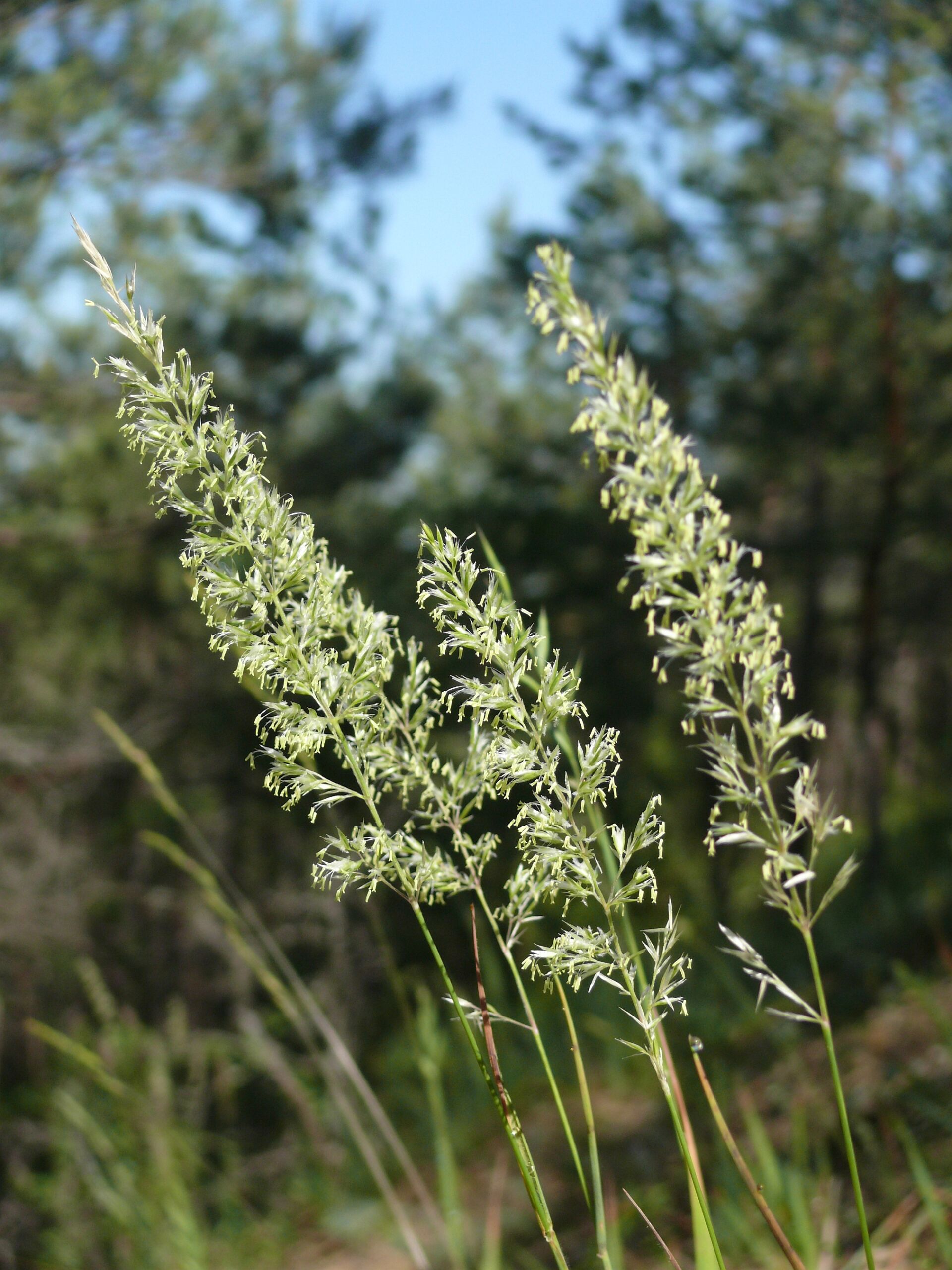
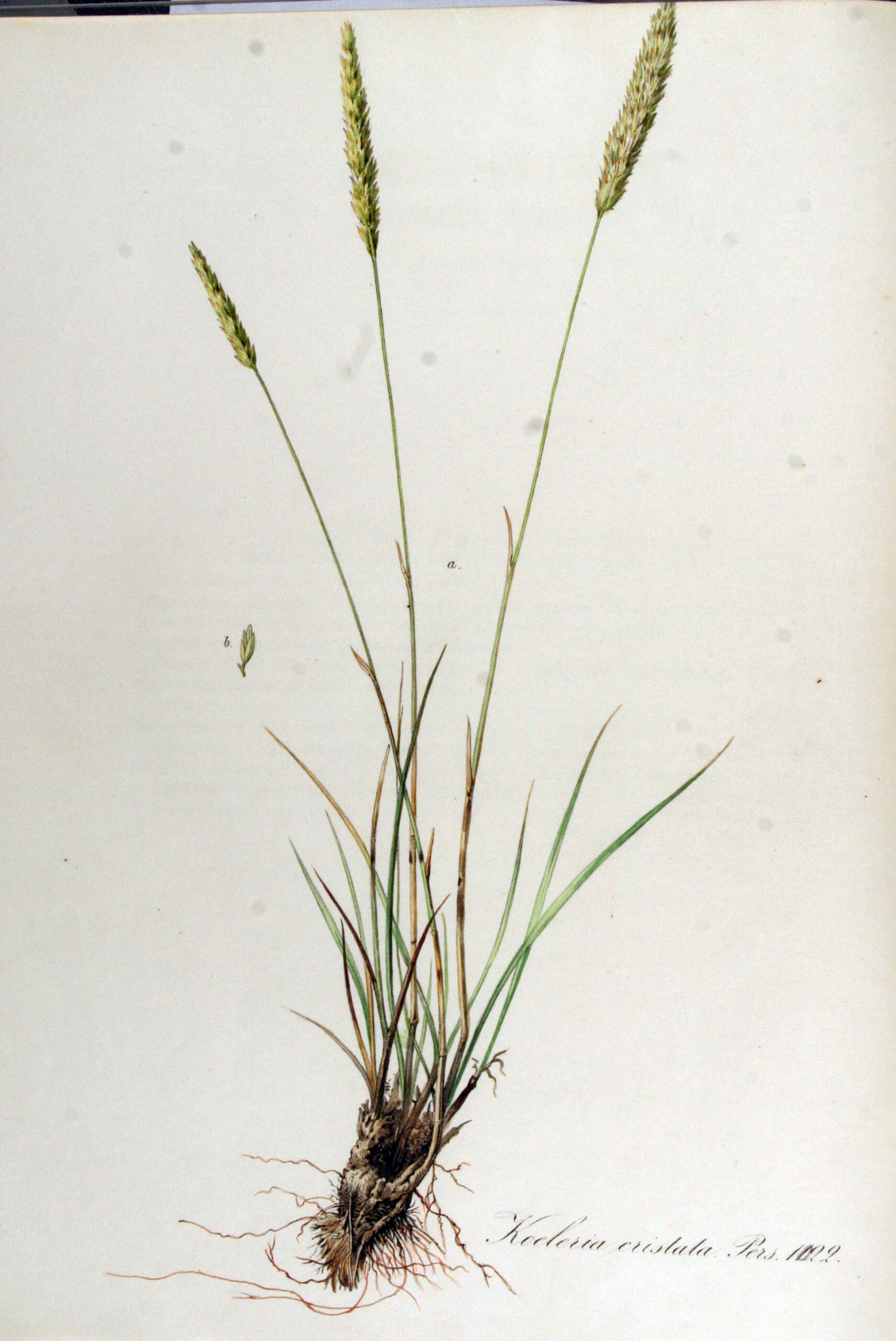
Junegrass is the common name for the genus Koeleria, a common and widespread genus of grasses found on all continents except Antarctica. The genus name honours the German botanist Georg Ludwig Koeler, and the species name of the best-known junegrass, macrantha, comes from the Greek for large-flowered, referring to its long, dense panicles. Koeleria is a grass genus, which means the flowers are not flowers as most gardeners picture them: they are spikelets, small, dry, wind-pollinated structures clustered into a panicle, and their beauty is in their shimmer, not their colour.
The species most commonly called junegrass in North America is prairie junegrass, Koeleria macrantha, also called crested hair-grass in Britain. It is a cool-season perennial bunchgrass that grows in small, scattered tufts rather than dense stands. Culms run 20 to 75 centimetres tall, with narrow, stiff, upward-pointing blades, and the flowering heads are congested, 4 to 13 centimetres long and only half a centimetre to a centimetre wide — narrow, spike-like, and shiny in the sun. Before the panicle opens, the young seedhead looks like a spike and sometimes catches a reddish light; when it opens in June, the panicle stays narrow, tapers evenly to a point at the top, and shines gold. That shine is diagnostic: junegrass panicles have a characteristic glossy look that separates them from their look-alikes once you have learned it.
Growth habit is the thing to understand before you plant it. Junegrass is a bunchgrass, not a sod-former. It grows in irregular tufts or bunches, with a bushy base of previous years’ brown leaves, and it does not knit into turf. It is also a cool-season grass, which means it grows in the cool of spring and autumn, flowers by the end of June, and then goes dormant until autumn or the following spring. A junegrass drift in July is a drift of golden, dormant tufts, not a failure — it is the plant keeping its appointment with summer dormancy, and it will green up again when the weather cools.
Range is broad: prairie junegrass is widespread across Eurasia and North America, from Ontario to British Columbia and south to Delaware, California and Mexico, in dry prairies, open woods, rocky slopes and sandy soil. It is a plant of dry, open, difficult places — the grass that grows where the lawn gave up — and that is exactly where it belongs in a garden.
How to grow
Plant junegrass where it is dry, sunny and poor, and then mostly leave it alone. Full sun to light shade suits it, and average to dry soils are its preference — sandy, gravelly, well-drained ground is ideal, and heavy, wet soil is the enemy. It is a hardy grass for difficult locations, recommended for dry gravelly soils, dry slopes and low-maintenance plantings, and it tolerates mowing and light foot traffic, which makes it useful on septic mounds and other spots where fussier plants sulk.
Hardiness for prairie junegrass is given as zones 3 to 8, which covers most of the temperate north, and its mature size runs 28 to 36 inches in garden references, though botanical descriptions put the culms at 20 to 75 centimetres — the difference is the difference between a plant in a garden bed and a plant on a dry prairie, and you should expect the smaller end of the range in poor, dry soil. Space tufts 12 to 18 inches apart in drifts so they read as a meadow rather than a row, and do not plant junegrass expecting a lawn: it forms tufts, not turf, and a drift of tufts with bare ground or low companions between them is the look it wants.
Propagation is by seed or division. Seed ripens in early summer, just as the plant goes dormant, and it can be sown in autumn or spring in a sunny, well-drained spot. Division is best done in spring or autumn, when the plant is actively growing, by lifting a tuft and splitting it with a sharp spade — the fibrous root system divides cleanly, and each division re-establishes quickly in dry soil. Junegrass may be short-lived, especially in heavy soils, so treat it as a plant to divide and renew every few years rather than a plant to install once and forget for a decade.
One honest warning about place: junegrass is a northern and western prairie plant, not a Florida plant. It wants cool seasons, cold winters and dry summers, and it will not thrive in hot, humid, wet ground. If you garden in the deep south, admire junegrass in other people’s meadows and plant a warm-season bunchgrass that actually wants your climate. This guide covers the plant the butterfly guides mean — Koeleria, host of satyrs and arctics — and it will not pretend that plant loves Florida.
Water & feeding
Water to establish, then back off. Junegrass wants moderate water at most, and its native ground is dry prairie and sandy soil, so an established tuft in well-drained ground needs little supplemental water. A deep soak in a prolonged drought will keep it greener longer, but regular irrigation in heavy soil will shorten its life — the plant is built for dry spells, and wet feet in summer are what kill it, not thirst.
Feeding is unnecessary and often counterproductive. Junegrass grows in poor, sandy, gravelly soils, and rich, fertilised ground pushes soft, floppy growth that falls over and invites disease. A thin mulch of gravel or grit around the tufts suits it better than a rich compost mulch, which holds moisture against the crown. If you must feed, a light dressing of compost in spring is the most it will ever need, and in most soils it needs nothing at all.
Cutting back is a once-a-year job. Leave the golden panicles standing through summer — they are the plant’s best feature, and birds work the seedheads — and cut the tufts back in late winter or early spring before new growth starts, removing the previous year’s brown leaves and making room for fresh blades. If you mow a junegrass area, mow high and infrequently; it tolerates mowing, but it is not turf, and scalping it defeats the purpose of growing a bunchgrass in the first place.
Common problems
- Heavy, wet soil. The main killer. Junegrass is short-lived in heavy soils and rots in wet ground. Plant in sandy, gravelly, sharply drained soil, or on a slope, and do not irrigate it like a lawn.
- Summer dormancy mistaken for death. Growth and flowering are usually complete by the end of June, and the plant goes dormant until autumn. Golden, quiet tufts in July are normal, not a reason to dig it up.
- Confusion with look-alikes. Junegrass is often mistaken for muttongrass and spike trisetum. Look for the shiny, narrow, taper-pointed panicle, the hairy panicle branches, and the small, thin, densely clustered spikelets.
- Short life in rich ground. In fertile, moist soil junegrass grows soft and dies young. Poor soil is not neglect here — it is the plant’s preference.
- It is not a lawn grass. Junegrass forms tufts, not sod, and it is not suitable for high-traffic use because of its slow growth. Plant it as a meadow drift, not as turf.
- Wrong climate. A cool-season northern prairie grass will struggle in hot, humid climates. Do not plant it in Florida expecting a prairie; plant a warm-season native grass instead.
- Grass allergy note. Like many grasses, Koeleria is classified as an allergen for people with grass pollen allergy. If that is you, enjoy it from the path, not with your face in the panicles.
Harvest
There is no food harvest from junegrass, and this guide will not invent one. The harvest is seed, and the seed harvest is for the meadow, not for you. Let the panicles ripen in June, let the seed fall where it will or collect it by shaking ripe heads into a bag, and let the drift thicken itself over the years. Birds work the seedheads through summer, which is one reason to leave them standing rather than cutting them down the moment they turn gold.
The other harvest is ecological, and it is the reason this guide exists. Junegrass is a host plant for satyrs and arctics — the butterfly guides list it as a host for Ridings’ satyr and Uhler’s arctic — and a meadow drift of junegrass is caterpillar food as well as a garden feature. If you grow junegrass for butterflies, do not spray it, do not mow it in caterpillar season, and accept that a chewed blade here and there is the plant doing its job. A grass that feeds a satyr has earned its place even if it never feeds you.
Historically, junegrass leaves were also put to household use: bunches of leaf blades were tied together and used as scourers for cleaning pans, and tied blades served as paintbrushes and brooms. It is a small, charming footnote — the grass that cleaned the pan as well as feeding the prairie — and it tells you something about the toughness of those narrow blades.
Saving seeds
Junegrass is a seed-spreading grass by nature, so saving its seed is mostly a matter of catching it before the wind does. Seed matures in early to late summer — July into August in most places — when the narrow heads turn pale tan and the grains feel hard and dry. Harvest before the heads start shattering: cut or strip the upper heads into a paper bag, and do it on a dry day. In a dry year the heads may be sparse and poorly filled, so only collect from stands that set plump seed, and skip any heads showing dark elongated fungal bodies, swelling, or mould.
Dry the heads thoroughly in a well-ventilated place, then thresh by rubbing them between gloved hands or beating them gently inside the bag. Screen out the coarse stems and winnow away the light chaff until the grain is relatively clean. The seed is tiny — around 2.3 million seeds to the pound, by the USDA’s count — so work over a tray, expect some loss, and sow thickly rather than trying to count anything.
Sow in spring, not fall: junegrass does best spring-sown into a clean, firm, weed-free seedbed, at the soil surface to no more than an eighth of an inch deep, because the seed needs light to germinate well. Do not bury it. Keep the bed moist until seedlings are up, and give them room — seedlings are slow and not vigorous, and a stand takes two to three growing seasons to properly establish, so do not graze or mow it hard in its first years. Seed labs break dormancy with a short prechill and potassium nitrate, but home growers can simply sow in spring and let cool nights do the work, or chill moist seed in the fridge for about a week before sowing. Germination likes warmth, roughly 20 to 30 degrees, and usually shows in one to three weeks.
One caution: not every junegrass ecotype produces viable seed readily — some stands flower well and set almost nothing worth sowing. If your collected seed germinates poorly, that may be the ecotype, not your technique, and bought seed of a named selection is the reliable fallback. Division in spring is the other route: lift a clump, split it, and replant. For storage, dry the cleaned seed completely — in Florida humidity that means drying it thin on paper until it is truly dry, then a labeled envelope or jar with a desiccant packet, kept cool and dark. And a Florida reality check: this is a cool-season grass of northern plains and mountains, so in Florida treat it as a cool-season experiment, spring-sown with afternoon shade, not as a summer lawn grass — heat and humidity are not its happy place.
Species in this group
Prairie junegrass — Koeleria macrantha — The species most commonly called junegrass in North America, and crested hair-grass in Britain; a cool-season perennial bunchgrass, 20 to 75 centimetres tall, with congested, shiny panicles 4 to 13 centimetres long; zones 3 to 8, dry prairies and sandy soils.
Pyramid junegrass — Koeleria pyramidata — A Eurasian junegrass with a more open, pyramidal panicle, shown in the first photo; historically treated as part of the same aggregate as prairie junegrass, and still confused with it in older references.
Crested hair-grass aggregate — Koeleria cristata — The old name for the junegrass aggregate, under which prairie junegrass and its relatives were long lumped together; shown in the historic illustration, and worth knowing because older books and labels still use it.
Note: the butterfly guides list “Junegrass” with the Latin Koeleria, which is a genus-level mention, and this genus guide is the correct home for it. Species-level junegrass planting should default to Koeleria macrantha in North America unless a local source says otherwise.