
🌵 Lechuguilla
What it looks like
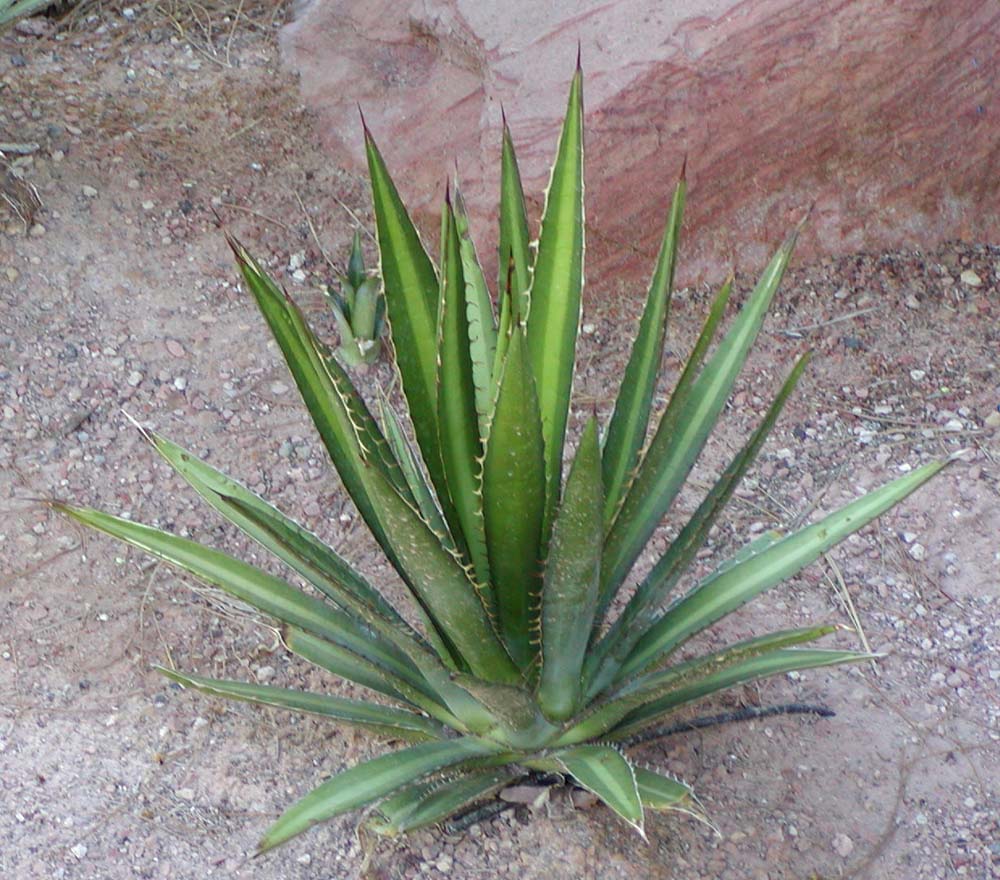
Lechuguilla is a small agave with an outsized reputation, and its name gives the game away: lechuguilla is Spanish for little lettuce, which is either a joke or a warning depending on whether you have ever tried to walk through a stand of it. It is a trunkless, evergreen succulent of the asparagus family, Asparagaceae, forming a basal rosette of 20 to 50 upright, thick, fleshy leaves from a woody caudex. The rosette is typically 8 to 24 inches tall, and each leaf is 8 to 20 inches long and under 2 inches wide, tapered to a stout terminal spine nearly an inch or two long, with the margins lined with downward-pointing spines. The leaves are yellow-green to gray-green, rigid enough to puncture clothing and even leather, and arranged in a rosette that looks less like a tidy ornamental agave and more like a plant that is having a bad day in every direction at once. Gardeners call it shindagger, and the name is not metaphorical. Hikers in the Chihuahuan Desert learn it the way everyone learns it: once, at ankle height, and never again.
Lechuguilla is the signature plant of the Chihuahuan Desert, and botanists use it as an indicator species for that desert, which is a polite way of saying that where lechuguilla grows, you are in the Chihuahuan Desert, and where it stops, you are somewhere else. Its range runs through the Trans-Pecos region of western Texas, southern New Mexico, and northern Mexico south to Hidalgo, mostly on calcareous, limestone soils, gravel flats, limestone terraces, and rocky desert slopes. It reproduces most often not by seed but by underground offshoots, suckering into dense colonies that can carpet a limestone hillside with thousands of rosettes, which is why a single plant is rarely single for long. Give it a rocky slope and a decade, and it will give you a small army.
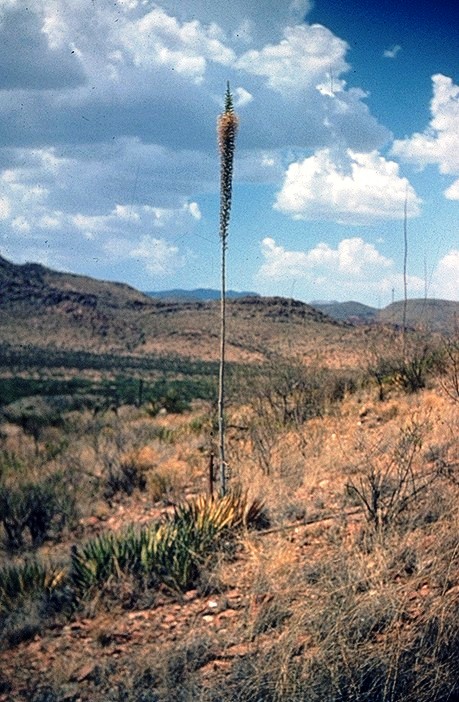
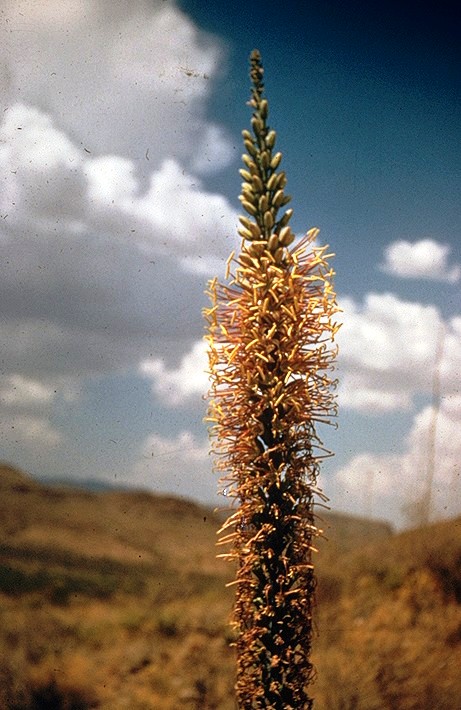
Then, once in its life, a rosette flowers, and it does so with desert drama. After years of growth, anywhere from three years to two decades depending on the source and the site, the rosette sends up a leafless flower stalk that can reach about 12 feet tall, carrying clusters of small funnel-shaped flowers in purples, reds, and yellows near the top. The flowers open in late spring into summer, the rosette sets seed, and then the flowering rosette dies, which is the monocarpic bargain every agave makes: one spectacular bloom, and then the offsets carry on. The colony survives. The individual rosette becomes desert mulch, which is a noble end for a plant that spent its life stabbing things.
Florida note: Lechuguilla is not a Florida plant, and Florida is not kind to it. It wants desert sun, limestone soil, and long dry spells, and it gets none of those reliably in a humid, rainy, acidic-soiled peninsula. Gardeners in Florida who love the look should admire it in desert gardens and botanical collections, or grow it in a container under cover with cactus mix and ruthless drainage, and even then summer humidity is a standing argument. This guide is honest about that: lechuguilla belongs in this project because two giant skippers depend on it, not because it belongs in a Florida yard.
How to grow
Grow lechuguilla the way the desert grows it: in full sun, in soil that drains instantly, and then mostly leave it alone. Full sun is non-negotiable; shade makes it weak, stretched, and unhappy. Soil must be extremely well-drained and mineral, ideally a cactus or agave mix with gravel, sand, or crushed limestone, and alkaline rather than acidic. In the ground, plant it on a slope or a raised rock bed where water never stands, because the one thing that kills lechuguilla faster than anything else is wet feet. A rosette sitting in soggy soil rots from the crown outward, and by the time you notice, the plant has already filed its resignation.
Plant offsets, called pups, in spring or early summer, spacing them 24 to 36 inches apart and remembering that they will sucker and fill in, so a tight planting becomes a colony faster than you expect. Site it where people do not brush past it: away from paths, play areas, and anywhere bare ankles go, because the marginal teeth point downward precisely so that anything moving past gets hooked. Wear thick gloves and long sleeves when handling it, and use tongs or a folded towel to move potted plants, since the terminal spine goes through ordinary garden gloves with embarrassing ease. In containers, use a wide, shallow pot with drainage holes and cactus mix, and never let the pot sit in a saucer of water.
Lechuguilla needs no coddling once established. It is hardy in zones 8 to 11 in dry climates, and in marginal zones it survives cold far better than it survives cold plus wet, so winter drainage matters more than the number on the zone map. Protect container plants from prolonged freezes by moving them under cover, and in wet-winter climates, an overhead shelter or a very gritty raised bed is the difference between a plant that persists and a plant that rots. Do not fertilize it into lushness. This is a desert plant, and lushness is not in its vocabulary.
Water & feeding
Water sparingly, and then even more sparingly than that. Lechuguilla is built for drought: thick, fleshy leaves store water, a waxy surface slows evaporation, and roots that expect long dry spells rot in soil that stays moist. Water deeply but infrequently while a new offset establishes, letting the soil dry completely between waterings, and once established, water only during extended drought, or not at all in a climate with occasional rain. In containers, the rule is the same with the stakes higher, since a pot holds water longer than a rocky slope does: soak, drain fully, and wait until the mix is dry several inches down before watering again.
Feed almost never. A light application of a low-nitrogen cactus fertilizer once in spring is plenty, and in mineral desert soil it may need nothing at all. Overfeeding, especially with nitrogen, produces soft, stretched growth that loses the plant’s compact, armored character and invites rot. The honest feeding advice for lechuguilla is that neglect is a fertilizer strategy. Lean soil, full sun, and restraint make a tight, fierce rosette. Rich soil, regular water, and kindness make a mushy one, and mushy is the one thing a shindagger must never be.
Common problems
- Rot from wet soil: The number one killer in cultivation, and almost always a drainage problem rather than a plant problem. Plant on slopes, in raised beds, or in gritty mix, and never let water stand around the crown. A rotting rosette smells bad, collapses inward, and rarely recovers, so prevention is the entire cure.
- It stabs people: This is not a defect, it is the plant, but it is a siting problem if you put it beside a path. Keep it away from walkways, wear thick gloves to handle it, and warn visitors. The downward-pointing marginal teeth are designed to catch anything moving past, and they are very good at their job.
- Toxicity to livestock: Lechuguilla is toxic to livestock, which is one reason ranchers in its range regard dense stands as a nuisance rather than a treasure. Do not plant it where grazing animals can reach it, and do not offer it as forage. Its traditional uses are fiber and soap, not food.
- It spreads: Offsets sucker freely, and a single rosette becomes a colony. In a rock garden that is usually the point, but in a small bed it can crowd out neighbors. Dig out unwanted pups with a sharp spade, wearing gloves, and compost them only if you are sure they will not root in the compost pile, because agave pups are stubborn.
- Scale and agave snout weevil: Like other agaves, lechuguilla can host scale insects and, in warm regions, the agave snout weevil, whose larvae bore into the crown. A collapsing center on an otherwise dry plant is worth investigating, and badly infested rosettes should be removed before the weevils move to neighboring agaves.
- Florida humidity: In humid climates, fungal problems and rot arrive faster than in the desert, even with good drainage. This is a climate mismatch, not a care failure, and it is why this guide does not recommend lechuguilla as a Florida landscape plant.
Harvest
Lechuguilla’s harvest is not a vegetable harvest, it is a fiber and propagation harvest with a long human history. The leaves yield a strong fiber, historically called ixtle or tampico fiber, used for rope, brushes, mats, and cordage, and the roots were traditionally used as soap, since they contain saponins that lather in water. Harvesting fiber is heavy work with a spiny plant and is not a casual garden project: leaves are cut, crushed, and scraped to extract the fiber, and the spines demand respect at every step. For most gardeners, the practical harvest is offsets. Dig pups in spring, let the cut end callus for a few days in dry air, and pot or plant them in gritty mix, and you have new plants for free, which is how desert gardeners have multiplied agaves forever.
For seed, wait until the tall flower stalk has bloomed and the seed capsules dry, then collect seed before it scatters, and sow it in gritty mix kept barely moist. Seed-grown plants are slow, taking years to reach flowering size, which is why offsets are the sensible route. And for the wildlife harvest, the one that matters most to this project, the harvest is the one you do not take: leave dense stands standing in the desert, because the caterpillars of the Coahuila giant-skipper and Mary’s giant-skipper live inside lechuguilla leaves, eating their way through the plant’s armored interior in perfect safety. A lechuguilla stand that looks empty to a hiker is, to a giant skipper, a nursery, a pantry, and a fortress all at once.
Saving seeds
Lechuguilla asks for patience before it offers seed. Like other agaves, it is monocarpic: a plant grows for many years, then sends up one towering flower stalk, sets seed, and dies. That single flowering is your seed event, so when a stalk appears, let it finish. The seed capsules ripen along the stalk and split open when dry, and that is the moment to collect — a paper bag held under the stalk and a gentle shake catches most of them.
First, the safety lecture, because this plant earns it. Wear thick gloves, long sleeves, and eye protection. Lechuguilla leaves end in needle-sharp points, the leaf edges carry teeth, and the sap can irritate skin. Handle the stalk with tongs or gloved hands and keep your face out of the way of the leaf tips. The seeds themselves are flat, dark, and papery, and they are the only harmless part of the operation.
Sow seed fresh for the best results. Surface-sow on a gritty, fast-draining cactus mix, press the seed in lightly, and keep it warm — lechuguilla seed needs warmth, not a cold spell, so there is no stratification to fuss over. Mist lightly until sprouts appear, then water like a desert plant: sparingly, and never let the mix stay soggy. Seedlings are slow, and that is normal; a seedling the size of a coin in its first year is doing fine.
The Florida humidity note matters more for this plant than for most. Lechuguilla is a Chihuahuan Desert native that hates wet feet, and in humid air its seedlings rot fast in soggy mix. Start seed in a gritty mix with plenty of airflow, skip the humidity dome, and water from below or sparingly from above. If you are growing it in Florida at all, sharp drainage and dry air around the crown are the whole game.
There is also a far more reliable route: pups. Mature plants send up offsets at the base, and each one is an exact clone of the parent. Sever a pup with a clean, sharp knife, let the cut dry and callus over for several days, then pot it in gritty mix and do not water until roots form. Pups skip the years of waiting, skip the pollination question, and give you the same plant — which, for a plant that flowers once and dies, is a very good deal.
Varieties
- No named garden varieties: Lechuguilla is grown as the straight species, Agave lechuguilla. Nurseries sell it under its common names, lechuguilla and shindagger, and no widely recognized cultivars exist, which suits a plant that has never shown the slightest interest in being improved.
- Close relatives in the trade: Gardeners who want a similar look with a different plant may meet Agave lophantha, with which lechuguilla has historically been confused, and other small clumping agaves of the Chihuahuan Desert. They are not lechuguilla, and they are not host plants for the giant skippers that depend on this species, so the distinction matters beyond the label.
- Forms in the wild: Wild plants vary in leaf color from yellow-green to gray-green and in rosette size with soil and rainfall, but these are site differences, not named varieties, and a plant from a limestone terrace in Texas and a plant from a gravel flat in New Mexico are the same species wearing different weather.