
🌿 False Nettle
What it looks like
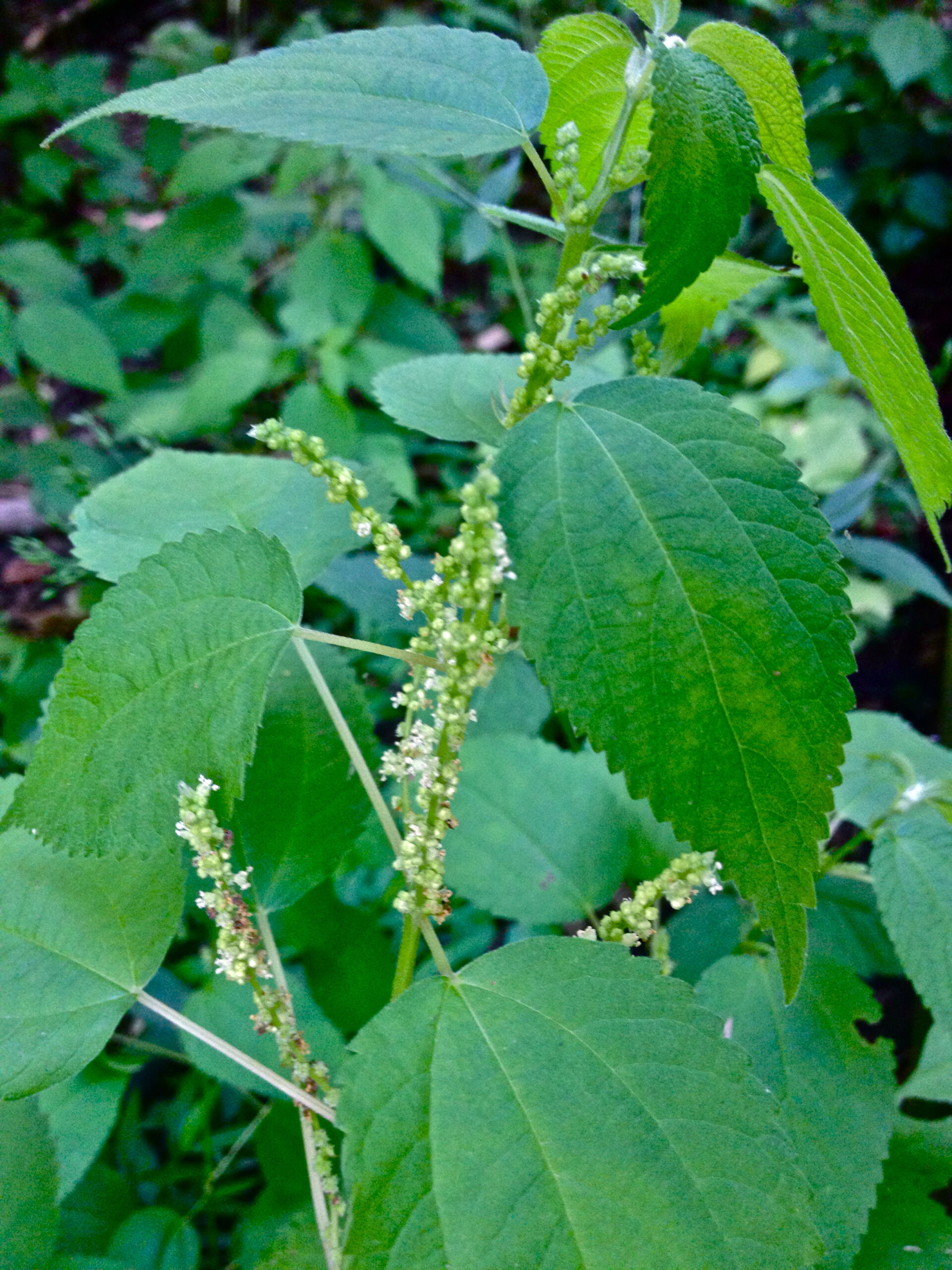
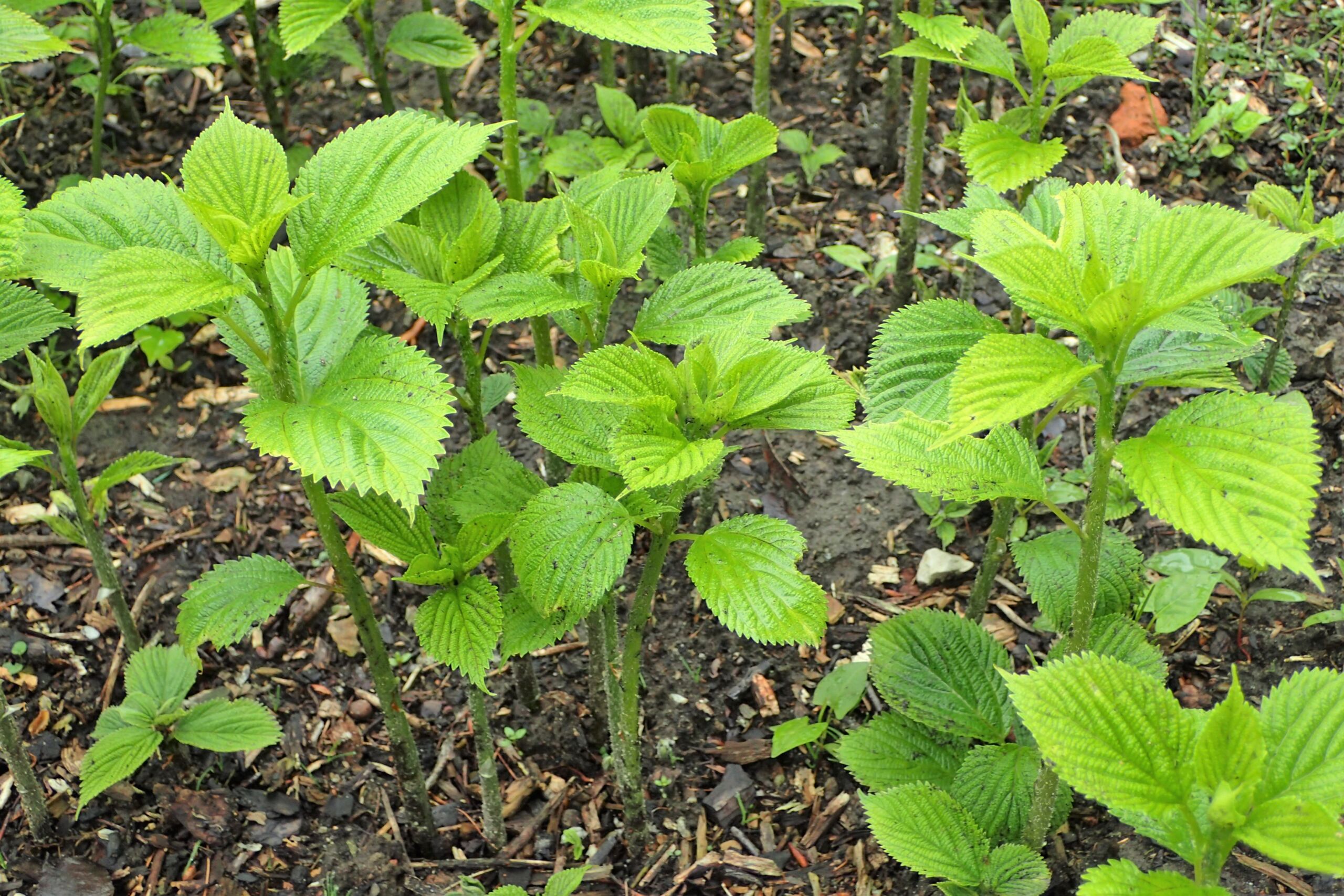
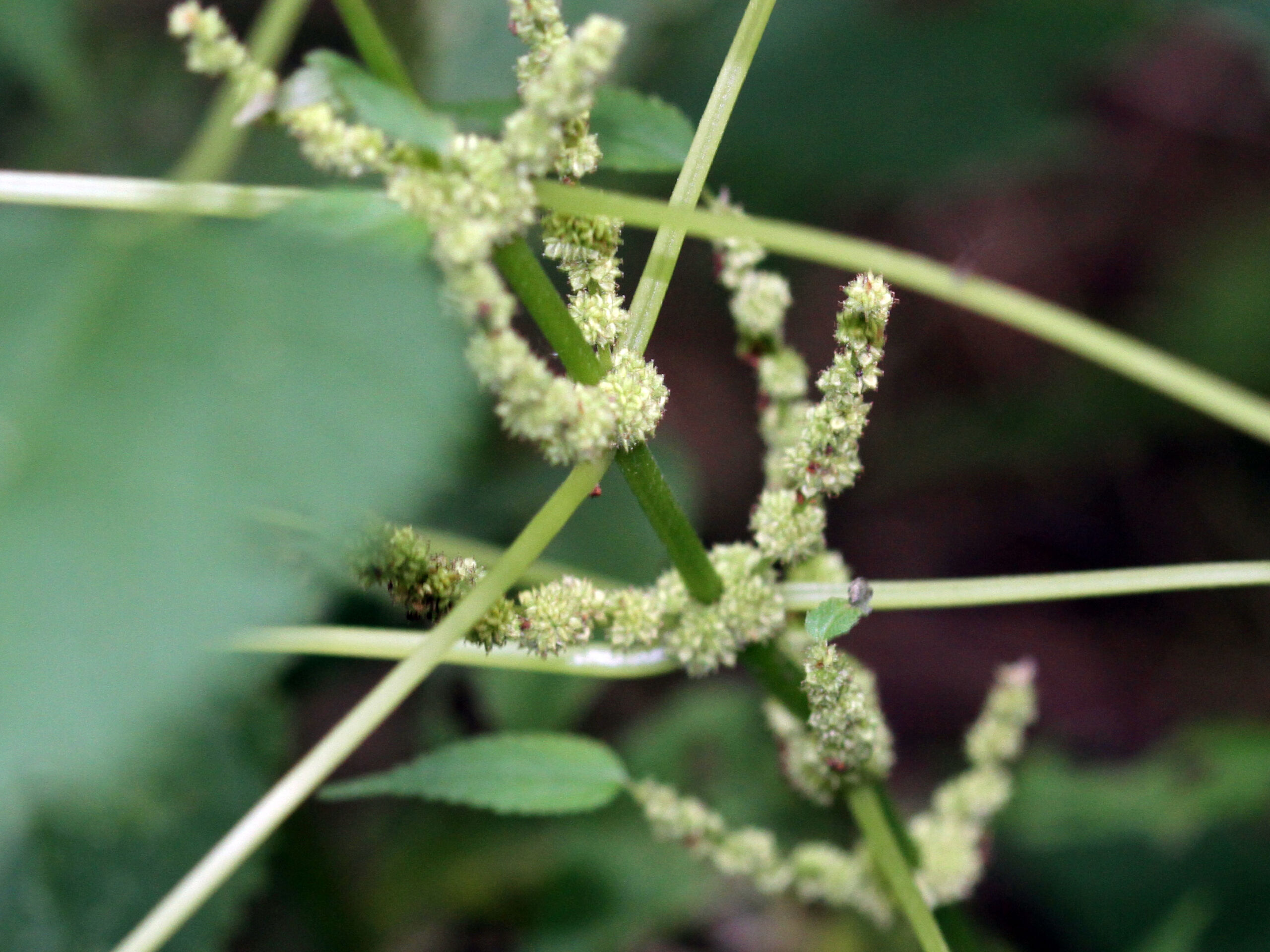
False nettle is a tall, upright perennial herb in the nettle family (Urticaceae), and it is the family member most likely to make you doubt your own eyes. It looks like a nettle, it grows where nettles grow, and its leaves have that same coarsely toothed, nettle-ish outline — and then you touch it and nothing happens. No sting, no welts, no regret. That is the whole joke of the common name: it is a nettle that is false only in the one way that matters to your skin.
The plant typically grows 2 to 5 feet tall and 1 to 3 feet wide, on erect, sometimes branching stems that can turn a little woody at the base and persist from year to year. The leaves are usually opposite, long-stalked, oval to lance-shaped, several inches long, with coarsely toothed edges and three strong veins running out from the leaf base — the classic nettle leaf blueprint, minus the weaponry. The undersides can look a little pale or chalky from fine hairs, but those hairs do not sting. If you are used to approaching nettles with gloves and suspicion, false nettle feels like a prank, and a welcome one.
The flowers are the giveaway, and they are also the reason for the Latin name. From summer into fall, false nettle bears tiny green to greenish-white flowers with no petals at all, packed into narrow cylindrical spikes that rise from the leaf axils in the upper part of the plant, usually a pair of spikes per pair of leaves, often with a few small leaves clustered at the spike tip. The genus name honors the German botanist Georg Rudolf Boehmer, and cylindrica is simply Latin for what you are looking at: cylinders. When the plant is in flower, identification gets easy, because true stinging nettle’s flower clusters branch into many slender, spiky racemes instead of these compact cylinders.
In the wild, false nettle haunts the damp places: moist or shady ground, deciduous woods, swamps, bogs, marshes, wet meadows, ditches, stream banks, and floodplain forests. Its range is enormous — eastern North America from southern Canada to Florida and west to Texas and Nebraska, with scattered populations farther west, plus Bermuda, Mexico, Central America, the West Indies, and South America — and in Florida it is native statewide, from cypress swamps and floodplain forests to wet thickets and roadside ditches. This is a wetland plant at heart, and it behaves like one in the garden: give it damp soil and it is cheerfully low-maintenance; give it a dry bed and it will tell you, quickly, that you have made a category error.
And then there is the reason this guide exists at all: caterpillars. False nettle is a host plant for the Eastern Comma and the Question Mark, the two butterflies whose guides list it by name, and it also hosts Red Admiral caterpillars, which lay their eggs near the tender top growth and fold leaves into little hiding nests as they feed. A patch of false nettle is therefore not just a plant but a nursery — one that happens to be safe to brush past while you peek at the rolled leaves. Moth caterpillars use it too, including the gall midge that raises spindle-shaped galls on its stems. If you plant false nettle and then find chewed, folded leaves, congratulations: the plant is working exactly as intended.
One plain-text disambiguation, because the family resemblance causes real confusion. True stinging nettle (Urtica dioica) stings, and wood nettle (Laportea canadensis) stings too — both are lookalikes, and neither is this plant. False nettle has no stinging hairs at all, so the safe field test is the one you should never run on a suspected true nettle: if it flowers in compact cylinders and never stings, you have found Boehmeria cylindrica. Do not confuse it with other members of its own genus either: ramie (Boehmeria nivea) is a different, Asian fiber species, and this guide claims Boehmeria cylindrica only.
How to grow
Site false nettle where the soil stays damp and the light is dappled, and most of the work is done. Part shade to light shade is its happy place, and it also grows in full sun provided the soil is wetter there — in a sunny, drier spot the foliage may turn yellowish-green, which is the plant’s polite way of asking for water and shade. A rain-garden edge, a pond margin, a woodland shade garden, a low spot that stays moist after rain, or a stream-bank planting are all natural fits. It tolerates periodic inundation, which makes it one of the few garden plants that will not hold a grudge about a flooded week.
Plant in spring, space plants 2 to 3 feet apart, and mulch to hold moisture. Seed needs no pretreatment and germinates readily when sown in spring on moist soil, and established plants can also be increased from root cuttings. False nettle usually carries both male and female flowers on the same plant, though occasionally a plant is all one sex, so if you want seed, plant several rather than betting the whole seed crop on a single specimen. Cut plants back in late winter before new spring growth, and deadhead if you do not want volunteers — or let it naturalize, because in a moist spot it will happily self-sow and form large clumps over the years.
Florida note: in Florida, false nettle is a statewide native of cypress swamps, floodplain forests, wet thickets, stream banks, marshes, and ditches, so Florida gardeners do not have to coax a northern plant south — it already lives here. The Florida cautions are about setting, not climate: plant it in genuinely moist ground, not a dry sandy bed, and keep it away from salty or brackish inundation and direct salt spray, which it does not tolerate. In a moist, casual setting it is best treated as a habitat plant rather than a formal border specimen — attractive when young, tall and a little weedy-looking as it matures, and superb at filling a rain garden or pond edge with caterpillar habitat.
One more management truth, stated before you plant a whole hedge of it: false nettle can become overly abundant in a happy moist spot. That is a feature in a restoration planting and a chore in a tidy bed, so site it where a colony is welcome, give it room to reach full size (large plants support far more caterpillars), and deadhead or divide when it outgrows its welcome. A plant that feeds three butterfly species is allowed to be enthusiastic; your job is just to aim that enthusiasm at the wet corner where it belongs.
Water & feeding
Water is the whole game, as it is for every wetland native. False nettle wants medium to wet soil that stays moist — rain-garden wet, pond-edge wet, low-spot wet. In a genuinely moist site with normal rainfall it largely waters itself; in a dry spell, water deeply and do not let the root zone dry out, because yellowing or scorched-looking foliage is the plant’s first complaint. A thick mulch of wood chips or leaf litter helps enormously, holding moisture and cooling the roots, and it doubles as habitat for the soil life that keeps wet soil healthy rather than sour.
Feeding: modest. False nettle prefers moist, well-drained, rich loamy soil, and a spring topdressing of compost is the right scale of feeding — not a heavy fertilizer program, which mostly produces taller, leggier stems. In a rain garden, the nutrients arriving with runoff are often plenty on their own. The plant’s real fertilizer is water: give it the moisture it wants and it will do the rest, growing tall, blooming in green spikes through summer and fall, and feeding the caterpillars that show up for the leaves.
Soil science note: wet soil is not dead soil, and false nettle is proof. The microbes, fungi, and invertebrates of a moist meadow edge are a different community from those of a dry bed, and they cycle nutrients in waterlogged conditions that would suffocate dryland soil life. False nettle’s roots live in that community, and its yearly dieback returns a large crop of biomass to the wet soil as organic matter, feeding the next cycle. Planting false nettle at a rain-garden edge is therefore not just decorating a wet spot — it is installing a caterpillar factory on top of a soil-building machine.
Common problems
- Drying out. The number-one problem, by a wide margin. Yellow-green foliage in sun, or scorched-looking leaves, usually mean the soil dried. Mulch deeply, site it wet, and water in dry spells — or do not plant it.
- Too much sun without moisture. Full sun is fine only with wetter soil. In a sunny, dry spot the leaves yellow and the plant sulks; move it to shade or keep it wetter.
- Self-seeding abundance. In a happy moist spot it self-sows freely and forms large clumps. Deadhead if volunteers are unwanted, divide when clumps outgrow their space, and site it where a colony is welcome.
- Weedy late-season look. Attractive when young, tall and rangy as it matures. Cut back in late winter, let neighboring plants support it in a naturalistic planting, and do not judge it as a formal border plant.
- Occasional deer browse. Deer browse it occasionally but rarely stop it, and it has no serious insect or disease problems in most gardens — the insects on it are mostly the caterpillars you planted it for.
- Salt. Not salt tolerant: keep it away from brackish inundation and direct salt spray, a real consideration for coastal Florida gardens.
Harvest
False nettle’s harvest is seed, stems, and caterpillar-watching — in that order, and with one firm boundary. This is not a food plant, and no part of this guide recommends eating it just because it resembles a nettle: its value is ecological, not culinary. If you want seed, collect the small dry fruits from the spikes in late summer and fall, and sow them in spring on moist soil with no pretreatment needed. If you want more plants, take root cuttings as well. And if you want fiber, you are following an old tradition — tough fibers from nettle-family stems were historically used for cordage and nets, though false nettle’s fiber is considered inferior to its cousin ramie’s, so treat that as a curiosity, not a crop plan.
The simplest harvest, though, is a summer afternoon beside a false nettle patch with a hand lens and no gloves: rolled leaves hiding Red Admiral caterpillars, chewed edges marking where Question Mark and Eastern Comma caterpillars have fed, and the knowledge that the wettest, least “useful” corner of the yard is now a nursery. Leave most plants standing through the season for the caterpillars, cut back in late winter, and let the patch come back bigger next spring. That is the crop, and it arrives without a single sting.
Browse all plant & pest guides
Saving seeds
False nettle (Boehmeria cylindrica) is a generous plant to save seed from, provided you understand its one great plot twist: it may not be able to do it alone. The species is wind-pollinated, with small, petal-less flowers that no bee is queueing up to visit, and populations vary — some plants carry both male and female flowers, while others are dioecious, with male and female flowers on separate plants, so seed only forms when both sexes are present and flowering together. Sources disagree on how consistently the species splits by sex, which is itself useful information: if a lone, healthy false nettle never sets a single seed, do not assume you did something wrong. It may simply be a single-sex plant with no partner in pollen range, and the fix is more plants, not more fertiliser.
For seed, watch the cylindrical flower spikes through late summer into fall. The fruit is a small achene — a dry, one-seeded fruit — that darkens as it ripens and carries tiny hooked hairs, the plant’s hitchhiking kit for catching a ride on passing animals. Collect whole spikes once the fruits are dry and brownish, and finish them in a paper bag indoors, where any seed that shakes loose is caught rather than lost to the floor. Rub or crush the dried spikes gently over a tray, winnow away the lightest chaff with a careful breath or a sieve, and keep only plump, dark seed. There is no fancy cleaning chemistry here: the soil science is gloriously boring, in the best way — dry seed, stored dry, stays alive; damp seed, stored damp, rots, and Florida humidity will happily do the rotting for you if you let it.
Dry the cleaned seed thoroughly on a tray out of direct sun for several days, until it feels hard and papery-dry, then store it in a labelled, airtight jar with a small desiccant packet, in a cool, dark place. No reliable published viability figure for home-saved false nettle seed was found while researching this section, so treat freshness as the plan: sow the freshest seed first, sow a little thickly, and test a pinch before a big sowing if the jar is more than a season or two old. Sow in spring, barely covering the seed, on consistently moist mix — this is a wet-ground plant, and its seedlings are tiny and slow at first, so mist rather than blast them with a watering can, and keep them moist until they reach an inch or two and take off. If seed feels like too much faff, remember the shortcut this plant offers: spring division of an established clump, and stem or root cuttings, both of which give you an exact copy of the parent, while seed-grown plants may vary. And one last stewardship note, because this plant likes to spread: false nettle can become abundant in moist ground, so save seed from the patch you want, deadhead or contain the patch you do not want taking over, and never dump seed or cuttings into a natural wetland.
Varieties
No named garden varieties or cultivars of false nettle were verified for this guide. The plant is grown as the straight species, Boehmeria cylindrica, from nursery stock, seed, or root cuttings, and its variation in height — sources report anywhere from about 1.5 to 5 feet depending on site and moisture — is a response to growing conditions, not a catalog of cultivars. Botanists have named a southeastern variant, Boehmeria cylindrica var. drummondiana, for plants with hairy stems and drooping, short-stalked leaves, but those plants grow fully mixed with typical plants across the same range, and some floras do not formally recognize the variety at all — so for gardeners there is one plant to grow, and it is this one. Plant the species, keep it wet, and let it be tall.