
🌊 Suaeda
What it looks like
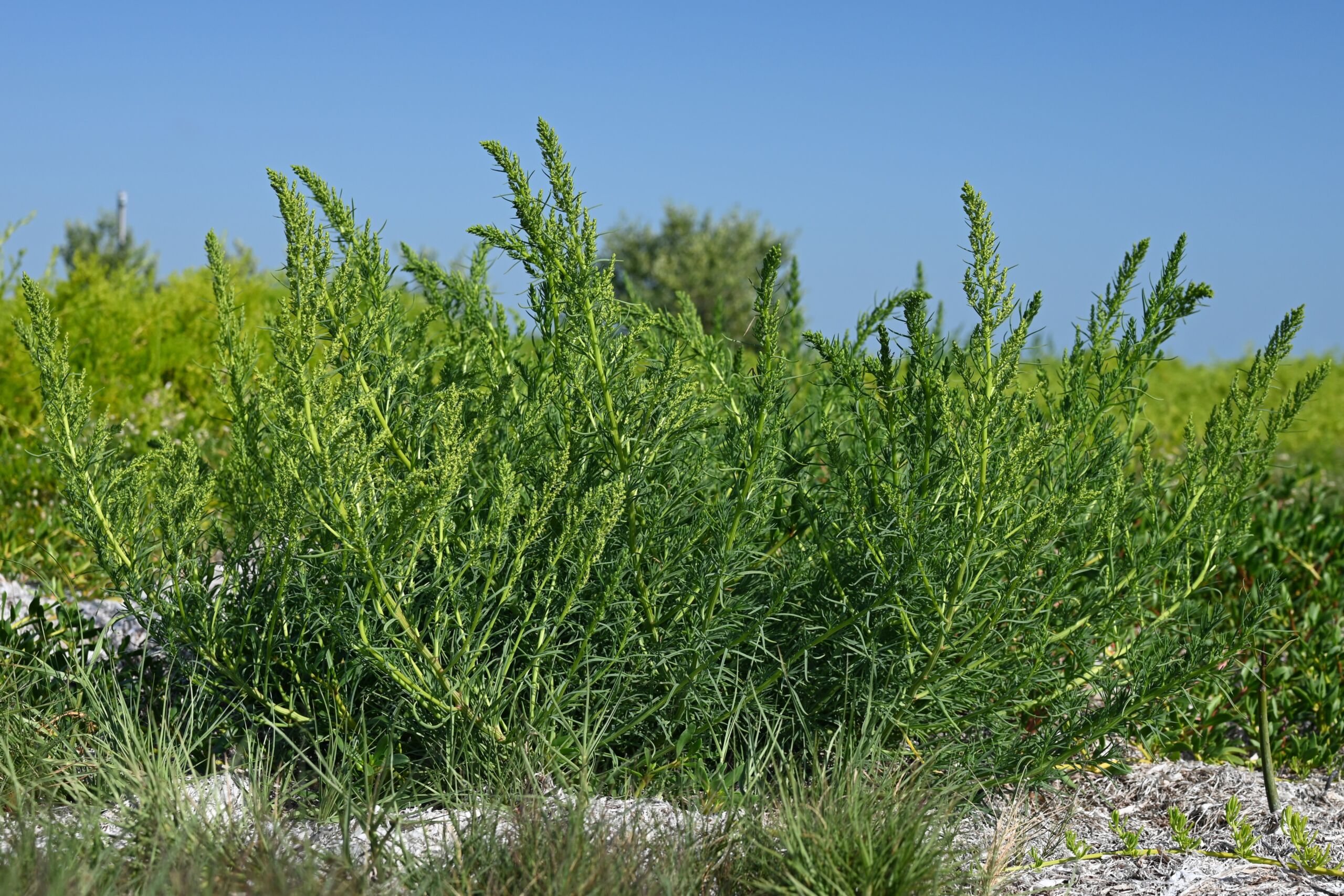
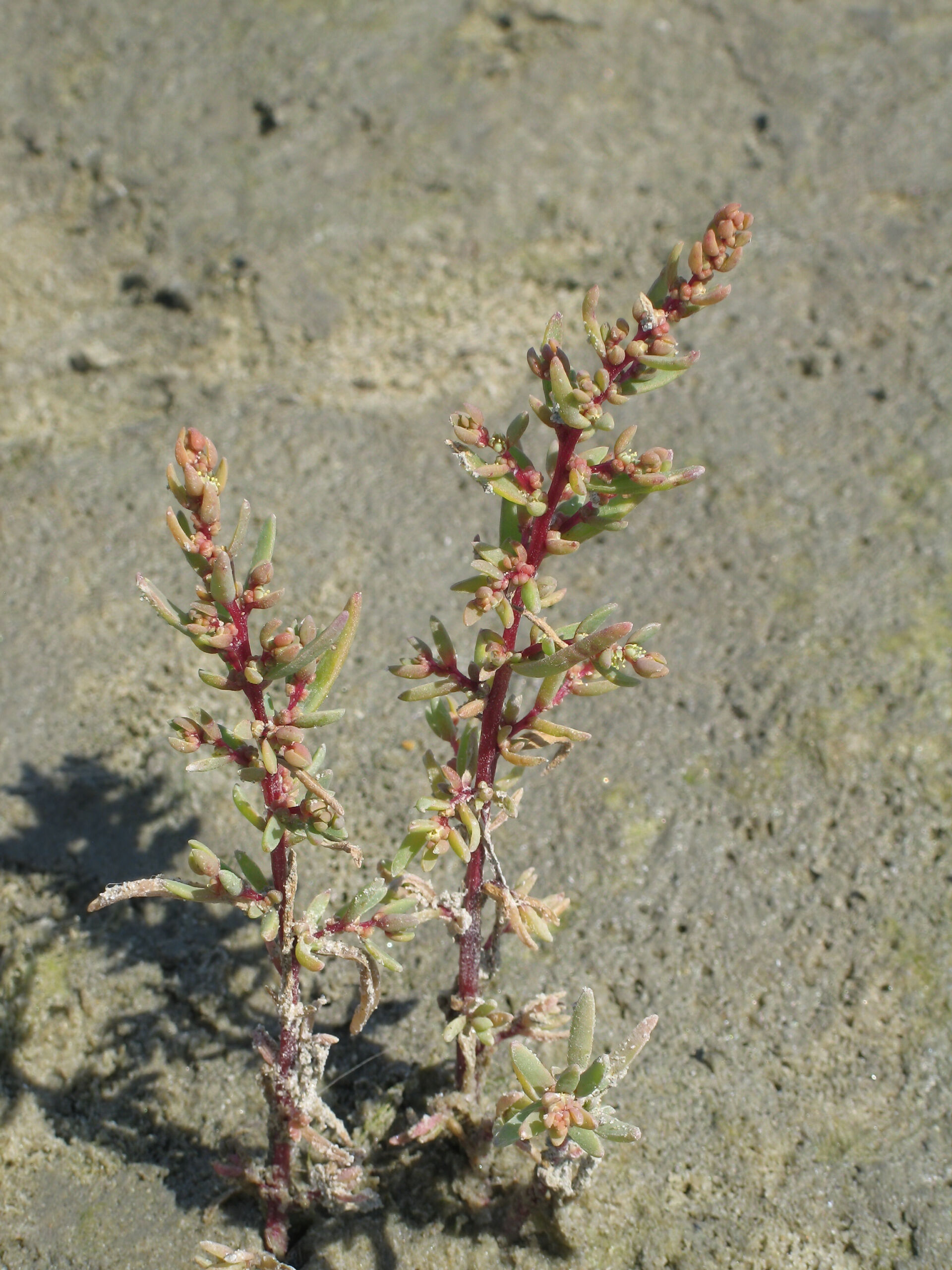
Suaeda is a genus of plants with two common names and one very specific address. They are called seepweeds and sea-blites, and they live where almost nothing else wants to: coastal salt-flats, tidal wetlands, the upper margins of salt marshes, inland salt pans, and alkaline desert basins. Sources disagree on the exact count — about 93 accepted species by one count, about 110 by another — but they agree on the character of the genus, which is the important part. These are halophytes, plants adapted to salty soil, and they wear that adaptation on their sleeves, or rather on their leaves.
The leaves are the giveaway. Most Suaeda species have thick, succulent, nearly cylindrical or narrowly linear leaves, fleshy little fingers that store water the way a cactus stores water, because in salty soil water is paradoxically hard to get. Salt in the soil pulls water away from roots by osmosis, so a plant in a salt marsh can stand ankle-deep in water and still die of thirst. Succulence is one answer to that riddle: store fresh water when you can, dilute the salt you cannot avoid, and keep going. Many species are annuals that germinate, grow, flower, and set seed in a single season between tides and droughts, while a few, like shrubby sea-blite, are small perennial shrubs that hold their ground year after year.
The flowers are not the reason anyone grows, or notices, a seepweed, and the genus is honest about that. They are tiny, green to reddish, and almost hidden among the leaves, without petals worth mentioning, because a plant that lives on a windswept salt flat does not waste energy on advertising. Pollination is mostly by wind, which is free and always available on a coast. What the plants do instead, with real enthusiasm, is colour. As autumn approaches, many Suaeda species flush red, crimson, or purple, turning whole stretches of salt marsh into a low, glowing carpet that looks like the ground itself is blushing. A salt marsh in October, with seepweed in full colour, is one of the great unadvertised flower shows in North America, and it happens in a place most people drive past without a second glance.
The stems tell the same story as the leaves. They are often reddish or purplish, sometimes woody at the base in the perennial species, and they branch freely, forming low mounds or sprawling mats that trap sediment and slow the water around them. That is not decoration. It is ecosystem engineering at ground level: a seepweed mat stabilizes mud, builds marsh, and creates the slightly-less-salty, slightly-less-windy microclimate that other marsh plants and animals need. Remove the seepweeds and the marsh does not just lose a plant. It loses a builder.
For Florida readers, the relevant species is the one in the first photograph. Annual seepweed, Suaeda linearis, grows in the Everglades and along Florida’s coasts, in the salt-marsh and mangrove-fringe habitats where the land meets the sea and the soil is salty enough to pickle anything else. It is not a plant for a garden bed, and this guide will not pretend otherwise. It is a plant for understanding a coastline, and for leaving alone where it grows.
The butterfly connection is small and precise. Seepweeds are host plants for the eastern pygmy-blue and the western pygmy-blue, two of the smallest butterflies in North America, butterflies so tiny that they are often mistaken for flies until they land and open wings the colour of dusty sky. A pygmy-blue caterpillar on a seepweed is a very small animal eating a very tough plant in a very harsh place, and the fact that the relationship works at all is a testament to both of them.
How to grow
Let us be blunt, because this genus punishes wishful thinking harder than most: Suaeda is not a garden plant in the ordinary sense, and this section is about the narrow circumstances in which growing it makes sense, not a general invitation to plant seepweed in a flowerbed. If you do not have saline soil, a salt-marsh edge, a coastal restoration site, or a constructed salt garden, do not plant Suaeda. In ordinary garden soil it will either grow weakly and disappoint you, or, in the case of a vigorous annual, self-sow into places where it is not wanted. The plant belongs to the coast. Keep it there.
Where it does belong — coastal restoration, living-shoreline work, salt-marsh mitigation, and the gardens of people who live on salt-affected ground and want to work with their site instead of against it — the method is refreshingly simple, because the plant does most of the work. Sow seed in autumn or spring onto bare, saline, sunny ground, press it into the surface, and let rain and tide do the rest. Seepweed seed is small and does not need deep burial; in the wild it falls onto mud, waits for the right combination of moisture and temperature, and germinates when conditions allow. Transplanting is possible for the annual species when they are very young, but direct sowing is easier and the plants resent root disturbance, so sow where they are to live.
Site selection is everything, and it is the opposite of normal garden advice. You want full sun, poor drainage in the sense of ground that stays damp and salty, and soil that other plants have already rejected. A low spot near the coast where salt spray reaches, where the soil is sandy or muddy and the water table is high, is ideal. A raised bed full of compost is not. If your site is not salty, you can create a salt garden in a container with a sandy, saline mix, but be honest with yourself about what you are doing: you are building a miniature salt marsh, and it will need salt water, or at least brackish water, on a regular basis, and it will kill anything non-halophytic that shares the container. That is a project for an enthusiast, not a weekend experiment.
Do not collect seed or plants from wild salt marshes without permission and without knowing the rules that apply to that marsh. Many coastal habitats are protected, many are part of restoration projects, and a bucket of seepweed seed taken from a fragile marsh edge is a small theft with a large footprint. Buy seed from native-plant suppliers who propagate their stock, or work with a local restoration group that already holds the permits and the knowledge. The plant is common, but the habitat is not expendable.
Water & feeding
Water with salt, or at least do not be surprised when fresh water alone is not enough. This is the strangest advice in any growing guide on this site, and it is correct for this genus. Seepweeds evolved in soil where the water is brackish or saline, and while many species tolerate fresh water for a time, they grow best, and colour best, when the soil solution carries some salt. In a coastal site, tide and spray provide it. In a container salt garden, a weak seawater or brackish-water watering — roughly the saltiness of diluted seawater, not a cup of table salt dumped on the roots — mimics the natural regime. If that sentence makes you nervous, good. It should. Salt is a tool here, not a seasoning, and too much of it will kill even a halophyte.
Keep the soil damp but not drowned, except where the species naturally experiences tidal flooding, in which case occasional inundation is part of the deal. The annual species are opportunists: they grow fast while moisture is available and set seed before the dry season bites. Letting a container salt garden dry out completely for weeks will kill them, and keeping it permanently waterlogged will rot them. Damp, salty, sunny: that is the whole regime, and it is a regime that most gardens cannot offer without deliberate construction.
Do not fertilize. Salt-marsh soils are not rich in the way garden soil is rich, and seepweeds are adapted to low fertility. A dose of fertilizer will push soft growth, invite aphids, and do nothing for the plant’s colour, which comes from stress — from salt, from sun, from the approach of autumn — not from feeding. The red flush that makes a salt marsh glow in October is the plant responding to its environment, and a pampered seepweed stays green and unremarkable, which is the plant’s way of telling you that comfort was never the point.
Common problems
The most common problem is the wrong site, and it shows up as a plant that germinates, grows a few inches, and then stalls, yellows, and dies for no apparent reason. The reason is usually that the soil is too good, too fresh, or too dry in the wrong way. Seepweeds do not fail dramatically. They fail quietly, by refusing to thrive where they do not belong, and the fix is not more care but a different address.
Aphids will find seepweeds, as they find most things, and they cluster on the tender shoot tips in spring. A jet of water or a wait for predators usually settles it. Do not spray a host plant for pygmy-blue butterflies with a broad-spectrum insecticide. The butterflies are the reason the plant matters in this project, and the aphids are a temporary inconvenience by comparison.
Fungal problems are rare in the open, windy, sunny sites seepweeds prefer, and common in the still, humid, overwatered containers where enthusiasts try to keep them alive indoors. If a container seepweed goes soft and grey at the base, it is almost certainly too wet and too still. Move it outside, cut back the water, increase the air, and accept that a salt-marsh plant on a windowsill is a fish out of water in the most literal sense.
The problem nobody expects is success. An annual seepweed in a suitable spot will self-sow enthusiastically, and next year there will be more of it, in more places, than you planted. In a restoration site that is the goal. In a small salt garden it is a management task: thin seedlings in spring, pull plants that wander into paths or into neighbours’ pots, and compost the extras before they set seed. A plant that feeds itself is a plant that does not need your help spreading, and it will not wait for permission.
Harvest
There is no ordinary harvest, and the seed harvest is the only one this guide recommends. When the tiny flowers have finished and the seed-bearing stems turn dry and brittle, cut whole stems into a paper bag, dry them indoors for a week, and shake out the small, dark seeds. Label the bag with the species, the location, and the year, because seepweed seed all looks alike and because provenance matters: seed from a Florida population is adapted to Florida conditions in ways that seed from a North Sea island is not, and the reverse is also true.
Young shoots of some Suaeda species are eaten in some coastal food traditions elsewhere in the world, where the salty, succulent greens are valued as a vegetable. This guide does not present seepweed as a Florida food crop, and it does not recommend foraging it. Salt-marsh plants accumulate whatever the marsh water carries, correct identification among the many small, fleshy, coastal plants is genuinely tricky, and several marsh species are protected or grow in places where picking is restricted. If you are interested in edible halophytes, start with a cultivated plant from a reputable supplier, not with a wild marsh plant you identified from a photograph.
If your goal is butterflies, the harvest is the same as for jewelflowers: leave the plants standing. Pygmy-blue caterpillars feed on the foliage and flowers, and the seed heads that follow feed birds. Cut back only after seed has scattered, and leave enough plants to self-sow. A salt-marsh edge that is allowed to manage itself, with seepweed in its proper place, is doing more work than any border you could design for it.
Saving seeds
Genus-level honesty first: Suaeda is a genus of seablites — salt-loving coastal plants — and seed needs are shared across most of it. The seed is small and light-hungry, so sow on the surface of moist, sandy mix and do not bury it. No cold treatment is needed; sow in spring in warm soil, and germination usually comes in one to two weeks.
Let the seed heads ripen on the plant until they are dry, then strip the seed into a paper bag. Dry it thoroughly before storing; it keeps a few years in a cool, dry jar. Sow more than you need, since germination is uneven, and thin to the strongest seedlings.
Seablites self-seed freely in the right spot — salt, sand, and sun — and that is the whole point of the plant: it grows where almost nothing else will. If you are growing one on purpose, give it the saltiest, sandiest corner you have and let it be; if you do not want volunteers, deadhead before the seed ripens.
In Florida, seablites are coastal natives for salt marshes and beach edges, happiest in full sun and salty sand. They are not garden plants in the usual sense — they are restoration plants, dune plants, salt-marsh plants — and the seed note here is for the coastal gardener and the native-plant grower, not the flower bed.
Species in this group
Suaeda linearis — Annual seepweed — The Florida species in the first photograph, photographed in the Everglades, and a host plant for pygmy-blue butterflies in the guides’ sense of the genus.
Suaeda maritima — Annual seablite, herbaceous seepweed, common sea-blite — The species in the second photograph, the most common seepweed of northwestern Europe, known in Britain as common sea-blite and in the United States as herbaceous seepweed.
Suaeda calceoliformis — A widespread and unusually variable North American seepweed of inland salt flats and alkaline basins as well as coasts; one of the polymorphic species that makes the genus hard to pin down to a single description.
Suaeda nigra — Bush seepweed — A shrubby or subshrubby western North American species of salt flats and desert washes, tougher and woodier than the annuals.
Suaeda vera — Shrubby sea-blite — A small shrub of saltflats and salt marshes across a wide Old World range, formerly placed in Chenopodium, a reminder that this whole genus once lived in the goosefoot family before the botanists moved it to the amaranth family.
Note: the butterfly guides mention seepweed at genus level only, as Suaeda, without naming a species. Those mentions belong to this genus guide, not to any single species above.