
🌼 Vachellia
What it looks like
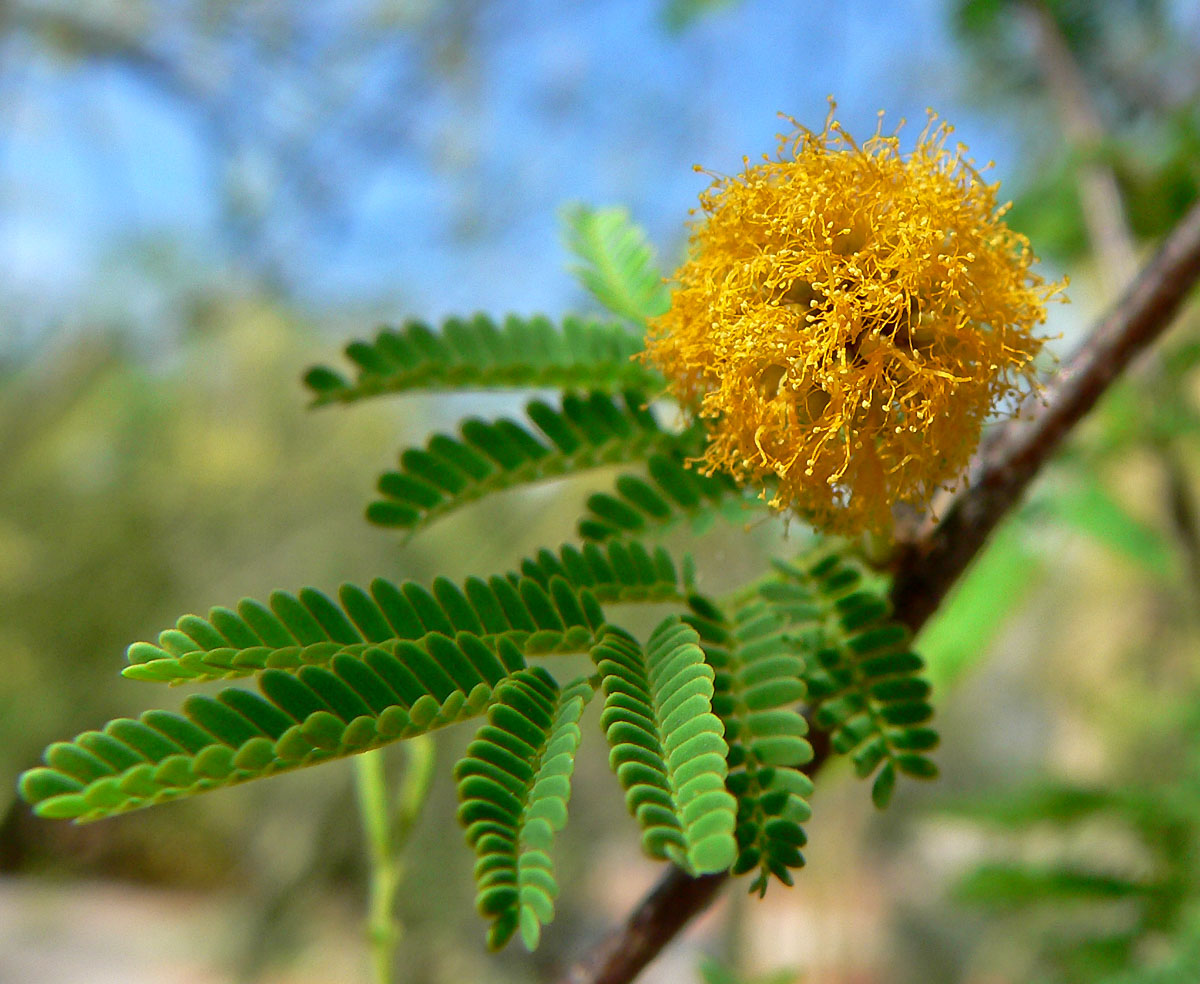
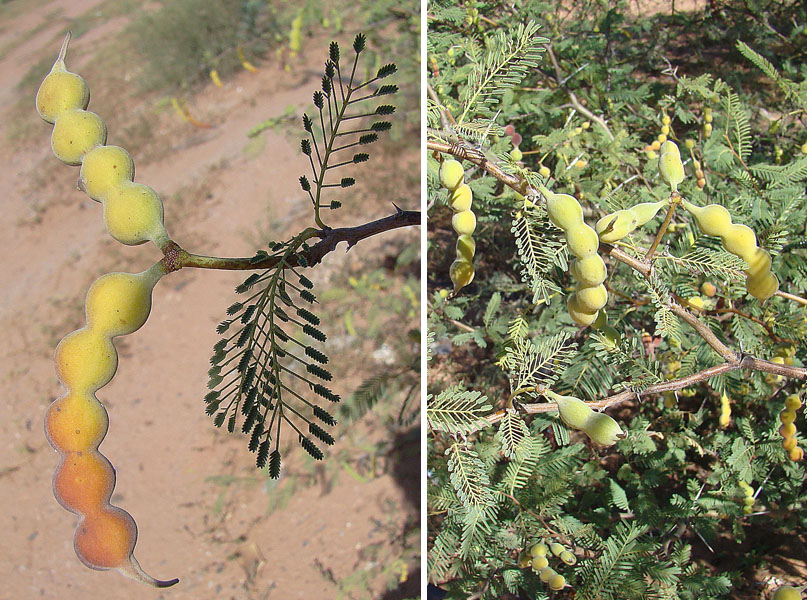
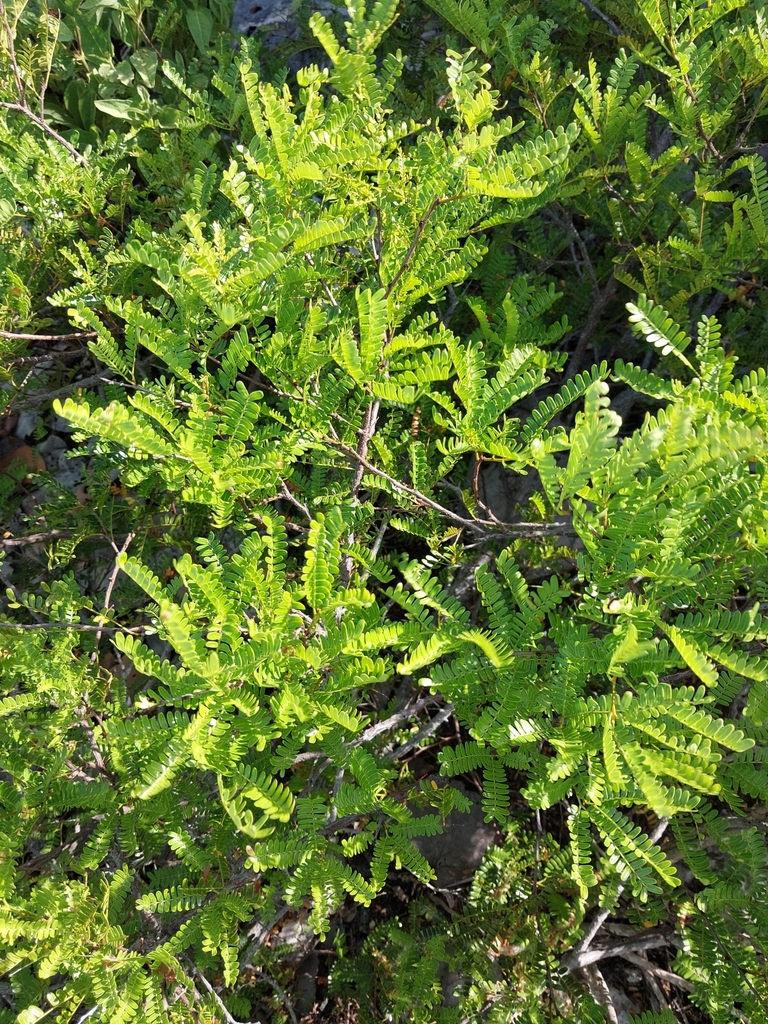
Vachellia is a genus of shrubs and small trees in the legume family (Fabaceae), in the mimosoid group — the family that gives us the puffball flowers, the feathery leaves, and the thorns. The plants are usually armed: spines or prickles on the stems, sometimes paired and straight, sometimes hooked, always worth respecting. The leaves are bipinnately compound — feathery, fernlike, divided and divided again — and the flowers are the genus signature: mimosoid flowers with a small, bell-shaped calyx, four or five small petals, and 15 to 120 long, showy stamens that stick far out of the flower, gathered into dense, globose heads or cylindrical spikes, solitary or clustered in the leaf axils. The effect, at a distance, is a shrub covered in small golden-yellow, white, or cream puffballs, and the scent — especially in sweet acacia — carries on warm air before you see the flowers at all. The fruits are legumes, nearly round in cross-section, not constricted between the seeds, with the seeds arranged in two rows or irregularly.
The genus holds about 160 species, with 10 in the Flora of North America, and its range is tropical to warm temperate worldwide: the southwestern United States, Mexico, Central and South America, the West Indies, Africa, Asia, and Australia, introduced nearly worldwide in warm regions. In the United States, Vachellia species are plants of the warm South — southern Texas, Arizona, and southern Florida — and of the tropical world beyond. They are plants of open, sunny, often dry and poor ground, and they are legumes in the full ecological sense: they fix nitrogen from the air through root nodules, which is why they thrive on ground that starves other shrubs.
For butterflies, Vachellia is a host genus, and the guides name it in exactly the way this guide is organized. The acacia skipper’s hosts are acacia species “now mostly placed in the genera Vachellia and Acaciella by botanists, though gardeners still say acacia” — the caterpillars feed on the foliage of these legume shrubs and small trees. The nickerbean blue’s hosts include “sweet acacia and pineland acacia (Vachellia species),” alongside gray nickerbean. That is two butterfly guides, both naming Vachellia as a genus, not a single species — which is why this is a genus guide, and why a species guide for one Vachellia would not cover it. If a butterfly guide names a single Vachellia species, it belongs to that species’ guide. If it names Vachellia, it belongs here.
Now the name change, stated openly, because gardeners deserve it straight. Vachellia species were formerly placed in Acacia, in the broad sense — and many gardeners, nurseries, and older books still call them acacias. The split happened because Acacia in the broad sense is not a natural, single evolutionary group: it had to be divided into at least five genera, and at the 2005 International Botanical Congress the type of Acacia was changed from an African species to an Australian one, so the Australian species kept the name Acacia and the former Acacia subgenus Acacia — the plants of the Americas, Africa, and Asia with straight spines and globose flower heads — became Vachellia. That is why the butterfly guides say “acacia” in one breath and “Vachellia” in the next, and why this guide is titled Vachellia: it is the organizing name the guides themselves use, and it is the name under which these plants are now filed. Acacia species guides, if any exist on the site, do not cover Vachellia, and Vachellia does not cover the Australian acacias that kept the old name. The split is real, it is botanical, and it is worth learning, even if the nursery tag still says Acacia.
How to grow
Here is the honest framing, and it is a climate one: Vachellia species are warm-climate plants, and most of them belong in frost-free or lightly frosted gardens — southern Texas, southern Arizona, southern Florida, and the tropical world — not in temperate gardens that freeze hard. Species hardiness varies, and a species that tolerates a light frost in Texas will not tolerate a northern winter, so check the species, not the genus, before planting. In their range, they are gloriously easy: full sun, excellent drainage, poor to moderate soil, and very little water once established. They are plants of open, sunny, dry ground, and they punish the two things gardeners most often offer — shade and wet feet — more reliably than they punish neglect.
To grow a Vachellia deliberately, plant a nursery-grown specimen in full sun in well-drained, even sandy or gravelly soil, and water deeply to establish in its first season. Do not amend the soil richly: as nitrogen-fixers, they make their own fertility, and rich, wet soil produces soft, rank growth and root problems. Space for the mature crown — 10 to 25 feet across, depending on the species — and do not plant a thorny species against a path, a play area, or a spot where you prune in shorts. Prune lightly to shape, removing dead or crossing wood, and wear gloves and eye protection: the spines are not decorative. Seed-grown plants vary, and named species from a reputable native-plant nursery are a better bet than a seed packet labeled only “acacia,” which could be almost anything in the old, broad sense of the name.
Florida note: In Florida, Vachellia species belong in the frost-free south, and the butterfly connection is a southern Florida story: the nickerbean blue’s sweet acacia and pineland acacia are coastal scrub plants of the southern peninsula, and a Florida gardener planting for that butterfly should plant the named Vachellia species of coastal scrub, in full sun, in sandy, well-drained ground, with room for a thorny shrub. Do not plant a Vachellia species that is not native or naturalized to Florida as if it were, and do not expect a tropical Vachellia to survive a central or northern Florida freeze. In Florida, the honest move is to plant the southern species, in the south, in the sun, and to let the thorns do their job at the edge of the garden, not in the middle of the path.
Water & feeding
Water needs are low once established. Vachellia species are adapted to dry, sunny, often poor ground, and they tolerate drought far better than they tolerate wet feet. In a garden setting, water deeply to establish in the first season, then water only in extended dry spells, and let the plant’s own rhythm — a flush of growth with rain, a pause in drought — set the schedule. Excellent drainage is the rule, and sandy, gravelly, or rocky ground is ideal. Standing water, heavy clay that stays wet, and a lawn sprinkler that soaks the crown daily are the fastest ways to kill a Vachellia.
Feeding: do not feed them, or feed very lightly. As legumes, Vachellia species fix atmospheric nitrogen through root nodules, which means they make their own fertilizer — and the soil science note is the genus’s whole story. A Vachellia in poor ground is not starving; it is feeding itself and, through leaf litter and root turnover, feeding the ground around it. Fertilizer, especially nitrogen fertilizer, helps their competitors more than it helps them, and it can suppress the very nodulation that makes them useful. If a garden plant looks pale and weak, check drainage and sun first, because a Vachellia in shade or wet soil will look hungry no matter how much you feed it.
Common problems
- Thorns, and they mean it. Vachellia species are armed shrubs and trees, with straight or hooked spines that catch clothing, skin, and garden hoses. Site them at the edge of the garden, not beside a path, and prune with gloves and eye protection.
- They are not hardy, and they will prove it. Most Vachellia species are tropical to warm temperate. A hard freeze will damage or kill them, and no amount of mulch changes that. Plant the species, in the place, that matches its hardiness, and do not let a mild winter fool you into planting a tropical species a zone too far north.
- Confusion with Acacia, Acaciella, and Senegalia. The old, broad Acacia has been split into several genera, and nursery tags have not all caught up. Check the botanical name on the tag, not the common name: a plant labeled “acacia” could be a Vachellia, an Acaciella, a Senegalia, or a true Australian Acacia, and those are different genera with different hardiness and habits.
- They can be weedy in warm climates. Fast-growing, seed-heavy legumes with bird- and mammal-dispersed seed can naturalize aggressively in warm regions. Do not plant a non-native Vachellia species outside its range, and pull volunteers where they are not wanted.
- Wet feet and shade. The two fastest ways to kill a Vachellia are standing water and deep shade. If a plant is failing, check drainage and sun before reaching for fertilizer or a spray.
- Messy fruit and leaf drop. Pods and feathery leaflets fall, and a Vachellia over a patio or a pool will make itself known. Site it over mulch or open ground, not over a surface you sweep daily.
Harvest
Harvest, for Vachellia, is mostly a fragrant and practical affair. The flowers of sweet acacia (Vachellia farnesiana) are famously fragrant — the scent that gives the species its common name — and the flowers have been used in perfumery and as a fragrant addition to gardens for centuries. The pods and foliage of some species have traditional uses as fodder and tannin sources, but this guide does not present Vachellia as a fodder or food crop: some species carry defensive chemistry, the thorns make harvest an adventure, and the harvest this guide recommends without reservation is the ecological one. Let a Vachellia flower for the pollinators that visit its puffball heads, let it host the acacia skippers and nickerbean blues where they occur, and let its nitrogen-fixing roots and leaf litter feed the ground beneath it. A Vachellia managed that way gives you fragrance, butterflies, and better soil, which is a better yield than a basket of pods — and it does so without requiring you to reach through the thorns.
Browse all plant & pest guides
Saving seeds
Genus-level honesty first: Vachellia is the acacia genus in its modern filing — the thorn trees, dozens of species across the warm world — and the seed playbook is shared across most of it. The seed coat is hard, so nick each seed with a file or rub it with sandpaper, then soak it overnight in warm water; the seeds that swell are ready. Sow warm in a gritty, well-draining mix, barely covered, and germination usually comes in one to two weeks after treatment. Untreated seed can sit in the soil for months and do nothing.
Let the seed pods ripen on the tree until they are dry and brown and the seeds rattle inside, then collect them into a paper bag. Dry the seed thoroughly before storing; acacia seed keeps for years in a cool, dry jar, and it is famous for staying viable in the soil seed bank for decades.
Seedlings will vary, and the named forms come only from cuttings or grafting. Sow more than you need, since not every seed takes up water even after scarifying, and give the seedlings room — Vachellia are trees, not shrubs, and they want to be tall.
In Florida, a few Vachellia species grow in the southern part of the state, happiest in full sun and sharp drainage. They are thorny from the start, so wear gloves when you handle them, and plant them where the thorns are a feature — a hedge, a boundary — not where children play.
Species in this group
Sweet acacia (Vachellia farnesiana) — the fragrant, golden-flowered shrub of the warm South, formerly Acacia farnesiana and Acacia smallii; named in the nickerbean blue guide as sweet acacia.
Pineland acacia (Vachellia species of Florida coastal scrub) — the pineland acacia named alongside sweet acacia in the nickerbean blue guide; a Vachellia species of southern Florida coastal scrub, claimed here at genus level because the guide names the genus, not a single species.
Twisted acacia (Vachellia tortuosa) — a thorny, twisted-branched species of Texas, Mexico, and the Caribbean, with strongly flexuous stems; a well-known Vachellia of the warm South.
Swollen-thorn acacia (Vachellia cornigera) — a Central American species famous for its swollen, hollow thorns that house stinging ants; a different species, and a reminder that Vachellia thorns are not just decoration.
Vachellia aroma — a South American species with golden flower heads, shown in the photos above; a representative of the genus’s southern range.
Vachellia acuifera — a Caribbean species, shown in the photos above from the Turks and Caicos Islands; a representative of the genus’s island range.
Other Vachellia species (Vachellia spp.) — the genus holds about 160 species, and this guide claims the genus as a group; a butterfly guide naming a single Vachellia species belongs to that species’ guide, and Australian Acacia species are a different genus entirely.