
🌳 White Oak
What it looks like
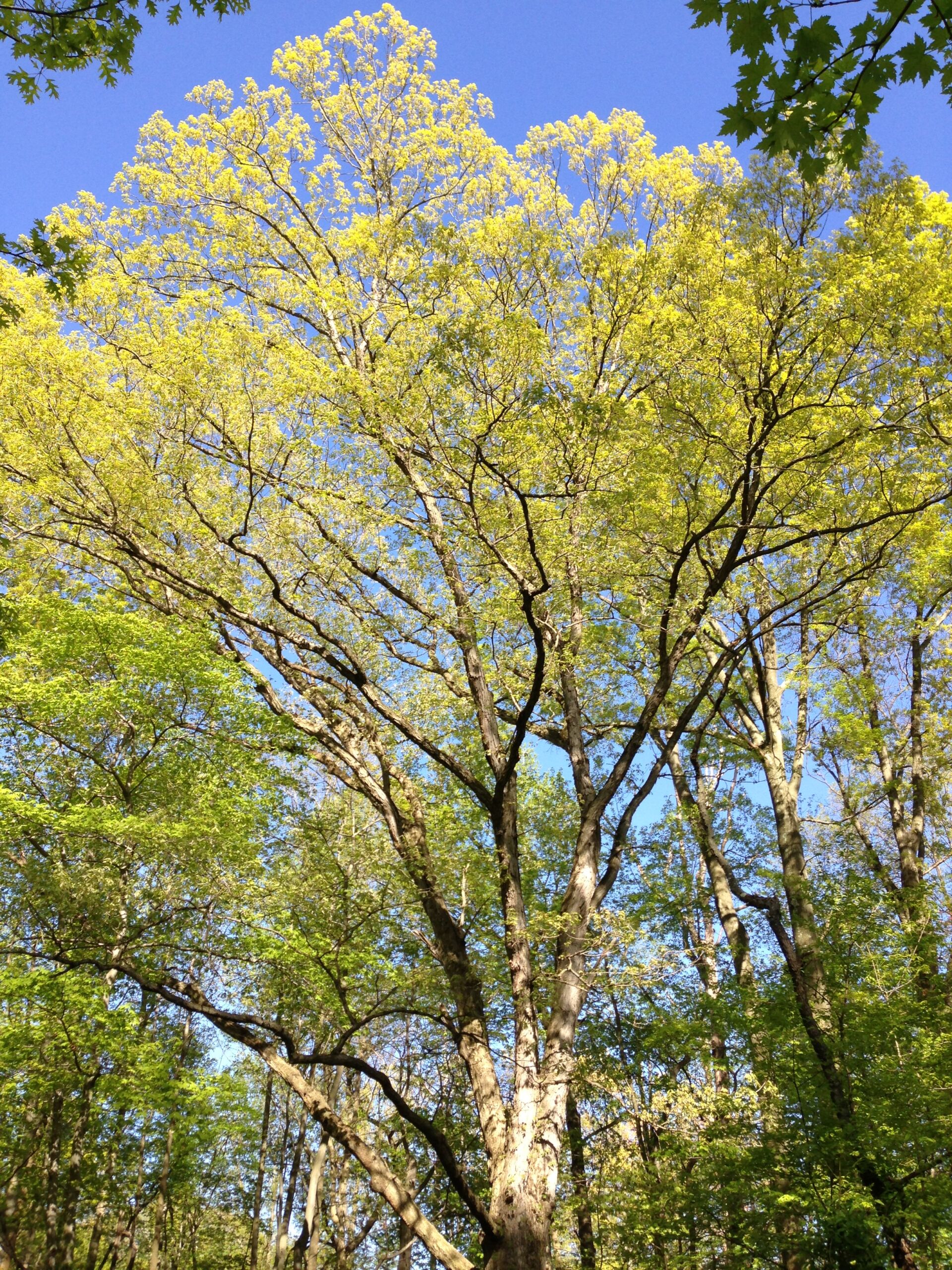

White oak is a large, deciduous shade tree of the white oak group, native to eastern North America from southern Quebec and Maine west to Minnesota and south to northern Florida and eastern Texas. In gardens it typically grows 50 to 80 feet tall with a similar spread and a broad, rounded, spreading crown; wild trees on good sites can reach 100 feet, and old specimens have been documented at more than 450 years old. This is not a tree for a small lot. It is a tree for a yard with room to be a yard, a forest to join, and a few centuries to fill.
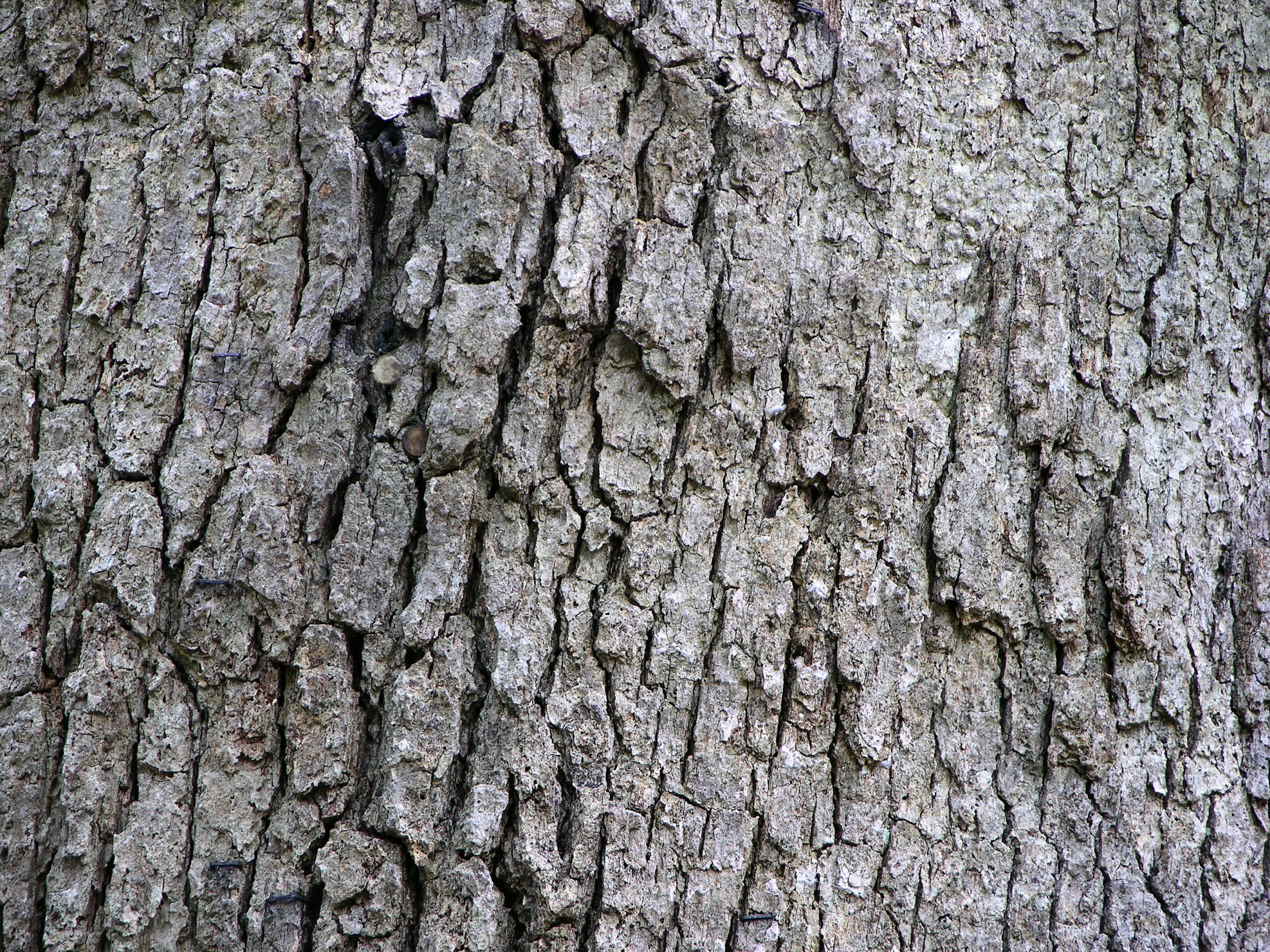
Identification starts with the leaves and the bark, and both are kinder than the red oaks’. The leaves are 5 to 9 inches long and 2 to 4 inches wide, with 5 to 9 rounded lobes — no bristle tips, which is the white-oak-group signature, and the easiest way to separate a white oak from a red oak at a glance. The lobes are deep but rounded, like a child’s drawing of an oak leaf, and the foliage turns a rich red to reddish-purple in fall. The bark is light gray, with shallow furrows forming scaly ridges or plates that flake in thin, papery pieces — a world away from the near-black, deeply furrowed bark of black oak (Quercus velutina) or the dark, striped bark of northern red oak (Quercus rubra). The buds are small, blunt, and reddish-brown, and the twigs are gray-brown and smooth.
The acorns tell the rest of the story, and they are the reason wildlife fights over this tree. White oak acorns are about an inch long, light brown, with a shallow, warty cap that covers only the top quarter of the nut, and they mature in a single season — one year from flower to fallen acorn, where the red oaks take two. They are also, famously, the least bitter of the oak acorns: lower in tannins than red oak acorns, sweet enough that deer, squirrels, turkeys, and birds eat them as soon as they fall, often before they can germinate. A white oak in a mast year is a grocery store with no closing time, and the animals know it.
For butterflies, white oak is a host tree, not a nectar plant. In the butterfly guides it appears as a host plant for the banded hairstreak and Edwards’ hairstreak, two hairstreaks whose caterpillars feed on oaks. The banded hairstreak guide lists white oak (Quercus alba) among its oak hosts, alongside chestnut oak and northern red oak, and Edwards’ hairstreak lists white oak (Quercus alba) among its oak hosts, alongside scrub oak, scarlet oak, and black oak. The caterpillars feed on the leaves, and the eggs overwinter on woody twigs, hatching in spring as the oak leaves emerge. That is the ecological job this tree does best, and it does it at a scale no shrub can match: a single mature white oak hosts more caterpillar species than almost any other tree in eastern North America, and the hairstreaks are only the named guests.
Do not confuse this tree with its oak cousins, and the site’s own oak guides are the map. The oak guide is Quercus virginiana, the live oak of the South, a different, evergreen species. The other oak species guides — canyon live oak (Quercus chrysolepis), coast live oak (Quercus agrifolia), scrub oak (Quercus ilicifolia), black oak (Quercus velutina), and Gambel oak (Quercus gambelii) — each cover their own species, and none of them covers Quercus alba. White oak is its own tree, with its own leaves, bark, acorns, and range, and this guide claims Quercus alba only. If a butterfly guide names another oak, it belongs to that oak’s guide. If it names white oak, it belongs here.
How to grow
White oak is a tree for the patient gardener with a large yard and good soil, and it rewards patience on a scale few garden plants can match. Plant a nursery-grown tree — balled-and-burlapped or container-grown, from a reputable native-plant nursery — in full sun to light shade, in acidic, well-drained soil, with room for a 50 to 80 foot spread at maturity. Do not plant it under a power line, against a house, or in a spot where a 100-foot tree will become a problem in a century, because a white oak planted well will outlive the planter, the house, and possibly the neighborhood. Dig a wide, shallow planting hole, set the tree at the same depth it grew in the nursery, mulch widely but never against the trunk, and water deeply in its first two seasons.
White oak is famously slow to establish and then famously long-lived. It puts down a deep taproot first and grows upward second, which means a transplanted white oak may look like it is doing nothing for a year or two while it is, in fact, doing the most important thing a tree can do: anchoring itself. Do not fertilize heavily, do not stake it longer than a season unless wind demands it, and do not prune it into a shape it does not want. Prune only to remove dead, crossing, or damaged wood, in the dormant season, and let the crown develop its natural, broad, rounded form. A white oak pruned into a lollipop is a white oak insulted.
Florida note: White oak does occur in Florida, but only in the northern part of the state — its range reaches northern Florida and no farther south — and in Florida it is a tree of the Panhandle and the northern peninsula, in acidic, well-drained woodland soil. Gardeners in northern Florida with room for a large tree and acidic soil can grow it, and should expect it to behave as a northern tree at the southern edge of its range: slower, more heat-stressed, and more dependent on good drainage and afternoon shade than the same tree in Virginia. Gardeners in central and southern Florida should not plant it: it is out of its range, it will not thrive, and the live oak (Quercus virginiana) is the Florida oak for those gardens. In Florida, white oak is a northern Florida tree, and it knows its latitude.
Water & feeding
Water needs are moderate, with a deep-rooted twist. White oak prefers moist, well-drained soil and establishes best with deep, regular watering in its first two seasons, but once established it is moderately drought-tolerant — the deep taproot reaches water that shallow-rooted trees cannot. In a garden setting, water deeply and infrequently, soaking the root zone rather than sprinkling the surface, and let the soil dry between waterings. Good drainage is the rule: white oak tolerates a range of soil pH if drainage is good, but it does not tolerate standing water or heavy, waterlogged clay, and it is sensitive to soil compaction and grade changes around its roots. Do not pave over a white oak’s root zone, do not pile soil against its trunk, and do not trench through its roots for a pipe and expect it to forgive you.
Feeding: light, if at all. A white oak in good, acidic, woodland soil needs no fertilizer, and its own leaf litter — left in place under the crown, not raked away and bagged — is the best feeding program there is. The soil science note is the tree’s whole story: white oak leaves, fallen and decayed, build the acidic, humus-rich, fungal-dominated soil that white oaks and their mycorrhizal partners thrive in, and the tree’s deep roots bring up minerals that shallow plants cannot reach. If a garden tree looks pale or chlorotic, check soil pH and drainage first, because a white oak in alkaline, compacted, or waterlogged soil will look hungry no matter how much you feed it, and iron chlorosis in high-pH soil is a soil problem, not a fertilizer deficiency.
Common problems
- It is big, slow, and permanent. A white oak needs a large yard, decades to mature, and a planting spot that will still make sense in a century. Do not plant it in a small lot, under a power line, or against a house and then complain that it grew.
- Transplant shock and the taproot. White oak is famously difficult to transplant, because of its deep taproot. Buy nursery-grown stock, plant it young, plant it carefully, and do not move it twice. A white oak moved twice is a white oak lost.
- Oak wilt and other oak diseases. White oaks are less susceptible to oak wilt than red oaks, but they are not immune, and they are susceptible to other oak problems including anthracnose, powdery mildew, and leaf blister in wet springs. Prune only in the dormant season, do not wound the tree in spring when sap-feeding beetles are active, and paint pruning wounds if local guidance calls for it.
- Gypsy moth and caterpillar defoliation. A mature white oak can survive a defoliation event, but repeated defoliation weakens it. The irony is worth stating: the caterpillars that gardeners spray for include the hairstreaks this guide celebrates. Do not spray a white oak for caterpillars without knowing what you are killing.
- Acorn mess, gloriously. A mature white oak in a mast year drops thousands of acorns, and they will dent cars, clog gutters, and sprout in every bed. Site it over lawn or mulch, not over a driveway you keep pristine, and accept the mast as the price of the tree.
- Confusion with other oaks. Rounded lobes without bristle tips separate white oak from the red oaks, and light gray, scaly bark separates it from black oak’s near-black bark. Check leaves, bark, and acorns together, and do not assume every oak is this species.
Harvest
Harvest, for white oak, is about acorns, wood, and time — in that order of garden relevance. The acorns are the least bitter of the oak acorns, and they have been used as food by Native peoples and by wildlife for as long as there have been white oaks: leached of their remaining tannins, ground into flour, and eaten as a staple. This guide does not present white oak acorns as a casual food crop — acorn processing is real work, and the tannins, though lower than in red oaks, still require leaching — but it notes the fact because it explains why the tree feeds so much wildlife so eagerly. The wood is the other harvest, and it is legendary: white oak wood is strong, rot-resistant, and tight-grained, the wood of barrels that age whiskey and wine, of ships, of flooring, and of furniture. A white oak grown for timber is a century-long investment, and a white oak grown in a garden is a tree whose wood harvest will belong to someone else’s century. The harvest this guide recommends without reservation is the ecological one: let the tree drop its acorns for the deer, squirrels, turkeys, and jays, let it host the hairstreaks and the hundreds of other caterpillar species that feed on its leaves, and let its leaf litter build the soil beneath it. A white oak managed that way gives you shade, wildlife, and a forest in miniature, which is a better yield than a barrel — and it does so for centuries.
Browse all plant & pest guides
Saving seeds
White oak seed comes with a deadline: acorns are recalcitrant, and they do not wait. Collect acorns in fall as soon as they drop — the plumpest, the heaviest, the ones with no weevil holes — and sow them right away, an inch or two deep in moist soil, or stratify them in damp sand in the fridge for a month or two and sow in spring. Do not store acorns dry; they lose viability fast once they dry out. Germination usually comes in a few weeks after sowing.
Save acorns from the best tree — the straightest trunk, the fullest crown, the biggest acorns — and sow more than you need, since germination is uneven and the squirrels will take their share. Give the seedlings deep pots — oaks grow a taproot fast, and they resent being moved once it is established.
Seedlings will vary, and the named forms come only from grafting. Seed is for the species, for timber, and for the patient gardener. A seed-grown white oak takes decades to mature, so this is the longest game in the garden — plant it for the grandchildren, not for yourself.
And the Florida honesty: white oak is a northern tree, for zones 3 to 9, and it is marginal in Florida — happiest in the Panhandle with some winter chill. In most of Florida, plant a live oak that likes the weather, or a native that does.
Species in this group
White oak (Quercus alba) — the species described in this guide, the eastern white oak of zones 3–9, with rounded leaf lobes, light gray scaly bark, and single-season acorns.
Live oak (Quercus virginiana) — the evergreen oak of the South, covered by the site’s oak guide; a different species, not white oak, and the Florida oak for central and southern gardens.
Black oak (Quercus velutina) — a red-oak-group species with near-black bark, yellow inner bark, and bristle-tipped leaves; covered by its own species guide, not white oak.
Northern red oak (Quercus rubra) — a red-oak-group species with bristle-tipped leaves and two-year acorns; a different species, and the correct pairing for the name “northern red oak,” not white oak.
Chestnut oak (Quercus prinus, syn. Quercus montana) — a white-oak-group species named alongside white oak in the banded hairstreak guide; a different species, not covered by this guide.
Scrub oak (Quercus ilicifolia), scarlet oak (Quercus coccinea), canyon live oak (Quercus chrysolepis), coast live oak (Quercus agrifolia), and Gambel oak (Quercus gambelii) — oak species named in the same butterfly guides or covered by their own guides; each is a different species from Quercus alba.