
🏛️ Acanthus
What it looks like
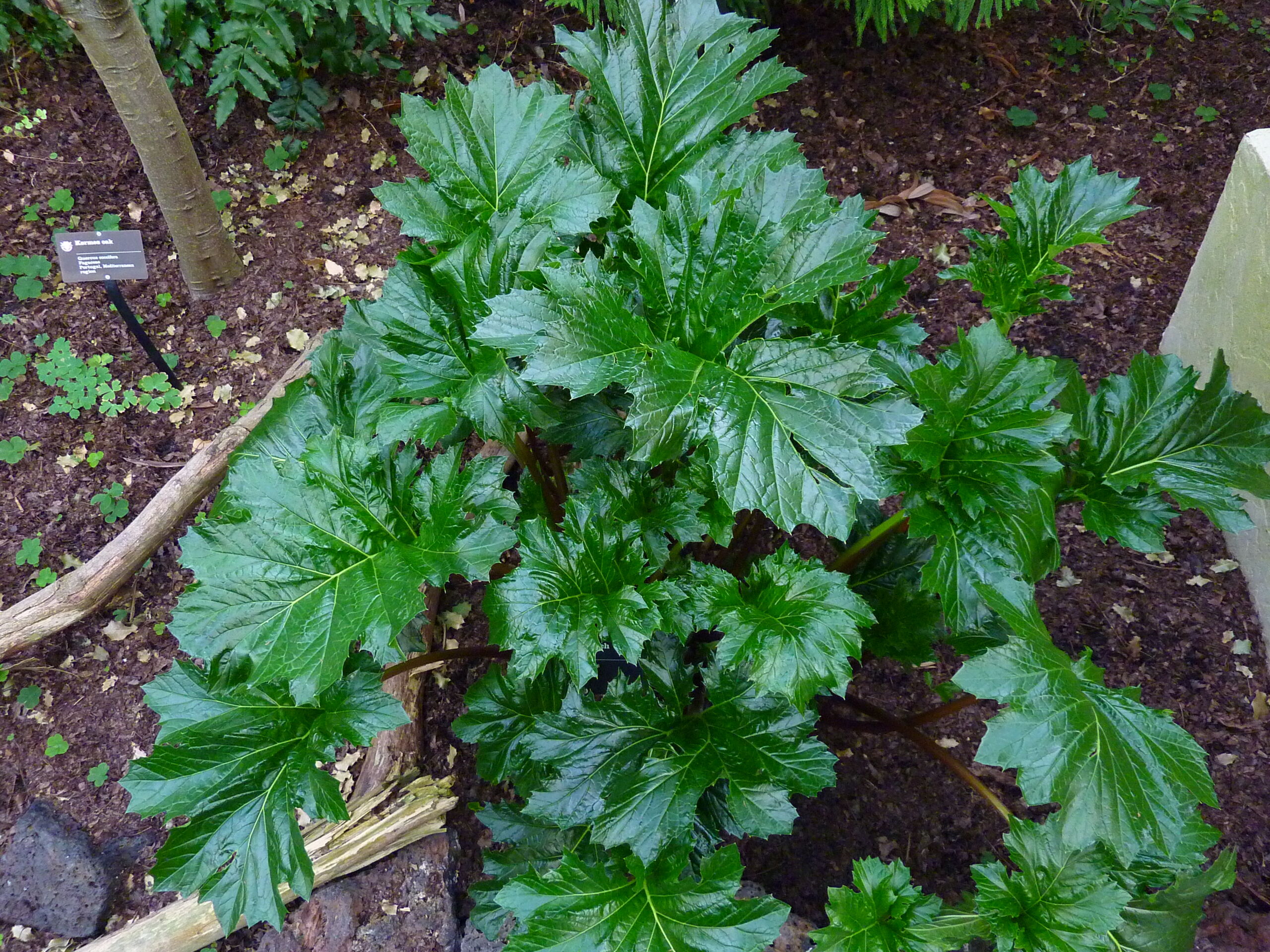
Acanthus is a genus of about thirty species of flowering plants in the family Acanthaceae, native to tropical and warm temperate regions, with its greatest diversity in the Mediterranean Basin and Asia. The garden species are herbaceous perennials, rarely subshrubs, and they are built like architecture: a basal rosette of large, deeply lobed, glossy dark-green leaves, and from the centre of that rosette, an erect spike of flowers that can tower over the foliage. Bear’s breeches (A. mollis), the best-known species, carries leaves up to twenty inches long on long petioles, soft to the touch despite the genus’s spiny reputation, and flower spikes up to five or six feet tall, crowded with tubular white flowers hooded by showy purple bracts. Spiny bear’s breeches (A. spinosus) is the fiercer cousin, with leaves cut into sharp, spiny lobes that mean business. Either way, the silhouette is unmistakable: a mound of sculpted leaves with a column of flowers rising out of it, like a plant that wandered out of a classical frieze and decided to stay in the garden.
The flowers are worth a close look, because they are a small engineering marvel. Each flower is tubular, whitish or lilac, up to two inches long, and wrapped in three bracts, the central one spiny and larger than the others. The calyx has two lips, the upper one purple and helmet-shaped, forming a hood over the corolla, which is reduced to a white lower lip with purple-pink veins. Four stamens, fused to the corolla, look like tiny brushes. The whole structure is a trap for pollinators — but a polite one: only bees and bumblebees large enough to force their way between the upper sepal and the lower lip can reach the nectar at the bottom of the tube, and in doing so they pick up pollen on their backs. Small insects need not apply. It is a flower that has chosen its pollinators and designed the door to fit them, which is a level of pickiness most garden plants do not attempt.
And then there is the architecture, which is the reason most people have seen an acanthus leaf even if they have never seen the plant. The deeply cut, glossy leaves of A. mollis were the model for the carved leaves on Corinthian column capitals in ancient Greek and Roman architecture — the story goes that the sculptor Callimachus, in the fifth century BCE, saw a basket left on a grave, overgrown with acanthus leaves curling around it, and turned the sight into the capital that crowns the most ornate of the classical orders. Whether the story is literally true hardly matters: look at a Corinthian capital and then at an acanthus leaf, and the resemblance is immediate. The genus name comes from the Greek akanthos, meaning thorn or spine, for the spiny bracts — and mollis, the species name of bear’s breeches, means soft, for leaves that, unlike its spiny relatives, do not bite back.
For butterflies, the genus appears in this series as a nectar plant: the Banded Peacock guide lists Acanthus among its nectar plants. The Banded Peacock is a tropical butterfly and a rare stray in the United States, so planting bear’s breeches is not a way to summon it to your yard — but the nectar record is genuine, and acanthus flowers, with their long tubes and purple hoods, are visited by the large bees they evolved for, as well as by butterflies that can reach the nectar. Grow it for the leaves and the architecture, and consider any butterfly visit a bonus, not a promise.
How to grow
Grow acanthus where it can be large, because it will be large whether you plan for it or not. Site it at the back of a mixed border or as a focal specimen, in deep, fertile, well-drained soil, in full sun or part shade. In cool-summer climates full sun gives the best flowering; where summers are hot, afternoon shade prevents leaf scorch, and a spot with morning sun and afternoon shade is ideal. Plant in spring or fall, setting the crown at soil level, and water in well. The plant forms a mound of leaves about three feet wide, with flower spikes rising to five feet, so give it room — two to three feet from its neighbours at minimum, and more if you want to walk past it without brushing the spiny bracts of A. spinosus, which are sharp enough to earn their Greek name.
Once established, acanthus is a tough, long-lived perennial that resents disturbance more than neglect. Its roots are thick, fleshy, and deep, and even a small piece of root left in the soil will resprout — which is why moving an established clump is a project, and why gardeners who try to remove one often find it back the next spring, politely but firmly. Divide clumps in spring or fall if you want more plants, or take root cuttings in winter: sections of thick root, laid in moist mix, sprout new plants. Seed can be sown too, but it is slower, and the seed capsules explode when ripe, flinging large seeds several feet — a neat trick that also means you should collect capsules before they burst if you do not want volunteers. Cut flower spikes back after bloom if you want tidiness, or leave them for the architectural seed heads; cut the whole plant to the ground in late fall or early spring to clear last year’s leaves and let the new rosette shine.
Watering and feeding are moderate. Water to establish, and during dry spells in the growing season, especially for plants in full sun; established clumps tolerate some drought, but the leaves stay glossier and the spikes taller with steady moisture. Feed lightly in spring with compost or a balanced fertilizer — acanthus is not greedy, and overfeeding produces soft growth that flops. Mulch in fall in colder zones to protect the crown, and do not panic if the top growth dies back in a hard winter: the roots usually survive and send up a fresh rosette in spring, which is the plant’s way of shrugging off weather that would kill a lesser perennial.
Florida note: Say this plainly, because the task brief asks for honesty here: acanthus is a poor bet in most of Florida. It is a Mediterranean genus that wants mild summers, cool nights, and sharp drainage, and Florida offers hot, humid summers, warm nights, and wet soil — the combination that brings crown rot, leaf scorch, and snails, which love the big soft leaves. North Florida gardeners in the coolest microclimates can try it in afternoon shade with excellent drainage and raised beds, treating it as an experiment, not a sure thing. For most Florida gardeners, the honest advice is to admire bear’s breeches in a botanical garden or a cooler climate, and to spend the same border space on a plant that wants Florida’s summers. A guide that pretended otherwise would be selling you a plant for a climate it does not enjoy.
Water & feeding
Water needs are moderate: steady moisture in the growing season, sharp drainage always. Water deeply when the top few inches of soil dry, and less in winter when the plant is dormant. The enemy is not drought but wet feet in warm weather — soggy soil in a hot summer rots the fleshy roots and the crown, which is exactly the Florida problem in miniature. In containers, use a free-draining mix and a pot with generous drainage holes, and never let the pot sit in a saucer of water. In the ground, a raised bed or a slope beats a flat, heavy clay spot every time.
Feeding: light. A spring dressing of compost, or a balanced granular fertilizer once in spring, is enough for a plant that builds most of its bulk from its own deep roots. Too much nitrogen makes soft, sprawling leaves that flop and invite snails and slugs, which are the main pests of this genus — the big, soft leaves are a snail buffet, and in damp climates you will need to check for them. A plant fed leanly and grown in sun holds its shape better and flowers more reliably than one pushed with fertilizer.
Common problems
- Crown and root rot in wet, hot soil. The main killer, and the reason Florida is a poor bet. Sharp drainage, raised beds, and no overwatering in summer are the prevention; once the crown rots, the plant rarely recovers.
- Snails and slugs. The big soft leaves are a favourite food. Check at night, use barriers or traps, and accept some nibbled edges as the price of growing the plant.
- Leaf scorch in hot sun. Full sun in a hot climate scorches leaf edges. Give afternoon shade where summers are fierce.
- It will not move or die on command. Fleshy root fragments resprout, so removal takes repeated digging. Site it where you want it for years, not as a temporary filler.
- Exploding seed capsules. Ripe capsules burst and fling seeds several feet, producing volunteers. Collect capsules before they split if you do not want seedlings.
- Winter dieback. Top growth dies back in hard winters, which looks alarming but is normal — the roots usually resprout in spring. Mulch the crown in fall in colder zones.
- Spiny bracts. A. spinosus and the flower spikes of most species carry sharp bracts. Site away from paths where bare legs or small hands will brush them, and wear gloves when cutting spikes.
Harvest
The harvest is flowers and leaves, not food. Cut flower spikes for arrangements — they are long-lasting, architectural, and dry well, holding their purple-bracted shape for months in a vase. Cut leaves for large-scale foliage arrangements, where a single acanthus leaf can anchor a whole display, which is only fair given that the leaf has been anchoring classical architecture for two thousand years. The other harvest is divisions and root cuttings: a mature clump, divided in spring or fall, gives you new plants for free, and root cuttings taken in winter do the same. Leave some spikes standing for the bees that evolved to work them — the large bumblebees that force the flower open are the plant’s chosen partners, and a garden that feeds them is doing honest ecological work, even if the plant itself is an import from the Mediterranean.
Browse all plant & pest guides
Propagation
Acanthus — bear’s breeches — is a plant you will almost never need to propagate on purpose, because it propagates itself with alarming enthusiasm. The tall flower spikes ripen into capsules that burst open and fling seed across the garden, and any scrap of fleshy root left in the soil will cheerfully grow into a new plant. The propagation question with acanthus is therefore less “how do I make more?” and more “how do I make more of exactly this plant, on purpose, without creating a monster?”
Division is the standard method and the most reliable. In spring or autumn, dig up an established clump — this is real work, because the roots run deep — and split it with a sharp spade, making sure each division carries both roots and several growing shoots. Replant immediately, water well, and give them room. Root cuttings are the clever alternative, especially for named cultivars: in late winter, cut pencil-thick root sections a few inches long, lay them in a gritty, free-draining mix, and keep them just moist. They root readily, and because they are clones, they reproduce the parent exactly — which matters, because seed-grown acanthus seedlings vary and can take two or more years to reach flowering size.
Seed is possible — collect it after the spikes brown, soak a day or two, sow shallowly in spring, and expect germination within a few weeks — but seed is for experimentation and raising the straight species, not for reproducing a favorite cultivar. Two warnings: deadhead the spikes if you do not want self-sown seedlings everywhere, and never compost dug-up roots, because every fragment can regrow. Bag them and bin them. In Florida’s warmth that regrowth habit is even more vigorous, so site divisions where a spreading perennial is a feature, not a future excavation project.
Species in this group
Bear’s breeches (Acanthus mollis) — the classic garden species: soft, deeply lobed, glossy leaves, white flowers hooded in purple bracts, spikes to five feet; the leaf behind the Corinthian capital and the common name “bear’s breeches” itself.
Spiny bear’s breeches (Acanthus spinosus) — the fiercer cousin, with sharply spiny, deeply cut leaves and similar flower spikes; more architectural, more armed, and better where you want a plant that defends its own space.
Balkan bear’s breeches (Acanthus balcanicus, also sold as Acanthus hungaricus) — a hardier, more cold-tolerant species widely grown in northern gardens, with deeply cut leaves and tall spikes; the choice where bear’s breeches itself is marginally hardy.
Mountain acanthus (Acanthus montanus) — a tropical African species with bold, spiny foliage and showy flower spikes, grown in warm climates where the Mediterranean species struggle with heat.