
🌼 Acmispon nevadensis
What it looks like
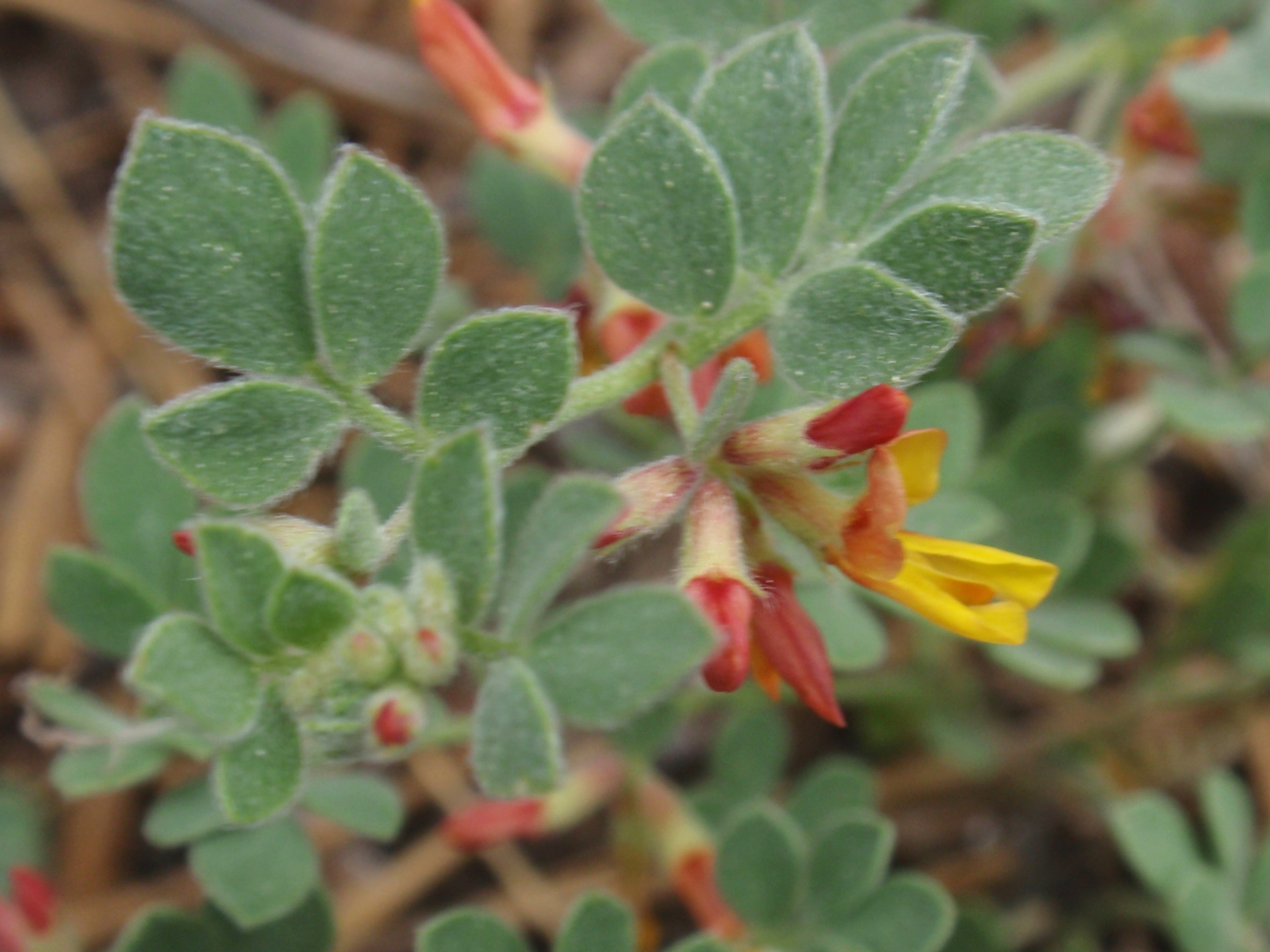
First, the name, because this plant’s name is a moving target and you deserve to know it before you buy a tag. Acmispon nevadensis is the name the butterfly guides use, and it is the name this guide files under. But current checklists — including Plants of the World Online — now treat this plant as Acmispon decumbens var. decumbens, the Sierra lotus, with Acmispon nevadensis listed as a synonym. One germplasm authority goes further, calling the nevadensis name superfluous because an older name, Hosackia decumbens, has priority. None of that changes the plant in front of you; it changes the label. If a nursery tag says Sierra lotus, or Acmispon decumbens, or Nevada bird’s-foot trefoil, or Nevada lotus, you may well be looking at this same plant, and this guide is the one that describes it.
What it looks like is unglamorous in the best way: a small, spreading or mat-forming perennial herb, coated in long hairs, lined with leaves made up of small green oval leaflets. Descriptions vary on the exact stature — one field account gives plants up to about 4 inches tall forming mats 12 inches or more across, while nursery summaries of the broader nevadensis complex give up to about 30 centimeters — and this guide reports that spread honestly rather than pinning a single height, because the plant’s size depends on variety, elevation, and site. The leaves are irregularly divided into three, four, or five oblong leaflets, each up to about 0.4 inches long, with wavy hairs on both sides, not dense enough to hide the greyish-green surface. The flowers are the reward for crouching down: small, yellow, pea-shaped blooms, up to about a centimeter long or more, borne in clusters of up to twelve on a short stalk, with a broad banner petal recurved by up to 90 degrees and two long wing petals often reddish at the tips, red in bud. The fruit is a slender, bent, beaked legume pod. The whole plant reads as a low, hairy, yellow-flowered mat hugging dry ground — easy to walk past, hard to mistake once you have knelt to look.
Its home is the dry West: dry hillsides and open areas in oak and coniferous woodland, grasslands, sagebrush, and pinyon-juniper woodlands, from about 2,800 to 9,000 feet in one field account, across California and the Pacific Northwest with small parts of Idaho and western Nevada, and more broadly across the western United States into British Columbia and northeastern Mexico in wider treatments. That range is another place where sources disagree — the narrow field range and the broad continental range describe different circumscriptions of the same tangled name — and this guide gives you both rather than pretending the map is settled. What every account agrees on is the habitat signature: dry, open, sunny, well-drained, and high enough that the air is cool at night.
And then there is the butterfly reason this guide exists. In the butterfly guides, Acmispon nevadensis appears as its own species entry in the bramble hairstreak guide’s Host plants list, alongside the genus-level Acmispon entry and broad-leafed lotus. The bramble hairstreak, also called the lotus hairstreak, is a small green hairstreak of coastal California, and its caterpillars have been recorded on this plant. A patch of Nevada bird’s-foot trefoil is therefore a butterfly nursery in miniature — low, sunny, nitrogen-fixing, and full of small caterpillars — but only in the West where both butterfly and plant live. Planting one in Florida will not summon a bramble hairstreak to your yard, and this guide says so plainly rather than letting a host list imply otherwise.
How to grow
Grow this plant the way it grows in the wild: in full sun, in soil that drains, and without fussing over it. It wants at least six hours of direct sun, dry, sunny, open ground, and well-drained sandy, gravelly, or rocky soil. It tolerates a range of soil types and a slightly acid to slightly alkaline pH in the broader complex, but the one thing it does not tolerate is wet feet or shade: moist, shady ground is where this plant goes to fail. A sunny slope, a gravelly bank, a rock garden, or the dry strip along a path in a cool-summer western garden are natural fits. Rich, constantly moist garden soil will grow it soft and short-lived, if it grows it at all.
Sow seed in fall or spring, scarify or soak it if germination is slow — legume seed coats can be stubborn — and space plants to allow a low mat at least a foot across. Do not pamper seedlings with rich compost and constant water; a lean start produces the tough, deep-rooted plant you actually want. Once established, it is drought-tolerant and low-maintenance, dying back in hard cold and returning from its root system. Prune lightly in late winter or early spring if you want to tidy the mat, and otherwise leave it alone: this is a plant whose whole strategy is to be left alone on dry ground.
Florida note: Florida gardeners, this is a plant to know, not a plant to plant. Nevada bird’s-foot trefoil is a high-country western perennial of dry, cool-night country, and it is not a Florida garden plant. Florida’s heat, humidity, and wet summers are the opposite of its habitat, and no honest zone rating makes it a southeastern staple. A Florida yard chasing the butterfly-host idea will feed far more local caterpillars with southeastern native legumes — partridge peas, ticktrefoils, and other warm-climate legumes — than with a struggling Sierra lotus. Know the plant, admire what it does in its own mountains, and plant its local cousins at home.
For gardeners in the right climate — cool-summer, dry, western gardens at elevation — this is a charming small-scale groundcover for the front of a dry border, a rock garden, or a native meadow edge. Let it mat, let it flower yellow in late spring and summer, and leave a patch unmowed through the caterpillar season if butterflies are the goal. It will not dominate a bed, and that is the point: it is a small plant doing a small, perfect job on ground nothing else wants.
Water & feeding
Water sparingly. This plant wants well-drained soil that dries between waterings, and established plants are drought-tolerant — it is a plant of dry hillsides and open woodland, not of bog gardens. Water new plantings until rooted, then back off; in its native pattern, a deep watering now and then in the growing season is plenty, and in a rainy climate drainage matters more than irrigation. A slope, a raised bed, or gritty soil will do more for it than any watering schedule, and a hollow that puddles will kill it faster than a dry month.
Feeding: almost none, and that is the point. Like all legumes, this plant partners with rhizobium bacteria in root nodules that fix atmospheric nitrogen, so it manufactures a meaningful share of its own fertilizer. A light topdressing of compost at planting is plenty; regular nitrogen fertilizer is actively counterproductive, encouraging soft growth and grass competition. If your plant looks pale and hungry in genuinely poor soil, a legume inoculant at sowing — to make sure the right rhizobia are present — is a smarter intervention than a bag of lawn food.
Soil science note: nitrogen fixation is one of the great bargains in all of gardening. A legume root nodule is a tiny chemical factory where bacteria trade fixed nitrogen for plant sugars, and when the plant dies or is cut back, that nitrogen enters the soil for the next crop. This is why a low legume mat on a dry bank is not just pretty but measurably richer underneath than the bare gravel it replaced. Planting this trefoil is, in the most literal sense, planting fertilizer that grows itself.
Common problems
- Wet soil and root rot. The number-one killer. Soggy, poorly drained ground rots the roots fast. Plant on a slope, in grit, or in a raised bed — never in a hollow that puddles.
- Shade. This plant needs full sun and fails in shade. Keep it open and sunny, or it will thin out and vanish.
- Wrong climate. Hot, humid Florida summers and wet winters are the opposite of its high-country habitat. Match the plant to a cool, dry western garden, or plant a local legume cousin instead.
- Slow or patchy germination. Hard legume seed coats delay sprouting. Scarify lightly or soak seed before sowing, and be patient.
- Name confusion on tags. The same plant may be sold as Acmispon nevadensis, Acmispon decumbens, Sierra lotus, or Nevada bird’s-foot trefoil — and the Davidson’s variety, Acmispon decumbens var. davidsonii, is a different variety, not this plant. Buy the variety on the tag, not just the species name.
- Over-fertilizing. Nitrogen fertilizer feeds competitors and suppresses nodulation. Keep feeding lean and let the plant fix its own.
Harvest
This plant is not harvested like a vegetable, and this guide does not pretend otherwise — but it does have a harvest, and it is a quiet one. In its native range it is valued as forage for wildlife and grazing animals and as a soil-improving, erosion-controlling groundcover, the kind of plant whose work is done by simply being there and fixing nitrogen. For home gardeners, the harvest is simpler: seed pods when they turn brown and dry, if you want to sow a new patch, and clippings left as a nitrogen-rich mulch.
The other harvest is the one this guide was built for: butterflies. Leave a patch unmowed through the caterpillar season, watch for small green hairstreaks patrolling low over it, and check the foliage for tiny caterpillars. That is the crop that matters here, and it arrives without a single spray, provided you leave the host plants standing.
Browse all plant & pest guides
Saving seeds
Acmispon nevadensis, the Nevada bird’s-foot trefoil of the western mountains, is a low, hairy, yellow-flowered mat that makes its seed the way its legume cousins do: in small pods that turn brown and dry when they are ripe. Let the pods dry on the plant, collect them before they split and scatter, and shell out the small, hard seeds. Save from a healthy, well-established mat, not from a plant that spent the season struggling, and remember what this plant is not: it is a western mountain plant, not a Florida garden staple, so its seed wants drainage and air, not a soggy summer bed.
Here is where honesty matters more than a tidy recipe, because sources disagree about exactly what this seed needs before it will sprout. Some advise a simple overnight soak in water before sowing. Others advise scarifying the hard seed coat first, by nicking it or rubbing it with sandpaper, or by a hot-water soak. Still others point to a winter chilling period, which is why fall sowing works so well for this group. Rather than pretending one of those answers is the only answer, use them together in the way the plant itself would experience them: scarify lightly, soak overnight, and sow in fall in a well-drained, sandy to gravelly mix, shallowly covered, about a quarter of an inch deep. Kept moist but never waterlogged, fall-sown seed gets its chill naturally over winter and often comes up in spring, while warm-sown seed may sprout within a few weeks. Sow more seed than you think you need, because germination in this genus is famously uneven, and a thin sowing that gives you two seedlings feels like a failure when a generous sowing would have given you a mat.
For storage, dry the seed thoroughly indoors with good airflow before jarring it, then keep it airtight, cool, and dark. That drying step is doubly important if you are handling seed in Florida humidity, where a jar sealed over even slightly damp seed turns into a mold experiment. A small desiccant packet in the jar is cheap insurance. Label the jar with the plant name and the year, because a small brown legume seed looks exactly like every other small brown legume seed by next spring, and your future self will not enjoy the guessing game.
This is a wild species, not an F1 hybrid from a seed packet, so seed saved from your own plants should grow into plants recognizably the same species, though not identical copies of the parent mat. If one particular mat matters to you exactly as it is, stem cuttings are the backup method, and they preserve the individual where seed preserves the species. And one taxonomy footnote, because this plant’s name keeps moving: current checklists now treat this plant as Acmispon decumbens var. decumbens, with Acmispon nevadensis as a name it used to travel under. Whatever name is on the tag, the seed in the pod behaves the same way: hard-coated, patient, and well worth the small trouble of a nick and a soak.
Varieties and relatives
Acmispon nevadensis as used in the butterfly guides is treated here as one plant, with its varieties and relatives kept distinct. This guide claims the nevadensis plant only — the low, hairy, yellow-flowered mat of the western mountains — and not the whole Acmispon genus, which has its own guide.
Acmispon decumbens var. decumbens — the current checklist name for this plant, the Sierra lotus proper; if a tag uses this name, it is this plant under its modern label.
Acmispon decumbens var. davidsonii (Davidson’s bird’s-foot trefoil, Davidson’s lotus) — a different variety of the same species, a perennial herb up to about 35 centimeters tall with densely hairy stems and yellow flowers in clusters of up to twelve, native to California and Nevada; it is NOT this plant, and its photo was deliberately not used here.
Acmispon glaber (deerweed) — a different, shrubby Acmispon species with its own growing guide; do not confuse a deerweed tag with a Sierra lotus tag.
Other Acmispon species — the genus holds dozens more, mostly western, and they are not this plant; if a label names a different species, that species is the plant.