
🌿 Aristolochia
What it looks like
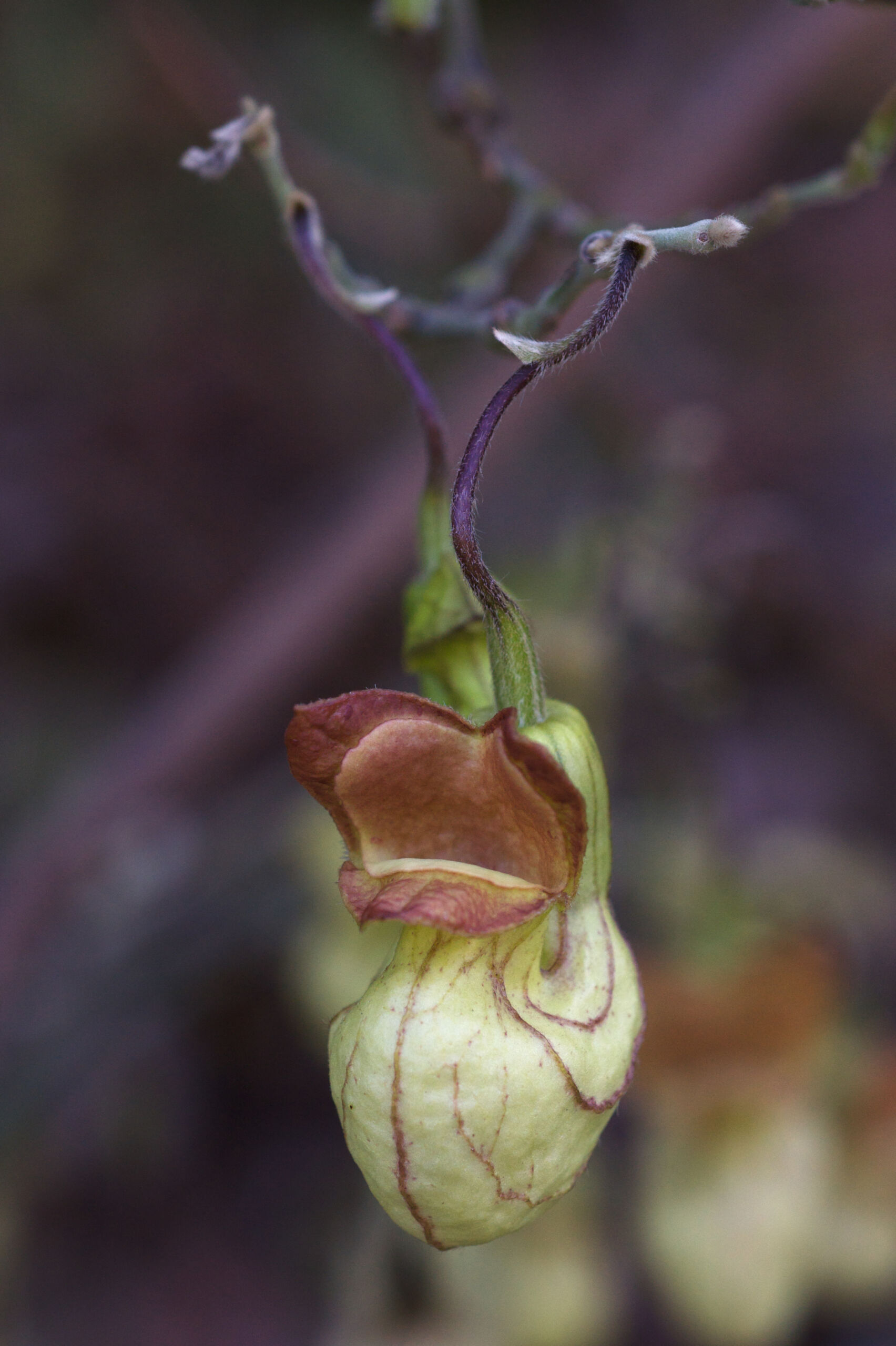
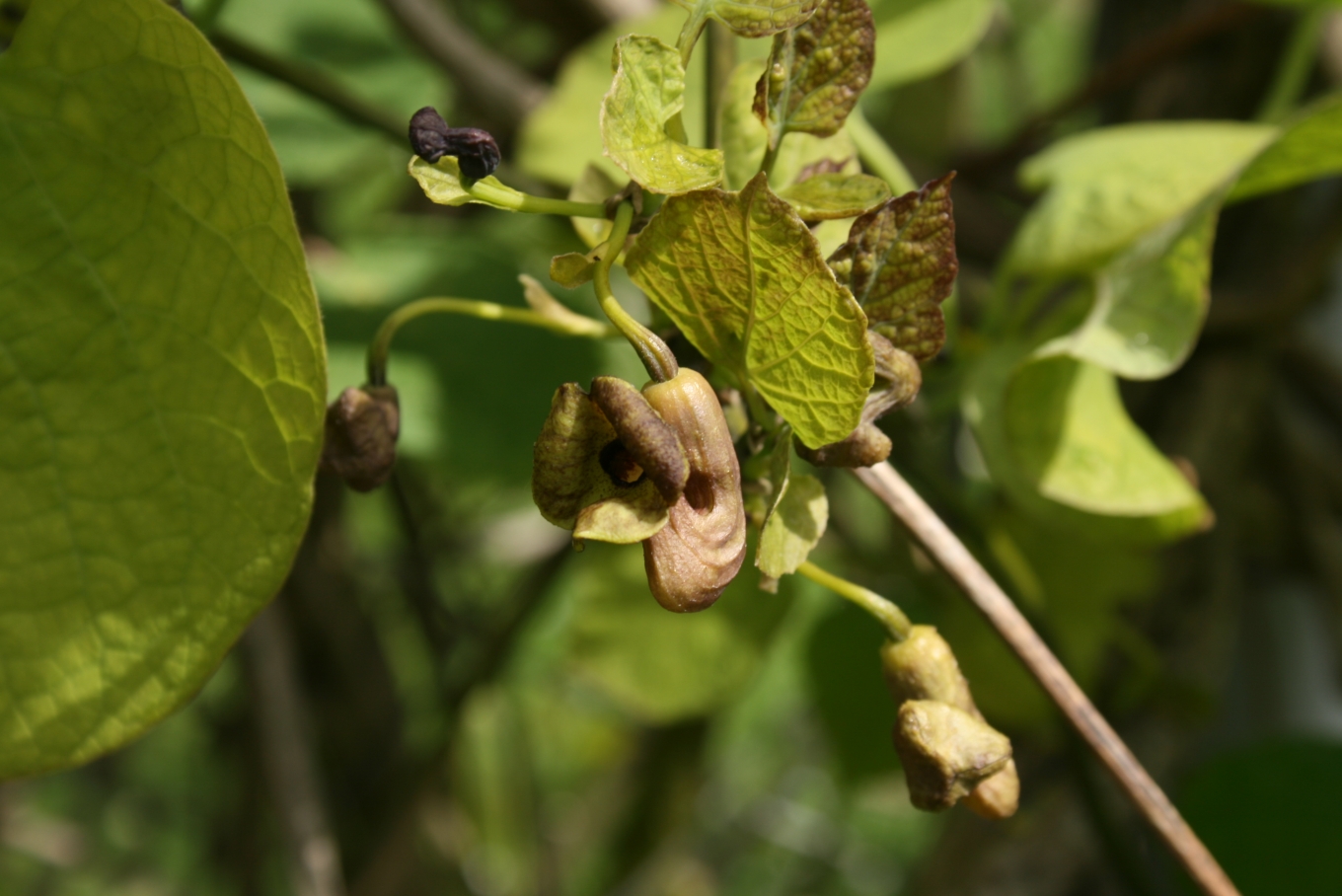
Aristolochia is the genus of the pipevines, and it is one of the great shape-shifters of the plant world. It is a large genus — over 500 species, with roughly 569 accepted species recognized in modern checklists — in the birthwort family (Aristolochiaceae), and it includes deciduous and evergreen species, woody climbing vines and herbaceous perennials, distributed across temperate and tropical regions worldwide, with concentrations in the Mediterranean, Asia, Africa, and the Americas. The genus was established by Linnaeus in 1753, and its common names — birthwort, pipevine, and Dutchman’s pipe — reflect both its long-standing reputation in herbal medicine and the curious shape of its flowers, which resemble the meerschaum smoking pipes once popular in the Netherlands and northern Germany. If you have ever seen a pipevine flower, you do not forget it: a curved tube, a flared mouth, a dull purple-brown or greenish-yellow color, tucked under the leaves like a secret the plant is keeping from everyone except a fly.
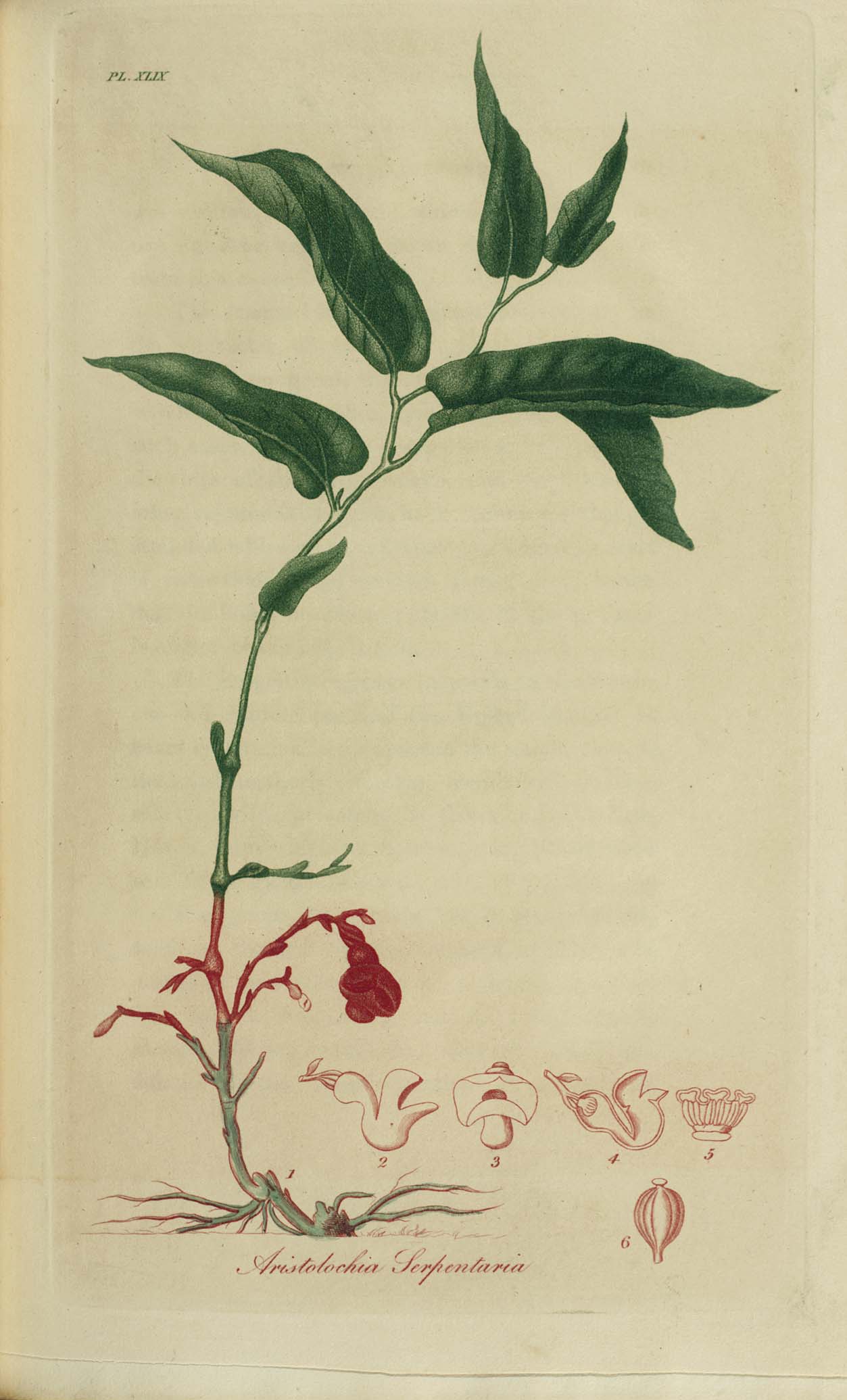
Most members are perennial herbs or woody vines, including evergreen and deciduous climbers, with alternate, often heart-shaped leaves. The eastern North American vines are the famous ones: bigleaf pipevine (Aristolochia macrophylla), a vigorous deciduous climbing vine of the eastern mountains and upland forests, with enormous, overlapping heart-shaped leaves that were a favorite of Victorian-era gardeners for screening porches, and that can reach 30 feet or more on a sturdy support; woolly pipevine (Aristolochia tomentosa), the downy-leaved central and southern vine; and California pipevine (Aristolochia californica), the wirier western species of California and Oregon, whose flowers carry red veining and whose vines suit a drier, sunnier garden. The herbaceous members are quieter: Virginia snakeroot (Aristolochia serpentaria) is a woodland herb of the eastern United States, not a vine at all, with slender stems and small, ground-level pipe flowers that you have to crouch to see. The genus also includes tropical giants, like the giant Dutchman’s pipe and the calico flower, whose flowers can be enormous and whose role in a butterfly garden is a cautionary tale, not a recommendation — more on that below.
The flowers deserve a paragraph of their own, because they are one of the strangest pollination systems in the plant kingdom. Most Aristolochia species are pollinated by small flies, attracted by fetid odors and the dull purple-brown coloration of the flowers — the flowers mimic rotting matter, which is exactly what a carrion fly is looking for, and the fly enters the curved tube, is temporarily detained by inner hairs while it picks up pollen, and is then released to visit another flower. It is pollination by deceit, a temporary detention that ends in pollination, not a meal, and it is a system the genus has been running for a very long time. The flowers are not showy in the conventional sense — they hide under the leaves, they smell of things you would not put in a vase, and they are pollinated by insects most gardeners swat — but they are, in their way, perfect, and they are the reason the genus looks like nothing else in the garden.
And then there is the chemistry, which is the reason this guide exists and the reason it carries a warning. All Aristolochia species contain aristolochic acids, compounds that are toxic to most animals and classified as human carcinogens, and that have caused severe kidney damage in people who ingested them in herbal remedies. The plants’ old medicinal reputation — the genus name comes from Greek words for best and birth, a nod to traditional birthing-related uses — is now understood as dangerous history, not a recommendation, and no part of any Aristolochia plant should ever be eaten, brewed, or used as a home remedy. But the same poison is the engine of one of the great butterfly stories in North America. Pipevine swallowtail caterpillars feed exclusively on Aristolochia foliage, sequester the aristolochic acids in their tissues, and carry that chemical defense through pupation into adulthood, making both caterpillars and adults unpalatable to birds and other predators. Plant a native pipevine, and you are not just feeding caterpillars; you are arming the butterflies that come out of them.
That butterfly story is the butterfly context for this genus guide, and it is written at the genus level in the guides themselves. The Pipevine Swallowtail guide says, in its Host plants section, that pipevine caterpillars eat Aristolochia and nothing else, and its quick facts list pipevines only (Aristolochia species) as hosts; the Polydamas Swallowtail guide lists Aristolochia hosts in the same genus-level way. The recorded hosts named in those guides include Virginia snakeroot (Aristolochia serpentaria), woolly pipevine (Aristolochia tomentosa), Dutchman’s pipe (Aristolochia macrophylla), California pipevine (Aristolochia californica), Marsh’s Dutchman’s pipe (Aristolochia pentandra), giant Dutchman’s pipe (Aristolochia gigantea), and calico flower (Aristolochia elegans), among several relatives. That list is the reason a genus guide is the honest unit: the butterflies’ menu is the genus, and a guide that covered only one species would leave the rest of the menu unexplained.
One plain-text disambiguation, because the pipevine family causes real confusion and real caterpillar losses, and because this genus guide must not swallow the species guides around it. This guide claims Aristolochia species as a genus only. Dutchman’s pipe (Aristolochia macrophylla) has its own plant-guides growing guide, woolly pipevine (Aristolochia tomentosa) has its own plant-guides growing guide, and Marsh’s Dutchman’s pipe (Aristolochia pentandra) is a separate species unit — none of those species is covered in particular by this genus guide, and this genus guide does not replace any of them. The site’s native-plant profiles for woolly Dutchman’s pipe, Marsh’s Dutchman’s pipe, and Virginia snakeroot are species profiles, not genus coverage, and they coexist with this guide in the same way. Buy and plant by Latin name, species by species, and let this guide be the map of the genus, not a substitute for any one of its members.
How to grow
Growing Aristolochia starts with the only decision that matters: which species, native to your region, are you actually planting? The genus spans temperate and tropical members, and the growing advice for a temperate eastern vine and a tropical giant are not interchangeable, so this section gives the genus pattern and names the species differences where they change the plan. For the temperate vines — Dutchman’s pipe, woolly pipevine, and California pipevine — the pattern is: a sturdy support, moist, well-drained, humus-rich soil, and sun to part shade. Give one vine one arbor, trellis, fence, or sturdy post, and train the twining stems onto the support as they grow, because these vines climb by twining and need something to wrap around. Dutchman’s pipe reaches 30 feet or more and holds big, overlapping leaves like shingles, so the support must be built for the vine it will become, not the seedling you planted; woolly pipevine wants moist soil and sulks in dry ground; California pipevine is wirier and suits a sunnier, drier western garden. Space vines so each has room to reach its full spread, mulch well the first year, and prune in winter after dormancy to keep the vine off the roof, the gutters, and the neighbor’s shrubs.
The herbaceous members want a different garden: Virginia snakeroot grows in woodland shade and humus-rich, moist, well-drained soil, as an understory herb, not a vine, and it wants the conditions of a woodland floor — dappled light, leaf litter, and soil that stays moist but never soggy. Plant it in a shade garden or woodland edge, among ferns and other woodland natives, and leave it alone; it is not a plant for a sunny bed or a container on a patio. The tropical members, meanwhile, are mostly a warning in this guide rather than a recommendation: giant Dutchman’s pipe and calico flower are widely sold ornamentals with spectacular flowers, but they are native to Brazil, and in areas frequented by pipevine swallowtails they act as ecological traps — females lay eggs on them, and the caterpillars cannot properly process the levels of aristolochic acid in their leaves, and die. The Pipevine Swallowtail guide says this plainly about calico flower, and this genus guide repeats it, because it is the most important planting advice in the whole genus: if you are planting pipevine for swallowtails, plant a native species appropriate to your region, and do not plant the tropical species as a substitute.
Propagation follows the vine and herb patterns respectively: seed, sown after cold stratification for the temperate species, or cuttings, which root moderately well, and division for the herbaceous species. Woolly pipevine seed, for example, wants soaking and about 90 days of cold stratification before sowing, because it is a temperate vine whose seeds expect a winter before they wake up — and that cold requirement is a good reminder that these are not tropical plants to be sown on a windowsill in January and expected to perform. Transplant while dormant where the species is a vine with fleshy roots, because fleshy roots resent disturbance in full leaf, and give every new planting a full season to establish before you judge it. A pipevine that looks unimpressive in its first year is often just building roots, and a pipevine in its third year on a good arbor is a green roof with caterpillars in it.
Florida note, stated by species rather than by genus, because the genus-level answer would be a lie. In Florida, the pipevine story is a north Florida story with a tropical caution attached. Woolly pipevine is a Panhandle plant only, native only to the Panhandle’s streamside woodlands and bottomlands, and state-listed as endangered there, so Panhandle gardeners can grow a genuine native from nursery-grown stock, and never from wild collection. Marsh’s Dutchman’s pipe is a south Florida native, the pipevine of the southern peninsula, and the species south Florida gardeners should grow for swallowtails. Virginia snakeroot reaches into north Florida woodlands. Central Florida gardeners should plant the species native nearest their region and check its range before buying, rather than assuming any pipevine suits any Florida garden. And every Florida gardener should avoid the tropical trap species, no matter how spectacular the flower, because a pipevine that kills the caterpillars it attracts is worse than no pipevine at all.
Water & feeding
Water, for the garden pipevines, is a question of moisture without sogginess. The temperate vines want medium to moderately wet soil that stays moist — streamside moist, woodland-edge moist, rain-garden-margin moist — and in a genuinely moist site with normal rainfall they largely water themselves once established, while in a dry spell they want deep watering and a root zone that does not dry out, because a thirsty pipevine thins out and stops covering its support, which defeats the purpose of planting it. A thick mulch of wood chips or leaf litter helps enormously, holding moisture and cooling the roots in summer, and it doubles as habitat for the soil life that keeps moist soil healthy rather than sour. The herbaceous woodland species want the same moisture, in shade, with leaf litter doing the mulching work naturally. The tropical species, if you grow them as ornamentals away from swallowtail country, want warmth and moisture too — but this guide does not recommend them for butterfly gardens, for the reason given above, and their water needs do not change that advice.
Feeding: modest, across the genus. Pipevines prefer moist, average, humus-rich soil, and a spring topdressing of compost is the right scale of feeding — not a heavy fertilizer program, which mostly produces soft, leggy growth that flops off the trellis. In a woodland or streamside site, the nutrients arriving with leaf litter are often plenty on their own. The plant’s real fertilizer is water and a good root run: give it the moisture it wants and a support it can climb, and it will do the rest, growing fast, leafing out big, and feeding the caterpillars that show up for the leaves while the flowers hide underneath for the flies. The soil science here is the woodland story: moist, humus-rich soil is a nutrient highway, regularly replenished with leaf litter and organic matter, and the microbes, fungi, and invertebrates of that soil cycle nutrients fast in warm, damp conditions. A pipevine’s roots live in that community, storing energy and sending up new growth through it, and its yearly leaf fall returns a large crop of leaves to the soil as organic matter, feeding the next cycle. Planting a native pipevine on an arbor at a moist garden edge is therefore not just decorating a fence — it is installing a butterfly nursery on top of a soil-building machine, and the poison in the leaves is the nursery’s security system.
Common problems
- Planting a tropical trap species. The most consequential problem in the genus. Giant Dutchman’s pipe and calico flower attract egg-laying pipevine swallowtails whose caterpillars cannot process their chemistry and die. Plant native species appropriate to your region, by Latin name.
- Toxicity. All parts of all Aristolochia species contain aristolochic acids and are toxic to people and pets, and classified as carcinogenic. Plant where children and grazing animals will not sample the plant, and never eat, brew, or use any part medicinally.
- Drying out. The temperate vines want moist soil. Thinning growth and a vine that stops covering its support usually mean the soil dried. Mulch deeply, site it moist, and water in dry spells — or pick a different vine.
- Weak support. A woody vine that reaches 20 to 30 feet or more needs a sturdy arbor, fence, or post. A flimsy trellis will bend or collapse under a mature vine.
- Wrong species, wrong region. A Panhandle vine in south Florida, or a tropical vine in swallowtail country, is a plant out of place. Check the species’ native range before you buy, and buy by Latin name.
- Caterpillar defoliation. Pipevine swallowtail caterpillars may devour leaves in summer, and that is the point of planting it. A healthy vine recovers quickly, so do not spray the caterpillars — they are the crop.
- Flowers hidden, scent odd. Pipevine flowers hide under the leaves and smell of things flies like, not of roses. That is the pollination system working, not a defect. If you want showy, fragrant flowers, plant something else.
Harvest
Aristolochia’s harvest is seed, cuttings, and butterfly-watching — in that order, and with one firm boundary that this guide states twice because it matters. This is not a food or medicine plant, and no part of this guide recommends eating, brewing, or otherwise ingesting it: aristolochic acids are toxic and carcinogenic, and the traditional medicinal uses of pipevine relatives are history, not a reason to experiment. If you want seed, collect the pod-like capsules in fall, and grow from seed with the cold stratification the temperate species expect — soaking and about 90 days of cold for woolly pipevine, for example — then sow and wait, because these are plants that expect a winter before they wake up. If you want more plants, take cuttings, though rooting is moderately difficult compared with seed, and transplant while dormant, because fleshy vine roots resent disturbance in full leaf.
The simplest harvest, though, is a summer afternoon under a pipevine arbor with no agenda at all: dark caterpillars eating leaves overhead, pipevine swallowtails drifting through the shade they made, and the knowledge that the vine over your head is both the roof and the nursery, and that its poison is what makes the butterflies safe. Leave most plants standing through the season for the caterpillars, prune in winter after dormancy, and let the vine come back bigger next spring. That is the crop, and it arrives without a single spray — because spraying it would kill the very thing you planted it for, and because a plant that has run its fly-pollination and caterpillar-defense system for millions of years does not need your intervention, only your willingness to plant the right species and then get out of its way.
Browse all plant & pest guides
Saving seeds
First, the warning, before anything else: Aristolochia species contain aristolochic acid, a toxin linked to kidney damage and cancer, and the genus is treated as carcinogenic. Do not eat any part of these plants, do not brew them, and do not use them as home medicine, whatever old herbals may have claimed. Grow pipevines for their extraordinary flowers and for the swallowtail caterpillars that feed on them — the caterpillars borrow the plant’s chemistry as their own armour, which is a neat trick for a caterpillar and no reason at all for a human to swallow it. Keep seed packets labelled and out of children’s reach, and wash your hands after handling seed.
With that said, the seed itself is straightforward to save, if you are patient. The fruit is a capsule holding many flat, winged seeds, and it splits open when ripe — in some species the valves peel back from the base like a little parachute, shaking the seeds out one by one on the wind. Watch for capsules turning dry and brown, and bag them before they finish splitting, or the wind will do your seed-saving for you and keep the proceeds. Let the capsules finish drying in a paper bag, then shake out the flat seeds and clean away the chaff.
Sow fresh seed when you can; it is the most reliable. Stored seed is fussier, and sources disagree about what it wants: some advise a warm soak of about 48 hours in hand-hot water, changed as it cools, before surface-sowing, while others recommend several months of cold, moist stratification for stored seed first. That disagreement is honest information, not a contradiction to hide — germination in this genus is slow and irregular either way, typically taking one to three months in warm conditions, with seedlings emerging in dribs and drabs. Press the seed into the surface of a moist, well-drained mix and barely cover it, keep it warm and evenly moist, and do not throw the pot out because the first month produced nothing. Grow seedlings on under cover for their first winter and plant out after the last frost.
Two more genus-level notes. Seed from a species plant generally comes true if no closely related species is flowering nearby to cross with it, but named selections and hybrids will not — multiply those by cuttings or layering instead, which is also the fallback if your vine never sets fruit at all, since the fly-trap flowers need their particular pollinators and may set little seed in cultivation. And plant the native species of your region: some widely sold non-native pipevines are ecological traps whose leaves poison pipevine swallowtail caterpillars instead of feeding them. Saving seed from the right species is only half the job; saving it from the wrong one helps nobody.
Species
Aristolochia is a genus of over 500 species, and no guide can list them all, so this section names the species a North American gardener or butterfly-watcher is most likely to meet, in plain text, and states plainly which ones have their own guides. Dutchman’s pipe (Aristolochia macrophylla) is the bigleaf eastern vine, with its own plant-guides growing guide, and it is listed here for completeness, not claimed by this genus guide. Woolly pipevine (Aristolochia tomentosa) is the downy-leaved central and southern vine, with its own plant-guides growing guide, and it is listed here the same way. Marsh’s Dutchman’s pipe (Aristolochia pentandra) is the south Florida pipevine, a separate species unit, and it is listed here the same way. California pipevine (Aristolochia californica) is the wiry western vine of California and Oregon. Virginia snakeroot (Aristolochia serpentaria) is the herbaceous eastern woodland species. Calico flower (Aristolochia elegans) and giant Dutchman’s pipe (Aristolochia gigantea) are tropical Brazilian species widely sold as ornamentals that act as ecological traps for pipevine swallowtail caterpillars and should not be planted where swallowtails fly. Grow the native species of your region, by its Latin name, and let the genus guide be the map, not a substitute for any species on it.