
🌿 Yellow Alpine Milkvetch
What it looks like
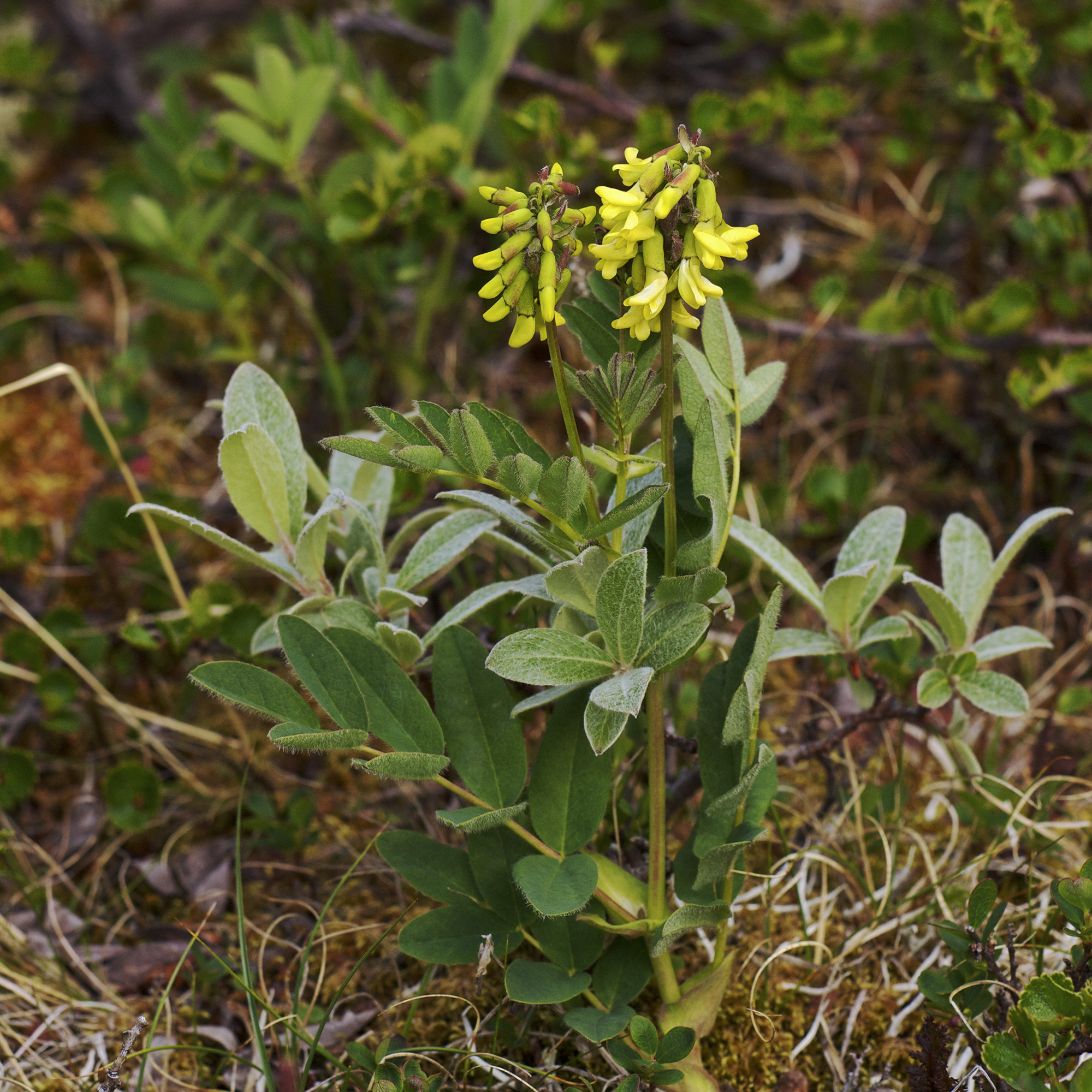
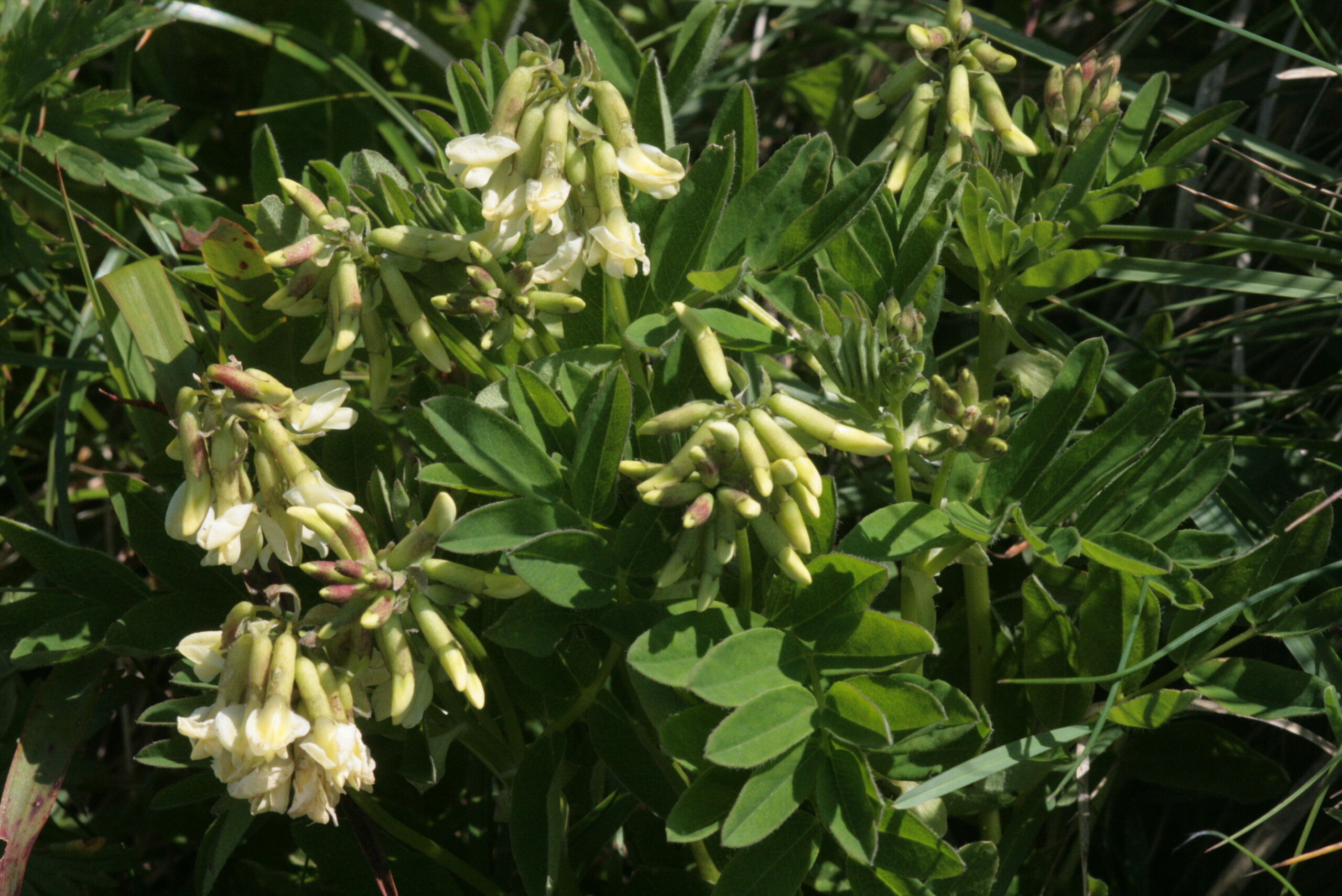
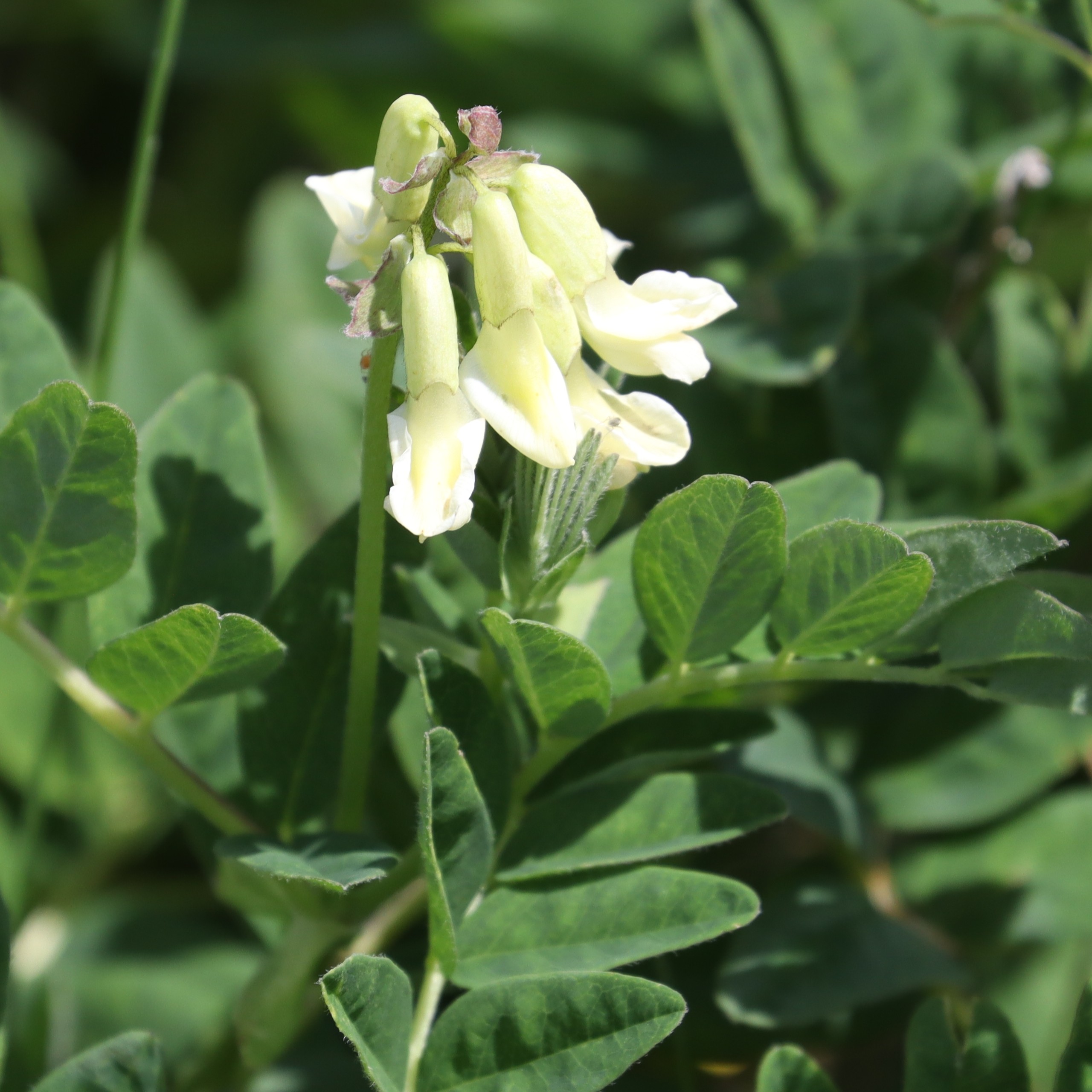
Yellow alpine milkvetch — also called pallid milkvetch, and in some sources Arctic milkvetch or frigid milkvetch — is a species of flowering plant in the legume family, Fabaceae, and it is a cold-climate plant through and through. In its Eurasian range it is described as a perennial, 8 to 35 centimetres (3 to 14 inches) tall, typically found in forests, meadows and along riverbanks at elevations from 200 to 3,000 metres. Other floras give a taller, more upright picture — stems to about 40 centimetres, leaves with 4 to 7 pairs of leaflets — and that disagreement is not a mistake in this guide, it is the plant itself: Astragalus frigidus as botanists use the name covers a wide, cold range, and plants at the edges of that range do not all look alike. The honest description is a low to medium perennial with pinnately compound leaves and pea-like flowers in loose racemes, and the flower colour is where you should pay attention, because it is the thing that separates this species from its purple cousin at a glance.
The flowers are pale. Flora Helvetica describes them as yellowish-white, about 1.5 centimetres long, hanging, grouped 5 to 20 in a somewhat loose raceme, and the Flora of Pakistan account describes a bright yellow corolla on a plant with black-hairy calyces. The common names agree: yellow alpine milkvetch, pallid milkvetch — pallid meaning pale, washed-out, the colour of a flower that has seen a lot of northern light and not much heat. That is the field mark that matters against alpine milkvetch, whose banner and keel are purple: if the milkvetch in front of you is pale yellow to yellowish-white, you are looking at the frigid one, and if it is purple-bannered with white wings, you are looking at the alpine one. Some secondary sources describe frigid milkvetch flowers as purple or pink-purple, and this guide records that disagreement rather than hiding it — but the flora accounts and the common names point pale, and pale is what this guide follows.
The leaves follow the milkvetch pattern: pinnately compound, with leaflets in pairs along a central stalk. The Flora of China account gives leaves 5 to 15 centimetres long, with leaflets in 4 to 6, sometimes up to 8, pairs, narrowly ovate to narrowly elliptic, 15 to 35 millimetres long, grey-green beneath with a distinct darker net of veins. The Flora Helvetica account gives 4 to 7 pairs of elliptical, hairless leaflets about 2 to 2.5 centimetres long, with oval, clasping stipules. The stems are mostly hairless, simple, and upright rather than sprawling — a contrast with alpine milkvetch’s decumbent, mat-forming habit, and another way to tell the cousins apart in the field: one hugs the ground, the other stands up, a little, in the cold air.
The range is where this guide has to be careful, and where it earns its keep. In the strict sense, Astragalus frigidus is native to subarctic and subalpine Eurasia. But the name has also been applied, in the past and in some North American sources, to North American plants that most modern treatments separate as American milkvetch, Astragalus americanus — and the Hecla Sulphur butterfly guide, a North American Arctic guide, names Astragalus frigidus among its hosts. That is a real taxonomic tangle, and this guide does not pretend to resolve it: it follows the butterfly guide’s Latin, as the project requires, and it flags the split plainly, so that a reader who looks up the North American plant and finds the name Astragalus americanus is not confused, and a reader who looks up the Eurasian plant and finds Astragalus frigidus is not misled. The synonym list alone tells the story — Astragalus secundus, Phaca frigida, Phaca alpina, Astragaloides frigida, and a dozen more names orbiting one cold plant — and the lesson is the standing one for this whole project: trust the Latin in the guide you are reading, and check it twice.
The butterfly connection is the reason this guide exists. In the Hecla Sulphur butterfly guide, the host-plants section says the caterpillars feed on milkvetch (Astragalus) species, including Astragalus frigidus and Astragalus alpinus, and on white clover, with arctic willow as a detour where milkvetch is absent. Frigid milkvetch is therefore a named host of a high-Arctic butterfly, and that is the context in which to understand it: a cold-climate legume, feeding a cold-climate caterpillar, in a short northern summer. It is not a plant you grow to attract the Hecla Sulphur to a southern garden, because the Hecla Sulphur does not live in southern gardens, and neither, really, does this plant.
How to grow
Start with the honest warning, because it comes before the planting advice and it changes the decision. Yellow alpine milkvetch is a subarctic and subalpine plant, not a general garden plant, and it has no business in a warm, humid bed. Its world is cold: open forests, meadows and riverbanks at elevation, cold nights, short summers, sharp drainage, and soil that is lean rather than rich. Planting it at low elevation in a warm climate is a mismatch, and no amount of enthusiasm will make it otherwise. The useful action for most readers is recognition and restraint: knowing what a frigid milkvetch is, leaving wild plants where they grow, and not digging cold-climate plants out of fragile habitat.
Where yellow alpine milkvetch is a sensible planting — a high-elevation rock garden or a northern garden in ground that mimics its home — give it full sun and sharp drainage. As a cold-climate legume it wants open ground, lean soil, and water that moves through rather than standing around the crown. Rich, compost-heavy soil and frequent watering produce soft growth that flops and rots, which is the usual fate of mountain plants pampered in lowland gardens. A gravel mulch, rather than bark, keeps the crown dry and suppresses weeds without holding damp against the plant.
Plant from seed or nursery stock in spring, after the worst cold has passed, and water sparingly through the first season until the root system is established. Like other Astragalus species it is a perennial, and once established it is hard to move — so choose the spot before you plant, not after. Legumes fix their own nitrogen through nodules on their roots, so do not fertilise it like a hungry annual: in lean soil it feeds itself, with a little help from its root bacteria, and fertilizer produces lush, soft growth that is more attractive to pests and less true to the plant. If a plant looks pale and hungry, the problem is almost never a lack of feed — it is too much water, too little sun, or soil that stays wet, and the fix is drainage and light.
Hardiness zones and exact spacing are not pinned in the sources checked for this guide, and this guide does not invent them. The plant’s world is subarctic and subalpine, at elevations up to 3,000 metres in its Eurasian range, and any guide that gives you a zone number for Astragalus frigidus without citing a flora is guessing. What can be said is that it is a low to medium perennial, grown as a clump, and that it should be given the room a clump needs and the cold it evolved with. If you need exact figures, consult a regional flora for your area before you plant, and check the Latin twice — frigidus, the cold one, not alpinus, its purple cousin in the same butterfly guide, and not americanus, the North American plant that has worn this name in the past.
Water & feeding
Water a yellow alpine milkvetch the way the cold places water it: snowmelt in spring, then a drier summer with occasional rain, and never a soggy crown. Through the first growing season, water when the soil has dried out, wetting the root zone thoroughly. Once established, back off — cold-climate plants are built for lean conditions, and summer water in a humid climate is more dangerous to them than summer drought. In winter, the rule is drainage, not drought: keep water moving away from the crown, and never let the plant sit in a hollow that ponds.
Feeding is simple: do not. Yellow alpine milkvetch grows in lean cold-climate soil and, as a legume, fixes its own nitrogen, and fertilizer produces weak, floppy growth. A gravel top-dressing and the minerals already in the soil are all the feeding it needs. If a plant looks hungry, check the drainage and the sun first, and the fertilizer bag last, if at all.
Pruning is a deadheading conversation, not a shaping one. Remove spent flower stalks after bloom if you want a tidier clump, and trim away dead material in spring. Do not cut into the crown: cold-climate perennials grow slowly, and a hard cut into old growth may not regrow. A clump left alone, with only its dead stalks tidied, is a clump that will persist, which is the right order of things.
Common problems
- Wrong climate. The defining problem. Heat and humidity, not cold, kill cold-climate plants in lowland gardens. If your summers are hot and wet, admire this plant on northern trips rather than planting it at home.
- Wet soil and crown rot. Saturated soil, especially in winter, rots the crown. Prevention is drainage, raised beds, gravel mulch and a site that never ponds; there is no cure for a rotted crown.
- Mistaken identity. The most common real-world problem with this plant is its name. North American plants once called Astragalus frigidus are now usually treated as Astragalus americanus, and milkvetches in general are identified by their pods as much as their flowers. Buy named seed from a reputable source, and do not identify a wild milkvetch from a phone photo alone.
- Flower-colour confusion. Some secondary sources describe this species as purple-flowered, against the flora accounts and common names that point pale yellow to yellowish-white. If a plant sold as frigid milkvetch is deep purple, check whether you have alpine milkvetch instead.
- Locoweed caution. Many Astragalus species are toxic to livestock — the locoweeds carry swainsonine and other compounds — and the genus as a whole should be treated with respect around grazing animals. This guide makes no edibility or medicinal claim for yellow alpine milkvetch, and no part of it should be eaten or used as medicine on the basis of this guide.
- It is not the milkvetch genus guide. A scoping note: the milkvetch guide covers Astragalus species as a group, and it lists frigid milkvetch among its species. A genus guide does not cover a species, and this guide does not cover the genus. If a butterfly guide says Astragalus frigidus, it means this plant.
Harvest
There is no garden harvest from yellow alpine milkvetch to recommend. It is not a food plant, not a medicine chest, and not a cut flower — its flowers are small and pale, on a cold-climate perennial, and picking them would be missing the point. The harvest that matters is ecological: the plant feeds the caterpillars of the Hecla Sulphur butterfly in the far north, and as a legume it fixes nitrogen into cold, lean ground where few plants thrive, preparing soil for the plants that come after it. That quiet work — standing upright in subarctic meadows and riverbanks, feeding a caterpillar that will become a sulphur-yellow butterfly in a short Arctic summer — is the harvest, and it is a long one.
If you grow it, the honest return is the clump itself: a pale-flowered, cold-hardy legume in a rock garden that actually belongs there, a nitrogen-fixer that asks for nothing but sun and drainage, and a living link to the subarctic summer. Leave it standing, let it seed, and let its pods drop where they will. The Hecla Sulphur, if it ever flies over your garden, will not be looking for it there — but the plant will still be doing the work it evolved to do, which is enough.
Saving seeds
Yellow alpine milkvetch is a legume, and like most of its pea-family cousins it packages its future in pods. Let the pods stay on the plant until they turn dry and papery and rattle faintly when you shake them — harvesting green pods is the classic way to end up with seeds that never wake up. Pop the pods open over a bowl, winnow out the chaff, and you have the easy part done. The hard part is convincing these seeds to germinate, because Astragalus frigidus is an alpine plant that evolved to survive winters that would make a Floridian weep, and its seeds carry that paranoia in their coats.
Two dormancy locks guard each seed. The first is a hard seed coat that water struggles to penetrate, and the second is a cold requirement: the embryo expects a winter before it trusts spring. Gardeners generally tackle both, in that order. Nick the coat lightly with sandpaper or a nail file — just enough to dull the shine, not enough to gouge the seed itself — then give the seeds a cold, moist spell in the fridge, tucked into damp sand or a damp paper towel inside a bag, for several weeks. Sources disagree on exactly how long that cold spell should run, with published ranges spanning roughly a month to three months, which is honest science-speak for “this plant has not read the same manual twice.” If you sow in autumn outdoors in a cold climate, winter does the work for you; in Florida, the fridge is your winter, and you will need it.
Sow shallowly, barely covered, in a gritty, free-draining mix — this is a mountain plant that hates wet feet even more than it hates warm winters — and keep the mix moist but never soggy. Germination is famously erratic: some seeds pop in a couple of weeks, others sulk for months, and some simply never bother. Sow more than you think you need and label everything, because milkvetch seedlings all look alike at first. This is a species, not a named hybrid, so seedlings grown from your own plants should resemble their parents, though as with any open-pollinated plant, bees may have introduced a little genetic gossip from neighboring milkvetches. Once seed is fully dry, store it cool, dark, and airtight with a desiccant packet — Florida humidity is the enemy of every stored seed, and a jar left on a sunny windowsill is a seed morgue. Use saved seed within a couple of seasons for the best odds, and accept that a low germination rate is the plant’s nature, not your failure.
Species and lookalikes
Yellow alpine milkvetch — Astragalus frigidus — The plant of this guide: a low to medium cold-climate perennial with pale yellow to yellowish-white pea flowers in loose racemes. Synonyms recorded in the sources checked include Astragalus secundus, Phaca frigida and Phaca alpina. No named garden varieties of this species were verified in the sources checked.
Alpine milkvetch — Astragalus alpinus — The other milkvetch named in the Hecla Sulphur host list, and a different species from this one. It is the purple-bannered, white-winged, mat-forming milkvetch, covered by its own guide. Do not fold the two together because they share a butterfly.
American milkvetch — Astragalus americanus — The North American plant that has worn the name Astragalus frigidus in past treatments, and that most modern treatments separate from the Eurasian Astragalus frigidus. If you are identifying a North American plant and your flora says americanus, it is talking about this plant’s North American counterpart, not a third species to add to the list — but this guide follows the butterfly guide’s Latin, frigidus, and flags the split rather than merging the two.
Canadian milkvetch — Astragalus canadensis — A stouter, upright milkvetch of prairies and open ground, covered in the milkvetch genus guide’s species list. A different species, and a warmer-climate plant than the frigid one.
White clover — Trifolium repens — Named alongside the milkvetches in the Hecla Sulphur host list, but a clover, not a milkvetch, and a different genus entirely. It is listed here only because it shares the butterfly, not because it resembles this plant.
Arctic willow — Salix arctica — The Hecla Sulphur’s detour host where milkvetch is absent. A willow, not a legume, and the odd one out in a legume host list — which is exactly why the butterfly guide remarks on it.
Note: the milkvetch genus guide (Astragalus species as a group) does not cover this species, and this guide does not cover the genus. If a butterfly guide says Astragalus frigidus, as the Hecla Sulphur guide does, it means this plant.