
🌸 Philippine Violet
What it looks like
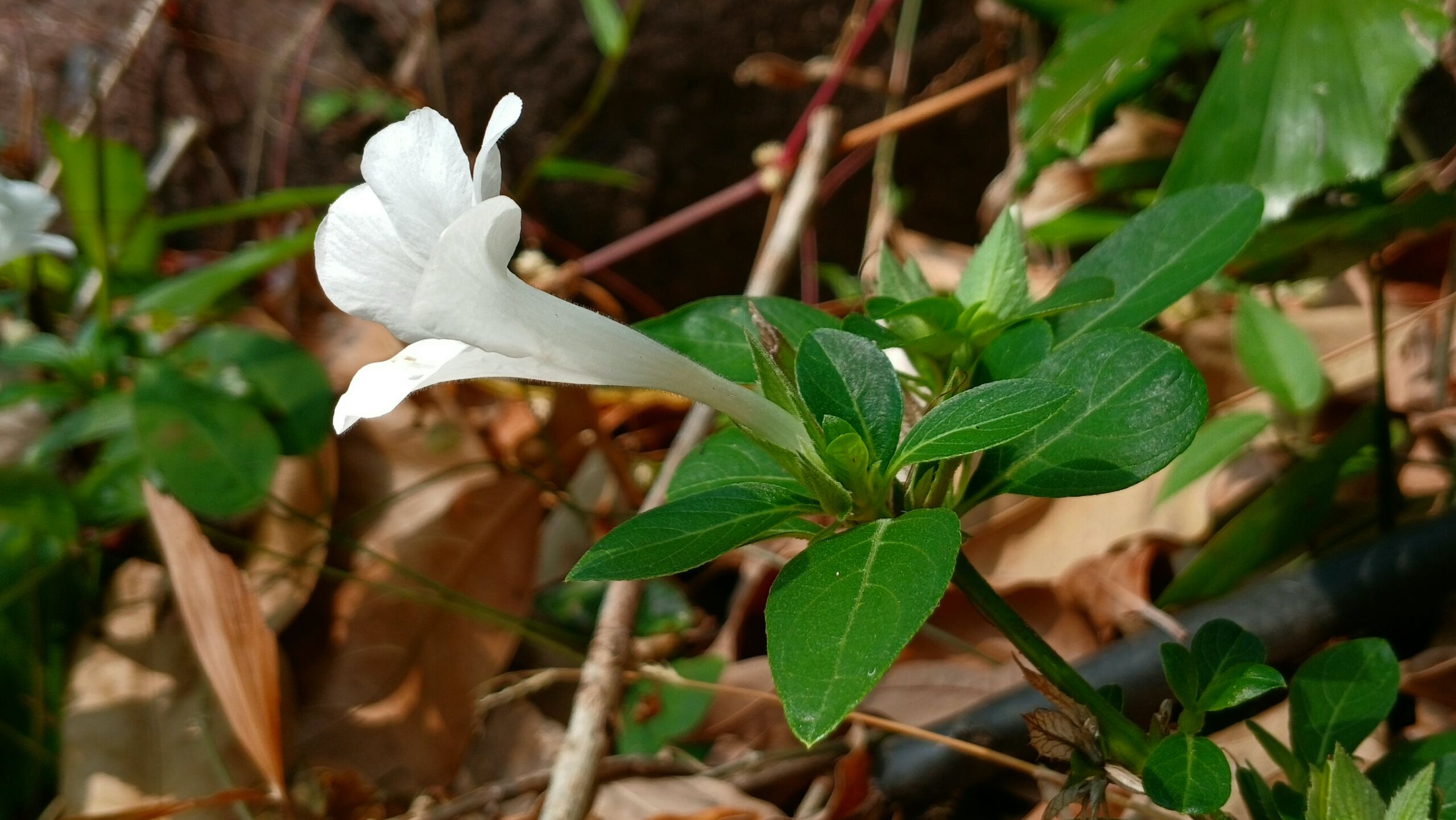
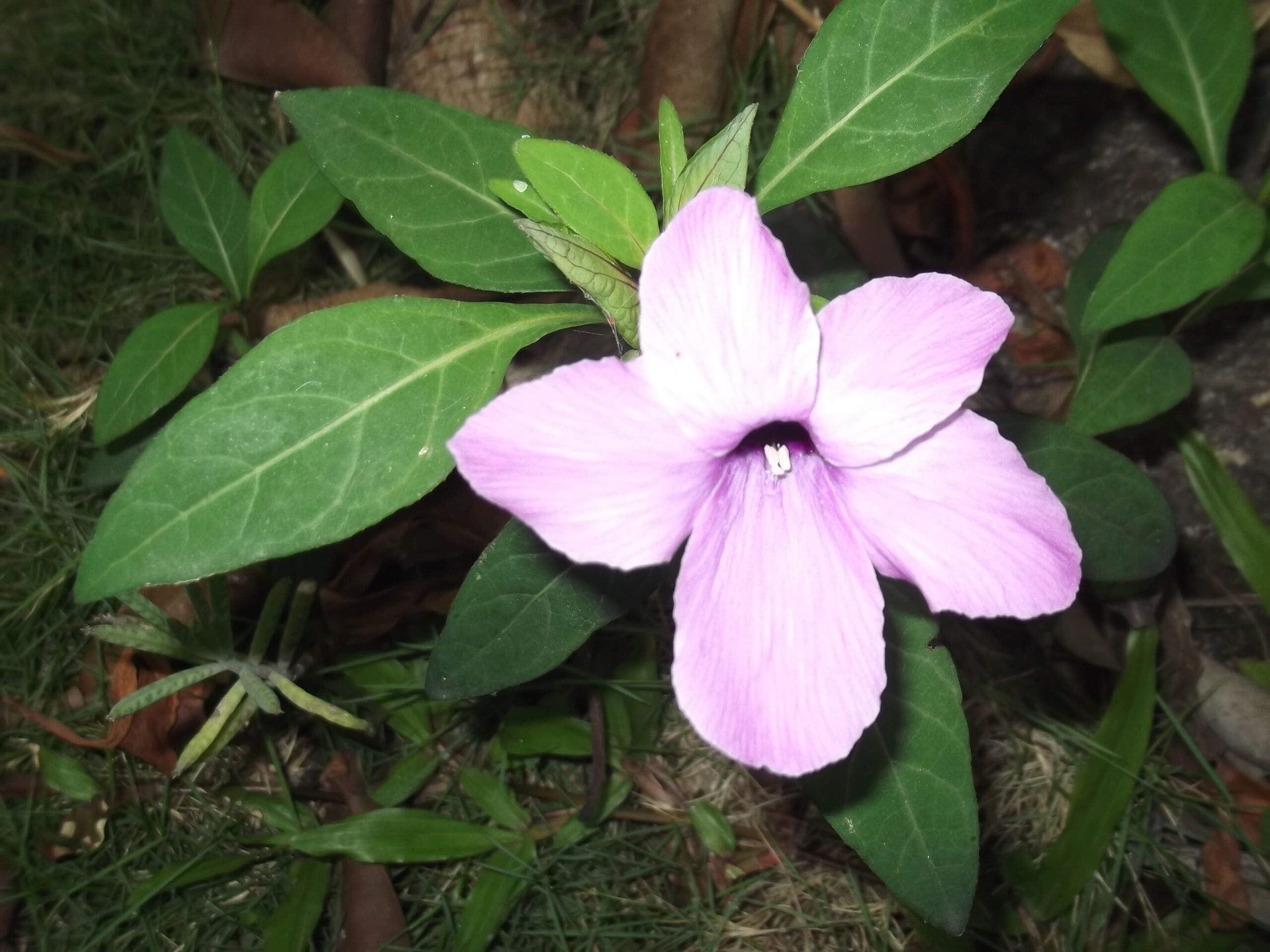

Philippine violet is an upright, herbaceous perennial — treated as a shrub in warm climates — in the acanthus family, Acanthaceae, and the first thing to say about it is that its common name is wrong twice over. It has no connection to the Philippines and it is not a violet: it is a Barleria, a genus of some 300 tropical and subtropical shrubs and subshrubs, named for the seventeenth-century French botanist Jacques Barrelier, and this species was formally described by Linnaeus in 1753. Its other common names are crested Philippine violet and bluebell barleria, and in South India it is known as the December Flower, because it blooms in December and its flowers are strung into garlands for wearing in the hair.
In form it is a dense, upright, hairy-stemmed, evergreen subshrub. Heights disagree by source in a way this guide records rather than smooths over: the current UF/IFAS account gives 6 feet tall with a 4-foot spread, the older IFAS account gives 36 to 48 inches, other floras give 60 to 100 centimeters, and one tropical-plants account gives 1 to 3 meters. The honest summary is a bushy plant roughly 3 to 6 feet tall and 3 to 4 feet wide, dense in full sun, making a good barrier, hedge, foundation, or border plant. The leaves are dark green on the upper surface and pale green beneath, elliptic to narrowly ovate, 2 to 4 inches long in the IFAS account, with tissue puckered around the veins, which appear recessed — a quilted look that helps identify it out of flower. The leaf arrangement is opposite, the stems are hairy, and after freezing weather the foliage becomes hard and prickly to the touch, which is why IFAS advises wearing gloves for spring cleanup.
The flowers are the reason anyone plants it. They are funnel-shaped, about 5 centimeters long, in violet, pink, or white, with white and lavender forms both common, and striped lavender-and-white forms sold as Lavender Lace. They appear on new growth in late summer and early fall in Florida, in terminal clusters, and in warm, frost-free areas they can flower intermittently through much of the year. The flowers are two-lipped and tubular, typical of the acanthus family, with prominent bracts, and the inflorescence is subtended by spiny bracts — handle the flower clusters with the same respect as the prickly post-freeze leaves. The fruit is an ellipsoid capsule about 1.5 centimeters long, glabrous and glossy at maturity, holding seeds that, in the family’s fashion, are quick to disperse. That capsule is the plant’s second personality, and it matters more than the flowers for the warnings below.
Its native range is southern and temperate Asia into tropical Asia: southern China, India, Pakistan, Myanmar, and neighboring countries, growing by streams, on roadsides and slopes, and in dry, xeric vegetation from near sea level to about 2,600 meters. It is widely grown as an ornamental in warm gardens worldwide, and it has naturalized beyond its native range — in Hawaii, in dry habitats; in Fiji and on Christmas Island, along roadsides and disturbed areas; and, closer to home, it is reported growing wild in central Florida. That Florida fact is stated carefully, because it is the hinge of this guide: Philippine violet is a Florida garden plant that does not always stay in the garden.
How to grow
Give Philippine violet what IFAS gives it: full sun to part shade, well-drained soil, and room to be dense. It stays dense in full sun, which is what makes it a good barrier planting, and it flowers most profusely with sun; in shade it will grow but flower less. It adapts to a variety of soil conditions — sand, loam, and clay are all listed as tolerated — provided the drainage is good, and it is drought tolerant once established, though it appreciates regular water without being overwatered. In the UF/IFAS planting guidance, zones 9A through 11B are the range, with year-round planting in zones 9, 10, and 11, and in north Florida it is evergreen in mild winters but may die to the ground in a cold winter, returning from the base in spring. That dieback is not death; it is the plant’s cold-weather habit, and it is why the spring pruning advice below exists.
Space plants 3 to 4 feet apart, which matches the 4-foot spread in the IFAS account and the 36-to-48-inch spacing in garden listings. Site it as a hedge, foundation planting, or border, not in front of a low window, because it will outgrow that spot, and not at the edge of a wild area, because of the reseeding warning in the next section. Plant it where you can see the flowers and reach the plant for pruning, and where a few volunteer seedlings will be a nuisance you can pull rather than an invasion you cannot reach. In a pot it is a cheerful, fuss-free shrub for a sunny patio, and potted growing is the honest recommendation for anyone who wants the flowers without the seedlings: a container keeps the capsules where you can deadhead them.
Pruning is the annual ritual, and IFAS states it plainly: prune the plant to the ground each spring to maintain a bushy plant. That sounds drastic, and it is meant to be — the plant regrows vigorously from the base, flowers on new growth, and stays dense instead of going leggy and woody. Wear gloves for the cleanup, because post-freeze leaves turn coarse and prickly and can irritate skin. Pinching stem tips during the growing season also encourages fuller, branchier growth. Propagation is by seeds or cuttings, and both are easy: stem cuttings 8 to 10 centimeters long root readily, and seeds germinate in about two weeks in warm, moist, well-drained soil. That ease is a virtue and a warning in the same breath, and the next section explains why.
Water & feeding
Water regularly but do not overwater. Philippine violet is drought tolerant and adapts to a variety of soils, but it is not a desert plant and it is not a bog plant: the middle path is well-drained soil that dries between waterings, with extra water in dry spells and in the establishment year. A spring mulch of compost or worm castings is plenty of feeding; heavy feeding pushes soft, leggy growth on a plant that is already fast-growing, and IFAS notes it is very low maintenance as a landscape plant. In a pot, let the mix dry on the surface between waterings and never leave the pot standing in a saucer of water. In the ground, the drainage rule is the same as for every plant in this library that hates wet feet, with one difference: this plant will forgive a missed watering far more readily than a missed deadheading, because the seeds, not the water, are what get away from you.
Soil pH is forgiving: garden listings give roughly 6.1 to 7.5, mildly acidic to neutral, and other accounts describe a preference for neutral to slightly acidic, organic-rich loam or sandy loam. Drainage matters more than the exact number. A Philippine violet in heavy, waterlogged soil will sulk; the same plant in sandy, well-drained Florida soil with sun will grow fast enough that you will be pruning it to the ground each spring and wondering, by fall, where the seedlings came from. That is the plant telling you its preferences, in its own way.
Common problems
The problem that matters is not a pest or a disease. IFAS states it twice, in two decades of publications, and this guide repeats it because it is the reason this plant needs a warning label rather than a sales pitch: Philippine violet readily reseeds and may move outside the intended area of cultivation, and the older account calls it weedy, saying it will readily reseed itself and can invade adjacent land. One review of its naturalization notes it as a potential invasive in waste areas and along roadsides, and it is recorded as escaping from cultivation and becoming invasive in some areas. This guide does not claim a Florida state invasive listing that it has not verified, and it does not recommend the plant uncritically. The honest position is: a vigorous ornamental that has naturalized in parts of Florida and beyond, that self-sows freely, and that should be deadheaded, kept out of wild areas, and grown in a pot if you cannot commit to pulling volunteers. If you want a butterfly host without that baggage, plant a native host instead and leave Philippine violet to the gardeners who will deadhead it.
Other problems are smaller. Long-term health is usually not affected by pests, per IFAS, and the plant is described as very low maintenance. Cold is a setback, not a killer, in its range: northern plants are killed to the ground in freezing temperatures and return from the base in spring, which is why the spring cut-to-the-ground pruning exists. Post-freeze foliage turns hard and prickly and can irritate skin, so gloves are not optional for cleanup. Salt tolerance is poor, so it is not a beachfront plant. And the flowers themselves are short-lived: an older garden account complains, charmingly, that the delicate flowers droop and wither very quickly, and a shower of rain spoils them at once. That is not a defect to fix; it is the plant’s rhythm, and the next flush is already coming.
The other common problem is name confusion. Philippine violet is not a violet, and it is not the same plant as other barlerias: Barleria prionitis, the porcupine flower, is a spiny bush with orange flowers, and Barleria involucrata is similar to cristata but larger in leaf and bloom, in blue-lilac. Buy by the Latin, Barleria cristata, and by the flower: funnel-shaped, about 5 centimeters, violet, pink, or white, on a dense, hairy-stemmed shrub with puckered, opposite leaves.
Harvest
Philippine violet is not a food crop, and this guide does not present it as one. Its recorded uses are ornamental and traditional-medicinal, and both need their cautions stated in the same breath. As an ornamental, the harvest is the flowers: in South India they are strung into garlands for wearing in the hair, and in a Florida garden the harvest is a hedge in flower in late summer and fall, cut stems for a vase — where they last only a short time — and the satisfaction of a plant that regrows from a spring pruning into a dense, flowering shrub by fall. As a traditional remedy, it is used in Thailand as a tonic, diuretic, and blood purifier, and its bitter leaf and root juice has a long folk record; the pharmacological literature studies its extracts, and mouse studies at fixed doses found no side effects or death, but that is not a recommendation, and this guide makes none. Do not eat or medicate with this plant on the strength of a garden guide.
The harvest that matters for the butterfly library is different, and it is the reason this guide exists at all: Philippine violet is a host plant of the mimic butterfly, which is listed in that butterfly’s guide under both the common form, barleria cristata, and the Latin form, Barleria cristata. That is why this guide covers both mention forms under one species, and why the coordinator wires both forms to it. A garden that deadheads every flower to prevent seedlings is a garden that has removed the plant’s flowers, but the caterpillars feed on the leaves, not the blooms, so deadheading and hosting are compatible — pull the capsules, keep the leaves, and the mimic’s caterpillars keep their nursery. That is the bargain this plant offers, and it is a fair one, provided you keep your side of it: deadhead, pull volunteers, and never plant it where its seedlings can walk into wild land.
Saving seeds
Philippine violet does not need your help to save its own seed — it needs your supervision. Barleria cristata reseeds so readily that Florida extension guidance warns it can move outside the bed you planted it in, which makes seed-saving here less a rescue mission and more a matter of catching the escape artists before they scatter. After the funnel-shaped flowers fade in late summer and fall, small capsules form, each holding a few seeds. The trick is timing: let the capsules dry on the plant until they are papery, but collect them just before they split, because once a dry capsule pops, its seeds are already on their way to the neighbor’s mulch. Snip whole drying capsules into a paper bag and let them finish opening there, where you — not the breeze — get to keep the contents.
Sow the seed shallowly in a warm, moist, well-drained mix, barely covering it, and keep it consistently moist but not soggy. Germination usually takes a few weeks, though some lots take longer, so give the tray time before declaring it a dud. Seedlings can be potted up once they are a few inches tall and sturdy enough to handle. Saved seed is the easy way to raise a drift of plants cheaply, and seed from the straight species generally comes reasonably true — but flower shade can wander, and a named color form is only guaranteed by cuttings. If you fell for one exact shade, take stem cuttings about eight to ten centimeters long, strip the lower leaves, and root them in moist mix; that cutting is a clone, while a seedling is a suggestion.
Florida notes, both practical and neighborly: dry saved seed thoroughly before storing it in a labeled, airtight container with a desiccant packet, cool and dark, because our humidity will otherwise turn a good seed lot musty. And manage the volunteers. Deadhead if you do not want a self-sown colony, pull stray seedlings while they are small, and do not toss seed heads or prunings where they can wash into natural areas — this is a non-native plant with a demonstrated enthusiasm for spreading, and keeping it inside your garden is part of growing it responsibly. Save the seed, enjoy the abundance, and stay in charge of where it lands.
Species in this group
- Philippine violet — Barleria cristata: This guide’s plant. An upright, hairy-stemmed acanthus shrub, 3 to 6 feet tall, with puckered opposite leaves and funnel-shaped violet, pink, or white flowers about 5 centimeters long; host of the mimic butterfly, under both its common and Latin mention forms.
- White Philippine violet — Barleria cristata var. alba: The white-flowered form of the same species, sold as Alba. Same plant, same reseeding warning, white flowers.
- Striped Philippine violet — Barleria cristata Lavender Lace: The lavender-and-white striped form of the same species. Same plant, same warning, striped flowers.
- Porcupine flower — Barleria prionitis: A different barleria, a spiny bush with orange flowers. Not Philippine violet, despite sharing the genus and the garden.
- Barleria involucrata: A similar barleria with larger leaves and blooms than cristata, in blue-lilac. Not Philippine violet, and the size difference is the field mark.
- Barleria lupulina: Another garden barleria, the hop-headed barleria, with a different flower form. Not Philippine violet.