
🌼 Black Birch
What it looks like
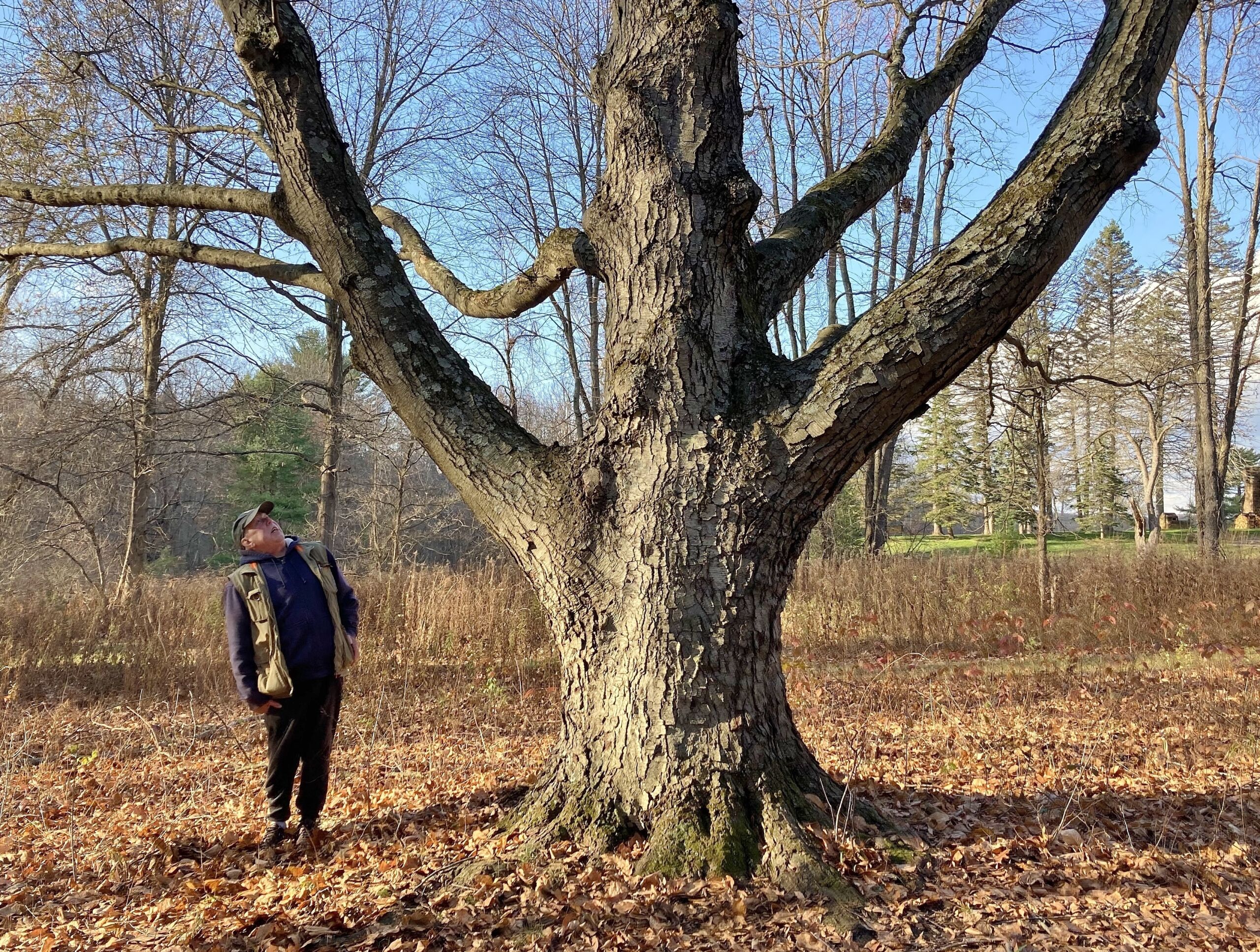
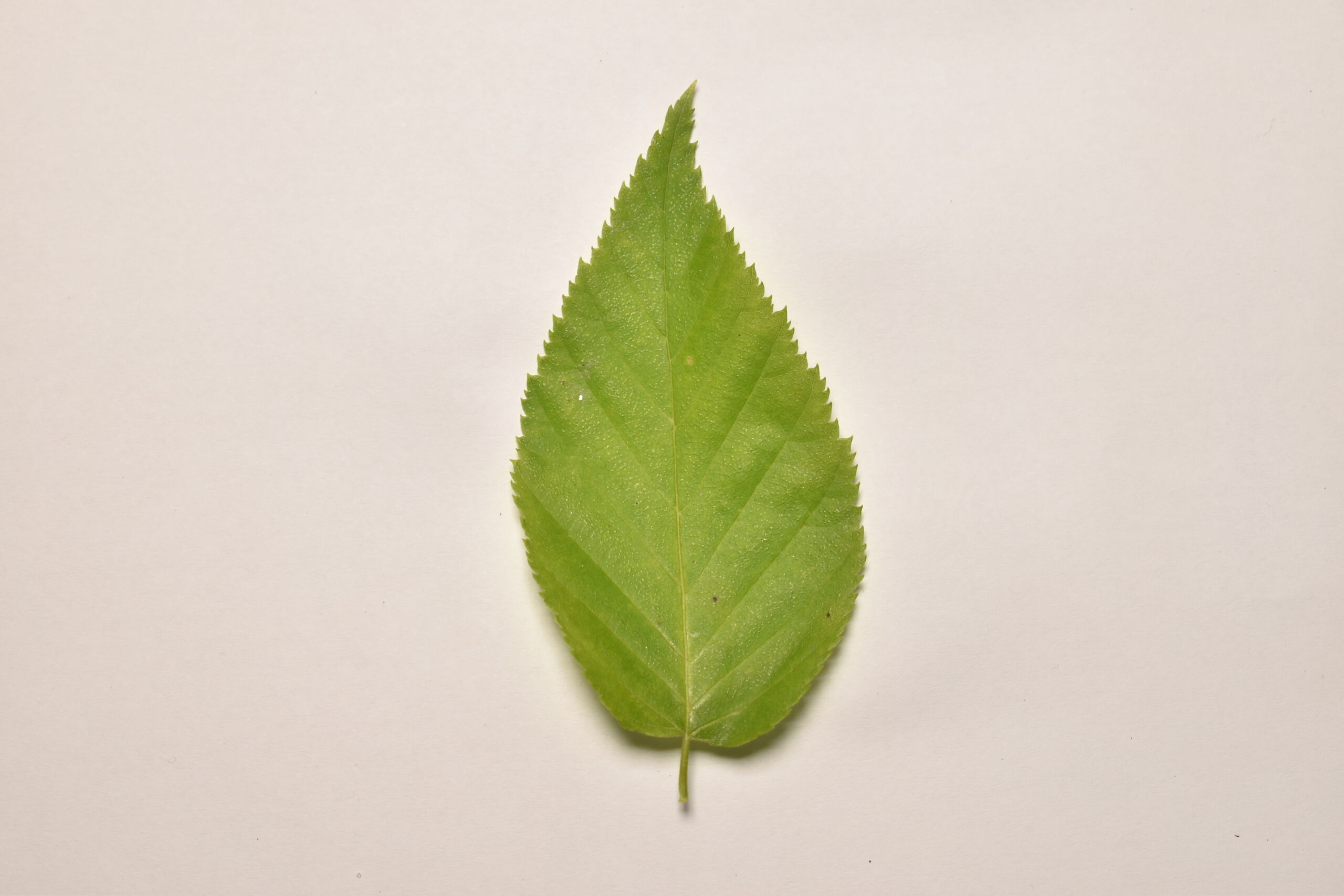
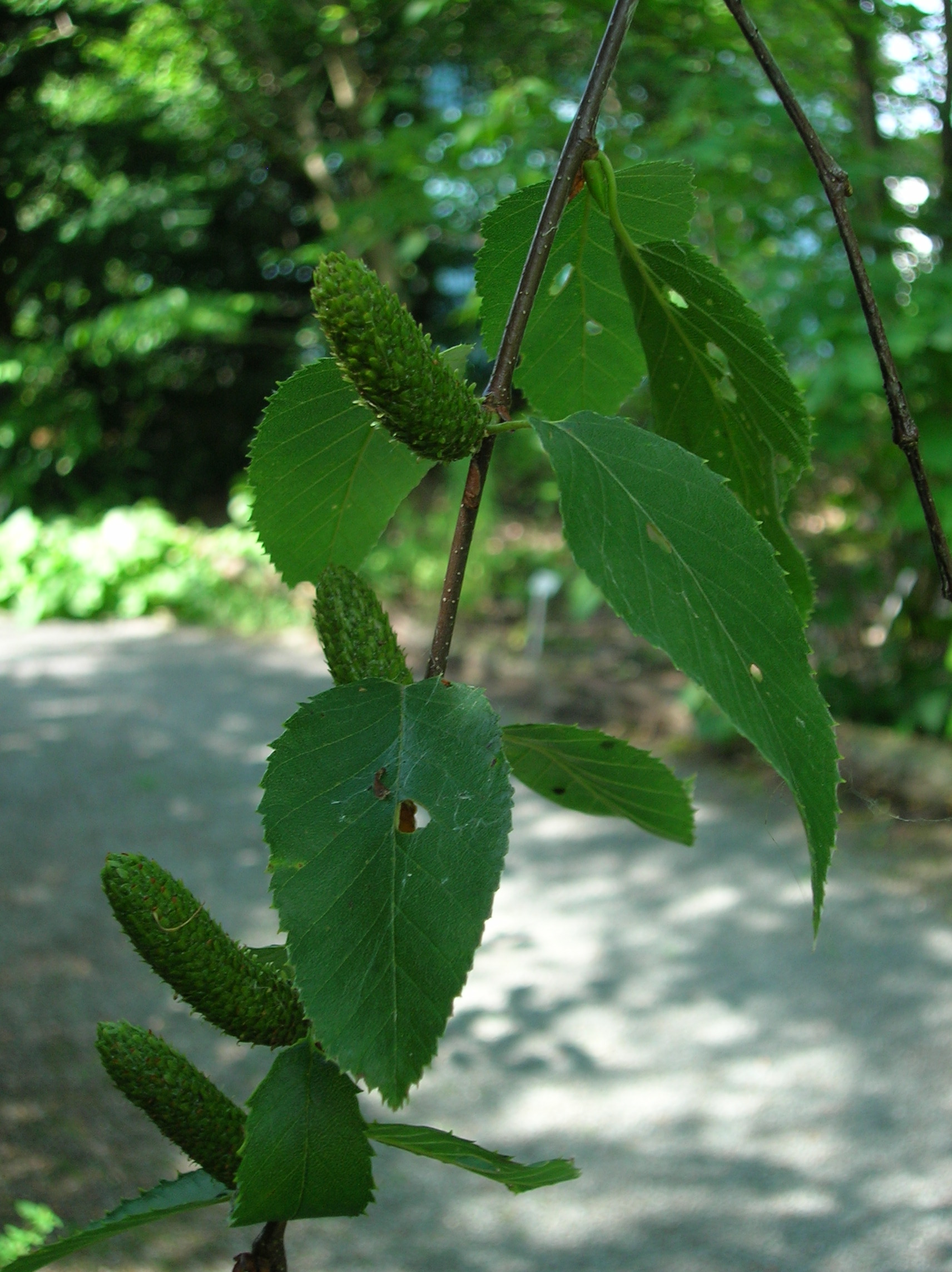
Black birch is the birch that breaks the birch rule. Ask most people to picture a birch and they picture white, peeling bark — and then black birch walks in with bark so dark it is mistaken for a cherry tree, and twigs that smell like wintergreen when you scratch them, and the whole identification game changes. Betula lenta is a medium-sized deciduous tree of eastern North America, in the birch family Betulaceae, also called sweet birch for its scent and cherry birch for its bark, and those three names — black, sweet, cherry — are the same tree, not three trees. It is a tree of rich, moist, cool forests and rocky slopes, from southern Maine west to southernmost Ontario and south in the Appalachian Mountains to northern Georgia, and it is one of the dominant trees of the moister hardwood forests of the northern Appalachians.
Start with the bark, because the bark is the story. On young trees it is smooth, reddish-brown to black, with distinct horizontal lenticels, the breathing pores that make it look cherry-like. As the tree ages it does not peel in papery sheets the way paper birch does; instead it turns grey to nearly black and breaks into large, thin, irregular, scaly plates, furrowed and close, which is why an old black birch is sometimes not recognised as a birch at all. The trunk is tall and straight, typically 15 to 24 metres (about 50 to 80 feet) tall, exceptionally to 30 or 35 metres, with a trunk up to 60 centimetres across and a narrow, open crown. The twigs are thin, reddish-brown to deep brown, smooth and shining, and when scraped they give off a strong scent of wintergreen — methyl salicylate, produced in the bark — which is the scratch-and-sniff test that separates black birch from almost every lookalike on the spot. The leaves are alternate, ovate, 6 to 15 centimetres long and 4 to 8 wide, with a finely serrated margin and veins that sweep upward, turning a spectacular golden-yellow in fall. The flowers are wind-pollinated catkins 2.5 to 3 centimetres long, the tree monoecious with pendulous male catkins and erect female catkins, and the fruit, maturing in fall, is a small catkin packed with tiny winged seeds between its bracts.
Black birch is a long-lived tree by garden standards and a patient one. Seed production mainly occurs in trees between 40 and 200 years old, though light crops can appear as early as 16 years, and the oldest known individual has been confirmed at 368 years old, with the species capable of living 250 to 300 years in undisturbed forest. The bark itself keeps a rough diary of that age: smooth young bark begins to split around 40 to 50 years, peels around 70 to 80, and is replaced by successive layers that peel again around 130 to 150 and 200 to 210 years. It seeds prolifically and colonises disturbed areas quickly, which is why, in the northeastern United States in the 1980s, black birch moved into gaps left when spongy moths, hemlock woolly adelgid, and dogwood anthracnose killed other trees. It is also notably resistant to the bronze birch borer that troubles other birches, and deer tend not to browse its young growth, which together explain why it is abundant where its yellow birch cousin is scarce.
For butterflies, this guide exists because of one comma. The green comma guide in this series lists its host plants as small pussy willow, “black birch (Betula lenta),” alder, western azalea, and gooseberry, more broadly willows, alders, birches, and blueberries. The green comma is a ragged-edged anglewing of northern forests and tundra edges, and its caterpillars eat birch leaves among others — so a black birch in a northern woodland edge is not just a timber tree or a wintergreen factory, it is a comma nursery. The leaves also feed other caterpillars, and the solitary leaf-cutter bee Megachile rubi cuts pieces from them to line its nest cells, which is a polite way of saying the tree is lunch for more than butterflies.
How to grow
Grow black birch where it can be a northern forest tree, not where you wish it were a southern one. It is best on deep, rich, moist, acidic soils, but it is adaptable: it tolerates clay, shallow rocky ground, and drier soil than most birches, and it is found on both protected slopes and rockier, more exposed sites. Give it full sun for the strongest fall colour, with light shade tolerated, and give it room — 30 to 40 feet from neighbours, because this is a 40- to 70-foot tree with a 35- to 40-foot spread, not a foundation shrub. Plant and transplant in spring, water well through establishment, and then let its preference for consistently moist, well-drained soil guide you: it likes moisture, it does not like sitting wet, and it dislikes compacted soil, urban sites, and hot, humid summers, which is the plant telling you, in advance, where it will fail.
Pruning has one rule that matters more than any other: prune only when fully dormant. Birches bleed heavily when the sap runs in spring, so winter pruning is the safe window and spring pruning is the way to watch your tree weep. Otherwise maintenance is light: mulch to keep roots cool and moist, remove dead wood in dormancy, and let the tree grow at its moderate to fast rate — typically a foot or two a year in good conditions — into its narrow, open crown. Propagation is by seed, sown when ripe in fall, with the usual birch patience required, and by the tree’s own prolific seeding in suitable sites, which means a black birch in a woodland garden will often plant its own successors if you let a few seedlings stand.
Florida note: Be blunt: black birch is not a Florida tree. It is a cool-climate species of northern hardwood forests, hardy to zone 3 and unhappy in heat, and Florida’s hot, humid summers are exactly the conditions it dislikes. Its range ends in the mountains of northern Georgia, and even there it is a mountain tree, not a lowland one. This guide is included because a northern butterfly depends on it, not because a Florida gardener should plant it, and the honest Florida advice is to admire it on a mountain slope, plant a river birch or another heat-adapted native for a similar look at home, and let black birch keep its wintergreen to the cool woods where it belongs.
Water & feeding
Water regularly and keep the soil moist but drained. Black birch prefers moist soil and consistent moisture, especially while establishing and in dry spells, and it tolerates occasional periods of dry soil better than most birches — but “tolerates” is not “prefers,” and a black birch left dry through a hot summer will show it in thin growth and poor colour. Water deeply, allow the soil to dry slightly between waterings, and never leave it waterlogged, which rots roots in a tree that wants drainage with its moisture. A deep mulch of bark or wood chips keeps roots cool and holds moisture, which matters more for this tree than for many, because its shallow, spreading root system lives near the surface. Feeding: light or none. In rich, moist, acidic soil it needs no fertiliser at all, and in poorer ground a single spring application of a balanced fertiliser is the ceiling, not the floor — overfeeding pushes soft growth in a tree that survives by being dense and close-grained, and it does nothing for the wintergreen scent, which the tree provides free of charge.
Common problems
- Heat and humidity. The main limit. Black birch dislikes hot, humid summers and compacted urban sites. In warm lowlands it languishes; plant it only in cool climates, on north- or east-facing slopes where possible.
- Spring pruning bleed. Birches bleed heavily when sap runs. Prune only when fully dormant, in winter, and never as a spring tidy-up.
- Dry soil. It tolerates dry spells better than most birches but still prefers consistently moist soil. Thin growth and poor fall colour in a dry summer usually mean water, not food.
- Confusion with yellow birch and cherry. Yellow birch (Betula alleghaniensis) has exfoliating bark and is heavily deer-browsed; black birch bark does not exfoliate, and its twigs smell of wintergreen. Young black birch is also mistaken for cherry — scratch a twig and smell: cherry does not smell like wintergreen candy.
- Wet, compacted ground. It wants moist but well-drained soil, not standing water or compaction. Raised, mulched, uncompacted ground beats a wet lawn edge every time.
- Scale and space. A 40- to 70-foot tree planted 10 feet from a house becomes a problem in a decade. Site it 30 to 40 feet from buildings and neighbours at planting, not at pruning time.
Harvest
The harvest is scent, sap, and wood, in that order of romance. Scratch a twig and you harvest wintergreen: the twigs and inner bark, steeped, make a wintergreen tea, and the inner bark can be eaten raw as an emergency food, though “emergency” is doing honest work in that sentence and this guide does not recommend it as a snack. The sap flows about a month later than maple sap and much faster, and it can be boiled into a stronger, molasses-like syrup or made into birch beer — though boiling destroys the volatile wintergreen oil, so sap syrup and wintergreen oil are different harvests from the same tree, not one harvest twice. The wood is heavy, about 47 pounds per cubic foot, close-grained and dense, used for furniture, millwork, and cabinets, similar to yellow birch wood and often not distinguished from it in the lumber trade. Historically black birch was the chief commercial source of wintergreen oil, distilled from its wood, until synthetic methyl salicylate replaced it in the 1950s and 1960s — which is why the tree was once harvested almost to endangerment and now stands, scented and unexploited, in the northern woods. Leave the leaves for the green comma caterpillars, leave the sap for a careful spring tapping, and let the tree be what it is: a dark-barked birch that smells like candy and outlives the gardener who planted it.
Browse all plant & pest guides
Saving seeds
Black birch (Betula lenta) is gloriously straightforward about seed, and gloriously impatient about everything else. The tree is wind-pollinated and monoecious, which is the botanical way of saying one tree carries both male and female flowers and can set seed on its own. That means seed you collect is genuinely the species, not a clone — but it also means seedlings vary a little from tree to tree, the way children vary from parents. If you want an exact copy of one particular tree, seed is the wrong tool; if you want more black birches, seed is the honest, cheap, and traditional one.
Collect in fall, when the upright female catkins — the little cone-like clusters — turn brown and start to crumble at a touch. Work over a paper bag, because the seed inside is a crop of tiny winged nutlets that the wind is already trying to steal. Crumble the catkins in the bag and pick out the worst of the papery bracts. Dry the seed promptly: birch seed is not a long-keeper, so sow it fresh rather than hoarding it.
The no-argument method is to let winter do the work. Sow fresh seed in fall, on the surface of a moist, well-drained seed mix in pots or a cold frame, and barely cover it — birch seed germinates in light, and buried seed is sulking seed. Leave the pots outside through winter, keep them moist but never waterlogged, and watch for seedlings in spring. If you would rather stratify in the fridge, sources disagree on the exact stretch — roughly a month to two months of cold, moist chilling is the common range, with some growers going longer — so treat any single number with suspicion and lean on the fall-sowing method when you can. Either way, the seedbed wants what a woodland floor offers after a tree falls: bare, moist, light-reached soil, not a thick blanket of leaf litter that a dust-sized seed cannot punch through.
Then comes the birch part of the bargain: patience. Prick seedlings out into individual pots once they are big enough to handle, grow them on in a cold frame for at least their first winter, and expect slow, steady, unimpressive growth at first. A seedling is not a sapling after one summer, and it will not pretend otherwise. Plant out in late spring or early summer, after the last frosts, into cool, moist, well-drained soil. And if your tree already self-seeds — black birch is a cheerful self-sower in suitable sites — the laziest propagation of all is to let a few volunteers stand where they land and thin the rest. The tree has been planting its own successors for a very long time, and it is better at it than most of us.
Florida note: black birch is a cool-climate tree, marginal at best in Florida heat, so most Florida gardeners will be growing it as a curiosity in the coolest, moistest corner they own, if at all. If you do save seed, dry it thoroughly before it ever sees a jar — Florida humidity turns half-dry seed into mouldy seed — then store it airtight with a desiccant packet, cool and dark, and sow it promptly rather than hoarding it. Seed saved in a Florida summer and sown in a Florida fall is a much better bet than seed saved and forgotten in a shed.
Species and varieties in this group
Black birch, sweet birch, cherry birch (Betula lenta) — the species of this guide; the three common names describe one tree, distinguished by dark non-peeling bark and wintergreen-scented twigs.
Yellow birch (Betula alleghaniensis) — the close wintergreen-scented cousin, separated by exfoliating bark and different leaf undersides; heavily deer-browsed where black birch is not, and not covered by this guide.
Paper birch (Betula papyrifera) and river birch (Betula nigra) — the white-peeling and salmon-barked birches with their own guides on this site; they are different species and are not covered by this guide, and a birch guide for one species does not cover another.