
💙 Blue False Indigo
What it looks like
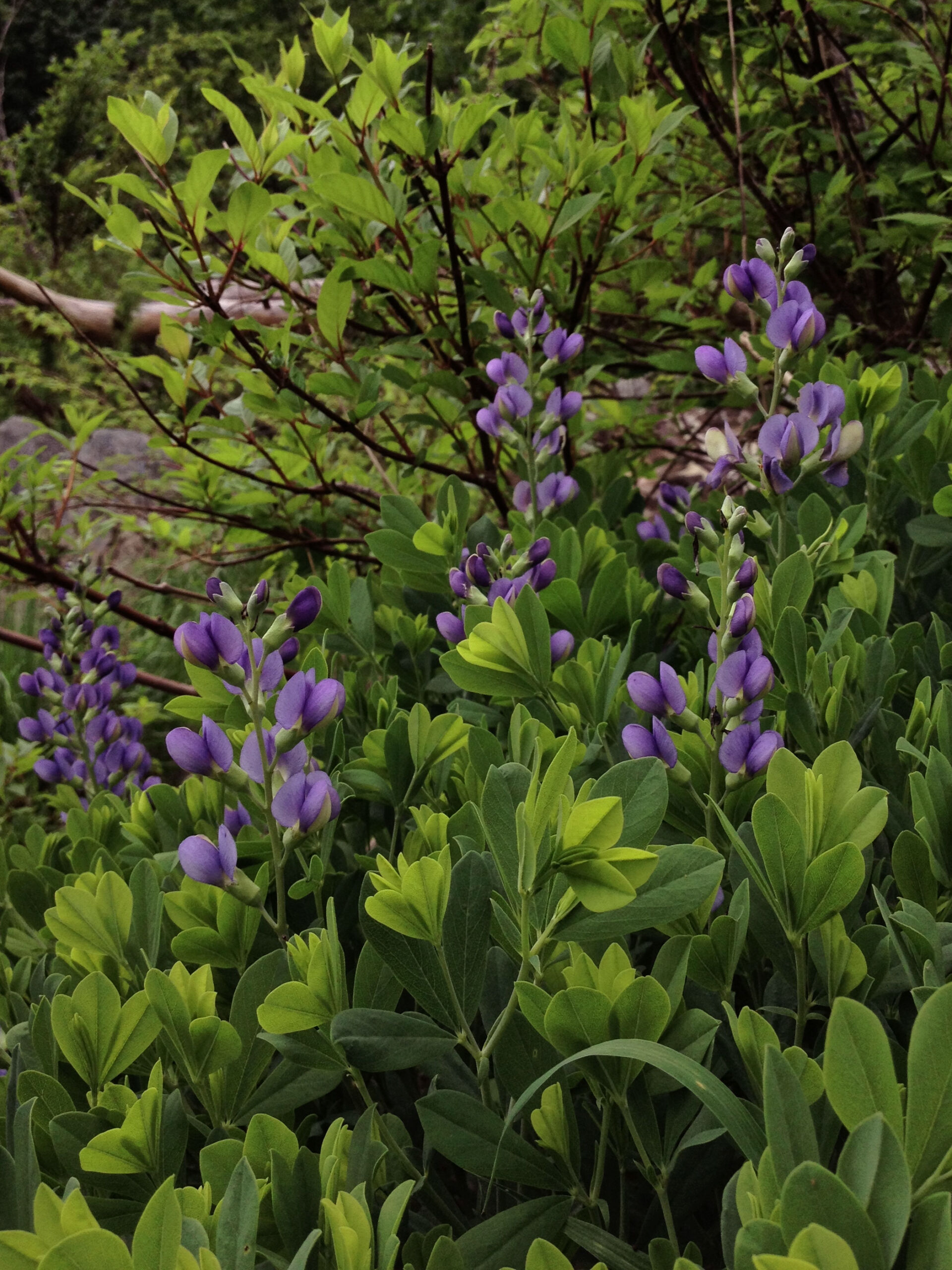
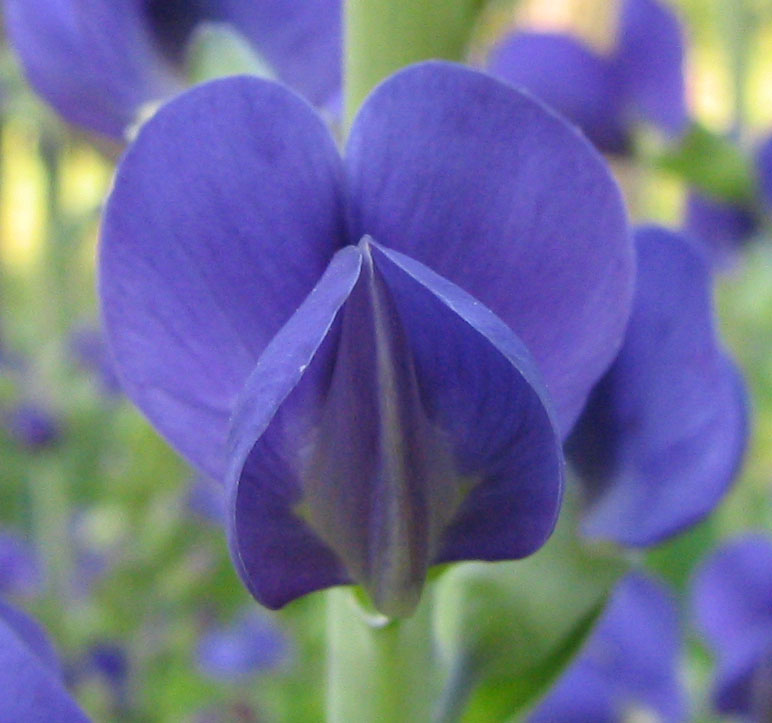
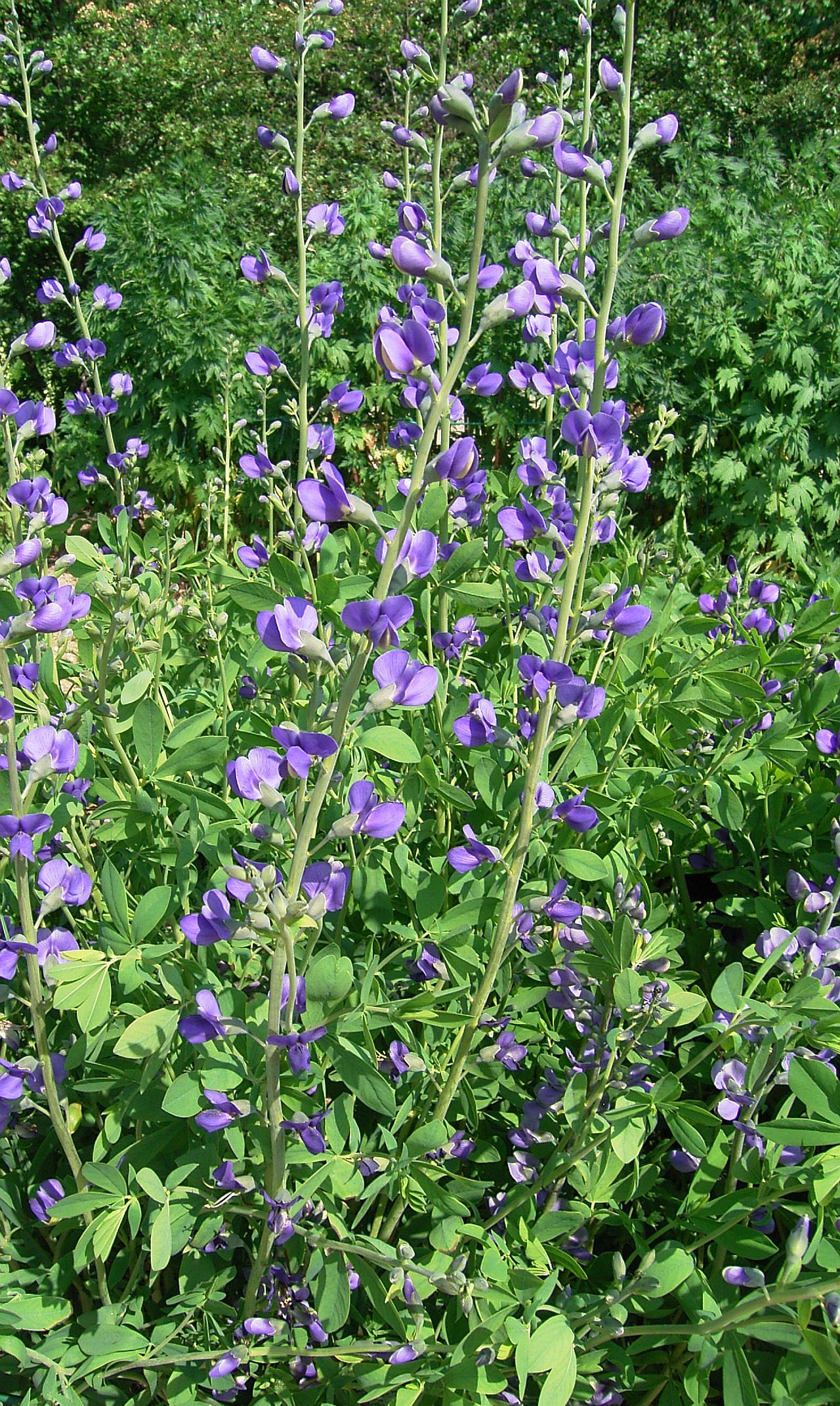
Blue false indigo (Baptisia australis) is a perennial that behaves like a shrub, which is the first of its many small deceptions. Every spring it sends up a dense, rounded mound of smooth stems, three to four feet high and as wide, clothed in blue-green, three-part, clover-like leaves, and in late spring to early summer it tops them with upright spikes of indigo-blue pea flowers, each spike up to a foot long, in one of the truest blues in the native garden. It is a member of the pea family (Fabaceae), which means it fixes nitrogen from the air through root nodules, feeding the ground it grows in while looking like it is doing nothing but showing off. The flowers are built so that only a heavy bee can open them — bumblebees shoulder their way in, smaller bees watch from outside — and after bloom the plant produces inflated seed pods that darken to charcoal black, rattle when shaken, and carry the garden through winter with more architectural dignity than most shrubs manage.
The name is a history lesson in disappointment, and it is worth knowing before you plant it. True indigo, the blue dye of denim, comes from a tropical plant, Indigofera tinctoria, that would not grow in the colonies, so settlers tried the native wild indigos instead. The plants gave a blue, but a weak, fugitive one, and the name “false indigo” records the verdict. The genus name Baptisia comes from the Greek for “to dip,” as in dyeing. The flowers, ironically, are a far better blue than the dye ever was, and the plant outlived its failed career as a dyestuff by becoming one of the most dependable perennials in the eastern garden — named a Perennial Plant of the Year in 2010, and the most commonly cultivated species in its genus.
That butterfly story is the reason this species guide exists, and it is stated at the species level, not the genus level, because the butterfly guide that names it names this species. The Frosted Elfin guide lists, in its Host plants section, wild lupine (Lupinus perennis), wild indigo (Baptisia tinctoria), blue false indigo (Baptisia australis), and rattlebox (Crotalaria sagittalis). The Frosted Elfin is a globally vulnerable butterfly of pine barrens and oak savannas, and its caterpillars eat the flowers and developing seedpods of its hosts — they feed on the plant’s reproductive effort, not its leaves. Planting blue false indigo is therefore not just planting a pretty perennial; in Frosted Elfin country, it is planting a caterpillar cafeteria, and the plant’s habit of blooming on a big, established mound means a mature plant can feed a colony’s worth of caterpillars while still looking like a shrub. Other butterfly sources also name baptisias as hosts for the wild indigo duskywing, the orange sulphur, the clouded sulphur, the eastern tailed-blue, and the hoary edge, and those records are genus-level or multi-species records — this guide claims only the Frosted Elfin’s species-level Host-list mention as its wiring target, and the rest as welcome company.
One plain-text disambiguation, because the indigos cause real confusion and this guide must not swallow its relatives. This guide covers Baptisia australis only. Wild indigo (Baptisia tinctoria), the yellow-flowered species, has its own plant-guides growing guide, and the Baptisia genus guide covers the genus broadly — its body talks about blue, white, and yellow flowers across species, even though its hero Latin line reads B. australis, a standing inconsistency that is the parent’s call to fix, not this draft’s. Buy and plant by Latin name, species by species: blue flowers on a shrub-like mound in late spring mean australis, yellow flowers mean tinctoria, and white flowers mean a different species again.
How to grow
Plant blue false indigo in spring or fall, in full sun and well-drained soil, and plant it where it can stay. That last clause is the whole game. A deep taproot makes established plants very hard to move — gardeners describe it as the size of a small tree’s — so give it its permanent spot from day one, with 24 to 36 inches of elbow room, and do not plan on dividing it later. From seed, be patient in a way that borders on the spiritual: lightly scarify the seeds, cold-stratify them for about 30 days, soak for 24 hours, and sow a quarter inch deep, and expect two to three years before the first bloom, because seedlings spend their first seasons building roots before they flower. Nursery plants are the shortcut most gardeners take, and they usually bloom in their second year. After bloom, either leave the handsome blue-black seed pods for winter interest or cut the plant back by about a third to keep it tidy.
Site it in lean, well-drained ground, not rich, wet soil. Baptisia prefers slightly acid soil but does well as long as the soil drains, and it is a light feeder and a nitrogen-fixer, so rich soil and heavy fertilizer mostly produce leafy growth at the expense of flowers. A little compost at planting is plenty. It tolerates heat, drought, and humidity once established, and it is deer-resistant, which in many gardens is the difference between a perennial and a rumor. It is a long-lived plant — decades, not seasons — and a mature plant only gets better, with more spikes each year, which is the reward for the patience it demands at the start.
Florida note, stated plainly rather than stretched. Blue false indigo is a central and eastern North American native, not a Florida native plant, and this guide does not pretend otherwise. North Florida gardeners grow it as a garden perennial, and it is happiest where winters actually get cold; in the warmer parts of the peninsula it is a stretch, not a sure thing. If you are gardening in Florida and want a native baptisia, look to the Florida native wild indigos of your region rather than assuming this midwestern and eastern species will behave like a local. And wherever you grow it, grow it for flowers and foliage, not food: parts of the plant are toxic if eaten, so admire it and keep it out of the salad bowl.
Water & feeding
Water deeply through the first season while roots establish, then back off. Blue false indigo is drought-tolerant once settled and prefers soil that dries between waterings; overwatering in heavy soil is a faster killer than drought. A spring topdressing of compost is the right scale of feeding, and worm castings worked into the bed are more than enough thereafter. Do not chase it with fertilizer in hopes of more flowers — the plant’s bargain with its nitrogen-fixing root nodules already supplies much of its nitrogen, and pushing it with rich food produces flop, not bloom. The soil science here is the legume story: rhizobia bacteria in the root nodules take nitrogen gas from the air, which plants cannot use directly, and turn it into forms the plant can use, and when roots and leaves eventually decay, some of that nitrogen stays in the soil for neighbors. A baptisia mound is therefore a slow-release fertilizer factory with flowers on top, which is why it thrives in lean soil that would starve a hungrier perennial.
Common problems
- Slow to establish. This is normal, not failure. Seed-grown plants take two to three years to bloom; nursery plants usually bloom in year two. Do not dig it up to check on it.
- Flopping in shade. Give full sun. Plants grown in shade grow leggy and need staking, and they bloom less.
- Poor bloom in rich, wet soil. Move to leaner, better-drained ground at planting time; this plant wants drainage more than dinner.
- Impossible to move or divide. The taproot resists both. Plant it where it can stay, and divide only while plants are young, if you must.
- Toxicity. Parts of the plant are toxic if eaten. Plant where children and grazing animals will not sample it.
- Seed pods rattling. Harmless. Cut them off if you dislike the sound or look, or leave them for winter interest and birds.
- Caterpillar feeding on flowers and pods. In Frosted Elfin country, that is the point of planting it. Do not spray the caterpillars — they are the crop.
Harvest
Blue false indigo’s harvest is seed, cuttings of a sort, and a very long show — in that order, and with one firm boundary. This is not a food or dye plant in any practical sense: the historical dye use failed because the color was weak and fugitive, and the plant is toxic if eaten, so no part of this guide recommends eating, brewing, or dyeing with it. If you want seed, collect the inflated pods in late summer when they darken, and grow from seed with the scarification and cold stratification described above, then wait, because these are plants that build roots first and flowers second. If you want more plants, buy nursery stock; division of an established plant is a fight with the taproot that the taproot usually wins.
The simplest harvest is a late-spring afternoon beside a mature mound: indigo spikes over blue-green leaves, bumblebees working flowers too heavy for smaller bees to open, and the knowledge that the plant under your nose is feeding the soil through its root nodules, feeding pollinators through its flowers, and, in the right habitat, feeding Frosted Elfin caterpillars through its pods. Leave most plants standing through the season for the caterpillars and the winter birds, cut back dead growth in early spring before new shoots appear, and let the mound come back bigger next year. That is the crop, and it arrives without a single spray.
Browse all plant & pest guides
Saving seeds
Blue false indigo hands you its seed harvest with a sound effect. After the indigo-blue flower spikes fade, inflated pods form along the stalks — green at first, then turning brown to black as they ripen. The test is gloriously low-tech: shake a stalk and listen. If the seeds rattle inside the pods, they are ripe. If they do not rattle yet, walk away and check again in a week; the pods hang on the plant for weeks, so there is no need to panic-harvest.
Snip the ripe pods into a paper bag, let them dry somewhere cool and airy for a week or so, then crack the pods open and tip out the seeds. Before you store anything, inspect each seed for a tiny bored hole. That hole is the calling card of the Baptisia seed pod weevil, whose larvae eat the seed from the inside and leave nothing but frass behind. Holed seeds go in the compost, not the seed jar — a weevil-eaten seed is a snack that already happened.
Now the fun part: false indigo seed wears armor. The seed coat is hard enough to shrug off plain water, which is why germination advice always starts with scarification — scuffing the coat so moisture can get in. Rub each seed gently on fine sandpaper or nick it with a file until you see a pale spot, then soak the scarified seed in hot (not boiling) water. Stop scuffing at the pale spot; grinding further can kill the embryo you are trying to wake up.
Sources disagree on whether cold matters after that, so here is the honest version: some growers get good germination from scarification alone, while others add a short cold, damp chilling period first, and still others simply sow in fall and let winter do the work. Fall sowing is the lowest-effort answer and the closest to what the plant does on its own — sow about half an inch deep, keep the bed moist but not soggy, and let the season handle the rest. Fresh seed germinates best, so sow promptly when you can and do not hoard seed for years.
Budget patience in years, not weeks. Seed-grown false indigo rarely flowers before its third year, because the plant spends its early life building a deep taproot and a nitrogen-fixing partnership with soil bacteria — legume roots and their rhizobia nodules are a whole underground economy, and economies take time to build. That same taproot is why you should not plan on dividing an established plant to multiply it; it resents being moved the way cats resent baths. Seed is the way. And once it finally blooms, the wait stops feeling like a wait and starts feeling like a flex.
Florida storage note: dry saved seed thoroughly, jar it airtight with a desiccant packet, and keep it cool and dark. In Florida humidity, “dry enough” is a higher bar than it looks — seed that feels dry on a humid afternoon may not actually be dry.
Varieties
Blue false indigo is mostly grown as the straight species, Baptisia australis, and this section says so plainly rather than inventing a cultivar list. Two botanical varieties are recognized: var. australis, the typical form, and var. minor, a smaller form. The named garden forms most gardeners meet with “Baptisia” on the label — smoky-violet, two-tone, and yellow-to-orange forms — are hybrids between Baptisia species, not cultivars of Baptisia australis itself, and they belong to the genus guide’s story, not this species guide’s. If you want the Frosted Elfin host plant named in the butterfly guide, buy the straight species by its Latin name, and let the hybrids be the pretty neighbors, not substitutes.