
🌿 Boehmeria
What it looks like
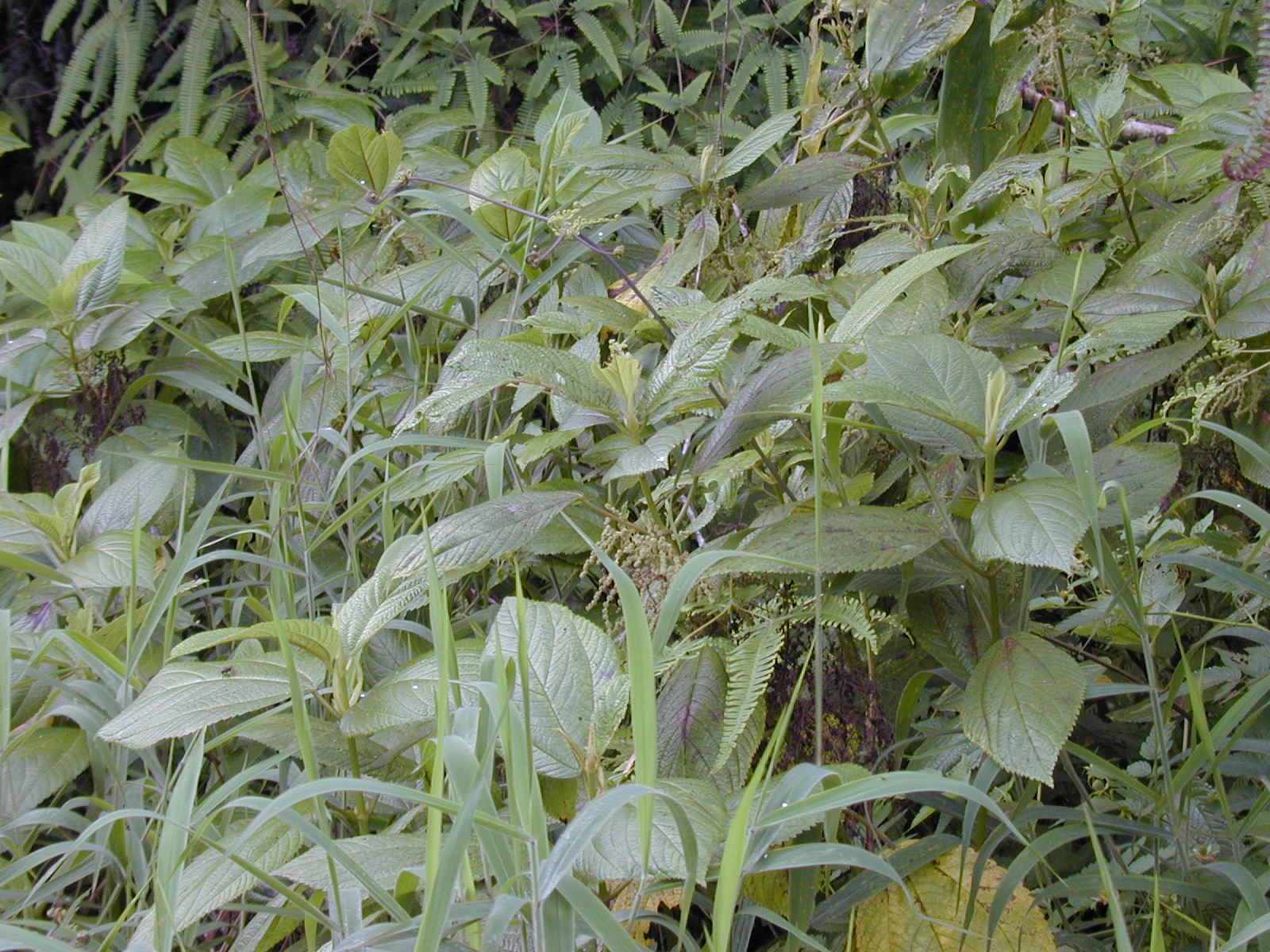
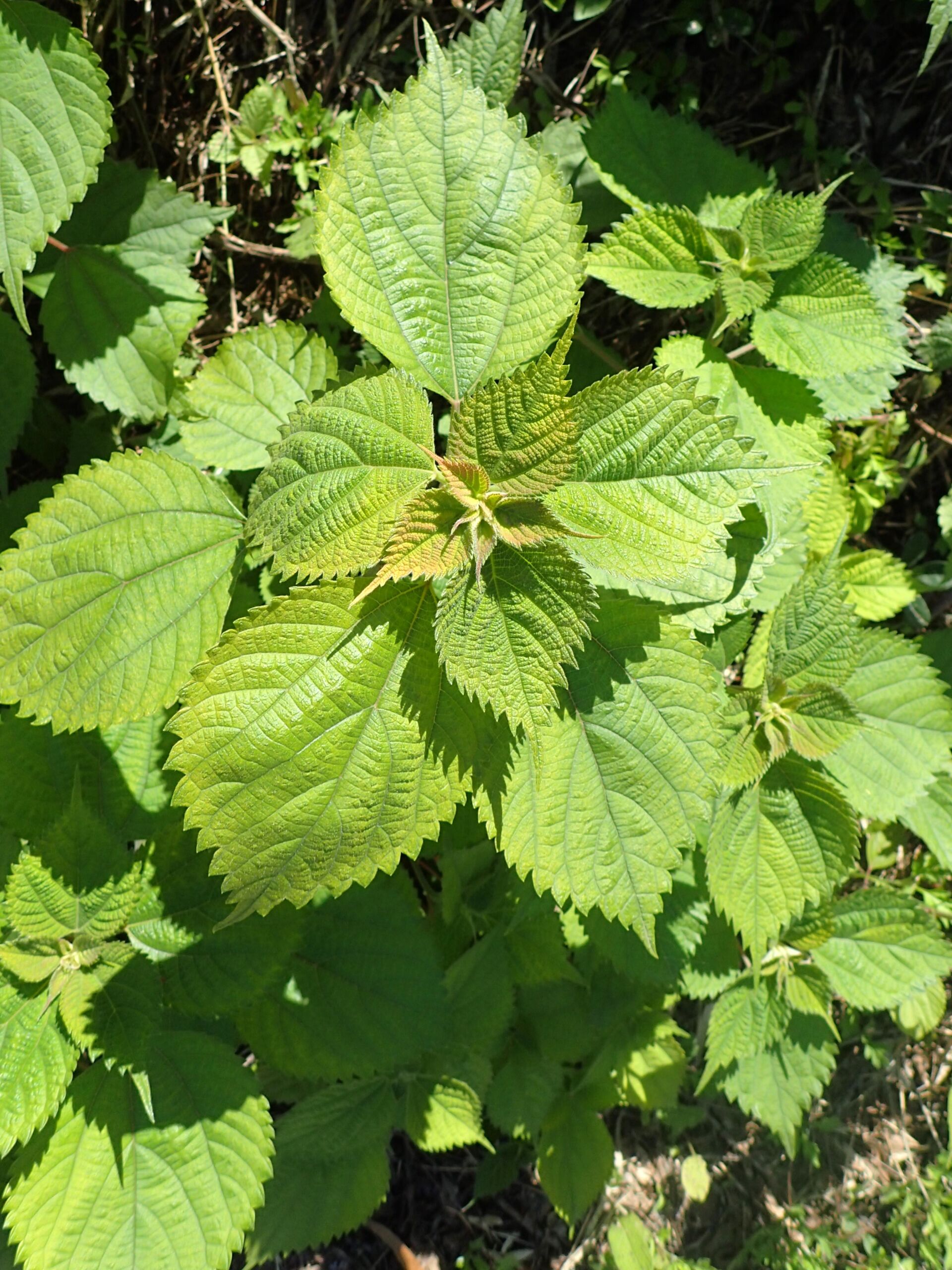

Boehmeria is the genus of the false nettles, and it is a genus built around a single, wonderful absence. It holds 47 species of flowering plants in the nettle family (Urticaceae), as accepted by Plants of the World Online as of January 2024, and of those species 33 are indigenous to the Old World and 14 to the New World, with no species indigenous to both. The species include herbaceous perennials, shrubs, and small trees, and although they are related to the similar-looking stinging nettles of the genus Urtica, species of Boehmeria do not have stinging hairs. That is the whole common name, right there: they look like nettles, they grow where nettles grow, and you can grab a handful without regret. The genus is named in honor of the German botanist Georg Rudolf Boehmer, and its type species is Boehmeria ramiflora, described by Jacquin in 1760.
The genus divides, roughly, into two stories. The Old World story is fiber. One species, ramie (Boehmeria nivea), is an important fiber crop, cultivated in China and elsewhere in southeast Asia for thousands of years as the source of the fiber called ramie or China grass — a bast fiber, from the inner bark of the stem, exceptionally strong and fine, used for cloth, cordage, and nets. Ramie is a monoecious shrub or subshrub to about two meters tall, with leaves seven to fifteen centimeters long, green above and snowy-white and downy beneath — nivea means snowy, and the leaf underside is the field mark. The New World story is caterpillars. False nettle (Boehmeria cylindrica) is the widespread eastern North American herb of damp woods, marshes, wet meadows, and ditches, and akolea (Boehmeria grandis) is the large-leaved Pacific species, and both feed butterfly larvae — which brings us to the reason this genus guide exists.
The butterfly context for this genus guide is stated at the genus level, because the butterfly guide that names it names the genus. The Orange Mapwing guide lists, in its Host plants section, that caterpillars feed on plants including Phenax, Boehmeria (false nettles), Celtis (hackberries), Sponia, and Trema micrantha. That is the wiring target for this draft: one guide, one genus-level mention, in the Host plants section, in the exact forms “Boehmeria” (common and Latin). The Orange Mapwing is a tropical brush-footed butterfly of Mexico, Central America, and South America, a rare stray in Texas, and its caterpillars eat nettle-family and related plants of tropical forest edges and mountain slopes — which is why a genus guide is the honest unit here: the butterfly’s menu is the genus, and a guide that covered only one species would leave the rest of the menu unexplained. In Texas, where the butterfly is only a stray, there is no local host-plant story, and none is invented here.
One plain-text disambiguation, because the false-nettle family causes real confusion and this genus guide must not swallow the species guides around it. This guide claims Boehmeria species as a genus only. False nettle (Boehmeria cylindrica) has its own plant-guides growing guide, and that guide covers its role as a host for the Eastern Comma and Question Mark butterflies in their guides; akolea (Boehmeria grandis) has its own plant-guides growing guide as well. Neither species is covered in particular by this genus guide, and this genus guide does not replace either of them. The site’s Academy native-plant profile for false nettle is a species profile, not genus coverage, and it coexists with both guides in the same way. Buy and plant by Latin name, species by species, and let this guide be the map of the genus, not a substitute for any one of its members.
How to grow
Growing Boehmeria starts with the only decision that matters: which species, native to your region or suited to your climate, are you actually planting? The genus spans temperate and tropical members, and the growing advice for a temperate wetland herb and a tropical fiber shrub are not interchangeable, so this section gives the genus pattern and names the species differences where they change the plan. The pattern is: moist, rich, well-drained soil, part shade to sun with moisture, and room to spread. False nettle wants light shade and moist, rich loam, grows in full sun where the soil stays wetter, and turns yellowish-green in sunny, dry sites — the leaf color is a moisture gauge, and a yellowing false nettle is usually asking for water, not fertilizer. Ramie wants warmth, moisture, and a long growing season, and grows as a shrubby perennial harvested for its stems. Akolea wants the warm, moist conditions of its Pacific home. Across the genus, the rule is moisture without waterlogging: the soil should stay evenly moist but drain, because these are streamside and woodland-edge plants, not bog plants and not desert plants.
Propagation follows the perennial pattern: division in spring is the easiest approach — divide established clumps and replant — and stem cuttings and seed also work for many species. False nettle seed needs no pretreatment, which is a small mercy in a genus that otherwise asks for attention to moisture. Transplant while young where the species is a clump-forming perennial, mulch well the first year, and cut back dead growth in late winter before new shoots appear, because most garden species are herbaceous or die back in cold winters and return from the roots. In a genuinely moist site with normal rainfall, an established false nettle largely waters itself; in a dry spell it wants deep watering and a root zone that does not dry out, because a thirsty false nettle thins out and stops being the lush, caterpillar-feeding clump you planted it to be.
Florida note, stated by species rather than by genus, because the genus-level answer would be a lie. In Florida, the Boehmeria story is a false-nettle story. False nettle is a statewide Florida native of cypress swamps, floodplain forests, wet thickets, stream banks, marshes, and ditches, and it is the species Florida gardeners should grow for the native anglewing butterflies — Eastern Comma, Question Mark, and Red Admiral all use it. Ramie, by contrast, is an introduced fiber crop in the southeastern United States, not a Florida native, and it is grown for fiber, not for the local butterfly fauna. Akolea is a Pacific species, not a Florida plant. Plant the species native to your region, by its Latin name, and let the genus guide be the map.
Water & feeding
Water, for the garden Boehmeria species, is a question of steady moisture. The genus pattern is medium to wet soil that stays moist — streamside moist, woodland-edge moist, rain-garden-margin moist — and in a genuinely moist site with normal rainfall the plants largely water themselves once established, while in a dry spell they want deep watering and a root zone that does not dry out. A thick mulch of wood chips or leaf litter helps enormously, holding moisture and cooling the roots in summer, and it doubles as habitat for the soil life that keeps moist soil healthy rather than sour. The tropical fiber species, grown as a crop, want warmth and moisture too, and in a production setting they are cut repeatedly through the season, which only works where the growing season is long and the water is steady.
Feeding: modest to moderate, across the genus. False nettle and its relatives prefer moist, average to rich soil, and a spring topdressing of compost is the right scale of feeding — not a heavy fertilizer program, which mostly produces soft, leggy growth. In a woodland or streamside site, the nutrients arriving with leaf litter are often plenty on their own. The soil science here is the wetland-edge story: moist, humus-rich soil is a nutrient highway, regularly replenished with leaf litter and organic matter, and the microbes, fungi, and invertebrates of that soil cycle nutrients fast in warm, damp conditions. A false nettle’s roots live in that community, and its yearly leaf fall returns a large crop of leaves to the soil as organic matter, feeding the next cycle. Planting a native false nettle at a moist garden edge is therefore not just decorating a ditch — it is installing a butterfly nursery on top of a soil-building machine, and the absence of stings is the nursery’s open-door policy.
Common problems
- Drying out. The temperate species want moist soil. Thinning growth and yellowing leaves usually mean the soil dried. Mulch deeply, site it moist, and water in dry spells — or pick a different plant.
- Wrong species, wrong region. A Pacific species in Florida, or a tropical fiber shrub in a temperate butterfly garden, is a plant out of place. Check the species’ native range before you buy, and buy by Latin name.
- Overabundance in wet ground. False nettle can become overly abundant in ideal wet conditions. Divide clumps, and do not plant it where it can march into a wetland you are trying to keep diverse.
- Confusing it with a stinging nettle. The resemblance is the point of the common name, and the test is safe: Boehmeria has no stinging hairs. If it stings, it is not this genus.
- Caterpillar defoliation. Anglewing caterpillars may eat leaves in summer, and that is the point of planting it. A healthy clump recovers quickly, so do not spray the caterpillars — they are the crop.
- Ramie grown for butterflies. Ramie is a fiber crop, not a local butterfly host in the southeastern United States. Grow false nettle for the anglewings, and ramie for the fiber, and do not confuse the two jobs.
Harvest
Boehmeria‘s harvest is fiber, division, and butterfly-watching — in that order, depending on which species you planted. Ramie’s harvest is the ancient one: stems cut through the growing season, bark stripped, and bast fiber extracted for cloth, cordage, and nets, a crop humans have grown for thousands of years in Asia. That harvest belongs to warm climates with long seasons, and this guide records it as the genus’s great economic story, not as a promise for every garden. False nettle’s harvest is simpler: divide clumps in spring for more plants, collect seed if you want it, and leave most plants standing through the season for the caterpillars.
The simplest harvest, though, is a summer afternoon at a moist garden edge with no agenda at all: false nettle leaves with anglewing caterpillars folded into them, question marks and commas drifting through the shade they made, and the knowledge that the clump under your nose is both a soil-builder and a nursery, and that its lack of stings is what lets you reach in and look. Leave most plants standing through the season for the caterpillars, cut back dead growth in late winter, and let the clump come back bigger next spring. That is the crop, and it arrives without a single spray — because spraying it would kill the very thing you planted it for.
Browse all plant & pest guides
Saving seeds
At genus level, because this guide covers all of Boehmeria, the false nettles, from the North American false nettle (Boehmeria cylindrica) to ramie (Boehmeria nivea), and the seed story is shared across the genus with one catch that matters more than any other detail: most false nettles are dioecious, which is a fancy way of saying each plant is either male or female, and only the female plants set seed, and only if a male plant bloomed nearby. A lone female in splendid isolation will flower beautifully and set exactly nothing. If you want seed, you need both sexes in the neighborhood.
Collect in fall, when the tiny fruits along the flower spikes have ripened and dried. The seed is small and unglamorous, which is fitting for a plant whose whole charm is being a nettle you can touch. Clip the ripe spikes into a paper bag, let them dry fully indoors with airflow, then rub them gently over a fine sieve to free the seed and shake out the chaff. In Florida humidity, dry seed thoroughly before storage, spread thin and stirred, because seed bagged even slightly damp will mold in a warm house. Store it labeled, airtight, with a desiccant packet, cool and dark.
Sowing is refreshingly undramatic by this project’s standards: most garden false nettles need no cold treatment, though a few weeks chilled in the refrigerator does no harm if you like to hedge your bets. Sow in spring in a warm spot, barely covering the seed or surface-sowing it, and keep the mix consistently moist, never dried out, because these are damp-ground plants and their seedlings are tiny, fragile things that a heavy watering can flatten. Mist rather than pour, give them bright indirect light and a humid cover until they are up, and expect slow going until the seedlings reach an inch or two tall, at which point they suddenly remember they are nettles and take off. Grow them on in pots until they are sturdy, then plant out after the last frost, in the moist, rich ground they prefer.
Seedlings, of course, vary, and they will not necessarily match a named selection, so if you have a particular plant you love, take the easy road instead: false nettle cuttings root almost embarrassingly well, often in a glass of water on a windowsill, and division in spring is just as simple. Seed is for increasing numbers, for sharing, and for the quiet fun of raising a nettle that never learned how to sting.
One watch-out: false nettles are enthusiastic self-seeders in happy, moist ground, and some species spread by rhizomes as well. That is a gift in a damp corner you want filled, and a nuisance in a tidy bed, so deadhead before seed drops if you do not want volunteers, and do not let garden seed escape into nearby wetlands, where a vigorous nettle relative is the last thing the native flora needs.
Species
Boehmeria is a genus of 47 species, and no guide can list them all, so this section names the species a North American gardener or butterfly-watcher is most likely to meet, in plain text, and states plainly which ones have their own guides. False nettle (Boehmeria cylindrica) is the widespread eastern North American herb of damp ground, with its own plant-guides growing guide, and it is listed here for completeness, not claimed by this genus guide. Akolea (Boehmeria grandis) is the large-leaved Pacific species, with its own plant-guides growing guide, and it is listed here the same way. Ramie (Boehmeria nivea) is the fiber crop, the snowy-leaved shrub of warm temperate and tropical Asia, widely cultivated and introduced into tropical and subtropical parts of other continents including the southeastern United States. Siebold’s false nettle (Boehmeria sieboldiana) is the East Asian ornamental grown for bold foliage in tropical-style gardens. Japanese false nettle (Boehmeria japonica) is another East Asian ornamental of the same trade. Grow the species native to your region, by its Latin name, and let the genus guide be the map, not a substitute for any species on it.