
🫐 Bog Bilberry
What it looks like
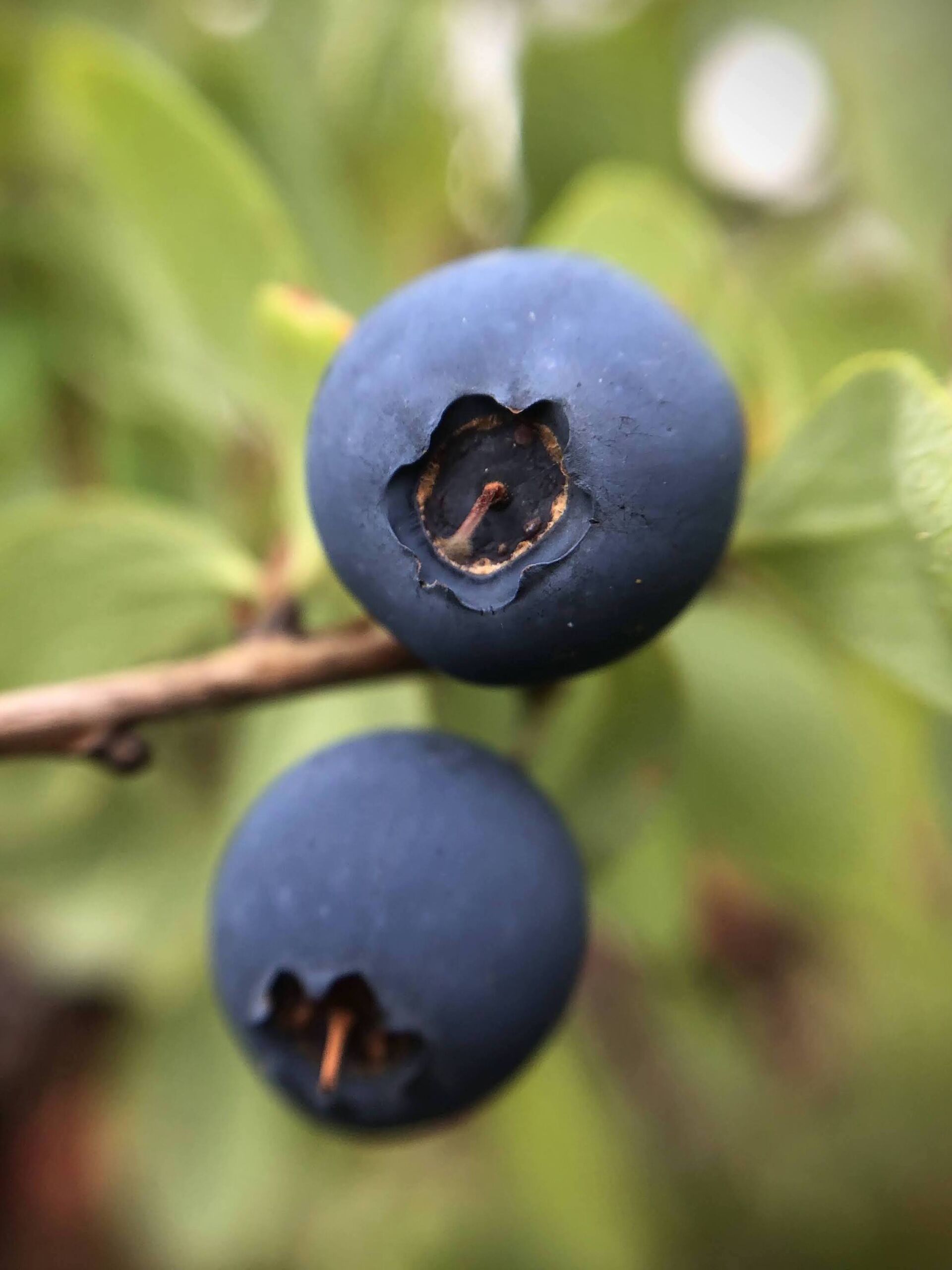
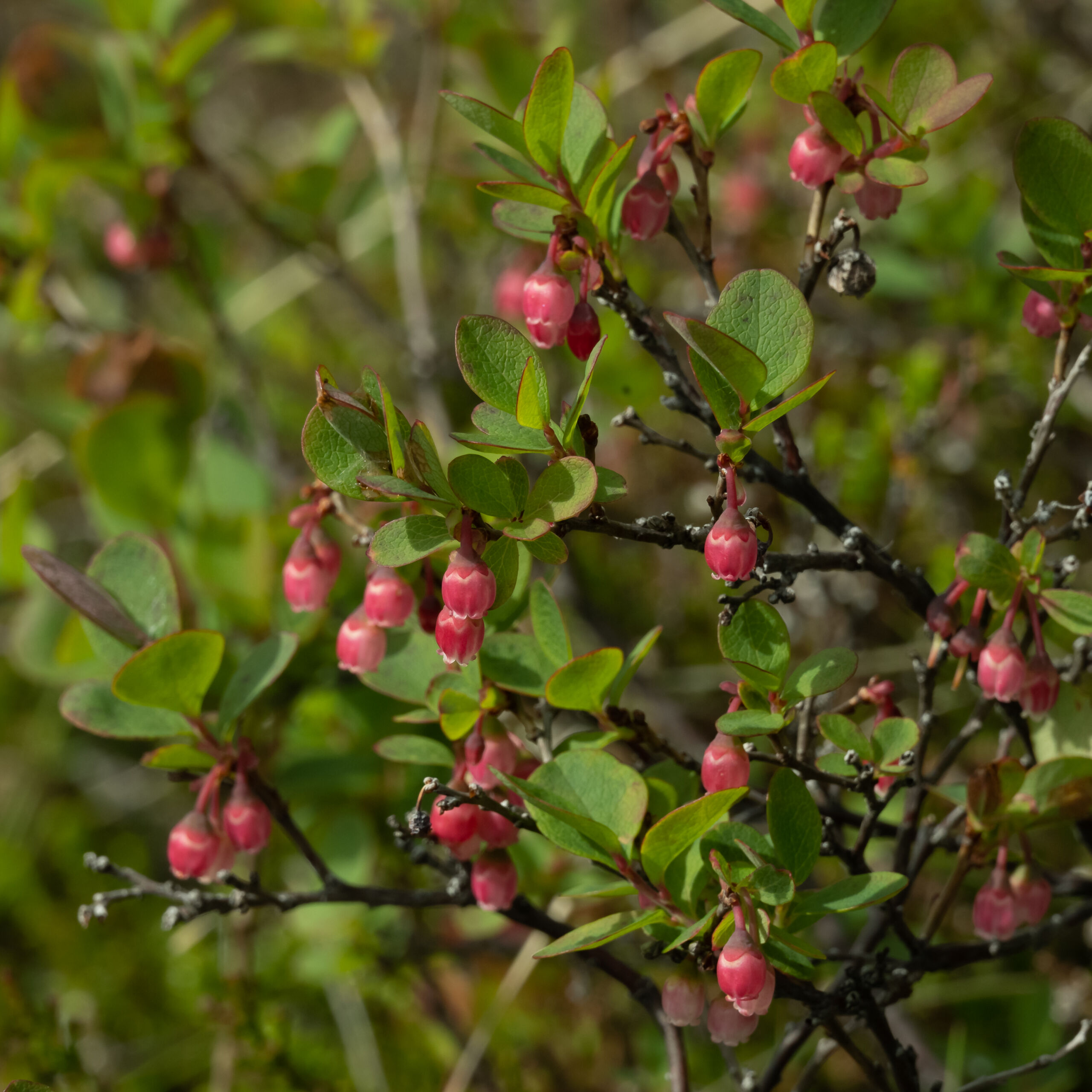
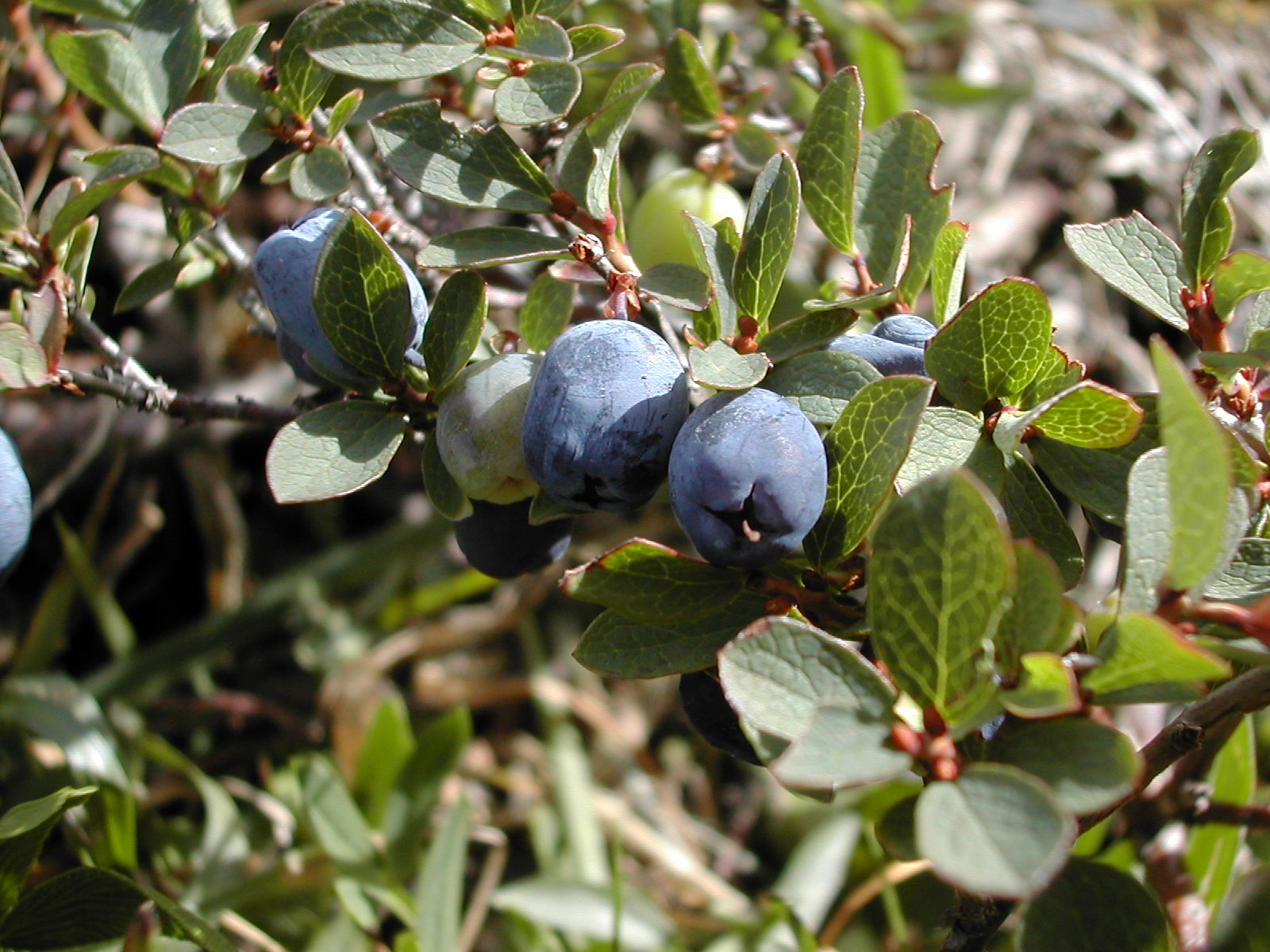
Bog bilberry is the bilberry that went north and never came back. It is a small deciduous shrub, usually 10 to 75 centimetres tall and rarely reaching a metre, with brown stems — a useful field mark, because its close cousin the bilberry has green stems — and oval leaves 4 to 30 millimetres long and 2 to 15 millimetres wide, blue-green with pale net-like veins, a smooth margin, and a rounded tip. The leaves drop in winter, which is a sentence that sounds ordinary until you remember where this plant lives: Arctic tundra, subarctic bogs, and mountain slopes where winter is not a season but a siege. A shrub that throws its leaves away every autumn and grows them back every spring in that climate is not fragile. It is just budgeting.
The flowers are the heath family’s signature shape, shrunk to jewel size: pendulous, urn-shaped, pale pink bells 4 to 6 millimetres long, produced in mid-spring in clusters of one to four from the leaf axils. They hang downward like tiny lanterns, which is the heath family’s way of keeping pollen dry and aiming it at the right visitors. The fruit that follows is a dark blue-black berry 5 to 8 millimetres across, with a waxy bloom and — here is the party trick — sweet white flesh inside, where a bilberry’s flesh is dark purple. Cut one open and the difference is immediate: bog bilberry stains your fingers far less than bilberry does, and the berry is usually a little larger and more oval, with a star-shaped mark where the flower was. Ripe in late summer, the berries are edible raw or cooked, made into jelly or pies, or dried; in Korean cuisine they are even used to make an infused liquor. The plant’s other common names tell the same story from different angles: bog blueberry, northern bilberry, western blueberry, alpine blueberry. Every name is a compass point, and every compass point is north or up.
The range is genuinely circumpolar, which is one of those words that sounds like exaggeration until you look at the map. Bog bilberry grows across the cool temperate regions of the Northern Hemisphere: at low altitudes in the Arctic and the Baltics, and at high altitudes south to the Pyrenees, the Alps, and the Caucasus in Europe, through the mountains of Mongolia, northern China, the Korean Peninsula, and central Japan in Asia, and in North America from Alaska across Canada to the Atlantic, south in the mountains to the Sierra Nevada in California and the Rocky Mountains in Utah, with its southernmost eastern limit on the summits of the White Mountains of New Hampshire. It grows on wet acidic soils on heathland, moorland, tundra, and in the understory of coniferous forests, from sea level in the Arctic up to 3,400 metres in the south of its range, and it is occasionally found on calcareous soils on mountain ledges, which is the plant equivalent of a rule with one polite exception. Its Latin name gives the game away: uliginosum comes from a Latin word meaning full of moisture, or swampy. This is a plant named for wet feet, and it means it.
The butterfly connection is the reason this guide exists in this project, and it is a one-plant story. The palaeno sulphur, the bog sulphur of the far north, feeds as a caterpillar on bog bilberry and on essentially nothing else in the butterfly guides’ telling: the caterpillar is green and camouflaged against the low bog shrubs, it overwinters as a caterpillar through the northern winter, and it finishes growing the following season. A butterfly tied to one bog shrub needs the whole bog, not just the shrub, which is why the palaeno sulphur’s conservation story is bog protection — keep northern bogs wet, intact, and unsprayed — rather than garden planting advice. European literature also reports bog bilberry as a host for Booth’s sulphur, alongside alpine milkvetch, which makes bog bilberry a small but real node in the northern sulphur network. Plant it, if you can grow it, and you are feeding a butterfly most gardeners will never see; understand it, and you understand why a bog is not empty ground.
One plain-text disambiguation, because the Vaccinium cousins cause real confusion and this guide must not swallow its neighbours. This guide claims Vaccinium uliginosum only. Bilberry is a different species, Vaccinium myrtillus, with its own growing guide, green stems, and dark purple flesh. The blueberry guide covers Vaccinium virgatum, the rabbiteye blueberry, not this plant. The cranberry guide covers Vaccinium macrocarpon, the large cranberry, not this plant. Bog bilberry is none of those, and none of those is bog bilberry, even though they all share a genus, a family, and a talent for staining things. Buy and plant by Latin name, and if the tag says anything other than Vaccinium uliginosum, you are holding a different shrub.
Florida note: Say this plainly: bog bilberry is not a Florida plant. It is a circumboreal shrub of cold bogs, tundra, and high mountains, hardy to zone 2, and it needs cold winters and cool summers that Florida does not offer. If you garden in Florida, this guide is for understanding the plant in butterfly guides and for admiring it from a distance — not for planting in a Keystone Heights yard. Northern gardeners with a wet, acidic corner, this one is yours.
How to grow
Grow bog bilberry where it wants to be, which is a wet, acidic, peaty corner with sun or light shade. The pattern from the sources is consistent: sun to part shade, with a sunny site supporting better fruit crops; moist to wet, lime-free soil rich in organic matter, peaty soil or light loam with leaf mould; a preferred pH around 4.5 to 6, with lime causing yellowed leaves through chlorosis. Shelter from strong winds helps, and the roots resent disturbance, so plant it where it can stay. Space plants 12 to 18 inches apart and let them spread into a low colony by rhizomes, with branches that can take root where they touch the ground. Mulch with pine needles or bark to keep the roots cool and moist, and do not let the bed dry out in the first year while the plants establish.
Propagation follows the Vaccinium pattern: semi-hardwood cuttings in late summer or early autumn, rooted in a moist, peat-based medium, or layering, where a low-growing branch is buried in soil while still attached to the parent until it roots. Seed can be sown outdoors in fall or winter-sown in vented containers, because like many northern shrubs it expects a cold period before it wakes up. Buying nursery stock is the sane option for most people, and it is worth saying that nursery stock of this species is a specialty item: it is not a garden-centre staple the way highbush blueberry is, and a tag that just says blueberry is not this plant. Check the Latin name before you buy, and plant in spring in a prepared bed of peat and sand over a moisture-retentive base if your native soil is not already a wet, acidic one.
For wildlife, the rule is to leave the berries alone where the plant is wild, and to share them where it is yours. The berries feed birds and small mammals through late summer and into autumn, and the low shrub layer shelters insects and ground-nesting birds in its native bog and moorland. In a garden, a bog bilberry colony in a bog garden or a cultivated wet bed is a small, honest piece of northern habitat: no lawn, no spray, just peat, water, and a shrub that has survived ice ages by being exactly where it is.
Water & feeding
Water is the whole story with bog bilberry, and the story is: keep it moist, never soggy for long, never dry. The plant wants consistently moist soil with good drainage — peat and sand in the right balance — and it sulks in both drought and standing water that turns airless. In a genuinely moist site with normal rainfall it largely waters itself once established, while in a dry spell it wants deep watering and a root zone that does not dry out. A thick mulch of pine needles or bark helps enormously, holding moisture and cooling the roots in summer, and it doubles as the acidic organic matter the plant feeds on as it breaks down.
Feeding: light, across the genus. Bog bilberry prefers moist, average, humus-rich, acidic soil, and a spring topdressing of compost or an acid fertilizer in spring if growth is weak is the right scale of feeding — not a heavy fertilizer program, which mostly produces soft growth. In a woodland or bog-garden site, the nutrients arriving with leaf litter and peat are often plenty on their own. The soil science here is the bog story: acidic, waterlogged peat is a nutrient-poor world, and the microbes, fungi, and mycorrhizae of that soil cycle nutrients slowly in cold, wet conditions. A bog bilberry’s roots live in that community, storing energy and sending up new growth through it, and its yearly leaf fall returns its leaves to the soil as organic matter, feeding the next cycle. Planting a bog bilberry in a wet, acidic bed is therefore not just growing a berry — it is keeping a small piece of bog chemistry alive, and the white-fleshed berries are the receipt.
Common problems
- Heat and humidity. The deal-breaker for southern gardeners. Bog bilberry is a cool-climate plant that wants cold winters and cool summers; it grows poorly in hot, humid climates and is not recommended for warm zones. Do not try to force it.
- Alkaline soil chlorosis. Yellow leaves on a bog bilberry in limy soil mean the pH is wrong, not that the plant needs fertilizer. Test the soil and acidify with peat and sulphur, or grow it in a container of acidic mix.
- Drying out. A bog plant that dries out stops fruiting and thins out. Mulch deeply, site it moist, and water in dry spells — or pick a different shrub.
- Wrong species, wrong tag. A tag that says blueberry or bilberry without a Latin name is not this plant. Bilberry is Vaccinium myrtillus, blueberry in the guides is Vaccinium virgatum, and bog bilberry is Vaccinium uliginosum. Check before you buy.
- Slow establishment. Bog bilberry colonizes by rhizomes at its own pace. A first-year plant looks like almost nothing. Judge it in year three, when the colony starts to knit together.
- Birds. Birds eat the berries, which is the point of a wildlife shrub and the frustration of a berry grower. Net small plantings if you want a harvest, and leave wild plants unnetted.
- Root disturbance. The roots resent being moved. Plant it where it can stay, and do not dig through an established colony to see how it is doing.
Harvest
Bog bilberry’s harvest is the berry, picked when fully dark blue-black and soft, in late summer. The berries are sweet, with white flesh that stains far less than bilberry, and they are eaten fresh, cooked into pies and sauces and jellies, or dried — dried berries keep like raisins and were traditionally dried for pemmican. A handful goes a long way in baking because the flavour is concentrated, and the honest review is that this is a forager’s and northern gardener’s berry, not a bulk crop: the shrubs are low, the berries are small, and the harvest is measured in bowls, not buckets. Leave most of the berries on wild plants for birds and mammals, and take only a small share from your own colony. The leaves have a traditional history as tea, but this guide does not recommend leaf harvest as a casual project — the berries are the crop, and the shrub is the habitat.
Browse all plant & pest guides
Saving seeds
Bog bilberry (Vaccinium uliginosum) seed saving follows the blueberry family playbook, with a northern twist: this is a circumboreal bog shrub, a plant of sphagnum and cold winters, and everything about its seed expects that world. Florida gardeners should hear this plainly first: bog bilberry is not a Florida plant, and seed saving here is a project for a northern bog garden or a cool-climate friend’s patch, not for a sunny St. Augustine bed. If that is you, read on.
Start with fully ripe berries in late summer to fall, soft and completely colored. Mash them in water, stir, and let the pulp float away while the plump seeds sink, then rinse the sinkers in a fine sieve and dry them on paper towel in the shade. Here the sources split, and it is worth saying so: one tradition says sow fresh seed as soon as it is ripe, in a greenhouse, with no storage at all, while the other says stored seed benefits from cold stratification, up to about three months in damp peat or sand in the refrigerator. Both agree on the underlying truth, which is that the seed wants a cold, damp period before it commits to growing, and fresh seed has effectively just lived through its own ripening season. If you stored your seed dry, give it the cold treatment; if you sow it fresh, sow it immediately and keep it moist.
Sow in late winter in a lime-free, acidic mix, the kind of mix every Vaccinium demands, barely covering the seed or surface-sowing it, and keep it consistently moist but not waterlogged, in light shade. Germination is erratic and can take weeks to months, so do not declare failure early. When seedlings reach a couple of inches tall, prick them out into individual pots and grow them on in light shade under cover for at least their first winter, planting out only in late spring or early summer after the last frost, into the moist, acidic, peaty ground they evolved for. From seed to a fruiting bush is a multi-year project, and seedlings vary in berry size and vigor, so named selections, where they exist, are kept true by cuttings, though even those are slow and difficult, or by division of suckers in spring or fall.
Store any seed you are not sowing right away the usual careful way: dried thoroughly, labeled, airtight with a desiccant packet, cool and dark, and note that in a humid climate “thoroughly dry” is a real requirement, not a suggestion, because damp seed in storage is mold’s invitation. And one conservation note, since this is a wild bog species: collect seed only from plants you grew or with permission, never strip a wild bog, and never sow garden-raised seed into a wild wetland. The bogs have their own genetics, and they do not need ours.
Species
Bog bilberry is a single species, Vaccinium uliginosum, and this section names its forms in plain text, because the subspecies question is genuinely unsettled and this guide will not pretend otherwise. The nominate form, Vaccinium uliginosum subsp. uliginosum, is the widespread form across most of the species’ range and the only subspecies that is relatively widely accepted. Vaccinium uliginosum subsp. microphyllum is sometimes accepted for Arctic plants with smaller leaves; Plants of the World Online treats it as a synonym of the nominate subspecies. Other named forms in the literature include subsp. nanum from Spain’s Sierra Nevada, subsp. vulcanorum from northeast Asia, and var. japonicum from Japan, and older synonyms include Vaccinium gaultherioides, Vaccinium occidentale, Vaccinium pubescens, and Vaccinium salicinum — all names for the same shrub seen from different mountains. Gardeners should buy by the species name, Vaccinium uliginosum, and treat subspecies labels as regional variation on one circumpolar theme, not as different plants to collect. No widely sold named garden cultivar of this species is asserted here, because none was verified in the sources used for this guide; the wild species is the garden plant.