
🌿 Buckbrush
What it looks like
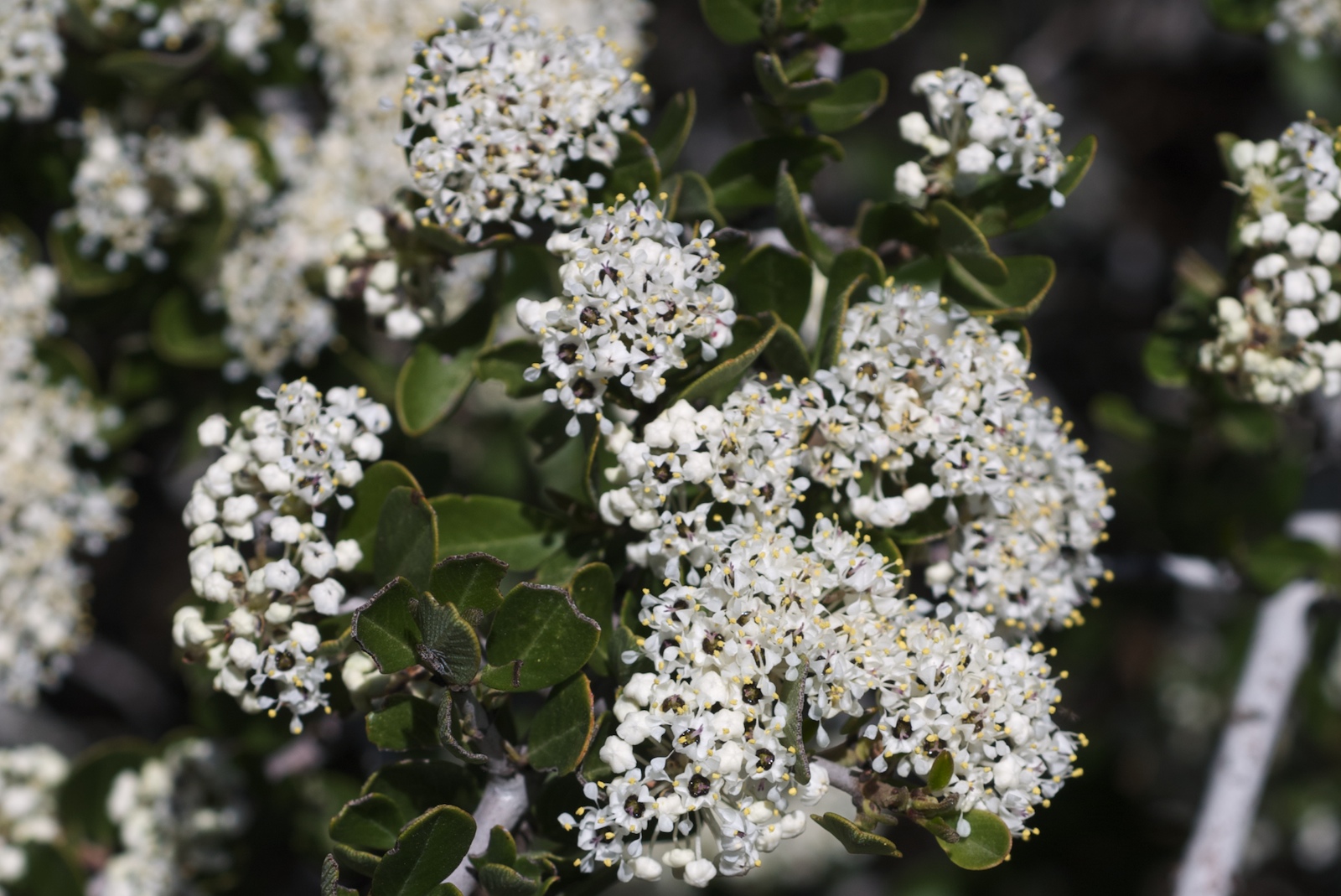
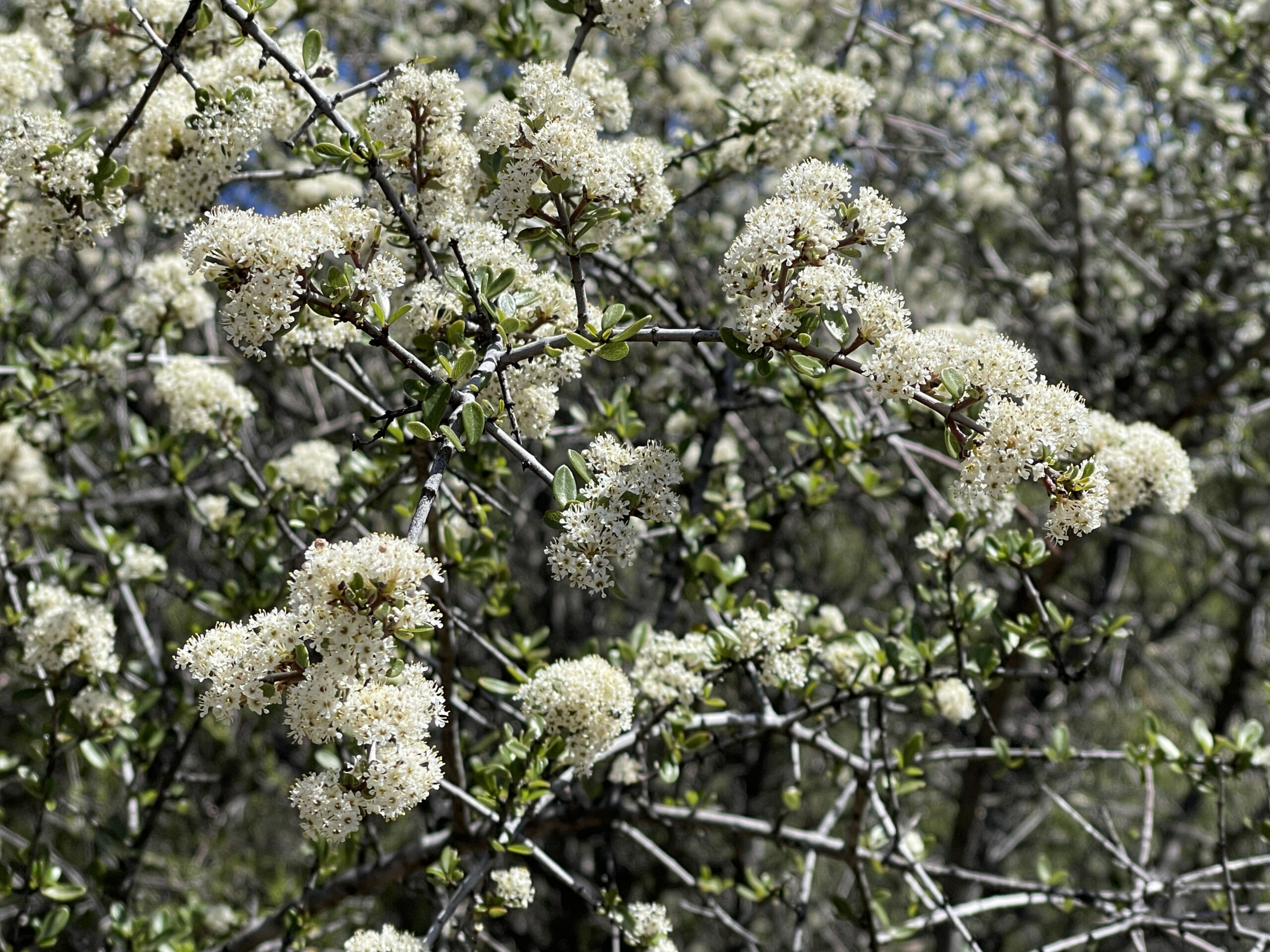
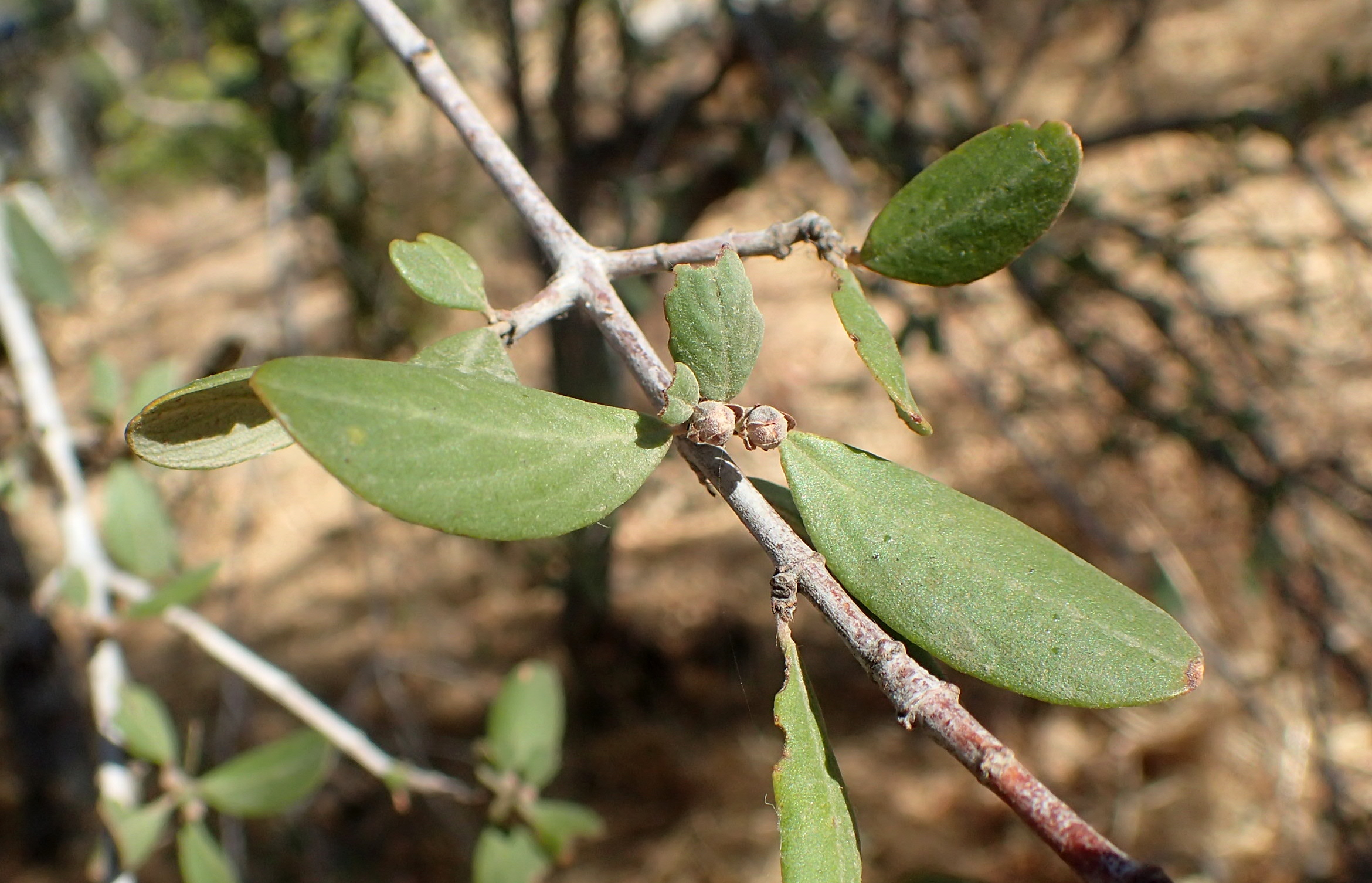
Buckbrush is a name that has been loaned out to half the shrubs deer like to eat, so this guide starts by pinning it down. The butterfly guides that name it — the California Hairstreak guide and the Hedgerow Hairstreak guide, both in their Host plants sections — list it as “buckbrush” with the Latin given only at genus level: Ceanothus. They do not name a species. The species identification in this guide therefore rests on the standard common-name mapping, stated openly rather than smuggled in: the USDA’s buckbrush accounts name the scientific name of buckbrush as Ceanothus cuneatus (Hook.) Nutt., with the common names buckbrush, buckbrush ceanothus, and wedgeleaf ceanothus, and the plant’s own field guides agree. In western North America, “buckbrush” specifically means Ceanothus cuneatus; elsewhere the nickname wanders onto other shrubs, which is why this guide insists on the Latin in every section. If the plant in front of you is not a western ceanothus with wedge-shaped leaves, it is not this buckbrush, whatever the locals call it.
So what is Ceanothus cuneatus? It is a native, perennial, evergreen shrub of the buckthorn family (Rhamnaceae), widely distributed in California, Oregon, and northern Baja California, and one of the defining shrubs of chaparral — the dense, drought-hardy shrubland of the West Coast. It is a spreading, rounded-to-sprawling bush reaching up to about 3 meters (roughly 10 feet) tall and often as wide, with small, stiff, wedge-shaped leaves — cuneatus means wedge-shaped, from the Latin cuneus, a wedge — gray-green, leathery, and built to lose as little water as possible. In spring it covers itself in clusters of small white to pale lavender-blue flowers, the “California lilac” look that gives the whole genus its nickname, and the flowers draw bees, butterflies, and every pollinator in the neighborhood. The fruit is a small, three-lobed capsule that splits open when ripe, and the seeds inside are famously hard-coated: they can sit in the soil for years, even decades, waiting for the heat of a wildfire to crack them open and trigger germination. Buckbrush is a fire plant, a deer plant, and a nitrogen plant all at once, and each of those jobs shapes how it grows.
The butterfly context is two guides, one section each, and a genus-level Latin. The California Hairstreak guide lists “buckbrush” with Ceanothus in its Host plants section, among chokecherry and valley oak; the Hedgerow Hairstreak guide lists “buckbrush” with Ceanothus in its Host plants section as well. Those are the two mentions this draft covers: Host plants section, exact form “buckbrush”, Latin as given in the guides Ceanothus. This guide does not claim the hairstreak guides named cuneatus — they did not — and the meta file for this draft records that gap plainly so the publisher can see exactly where the species identification came from: the USDA standard mapping, not the butterfly-guide text. The wider ceanothus butterfly story is real — the genus feeds several hairstreaks, and the site’s Ceanothus genus guide covers the genus pattern — but the buckbrush mentions are these two, and they are reported as two, not inflated into a genus-wide claim.
That genus guide is the duplicate check for this draft, and it needs a careful sentence. The site already has a Ceanothus genus guide at /plant-guides/ceanothus/, live and published. It mentions “buckbrush” exactly once, as one of several loose nicknames gardeners give the genus as a whole (“Gardeners call many of them California lilac, wild lilac, mountain lilac, buckbrush, or soap bush”), and it contains zero mentions of cuneatus. That is genus coverage, not species coverage: it does not describe wedgeleaf ceanothus, its chaparral habitat, its fire ecology, or its hairstreak hosts in particular. Under the project’s hard mislink rules, a species must not be folded into a genus guide, and a genus guide must not be treated as covering a species. This draft is the species guide the genus guide is not, and the two coexist the way the New Jersey tea species guide coexists with the genus guide: same genus, different unit, no overlap claimed.
How to grow
Growing buckbrush means growing a chaparral shrub, and the first rule is to believe its address. This is a plant of dry, sunny, well-drained slopes in California, Oregon, and Baja California — chaparral, coastal sage scrub, oak woodland edges, and foothill slopes from valley floors to mountain ridges. Give it the sunniest, best-drained spot you have: a slope, a raised bed, a gravelly bank, anywhere water does not sit. Plant it in fall so winter rain establishes the roots before summer drought, space shrubs 6 to 10 feet apart so each spreading bush has room to be a bush, and then mostly leave it alone. It is not a plant for a rich, irrigated border; pampering it with frequent water and fertilizer produces soft growth, root rot, and a shrub that dies young. Lean soil, sharp drainage, full sun, and summer dryness are the whole program — the plant evolved for a climate with wet winters and a long, rainless summer, and it expects that rhythm.
Pruning is light and mostly unnecessary. Buckbrush has a naturally rounded, spreading form, and the best pruning is the removal of dead wood and the occasional shaping cut after flowering. Do not shear it into a hedge: a sheared ceanothus loses its natural form and its flower display, and hard pruning into old wood often fails to resprout, because ceanothus, like many chaparral shrubs, resprouts poorly from old, leafless stems. If a shrub gets leggy, replace it rather than cutting it to a stump — or better, plant it where it has room to spread from the start. Propagation is by seed with a fire trick, or by cuttings: seed needs scarification or a hot-water treatment to crack its hard coat (the garden imitation of wildfire heat), while semi-hardwood cuttings in late summer root reasonably well. If you are growing it for hairstreaks, plant it in a group or a hedge row rather than as a lone specimen — a patch of host plants is easier for a searching female to find, and it survives caterpillar feeding better than one shrub does.
The nitrogen story deserves its own paragraph, because it is the reason buckbrush is more than a pretty shrub. Ceanothus species are actinorhizal: their roots partner with Frankia bacteria, which fix atmospheric nitrogen into a form plants can use, the same job legumes do with rhizobia but with a different bacterial partner. A buckbrush on a poor slope is not just surviving the poor soil — it is improving it, dropping nitrogen-rich leaf litter and feeding the soil community around it. That is why buckbrush is a pioneer after fire: it colonizes burned, nutrient-stripped slopes, fixes nitrogen, builds soil, and prepares the ground for the oaks and pines that follow. Planting it is planting a soil-builder, not just a shrub.
Florida note, stated plainly: buckbrush is a dry-summer western chaparral plant, and Florida’s humid summers, summer rain, and wet soils are a poor match — the same qualification the Ceanothus genus guide makes for the genus as a whole. This guide does not recommend it for Florida planting, and no zone figure here should be read as a Florida promise. Its place in this project is as the hairstreak host the butterfly guides name, for gardeners in its native range.
Water & feeding
Water is where most gardeners kill this shrub, by kindness. Buckbrush wants little to no summer water once established — deep, infrequent watering while it establishes in its first winter and spring, then taper off hard. In a Mediterranean-climate garden it largely waters itself from winter rain; in a garden with summer irrigation, plant it where the sprinklers do not reach, or it will grow soft, rot at the crown, or simply live fast and die young. A gravel mulch suits it far better than a thick wood-chip mulch, which holds moisture against the crown. Think chaparral slope, not woodland floor.
Feeding: essentially none, and nitrogen fertilizer is actively counterproductive. A nitrogen-fixing shrub does not need nitrogen feed — that is the point of the Frankia partnership — and feeding it mostly produces soft growth and suppresses the very root partnership that makes it valuable. A handful of compost at planting is plenty, and in a genuinely poor soil the shrub will fix what it needs. The soil science is the pioneer story: on a burned or stripped slope, buckbrush’s roots, its Frankia nodules, and its leaf litter rebuild nitrogen, organic matter, and soil structure together, and the shrubs that follow it grow in soil it made. Feed the slope with a buckbrush, not the buckbrush with a bag.
Common problems
- Overwatering and wet soil. The number-one killer. Crown rot and early death in irrigated beds. Plant it out of sprinkler reach, in sharp drainage, and taper water hard after establishment.
- Rich soil and nitrogen fertilizer. Soft growth, suppressed nitrogen fixation, and a short life. Lean soil is a feature for this shrub.
- Hard pruning into old wood. Ceanothus resprouts poorly from leafless stems. Prune lightly after flowering, or replace a leggy shrub rather than cutting it to a stump.
- Buying the wrong “buckbrush.” The nickname wanders onto other shrubs outside the West. Check the Latin: Ceanothus cuneatus, wedge-shaped leaves, western chaparral — or it is not this plant.
- Deer browsing. The name is honest: deer eat buckbrush, enthusiastically. In deer country, protect young shrubs or plant it as a hedge deer are allowed to prune.
- Florida humidity. Not a Florida plant. Humid summers and wet soils are a poor match; do not plant it in Florida expecting chaparral performance.
- Caterpillar feeding. Hairstreak caterpillars eating the leaves are the point of planting a host. A healthy shrub recovers; do not spray the caterpillars.
Harvest
The harvest here is seed, cuttings, and hairstreak-watching — with one traditional-use footnote kept honest. Collect the small capsules as they ripen and split, and scarify the hard-coated seed with hot water before sowing, imitating the fire heat that wakes them in the wild; take semi-hardwood cuttings in late summer for true-to-type plants. Traditional uses are recorded for the species — native peoples used its young shoots for baskets and its twigs for tools and firewood — and this guide reports that as history, not as a recommendation to harvest wild plants, which should never be collected from the wild. Leave most of the shrub standing through the hairstreak season, let the white flower clusters draw the spring pollinators, and let the shrub do what a chaparral pioneer does: hold a dry slope, feed the soil with nitrogen, and come back bushy after the hardest summer, without a single spray — because spraying it would kill the very thing the butterfly guides sent you here for.
Browse all plant & pest guides
Saving seeds
Buckbrush seed saving starts with a fire story, because Ceanothus cuneatus is a fire-recruiter shrub: in the wild its seeds sit in the soil with a hard, waterproof coat, waiting for the heat of a chaparral fire to crack that coat open, and then germinate in a rush into the ash-enriched, competition-free ground after the burn. That is a magnificent survival strategy and a mildly inconvenient one for a gardener, because seed sown straight from the shrub with no treatment will mostly sit there, unimpressed, for a very long time. If you sow buckbrush seed and nothing happens, the seed is probably not dead; it is dormant, doing exactly what evolution taught it to do.
Collect in late spring, when the small capsules are ripe, and do it before they do their party trick: ripe buckbrush capsules burst open with real force and can fling seed a surprising distance, so bag the clusters, or cut whole fruiting stems into a paper bag, just before the capsules split. Let them dry fully indoors, then break the capsules open by hand and clean away the chaff. The seed itself is small and hard-coated, and that coat is the whole problem to solve. In nature heat solves it; in the garden, a hot-water soak, pouring just-boiled water over the seed and letting it soak as the water cools, followed by a cold, moist chilling period of roughly one to three months in the refrigerator, mimics the fire-then-winter sequence well enough to wake a useful proportion of seed. Published protocols vary, some use a brief boiling-water treatment before soaking, some a warm soak followed by chilling, and germination is still erratic, typically over one to two months at mild temperatures, so sow generously, keep the mix barely moist and gritty, and do not throw the tray out after three quiet weeks. Sow shallowly, about half an inch to an inch deep in lean, gritty mix, and give seedlings sharp drainage and sun once they are up, with no rich feeding: this is a nitrogen-fixing chaparral shrub that makes its own fertility and resents wet, rich soil.
Cuttings are the honest shortcut if you want an exact copy of a particular shrub rather than a genetically mixed batch of seedlings. Take semi-hardwood cuttings in late summer, dip in rooting hormone if you use it, and root in a sandy, sharply drained mix kept moist but not wet, in indirect light until rooted. Seed-grown plants, by contrast, will vary, and they take a few years to reach flowering size, so patience is part of the price either way.
A Florida reality check, because this guide’s plant is a western chaparral shrub, not a Florida native: buckbrush wants dry, sunny, sharply drained, poor soil and a Mediterranean rhythm of wet winters and dry summers, which is roughly the opposite of a humid Florida summer in a rich bed. It can be grown as a curiosity in the driest, sunniest, best-drained spot you own, but do not expect it to behave like a Florida shrub, and do not plant it where its dry, shrubby growth could add fuel near structures. Wherever you grow it, dry saved seed thoroughly, label it with species and year, and store it airtight with a desiccant packet, cool and dark; hard-coated ceanothus seed keeps well dry, which is, after all, how it waits out the years between fires.
Varieties
Buckbrush is sold mainly as the species, with varieties recognized in botanical treatments and named in plain text here, not linked. The recognized varieties include Ceanothus cuneatus var. cuneatus — the typical buckbrush, the form most gardeners meet — and Ceanothus cuneatus var. fascicularis — sedgeleaf buckbrush, a form with narrower, more clustered leaves. A further form, sometimes treated as var. rigidus and sometimes as its own species Ceanothus rigidus (Monterey ceanothus), is named here so it is not mistaken for typical buckbrush: it is a related coastal form with its own range and habits. None of these varieties is claimed here as a separate guide, and none changes the butterfly story: for the California and Hedgerow Hairstreak host listings, plant Ceanothus cuneatus, by Latin name, on a dry sunny slope, and let the variety be a garden choice, not a host-plant gamble. The related species a gardener is most likely to meet are named in plain text: Ceanothus americanus (New Jersey tea, which has its own species guide), Ceanothus thyrsiflorus (blueblossom), and Ceanothus greggii (desert ceanothus) — all covered by the Ceanothus genus guide in general, none of them buckbrush, and none of them covered in particular by this species guide.