
🌿 Theobroma
What it looks like
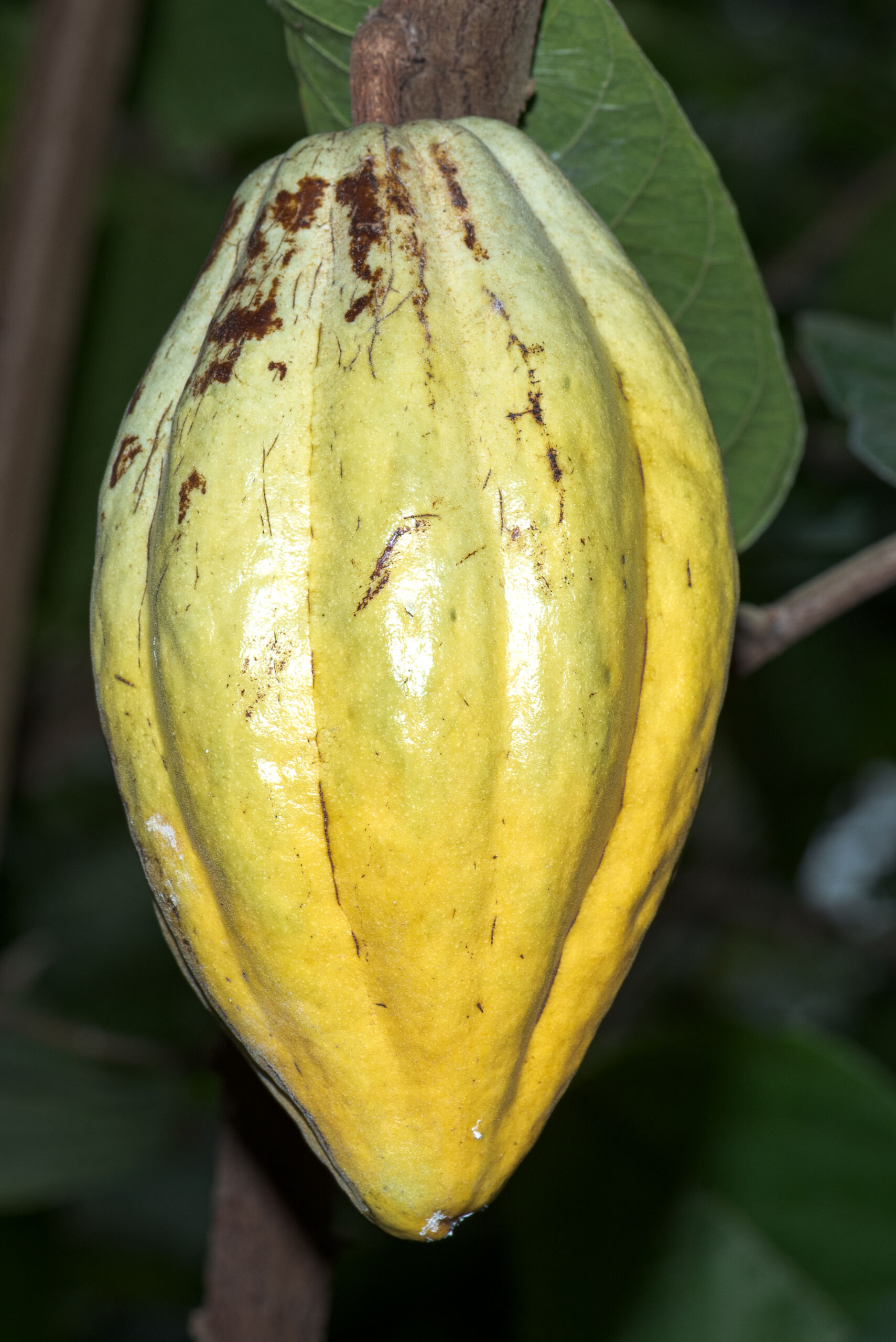
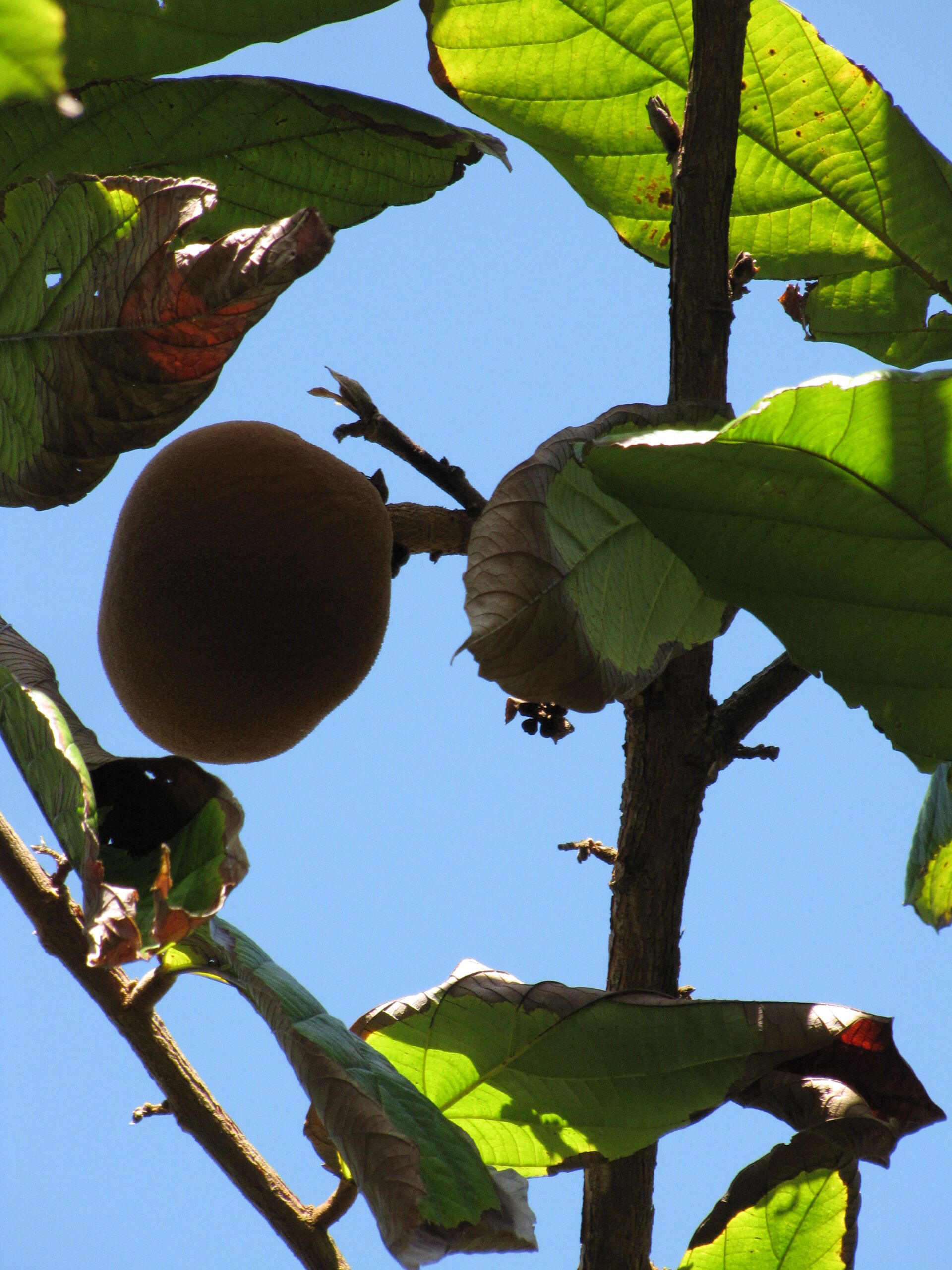
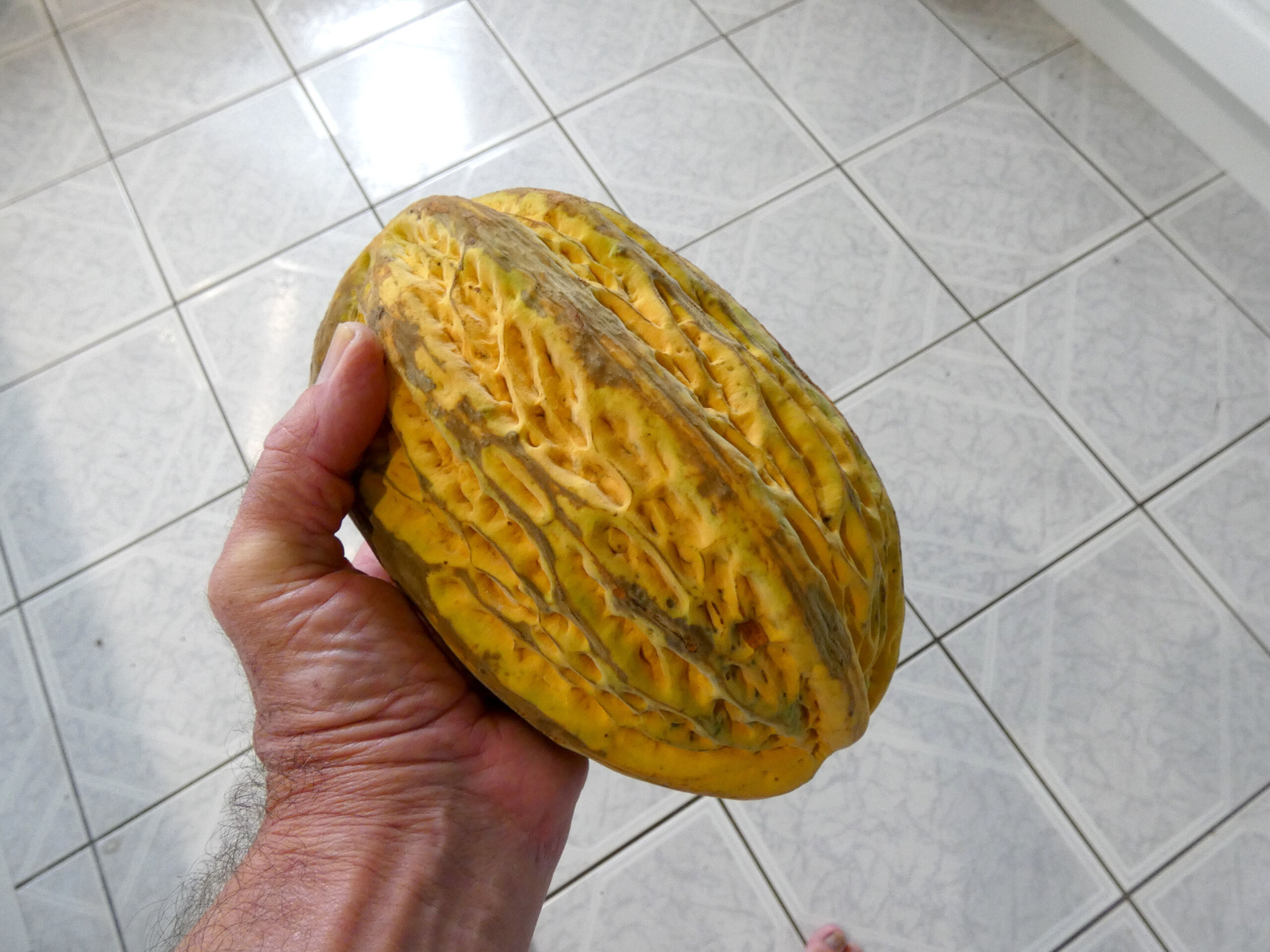
Theobroma is the genus of the chocolate trees, and it is a genus with a name that oversells nothing and a roster that most people never get past the first entry. It is a genus of flowering plants in the mallow family (Malvaceae), formerly placed in the sterculia family (Sterculiaceae) before that family was folded into Malvaceae, and it holds roughly twenty species in the traditional circumscription — small understory trees of the tropical forests of Central and South America, with the greatest diversity in the Amazon basin. The genus name is Greek, and it is the least modest name in horticulture: theos, god, plus broma, food — food of the gods. Linnaeus published the genus in 1753, with cacao (Theobroma cacao) as its type species, and the name has been doing the genus’s marketing ever since, which is fair, because the genus contains the plant that gives the world chocolate, and that is a hard act for any genus name to live down.
The genus pattern is easy to picture once you have seen one member, because the members share a way of life. These are small trees of the forest understory, growing beneath a taller canopy in warm, humid, lowland rainforest, with large, simple, alternate leaves, often long and oblong with a pointed tip, and a habit of flowering and fruiting straight off the trunk and older branches — a trait botanists call cauliflory, and gardeners call “wait, the fruit grows on the trunk?” Yes. It does. The flowers are small, often pinkish or whitish, clustered on the bark, and easy to miss if you are looking up in the canopy where flowers are supposed to be. The fruits are the show: large, leathery pods, ribbed or smooth depending on the species, hanging from trunk and branch, each one packed with seeds wrapped in a sweet, mucilaginous pulp. In cacao, those seeds, fermented, dried, and roasted, become chocolate. In the cousins, the pulp and seeds are eaten in their own right, and the pods are a rainforest pantry rather than a commodity crop.
And then there is the chemistry, which is the reason this genus is famous, beloved, and mildly dangerous all at once. Theobroma seeds contain theobromine, the bitter alkaloid that gives chocolate its bite and its gentle stimulant lift, alongside caffeine in smaller amounts. Theobromine is the reason chocolate is a human pleasure and a dog emergency: dogs metabolize it far more slowly than people do, so chocolate that is a treat for you is a toxin for them, and no part of this guide suggests sharing the harvest with the household hound. The pulp around the seeds, by contrast, is sweet and tart and eaten fresh across the Amazon, and it is the part of the pod most visitors taste first — which is a neat summary of the genus: the seed is the crop, the pulp is the snack, and the tree grew both of them in the shade of a rainforest for a very long time before anyone thought to ferment them.
The butterfly context for this genus guide is Cramer’s Eighty-eight, and it is a host context written at the genus level, which is exactly why a genus guide is the honest unit. The Cramer’s Eighty-eight guide says, in its Host plants section, that caterpillars feed on Trema species and on Theobroma species, the cacao genus. That is the wiring target for this draft: one guide, one genus-level mention, in the Host plants section, in the exact forms “Theobroma species” and “the cacao genus.” Cramer’s Eighty-eight is a tropical brush-footed butterfly of Mexico to Peru and Brazil, a rare visitor to southern Florida, and its caterpillars are forest-edge feeders, not garden pests — the Trema association is the unusual one in its tribe, and the Theobroma association is the genus-level one, with no single Theobroma species named in the guide. A guide that covered only cacao would pretend the butterfly had made a species choice it did not make, and a guide that covered only cupuaçu would do the same in the other direction. The genus is the menu, so the genus is the guide.
One plain-text disambiguation, because the site already has a cacao guide and this genus guide must not swallow it. This guide claims Theobroma species as a genus only. Cacao (Theobroma cacao) has its own plant-guides growing guide, titled “Cacao: Growing Guide,” under the slug “cacao,” and that guide covers the cacao species in particular — its growing, its pods, its chocolate — in a way this genus guide does not. This genus guide does not replace that guide, and the cacao species guide does not cover the genus: a species guide for one species does not cover its genus, and the rest of the genus — cupuaçu, mocambo, and their wild cousins — lives here, not there. Where this genus guide names cacao, it names it as one member of the genus, for orientation, not as a claim on the species guide’s subject. Buy and plant by Latin name, species by species, and let this guide be the map of the genus, not a substitute for any one of its members.
How to grow
Growing Theobroma starts with the only decision that matters, and it is a climate decision, not a technique decision: are you in a frost-free tropical climate, or are you not? The genus is tropical to its roots, and the growing advice for a rainforest understory tree does not translate to a temperate garden, a sunny patio, or a greenhouse you heat only on weekends. The genus pattern is: shade or part shade under a taller canopy or a shade structure, warmth year-round with no frost, high humidity, and moist, rich, well-drained, humus-rich soil that never dries out and never waterlogs. Plant a young tree in the shelter of larger trees or a shade house, protect it from wind and direct midday sun while it establishes, mulch deeply with leaf litter or wood chips, and water steadily through dry spells, because a thirsty Theobroma drops leaves and sulks in a way that takes a season to forgive. These are not drought plants, not sun plants, and not plants that enjoy a cold snap as a character-building exercise.
Propagation follows the tropical-tree pattern: seed, sown fresh, is the usual route, because Theobroma seeds lose viability quickly once they dry out — a seed that has sat in a drawer for months is a seed that has already given up — so sow fresh seed from a ripe pod into moist, humus-rich mix, keep it warm and shaded, and wait for germination in weeks rather than days. Cuttings and grafting are used for named cacao selections in commercial growing, where a grower wants a known variety rather than a seedling lottery, but for a home grower in the tropics, fresh seed and patience are the honest method. Give each tree room to become a small tree, not a shrub: space by species, prune lightly to shape and to remove dead wood, and harvest pods as they ripen, by species and by color, rather than by calendar — a pod that is ready tells you by color, sound, and give, and a pod picked green is a pod wasted.
Florida note, stated by species rather than by genus, because the genus-level answer would be a lie. In Florida, the Theobroma story is a south Florida story, and a sheltered one at that. Cacao is a tropical understory tree suited only to frost-free south Florida, grown in shade with humidity and protection from cold snaps, and even there it is a tender tree that wants a warm microclimate, not a statewide garden promise. Cupuaçu and mocambo are more strictly tropical still, Amazon-basin trees that want more heat and humidity than even south Florida reliably offers, and they belong in a tropical collection or a heated greenhouse, not in an open Florida yard. Central and north Florida gardeners should not plant any Theobroma outdoors expecting a harvest: a single frost ends the performance, and the genus’s rainforest shade is not something a temperate winter can fake. Grow the species that suits your frost-free microclimate, by its Latin name, and let the genus guide be the map.
Water & feeding
Water, for the garden Theobroma species, is a question of steady moisture in the root zone. The genus pattern is moist soil that stays evenly damp — rainforest-floor moist, leaf-litter moist, morning-mist moist — and in a genuinely humid tropical site with regular rain the trees largely water themselves once established, while in a dry spell they want deep, regular watering and a root zone that does not dry out, because a thirsty Theobroma thins out, drops leaves, and stops setting pods, which defeats the purpose of planting it. A thick mulch of leaf litter or wood chips helps enormously, holding moisture, cooling the roots, and feeding the soil life that keeps humus-rich soil healthy rather than sour, and it doubles as a slow-release pantry for the tree itself. The understory rule applies to water as much as to light: these trees evolved under a canopy that drips, shades, and mulches them, and a garden that imitates that canopy — shade above, mulch below, moisture steady — is a garden a Theobroma understands.
Feeding: modest to moderate, across the genus. Theobroma species prefer moist, average to rich, humus-rich soil, and a regular topdressing of compost or well-rotted organic matter is the right scale of feeding — not a heavy synthetic fertilizer program, which mostly produces soft, leggy growth that flops and invites pests. In a rainforest or a well-mulched tropical garden, the nutrients arriving with leaf litter are often plenty on their own. The soil science here is the forest-floor story: warm, damp, humus-rich soil is a nutrient highway, regularly replenished with falling leaves and organic matter, and the microbes, fungi, and invertebrates of that soil cycle nutrients fast in tropical conditions. A Theobroma’s roots live in that community, and its yearly leaf fall returns a large crop of leaves to the soil as organic matter, feeding the next cycle. Planting a Theobroma under a canopy at a moist tropical garden edge is therefore not just growing chocolate — it is installing a small piece of rainforest floor, and the pods hanging off the trunk are the pantry on top of it.
Common problems
- Frost. The most consequential problem in the genus. A single frost can kill or badly damage a tropical Theobroma. Grow only in frost-free climates or under serious protection, and do not gamble a tree on a mild winter.
- Drying out. The genus wants steady moisture. Thinning growth, leaf drop, and pods that fail to set usually mean the soil dried. Mulch deeply, site it moist and shaded, and water in dry spells — or pick a different tree.
- Too much sun. These are understory trees. Full, harsh sun scorches leaves and stresses young trees. Give them canopy shade or a shade structure, especially while establishing.
- Stale seed. Theobroma seeds lose viability quickly once dried. Sow fresh seed from a ripe pod, and do not trust old, dried seed to wake up.
- Wrong species, wrong region. An Amazon-basin cousin in a marginal climate, or any Theobroma outdoors where frost visits, is a tree out of place. Check the species’ climate before you buy, and buy by Latin name.
- Theobromine and dogs. Chocolate and cacao seeds are toxic to dogs, which metabolize theobromine slowly. Keep pods, seeds, and chocolate away from dogs, and never share the harvest with them.
- Caterpillar and pod pests. In the tropics, pod borers and fungal pod rots are the commercial grower’s headache. A home grower should harvest ripe pods promptly, remove diseased pods, and keep the canopy open enough for air — and should not spray a butterfly host tree without thinking about what else the spray will kill.
Harvest
Theobroma‘s harvest is pods, pulp, and seeds — in that order, depending on which species you planted, and with the patience of a tree crop rather than a vegetable bed. Cacao’s harvest is the famous one: pods cut from trunk and branch when ripe, split open, seeds and pulp scooped out, pulp fermented away, seeds dried, roasted, and ground into chocolate — a chain of steps that turns a rainforest pod into a bar, and that belongs to growers with the climate and the time to run it properly. Cupuaçu’s harvest is simpler and, in the Amazon, just as beloved: pods split for their fragrant, tart-sweet pulp, eaten fresh or made into juice, ice cream, and desserts, with the seeds as a secondary prize. Mocambo’s harvest is seeds and pulp together, eaten fresh or roasted, a forest food rather than a commodity. Across the genus, the rule is the same: harvest pods as they ripen, by species and by color, not by calendar, and use them fresh, because a Theobroma pod is a perishable pantry, not a storage crop.
The simplest harvest, though, is a humid afternoon under a Theobroma tree with no agenda at all: pods hanging off the trunk like ornaments someone forgot to take down, the smell of ripe pulp when one is split, and the knowledge that the tree over your head is both a pantry and a butterfly host, and that its name — food of the gods — was not marketing after all, just accurate. Leave most trees to their own rhythm, prune lightly for shape and air, mulch every year, and let the tree come back bigger next season. That is the crop, and it arrives without a single spray aimed at the caterpillars — because a genus that feeds both chocolate-makers and eighty-eight butterflies has earned the right to be left alone to do both jobs.
Browse all plant & pest guides
Saving seeds
Cacao seed comes with a deadline: it is recalcitrant, and it does not wait. Clean the pulp off the seed, rinse it, and sow it the same day or within a few days — seed that dries out is dead seed, and seed stored for weeks is mostly dead too. Sow in a warm, moist mix at 75 to 85°F, about an inch deep, and germination usually comes in one to two weeks.
Save seed from fully ripe pods — the sweetest, most fragrant cacao on a healthy tree — and sow more than you need, since germination is uneven. Seedlings vary in pod size and flavor, and the only way to lock in a named type is grafting. Seed is for the adventure, and cacao is worth the gamble.
Young seedlings are tender and need heavy shade for the first year, so keep them out of direct sun and sheltered from wind and cold. Growth after germination is steady, and the tree starts fruiting three to five years after sowing in a warm climate.
In Florida, cacao is a warm-climate tree for zones 10 to 11, happiest in the southern part of the state in a sheltered, frost-free spot with part shade and moist soil. Start seedlings in pots, keep them warm through winter, and plant them out only when the weather is reliably warm — a single cold night can undo a year of growth.
Species
Theobroma is a genus of roughly twenty species in the traditional circumscription, and no guide can list them all with equal detail, so this section names the species a gardener, cook, or butterfly-watcher is most likely to meet, in plain text, and states plainly which one has its own guide. Cacao (Theobroma cacao) is the famous species, the chocolate tree, with its own plant-guides growing guide under the slug cacao, and it is listed here for completeness, not claimed by this genus guide. Cupuaçu (Theobroma grandiflorum) is the big-podded Amazonian species grown for its fragrant, tart-sweet pulp. Mocambo, also called pataxte (Theobroma bicolor), is the jaguar tree, grown for its seeds and pulp. Capacui (Theobroma speciosum) is another edible Amazonian cousin. Monkey cacao (Theobroma angustifolium) is the Central American member of the genus. Cacao de monte (Theobroma mammosum) is a wild Amazonian cousin. Theobroma obovatum, Theobroma subincanum, Theobroma sylvestre, Theobroma simiarum, Theobroma microcarpum, and Theobroma glaucum are further wild members of the genus, known mostly from the forest rather than the garden. Grow the species suited to your frost-free climate, by its Latin name, and let the genus guide be the map, not a substitute for any species on it.