
🌿 California False Indigo
What it looks like
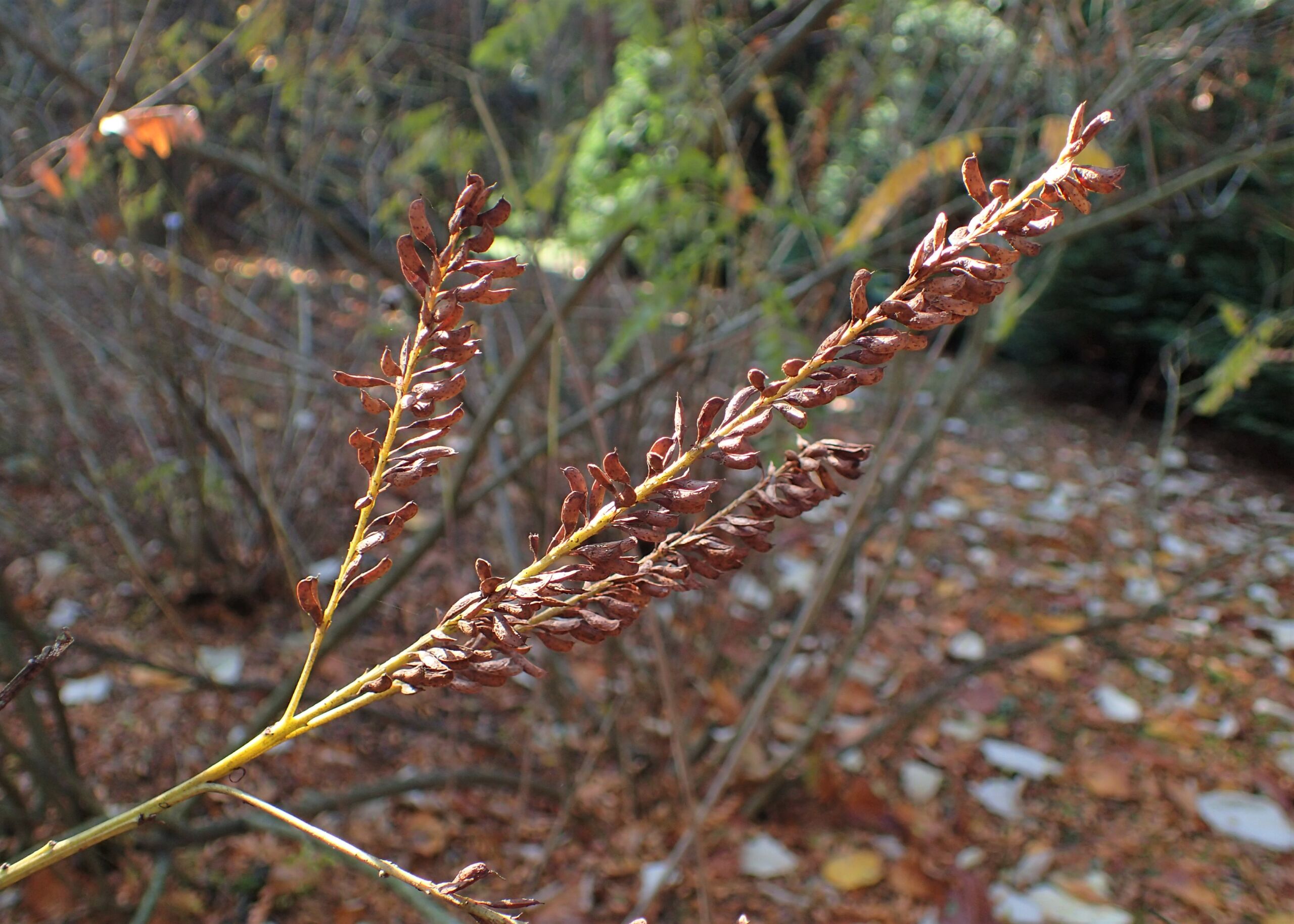
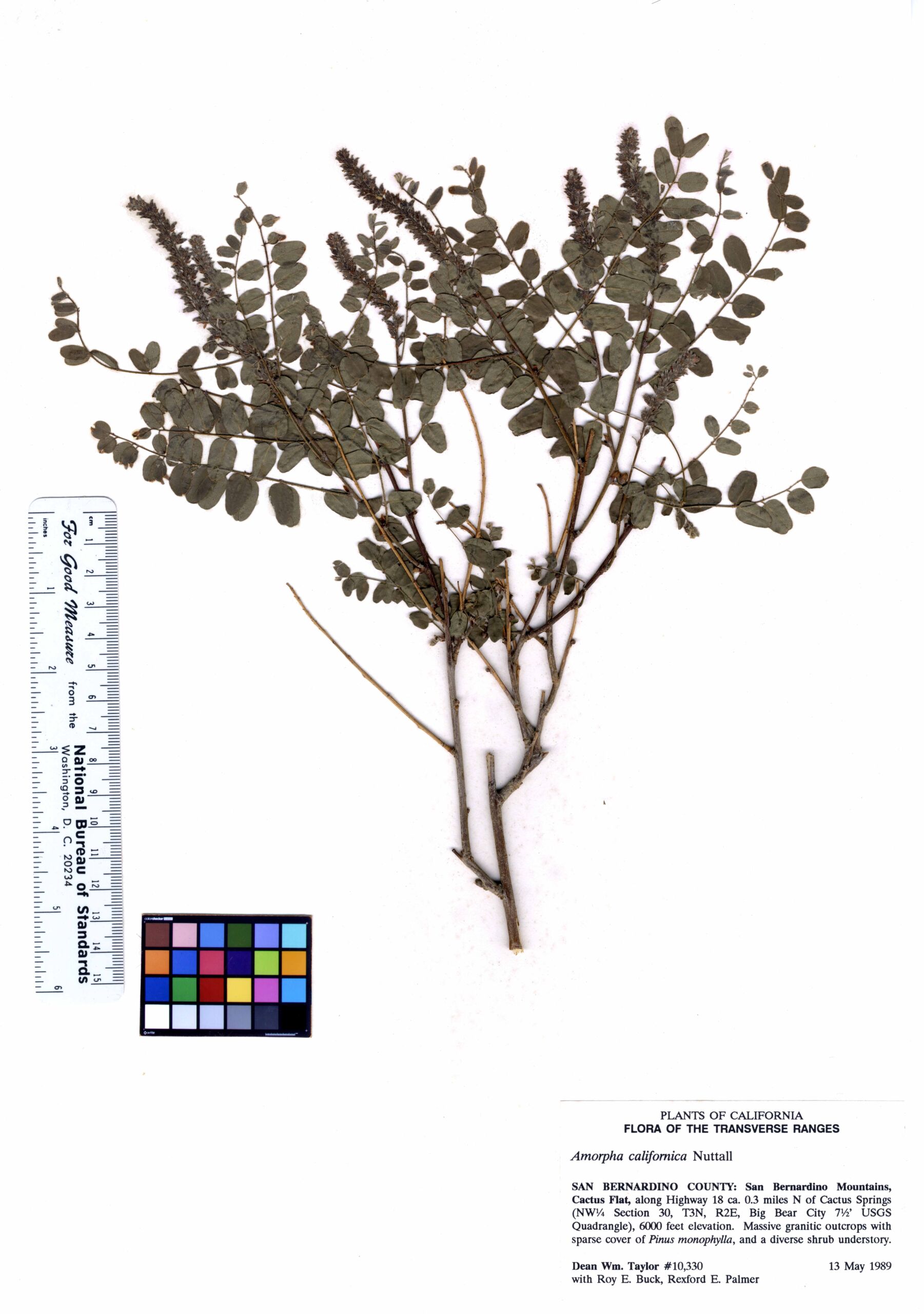
California false indigo is a shrub that looks like a fern that decided to flower, and the resemblance is not an accident of your eyesight — it is the leaf. Amorpha californica is a deciduous, thornless shrub in the legume family (Fabaceae), native to California, Arizona, and northern Baja California, where it grows in chaparral and oak woodlands, on shrubby slopes, in yellow pine forest margins, and along riparian woodlands. It is an open, somewhat see-through shrub, usually 4 to 8 feet tall and about as wide in gardens, though flora accounts record it from about 1 to 4 metres, and it carries itself in a fountain-like form, with multiple fronds of compound leaves arching outward like a large fern. In winter it goes dormant and largely dies back toward the ground in colder or more exposed sites, then returns in spring — a habit that surprises gardeners expecting an evergreen shrub and reassures them once they see the spring flush.
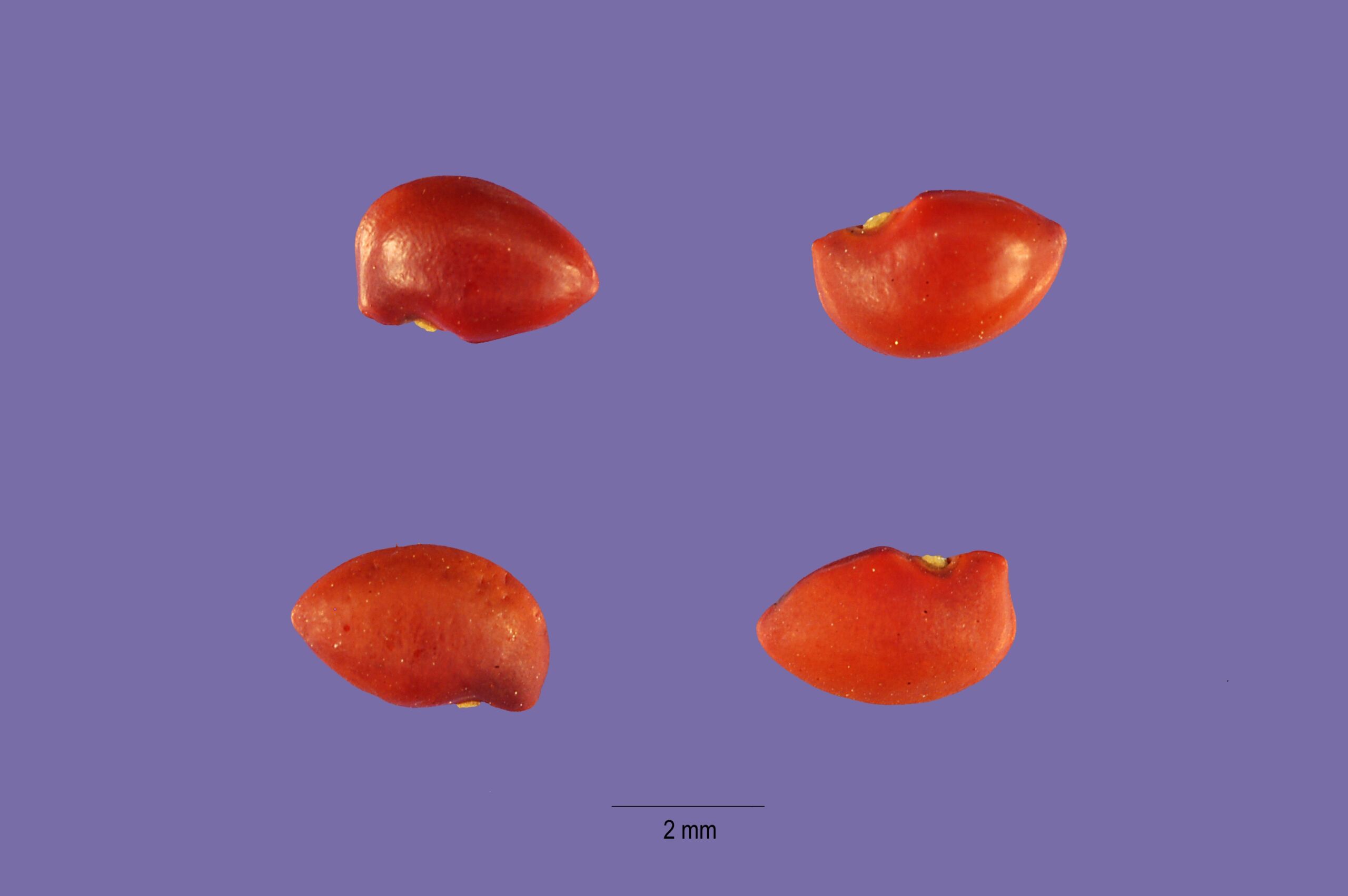
The leaves are the identification. They are odd-pinnately compound, 10 to 30 centimetres long, with 15 to 33 leaflets, each leaflet oval, entire-margined, bright green, smooth, and dotted with glands, ending in a single terminal leaflet. The stems and leaf stalks are the second clue: shoots are finely hairy and covered with prickle-like and small blister-like glands, and the foliage is strongly scented — gardeners describe a pleasant fragrance, something like tropical fruit with lavender in it, released when the leaves are brushed. Rub a leaf, smell your fingers, and you have done half the identification already. The other half is the flower, and it is the strangest pea flower you will meet. The genus Amorpha is unusual among legumes in having the corolla reduced to a single petal — the banner alone, violet to purple, with no wings and no keel — and ten stamens that stick out beyond it, orange-tipped, in dense spike-like racemes 8 to 20 centimetres long holding a hundred or more small flowers each. From a distance the spikes read as purple wands with orange dust; up close they are a lesson in how much flower a plant can throw away and still get pollinated. The fruit is a small dry legume pod, about 5 to 6 millimetres long, usually holding a single seed, carried in spike-shaped clusters.
The butterfly context for this guide is the Marine Blue guide, which lists “California false indigo” with the Latin Amorpha californica in its Host plants section — the single butterfly-guide mention that brings this shrub into the project. The wider butterfly world knows it better than that one mention suggests: the endemic California dogface butterfly’s larvae feed on it, along with the southern dogface and the silver-spotted skipper, and its spring flower spikes are a nectar source for bees, butterflies, and hummingbirds in its native range. As a legume it also does quiet soil work that the flowers never advertise: like other members of the pea family it partners with root bacteria to fix atmospheric nitrogen, so a California false indigo planted on a slope is feeding the soil it stands in as well as the insects that visit it. That combination — nitrogen-fixing shrub, scented foliage, purple-and-orange flower spikes, dogface host — is why western native gardens plant it, and why it earns a guide of its own rather than a footnote under another false indigo.
One plain-text disambiguation, because “false indigo” is a shared nickname worn by several unrelated plants, and this guide’s whole job is to keep them apart. This guide covers California false indigo (Amorpha californica) only. It is not blue false indigo (Baptisia australis), the eastern herbaceous perennial with trifoliate blue-green leaves and tall indigo-blue flower spikes, which has its own species guide in this project — different genus, different habit, different side of the continent. It is not false indigo bush (Amorpha fruticosa), the wider-ranging Amorpha species with its own native-plant profile on this site: the two are close cousins, but California false indigo’s twigs, petioles, and leaf stalks bear spine-like glands where false indigo bush’s do not, and its leaflets are smaller. It is not leadplant (Amorpha canescens), another Amorpha cousin, and it is not any true indigo (Indigofera), the dye plants. The name “false indigo” means the plant looks like an indigo without being one; the Latin name tells you which false indigo you are actually holding, so buy by Latin name, as always.
How to grow
Growing California false indigo starts with placing it where a western shrub wants to be: sun to light shade, with a little more shade in hot inland sites, in well-drained soil, with room to reach its fountain form. In its native range it grows on slopes and in open woodland, and in the garden it wants the same deal — a sunny slope, an oak understory edge, a chaparral-style bed with other western natives, not a soggy low spot or a heavily irrigated lawn border. Space shrubs 4 to 8 feet apart so each has room to arch, and give it a full season to establish before you judge it: like many shrubs it spends its first year building roots, and like many drought-tolerant shrubs it resents being fussed over once it is settled. It is winter-deciduous, so expect a bare framework in winter and a spring flush, and do not mistake dormancy for death — the shrub that looks finished in January is the shrub that leafs out in March.
Propagation follows the legume pattern: seed, collected from the small pods when they ripen, and cuttings. Legume seeds often carry hard coats, so scarification and soaking before sowing are the usual preparation, and seedlings should be transplanted while young, because shrubs that build deep root systems resent late moves. Pruning is light: remove dead wood in late winter before spring growth, shape lightly to keep the fountain form open, and leave the plant alone otherwise — a California false indigo that is pruned into a hedge loses the open, fern-like character that is the whole point of planting it. In a native garden it pairs naturally with the plants of its home communities — oaks, chaparral shrubs, and western wildflowers — and it earns its place not as a specimen to stare at but as a working shrub: nitrogen for the soil, scent for the gardener, spikes for the pollinators, leaves for the dogface caterpillars.
Florida note, stated by range rather than by wishful thinking, because a Florida gardener meeting this shrub in a butterfly guide needs the honest version. California false indigo is a western native — California, Arizona, northern Baja California — and it is not a Florida plant, not a Florida butterfly-garden plant, and not a substitute for any Florida native shrub. Its butterfly-guide mention comes from the Marine Blue, a western butterfly, and its dogface hosts are western butterflies too. Florida gardeners should admire it from this guide and plant their own region’s legumes for their own butterflies, rather than importing a chaparral shrub into humid Florida soil where it does not belong. A plant out of its range is a plant out of its luck, and this guide would rather you plant a Florida native well than a California native badly.
Water & feeding
Water, for California false indigo, is a question of drainage first and quantity second. In its native chaparral and woodland sites it grows where water drains away, and in the garden it wants well-drained soil and a watering pattern that lets the root zone dry between waterings once it is established — drought-tolerant, in the usual western sense, meaning it survives dry summers on little water, not that it enjoys being baked in a pot. Water deeply at planting and through the first dry season to establish roots, then back off: established shrubs in a suitable climate largely water themselves on normal rainfall, with deep occasional watering in extended drought. A mulch of wood chips or gravel helps hold moisture without holding it against the crown, and it doubles as habitat for the soil life that keeps well-drained soil healthy rather than dusty.
Feeding: light, and mostly unnecessary, because this is a nitrogen-fixing legume. The root bacteria do the fertilizing, pulling nitrogen from the air into a form the plant — and, over time, its neighbors — can use, which is why legume shrubs are prized on poor slopes and in restoration plantings. A spring topdressing of compost is plenty, and heavy nitrogen fertilizer is not only wasteful but beside the point: you would be feeding a plant that already feeds itself, and pushing soft, leggy growth that flops out of its fountain form. The soil science here is the legume story: the nodules on the roots are a partnership, bacteria housed and fed by the plant in exchange for nitrogen, and the shrub’s yearly leaf fall returns that nitrogen to the soil as organic matter. Planting a California false indigo on a slope is therefore not just decorating the slope — it is installing a slow-release fertilizer factory with purple flowers, and the dogface caterpillars eating its leaves are part of the same system, moving that nitrogen onward into butterflies.
Common problems
- Buying the wrong false indigo. Blue false indigo (Baptisia), false indigo bush (Amorpha fruticosa), and true indigos (Indigofera) all share the nickname. Check the Latin name: this guide’s plant is Amorpha californica, a western shrub with many-leafleted pinnate leaves and spine-like glands on its twigs.
- Soggy soil. A chaparral and woodland shrub that wants drainage. Yellowing and thinning in a wet low spot usually mean the soil stays wet — move it to a slope or a raised, well-drained bed, or pick a different shrub.
- Mistaking dormancy for death. Winter-deciduous and sometimes dying back toward the ground in winter. Wait for spring growth before declaring it dead or digging it out.
- Too much water and fertilizer. Established shrubs want little of either. Heavy irrigation and nitrogen fertilizer produce leggy growth and defeat the plant’s drought-tolerant character.
- Wrong region. A California, Arizona, and Baja California native. Planting it in humid eastern or Gulf climates, including Florida, is a plant out of place — admire it here, plant a regional native there.
- Collecting the rare variety. The Napa false indigo variety (var. napensis) is a rare plant of the San Francisco area and North Coast Ranges. Never collect it from the wild; buy only nursery-grown stock of the standard variety, and leave rare plants where they grow.
- Caterpillar defoliation. Dogface and skipper caterpillars may eat leaves in season, and that is the point of planting a host shrub. A healthy shrub recovers, so do not spray the caterpillars — they are the crop.
Harvest
California false indigo’s harvest is seed, cuttings, and a slope that holds together — in that order, and with one firm boundary worth stating plainly. This is not a food, dye, or medicine plant in this guide’s telling, despite the “indigo” in its name: it is not a true indigo, it is not a dye crop, and no part of this guide recommends eating, brewing, dyeing with, or otherwise ingesting it. If you want seed, collect the small pods when they ripen, and grow from seed with the scarification and soaking that hard-coated legume seeds expect, then sow and wait, because shrubs that build deep roots take their time. If you want more plants, take cuttings, and transplant while young, before the root system decides it lives where it lives.
The simplest harvest, though, is a spring afternoon beside a California false indigo in full spike: purple wands with orange stamens over fern-like leaves, bees working the spikes, a dogface butterfly somewhere in the story, and the knowledge that the shrub under your hand is feeding the soil it stands in as well as the insects that visit it. Leave most plants standing through the season for the caterpillars, prune dead wood in late winter, and let the shrub come back bigger next spring. That is the crop, and it arrives without a single spray — because spraying it would kill the very thing you planted it for, and because a shrub that has run its nitrogen-fixing, scent-glanded, single-petalled system for a very long time does not need your intervention, only your willingness to plant the right species and then get out of its way.
Browse all plant & pest guides
Saving seeds
California false indigo is a legume, and legume seed has a legume attitude: a hard, waterproof coat that laughs at a casual sowing. The pods are small — usually a single seed each — and ripen in fall. Collect them when they are dry and brown, shell out the seeds, and dry them thoroughly before storage. Then comes the part that actually matters: scarification. Without it, most of the seed will simply sit there. Nick each seed with a knife or file, rub it between sandpaper, or pour hot (not boiling) water over the batch and let it soak for twelve to twenty-four hours. Swollen seeds are ready; unswollen ones can be scarified again. Sources vary on the chill that follows — some give about three weeks of cold, moist stratification for stored seed, others two to three months — so treat the chill as insurance rather than gospel, and sow after scarification with a few weeks of cold behind the seed if you can manage it.
Sow shallowly, about 1 cm deep, in a well-drained mix, kept moist at roughly 20–25 °C, and expect germination over one to three weeks for properly treated seed — unevenly, because that is how wild legumes hedge their bets. Grow seedlings on until they are sturdy before planting out, and give them sun and room: this is a shrub that wants to be four to eight feet of open, drought-deciduous growth, not a crowded seedling tray. Cuttings and layering also work and are the route for an exact plant, since seedlings vary, but seed is the easy, generous method for a species plant.
One practical note: false indigo seed keeps well when stored cool and dry — legume seed is famously long-lived — but in Florida, store it airtight with a desiccant packet, because humidity will find any envelope you leave on a shelf. And a range note, stated plainly: this is a California native of dry slopes and oak woodland, not a Florida plant, so in Florida it is a collector’s shrub for sharp drainage and sun, not a sure thing. Sow fresh seed for the best stand, scarify honestly, and do not blame the seed if you skipped the sandpaper.
Varieties
No named garden cultivars of California false indigo were verified for this guide. The plant is grown as the straight species, Amorpha californica, from nursery stock or seed. Two botanical varieties are recognized, and they are not interchangeable garden choices: the standard variety, Amorpha californica var. californica, is the widespread shrub of California, Arizona, and northern Baja California described in this guide; the Napa false indigo, Amorpha californica var. napensis, is a rare plant found only around San Francisco and in the North Coast Ranges, and it should never be collected from the wild. Its relatives are not varieties either: false indigo bush (Amorpha fruticosa) is a different, wider-ranging Amorpha species with its own native-plant profile; leadplant (Amorpha canescens) is another different Amorpha species; and blue false indigo (Baptisia australis) is a different genus altogether, with its own species guide. Plant the standard variety by its Latin name, and leave the rare one where it grows.