
🌿 California Mustard
What it looks like
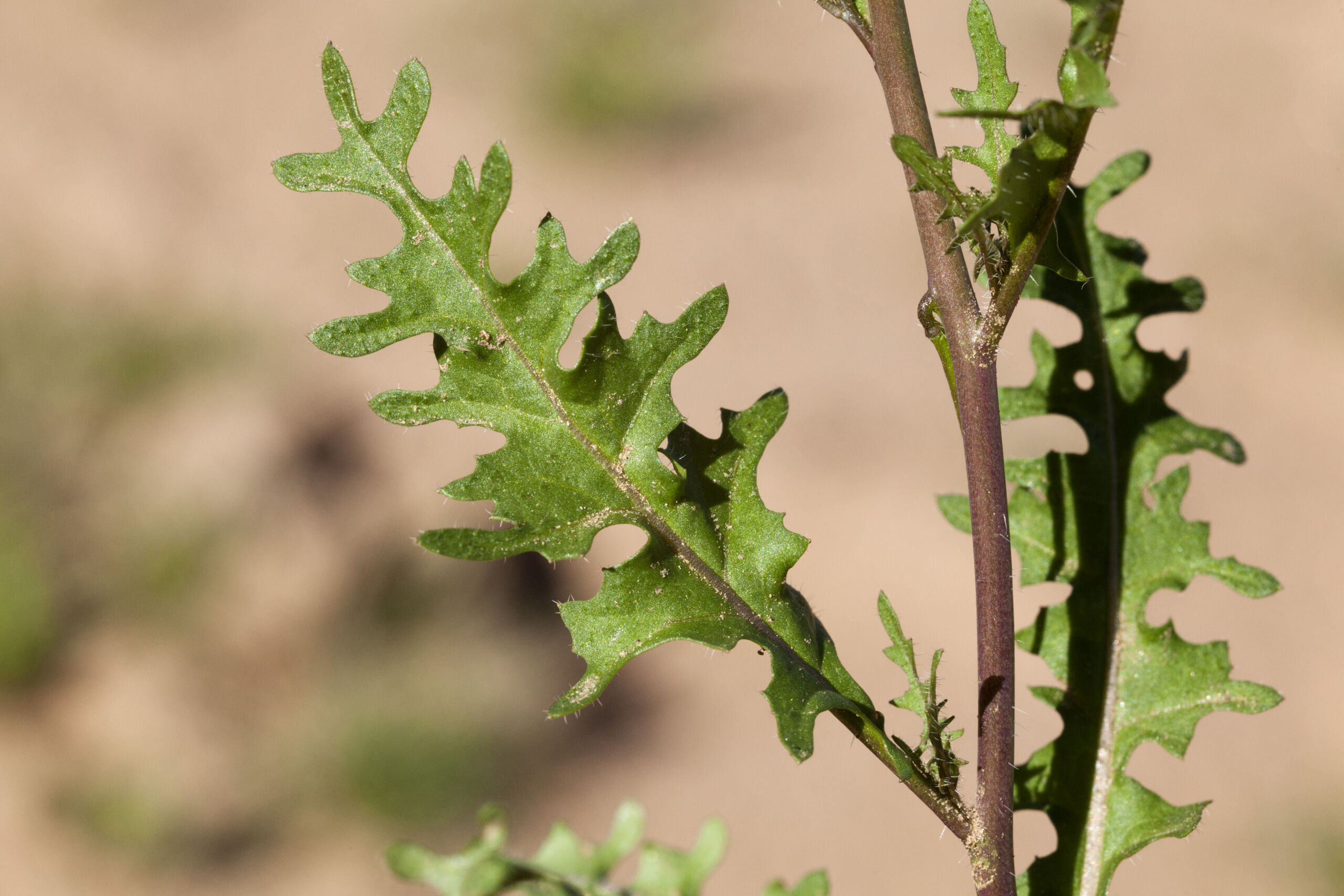

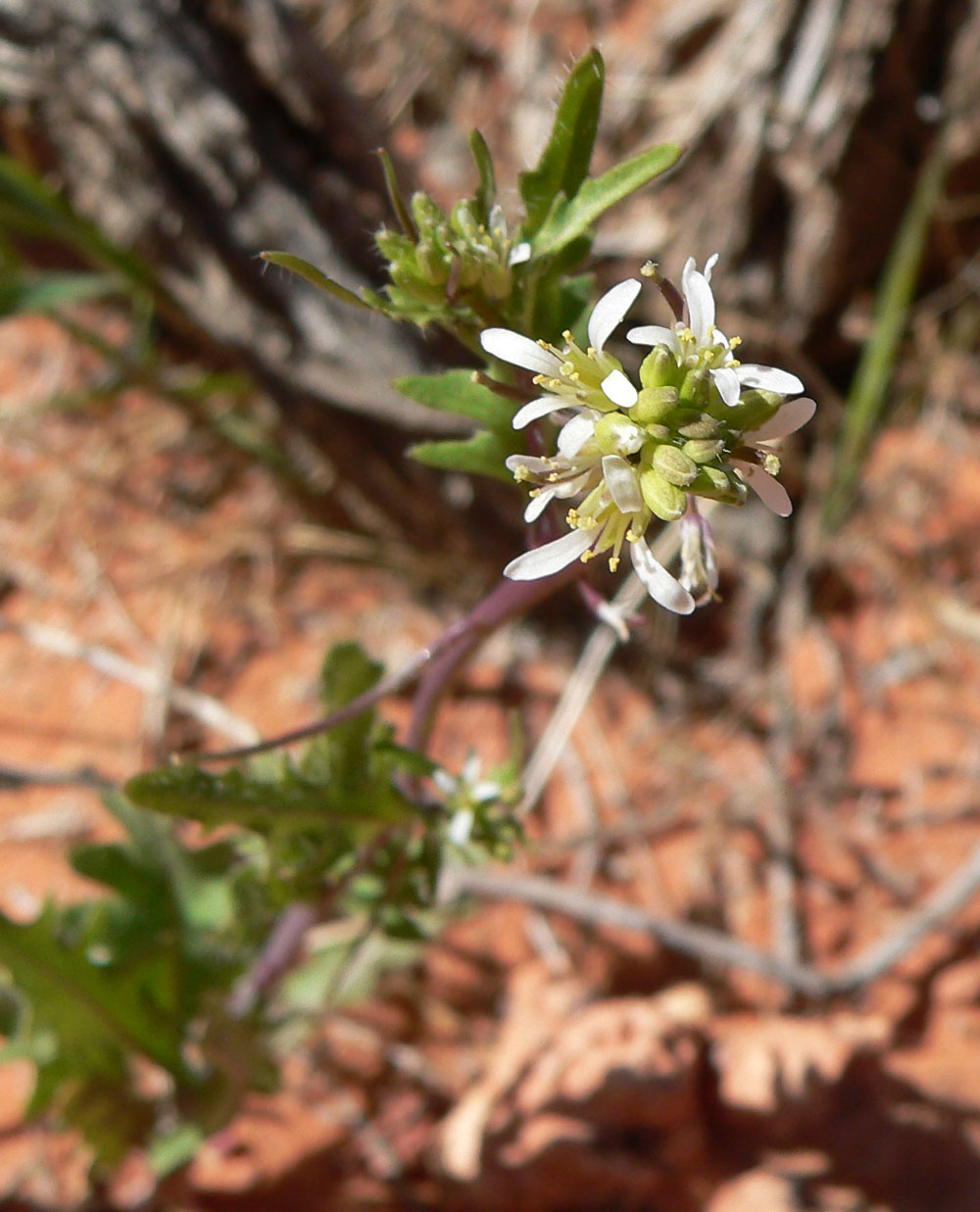
California mustard is a plant that apologizes for its name before you have even finished reading it, and rightly so. It is Streptanthus lasiophyllus in the butterfly guide that brings it into this project, a species of the mustard family (Brassicaceae) known also as slenderpod jewelflower, and it is a thin-stemmed, erect annual herb of western North America — not a condiment, not a crop, and not the mustard on your sandwich. It grows from British Columbia south to northern Mexico, across California, Nevada, Arizona, and into neighboring states, in the places other plants consider a dare: desert flats, gravelly areas, limestone rocks, talus slopes, sandy banks, grassy fields, and disturbed ground, from near sea level to well over a thousand metres. It is, in the best sense, a weed of the open West — an annual that appears where the ground is bare, does its business fast, and leaves seed behind for next year.
The plant itself is spare to the point of elegance. Stems are erect, unbranched or branched toward the top, usually a few decimetres to about a metre tall though the species is famously variable, and at least sparsely hairy toward the base — hairy enough that one of its names, lasiophyllus, means woolly-leaved, and hairiness is one of the characters that helps separate it from look-alikes. The basal leaves are lobed and toothed, soon withering as the plant grows, and the stem leaves are smaller, lance-shaped to oblong, pinnately lobed, with fewer lobes toward the top. The flowers sit at the top of the stem in an elongated, unbranched cluster, each flower well separated from its neighbors rather than crowded into a head: four small petals, usually white to creamy white and rarely pinkish, about half a centimetre long, widely spaced and oval, with the four-petalled cross shape that marks the whole mustard family. The fruit is the part that gives it the slenderpod name — a narrow pod, a few centimetres long, hanging downward or spreading from the stem on a short stalk, ripening as the plant dries. Flowering runs from March into June, earlier in the desert and later in cooler sites, and the whole plant is an annual: one season, seed, done, with next year’s plants coming from the seed bank rather than from a perennial root.
The butterfly context for this guide is the Desert Orangetip guide, which lists “California mustard” with the Latin Streptanthus lasiophyllus in its Host plants section, alongside lyreleaf jewelflower, London rocket, western tansymustard, and sand fringepod — a whole mustard-family menu for a desert butterfly. That is the single butterfly-guide mention that brings this annual into the project, and it is a fitting one: the desert orangetip is a butterfly of open, dry, mustard-rich country, and California mustard is exactly the kind of unassuming annual its caterpillars eat, the plant you walk past on a desert flat without noticing until you learn to look for the small white crosses on thin stems. As a member of the mustard family it also carries the family’s chemistry — the sharp, sulfur-containing compounds that give mustards their bite — and the orangetip caterpillar, like other pierid caterpillars, has evolved to eat plants other insects avoid, turning a chemical defense into a dinner invitation.
One plain-text disambiguation, because the name “California mustard” is a trap for the unwary in three directions at once. First, this guide covers California mustard (Streptanthus lasiophyllus) only. It is not black mustard (Brassica nigra), the introduced, invasive, golden-flowered mustard that turns California hillsides yellow in spring and has its own species guide on this site — different genus, different flowers, different ecological story, and a plant to manage rather than to celebrate. It is not the kitchen mustards (Brassica species grown for seed and greens), and no part of this guide recommends eating California mustard, despite the family resemblance: wild mustards vary, identification of annual mustards is fiddly, and a butterfly host is not a salad green. Second, it is not lyreleaf jewelflower (Streptanthus carinatus), the fellow desert orangetip host that shares its butterfly guide’s menu — a close cousin in the same genus, a different species. Third, the genus guide on this site, Streptanthus, names this species among the jewelflowers but does not cover it as a species unit, which is why this species guide exists. Buy and identify by Latin name, and expect the Latin name itself to wobble: see the nerdy fact.
How to grow
Growing California mustard is mostly a matter of getting out of its way, because it is an annual of disturbed, open ground and it knows its job better than you do. In its native western range, sow seed in autumn or very early spring onto bare, well-drained, sandy or gravelly soil in full sun, barely covering it, and let winter rain and spring warmth do the rest. It wants open ground, not a rich, mulched, irrigated bed: a gravel path edge, a dry slope, a patch of bare ground after disturbance, the kind of spot where a desert annual would volunteer on its own. Thin seedlings to a few inches apart if they come up thick, and then leave them alone — no staking, no fussing, no rich feeding, because a plant built for desert flats does not want a pampered life and will mostly just get leggy and flop if you give it one. It will flower from March into June, set its dangling pods, dry down, and drop seed for next year, and the gardener’s job is mostly to leave some of that seed where it falls and to resist tidying the patch into bare mulch before the seed has shed.
Propagation is seed, full stop, because it is an annual with no perennial root to divide and no woody stem to cut. Collect pods when they are dry and papery, and sow where you want next year’s plants, or let the plants self-sow and thin the volunteers in spring. A patch that self-sows for several years will look different every year — taller in a wet spring, shorter and hairier in a dry one — because this is a highly variable species, and the flora accounts say so outright: flower size, leaf shape, pod length and curvature, hairiness, and plant height all vary across its range, and some of its named varieties may yet turn out to be distinct species. That variability is not a flaw in the guide; it is the plant, and a gardener who meets a shorter, hairier, pinker-flowered California mustard than the one in the photograph has probably still met California mustard, just a different expression of it.
Florida note, stated by range rather than by wishful thinking, because a Florida gardener meeting this annual in a butterfly guide needs the honest version. California mustard is a western annual of desert flats, gravelly slopes, and dry open ground, and it is not a Florida plant and not a Florida butterfly-garden plant. Its butterfly, the desert orangetip, is a western butterfly, and its habitat — dry, open, well-drained, with a winter-rain rhythm — is not a Florida garden’s habitat. Florida gardeners should admire it from this guide and plant their own region’s mustards and wildflowers for their own butterflies, rather than importing a desert annual into humid Florida soil where it does not belong. A plant out of its range is a plant out of its luck, and this guide would rather you plant a Florida native well than a desert annual badly.
Water & feeding
Water, for California mustard, is the desert-annual pattern: winter and spring moisture, then dryness, and no apologies for either. In its native range it grows on rainfall alone, in soils that drain fast — desert flats, gravelly areas, sandy banks — and in the garden it wants the same deal: water to germinate and establish in the cool season, then let it dry as it flowers and sets seed, because an annual that evolved to finish before the summer drought does not want summer irrigation. Overwatering a desert annual in warm weather mostly buys you rot and flop, and a rich, constantly moist bed buys you a leggy plant that falls over before it sets seed. If you garden in a wetter climate, the honest advice is a raised, gravelly bed with sharp drainage, or a container with a sandy mix, rather than a standard garden bed — and if that sounds like a lot of work for a small white flower, it is, which is another reason this annual belongs in western gardens and western deserts rather than everywhere.
Feeding: none, to speak of. A desert annual of poor, gravelly soils does not want fertilizer, and feeding it mostly produces soft, oversized growth that flops and sets less seed. The soil science here is the poor-soil story: in thin, mineral soils, an annual’s strategy is speed, not size — germinate, grow fast, flower, set seed, die, and let the seed bank carry the population through the dry season and the bad years. California mustard’s yearly return of stems and leaves to the soil as organic matter is small but real, and over several self-sowing years a patch builds its own thin humus layer, which is how desert soils improve: a little at a time, one annual generation at a time. Do not fertilize it; let it be small, fast, and faithful to its habitat, and it will come back.
Common problems
- Mistaking it for black mustard. Black mustard (Brassica nigra) is a different, invasive, yellow-flowered species with its own guide. California mustard has small white to creamy flowers, thin stems, and dangling narrow pods — check the flower color and the Latin name before you celebrate or pull.
- Eating it because it is a mustard. No part of this guide recommends eating California mustard. Wild annual mustards are fiddly to identify, and a butterfly host is not a salad green — admire it, leave it for the orangetips.
- Too much water and food. A desert annual of poor, fast-draining soils. Rich, constantly moist beds produce leggy, flopping plants that set little seed. Give it sun, gravel, and benign neglect instead.
- Tidying away next year’s plants. The patch is an annual seed bank, not a perennial bed. Clearing and mulching the patch before seed has shed removes next year’s crop — leave some plants to dry and drop seed.
- Wrong region. A western annual of desert flats and dry open ground. Planting it in humid eastern or Gulf climates, including Florida, is a plant out of place — admire it here, plant a regional native there.
- Variable appearance confusing identification. Height, hairiness, leaf shape, and pod length all vary across its range. A shorter, hairier, or pinker plant than the photograph may still be California mustard; check the small white cross-shaped flowers, the thin stems, and the narrow dangling pods together, not any one character alone.
- Confusing it with its cousins. Lyreleaf jewelflower (Streptanthus carinatus) shares its butterfly menu but is a different species, and the Streptanthus genus guide names this species without covering it as a species unit. Identify by Latin name, species by species.
Harvest
California mustard’s harvest is seed, and seed only, because it is an annual and that is the whole economy of an annual. Collect the pods when they are dry and papery, before they shatter and scatter, and sow them where you want next year’s plants — or, simpler and better, leave a patch of plants standing to dry and drop their own seed, and thin the volunteers in spring. Do not harvest it as food, and do not harvest it as a condiment: the name is a family resemblance, not a recipe, and the plant’s value in this guide is as a butterfly host and a desert wildflower, not as a crop. A paper bag of dry pods, labelled with the Latin name and the year, is a perfectly respectable harvest for a plant like this, and it keeps better than any leafy green ever would.
The simplest harvest, though, is a spring morning on a desert flat, or at the edge of a gravelly western garden bed, with no agenda at all: thin stems with small white crosses, dangling pods catching the light, and the knowledge that a butterfly you may never see — a desert orangetip, small, white, and fast — eats this unassuming annual as a caterpillar and owes its existence to plants exactly like it. Leave some plants standing through the season for the caterpillars, let some seed fall for next year, and do not spray the patch — because spraying it would kill the very thing you planted it for, and because a desert annual that has run its fast, spare, seed-banking system for a very long time does not need your intervention, only your willingness to leave a patch of bare ground alone.
Browse all plant & pest guides
Saving seeds
California mustard is a wild annual, and wild annuals have exactly one job: make seed, scatter it, and die before summer. This one does it elegantly — thin stems, small white to yellowish flowers in spring, and narrow hanging pods, each a silique up to about 7 cm long, that dry down and split to release their seed. Your job is simply to get there before the wind does. Let the pods ripen on the plant until they are dry and tan and the plant itself is yellowing off, then snip whole stems into a paper bag, because the pods shatter the moment you look at them sideways, and finish drying indoors for a week before threshing the seed out over a tray.
Sow like the wildflower it is: in fall, scattered on bare, well-drained soil and pressed in, so the seed takes its winter chill in place and wakes with the rains — or in early spring, barely covered, in sun. No pretreatment is needed beyond that seasonal cue; mustard-family seed is famously willing, and a fall sowing is the closest thing to a guarantee this genus offers. Thin seedlings to give each plant room, since a crowded mustard is a spindly mustard, and expect bloom the following spring, March to June, before the plant sets its own seed and completes the cycle.
Two notes for the careful gardener. First, this is a mustard, and mustards cross: saved seed of the species is fine, but if you grow several mustard-family wildflowers cheek by jowl, expect the occasional mongrel, and enjoy it for what it is. Second, it self-sows with the enthusiasm of any annual that has never heard of property lines, so deadhead what you do not want, and let a patch reseed where you do. In Florida, store held seed airtight with a desiccant packet — humidity is the enemy — and sow in the cool season, since this is a spring wildflower of western hills, not a summer plant for the subtropics.
Varieties
No named garden varieties or cultivars of California mustard were verified for this guide. The plant is grown as the straight species, Streptanthus lasiophyllus (also filed as Caulanthus lasiophyllus and formerly Guillenia lasiophylla), from seed or self-sowing, and its variation in height, hairiness, leaf shape, and pod length is the natural variation of a widespread, highly variable annual, not a catalog of cultivars. The flora accounts note that some of its named botanical varieties, such as var. rigidus, may yet prove to be distinct species, so a gardener meeting a notably rigid or notably hairy form has met a taxonomic question, not a garden variety. Its relatives are not varieties either: lyreleaf jewelflower (Streptanthus carinatus) is a different species and a fellow desert orangetip host; black mustard (Brassica nigra) is a different genus and a different ecological story. Sow the species by its Latin name, let it self-sow, and let the patch vary as it will.